Tasmania’s wild links: Barnbougle, Lost Farm and Cape Wickham
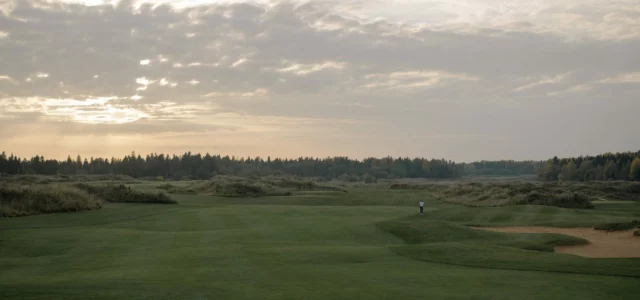
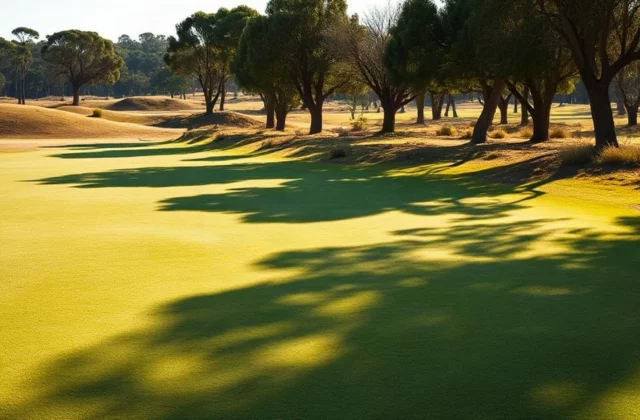
These courses sit on dunes, not on a coastal view. The ground is genuinely firm, the ball genuinely runs, and the wind is the main hazard.
In brief
- Barnbougle suits a first visit; King Island rewards a longer one.
- Land approaches short and let them run; take the putter from off the green.
- Into the wind, more club and a swing at eighty per cent.
- Book tee times before flights and beds, a long way ahead.
- The fixed cost of getting there argues for more rounds, not fewer.
Tasmania has, in twenty years, gone from having no international golf reputation to holding three of the highest-ranked courses in Australia. Cape Wickham sits second in the country and 24th in the world, Barnbougle Dunes fourth in Australia and 31st in the world, and Lost Farm seventh and 40th. All three are public-access links, which is the part most visitors do not expect.
Barnbougle: three courses in one place
On the north-east coast, Barnbougle runs three courses: The Dunes, Lost Farm and Bougle Run, cut through natural coastal contours and built to play like the links of Scotland and Ireland. Lost Farm is unusual even by links standards, with twenty holes, all of which are playable in a single round.
The practical consequence is that Barnbougle is a destination rather than a stop. Two or three days there gives you three distinct courses without moving the car.
How far ahead to book
Further ahead than any other Australian golf trip. Both destinations have limited accommodation, limited tee times and a peak that is short, and the good weeks go a year out. The flights to King Island are the binding constraint rather than the golf.
Book the tee times first, then the flights, then the beds, and expect to be flexible on dates rather than on courses. Midweek is easier than weekends everywhere, and the shoulder months are easier again.
Cape Wickham, on King Island
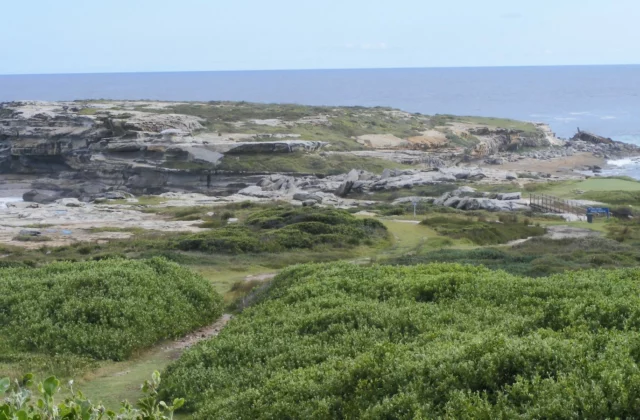
Cape Wickham sits on King Island, in Bass Strait, with the ocean visible from every hole and in play on several. Getting there means a flight, which is why it stays quieter than its ranking suggests, and why the golfers who make the trip tend to stay several days rather than one.
Why these courses exist where they do
Both destinations sit on dunes: deep sand, close-cropped grass and ground that has been shaped by wind rather than by machinery. That is what links land means, and Tasmania has more of it in usable form than anywhere else in the southern hemisphere.
The consequence for a visitor is that these are not resort courses with a coastal view. The ground is genuinely firm, the ball genuinely runs, and the wind is genuinely the main hazard. A player who arrives expecting a manicured parkland with scenery will spend two days confused and the third enjoying it.
It also means the season is longer than the latitude suggests. Sand drains, so the courses stay playable through wet weeks that would close an inland course, and the limiting factor in winter is cold and wind rather than ground condition.
Playing links in Tasmanian conditions
These are genuine links: firm ground, wind that changes the club selection every hole, and fairways that run into greens. Three adjustments make the difference.
- Play the ball low. A knock-down with an extra club, ball back, is the shot that survives the wind.
- Land it short. The ground will take the ball to the flag if you let it. Flying approaches to the pin is how visitors run up big numbers here.
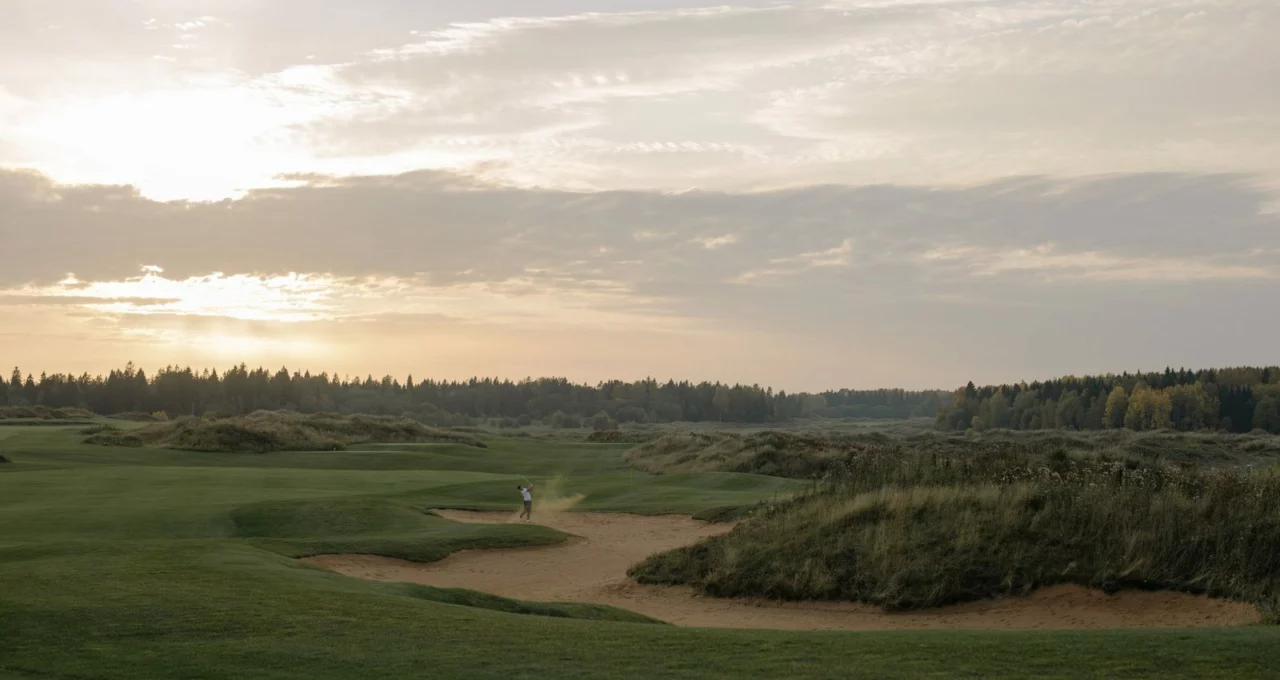
- Respect the sand. Links bunkers exist to cost you a shot. Play out sideways when the face is against you.
Two destinations, two different trips
Barnbougle and King Island are often spoken of together and they are not the same trip. Barnbougle puts multiple courses in one place with accommodation on site, which makes a three or four day stay straightforward and lets weather be worked around rather than planned for.
King Island is the more committed version: a flight, fewer beds, and courses laid on some of the most dramatic coastline in the country. It rewards a longer stay and punishes a tight schedule, because a weather day there is a day with nowhere else to go.
If it is a first visit and time is limited, take Barnbougle. If it is a second visit and the point is the coastline, take King Island and give it more days than seem necessary.
What it costs, honestly
The fixed cost of getting there is the largest part of the trip and it is the same whether you play twice or six times, which is the argument for staying longer rather than shorter. Green fees at the destination courses are at the top of the Australian range, and accommodation on site is limited and priced accordingly.
The saving is in the shoulder months and midweek, where the same courses cost noticeably less and are considerably emptier.
When to go
The Tasmanian season runs opposite to the northern hemisphere: the settled months are the Australian spring and summer, roughly October to April. Even then the wind is part of the design rather than an interruption, and the weather changes within a round.
Pack waterproofs regardless of the forecast, and shoes with grip. These are coastal courses on exposed ground.
What Tasmanian links golf asks of you
These courses sit on sand, and sand plays nothing like the parkland most Australian golfers are used to. It drains in hours, stays firm for most of the year, and the ball runs a long way after it lands: a drive that finished at 200 metres at home finishes at 230 here.
Two adjustments follow. Land approaches short of the flag and let them run rather than flying the ball to the pin. And around the greens, take the putter or a low runner rather than an open wedge: on a tight lie over firm ground, the shot that looks least impressive is the one that works.
The third is wind, which on these coasts is the round rather than a detail of it. Into the wind, take more club and swing at eighty per cent, because a hard swing adds spin, spin makes the ball climb, and a ball that climbs into a headwind falls out of the sky. Downwind, the ball flies and runs, and greens that held in the morning will not hold in the afternoon.
Getting there, and what it costs
Both destinations need planning. Barnbougle is a drive from Launceston, King Island needs a flight, and neither is somewhere you turn up at on a whim. Book the tee times before the accommodation and before the flights, because the times you get should decide the shape of the trip.
Budget the extras honestly: the flight or the ferry, the hire car, and accommodation on site where that is the only realistic option. Play multiple rounds per destination rather than one, because the fixed cost of getting there is the largest part of the trip and it is the same whether you play twice or five times.
Rates fall sharply outside the peak. The shoulder months have the same courses in comparable condition with better availability, and midweek beats the weekend everywhere.
Weather, and planning around it
Tasmania delivers four seasons in a day more often than anywhere else in the country, and a links course amplifies it. A calm morning and a two-club wind after lunch is a normal day, not a bad one.
Plan for it rather than against it: play early where you can, keep one flexible slot in the itinerary, and treat a windy round as the reason you came rather than an interruption. The courses were designed for exactly those conditions and they are more interesting in them.
Building the trip
A week works better than a long weekend. Three or four days at Barnbougle, playing The Dunes, Lost Farm and Bougle Run, then the flight to King Island for Cape Wickham, then home. Two rounds a day is possible in summer daylight and unwise on the first day.
Book accommodation and tee times together where the resorts offer it, because on-site stays hold priority on the sheet.
Playing well as a visitor
Two things decide how a visitor is judged on a links, and neither is the score. Pace first: keep in touch with the group ahead, let a faster group through if a hole opens, and leave the bag on the side of the green nearest the next tee.
Ground care second. Replace divots, repair your pitch mark and one more, and rake bunkers properly, dragging the sand to the low side and entering at the lowest point. On links land, where wind moves loose sand about, an unraked bunker is the reason the next player has an unplayable lie.
And play the forward tees. A links from the back markers in a two-club wind is an endurance test for most amateurs; the same course two sets forward is a very good day, and the handicap system converts every set correctly through course rating and slope.
What to pack
Two pairs of shoes, because one pair needs a full day to dry after a wet round and you are playing several days running. Two gloves, for the same reason. A genuine rain jacket regardless of the forecast, and a hat that stays on in wind.
And your Golf ID, because several of these courses ask visitors for a handicap. A certificate you cannot produce is not a certificate.
One round or several
If the answer is one, play it and accept that you will not have worked the course out. Links courses reveal themselves on the second and third rounds, when you know where the ground runs and which side of each green to miss on.
Where to book
- Barnbougle: The Dunes, Lost Farm and Bougle Run, with accommodation on site.
- Cape Wickham, on King Island: book the golf and the flights together, since the flight schedule dictates the tee time rather than the reverse.
Rates change by season and by package. Confirm the total, including any transfers, when you book.