Stand bags 2026 for Australian walkers: sandbelt buggies, summer water and the kilos that count
Carry bags are sold on the number printed on the product page, from 1.4 to about 2.3 kilograms. Load fourteen clubs, a dozen balls and the water an Australian summer demands, and the gap between them shrinks to a small part of the 7 to 9 kilograms on your back. Here is what four current bags promise, what three of them cost in Australia this month and what owners say about carrying them.

In brief
- Makers' weights: Titleist Players 4 Carbon 1.4 kg, Sun Mountain Eclipse E-2.5 1.9 kg (new generation 2.0 kg), COBRA Ultralight Pro 2.2 kg, PING Hoofer Lite 2026 about 2.3 kg.
- Prices read on 26 October 2026, including GST: COBRA A$279.96 (RRP A$349.95), Titleist A$319.96 (RRP A$399.95), PING A$335.96 (RRP A$419.95); no Australian price found for the standard E-2.5.
- A loaded bag commonly weighs 7 to 9 kg, and every litre of water adds a kilogram: two summer bottles outweigh the lightest bag here.
- Owners praise the straps and stable stands; they criticise a crowded four-way top with fourteen clubs, no waterproofing and less room on the lightest bags.
Late October is when the walking season properly starts in the southern states. The mornings are still cool, but by the back nine the sun has some sting in it, the sandbelt is firming up, and the bottle of water you threw in the bag in August has become two. It is also when a lot of golfers decide the old stand bag has done its time and start comparing new ones by the figure printed on the product page: 1.4 kilograms, 1.9, 2.2. That figure is real, but it describes an empty bag. What you carry from the first tee to the 18th green is the bag plus fourteen clubs, a dozen balls, a rangefinder, a spray jacket you will probably not wear and, from now until April, a fair amount of water. This page looks at four current carry bags with that full load in mind.
Nobody at Panxis Golf carried, weighed or measured these bags. What follows is what the makers publish, what the bags cost in Australia this month and what golfers who own them say in public.
The kilos on the label and the kilos on your back
Start with the clubs. Most published estimates put a full set of fourteen somewhere between about 4 and 5.5 kilograms without the bag, depending mainly on whether your irons have steel or graphite shafts. A golf ball may weigh no more than 45.93 grams under the Rules of Golf, so a dozen in the ball pocket come to roughly 550 grams. A litre of water weighs a kilogram. Add a rangefinder, a towel, tees, sunscreen and a light jacket, and a loaded stand bag commonly lands somewhere between 7 and 9 kilograms, more or less whichever bag you started with.
Against that total, the spread between the lightest and heaviest bag on this page is a little under a kilogram. It is worth having, but it is a smaller share of the load than most buyers assume. Two one-litre bottles, which plenty of walkers will carry on a hot January afternoon, outweigh the lightest bag here on their own.
That is why the same three things come up whenever walkers talk about bags that work for them:
- How the straps sit. Wide, well-padded dual straps that stay flat spread several kilograms across both shoulders. Thin straps that twist can make a light bag feel heavy by the 12th.
- How the bag hangs. A bag that sits level on your back, without the clubheads dragging behind or tipping over your shoulder, is easier to carry and to swing up off the ground forty or fifty times a round.
- How much it invites you to pack. Every spare pocket is somewhere for old balls, a second glove and an extra drink to live. The lightest bags save weight partly by giving you less room to fill.
Four bags, four Australian prices
All prices below were read on 26 October 2026, in Australian dollars including GST, at one national Australian golf retailer. Three of the four were marked down from their recommended retail price on the day. The fourth, the Sun Mountain Eclipse E-2.5 in its standard form, was not listed by either of the Australian retailers checked, so it appears here without a price.
| Bag | Maker’s listed weight | Top | Pockets | Price, 26 Oct 2026 | RRP shown |
|---|---|---|---|---|---|
| Titleist Players 4 Carbon (2025) | 1.4 kg | about 20 cm, 4-way | 6 | A$319.96 | A$399.95 |
| Sun Mountain Eclipse E-2.5 | 1.9 kg (new generation 2.0 kg) | about 19 cm, 4-way | 8 or 9 | No Australian price found | n/a |
| COBRA Ultralight Pro (stand) | 2.2 kg | 4-way | 7 | A$279.96 | A$349.95 |
| PING Hoofer Lite (2026) | about 2.3 kg | 4-way | 9 | A$335.96 | A$419.95 |
Two things stand out for Australian buyers. First, the neat rule you sometimes see overseas, where the lightest bag is also the dearest, does not hold here this month: at recommended retail the PING is the most expensive of the three, A$20 above the Titleist, and on sale the gap between them is A$16. Second, the COBRA is the cheapest of the group whether you go by the sale price or the RRP, even though it is 800 grams heavier than the Titleist and adds a cooler pocket and a rain hood. Titleist’s Australian website gives a recommended price of A$399 for the Players 4 Carbon, in line with the retailer’s figure.
The missing Sun Mountain is worth a note. The retailer that had the other three listed only the waterproof H2NO version of the E-2.5, labelled as a 2027 model, at A$489.95 with no discount. That is a different bag, with eight pockets and a waterproof shell, and it is not the one compared on this page.
What each maker publishes
The figures in this section are the makers’ own, as shown on their product pages and repeated on retailers’ listings. Where an Australian figure exists, it is used.
Titleist Players 4 Carbon
Titleist’s bag for walkers who want the least possible weight. The current version dates from 2025, and Titleist’s Australian listing gives it as 1.4 kilograms, slightly up on the previous generation.
- Top: an 8-inch (about 20 cm) four-way top with full-length dividers.
- Storage: six pockets, including a velour-lined valuables pocket and a full-length apparel pocket.
- Carry: a double strap Titleist calls premium, with a hip pad that reviewers say is larger than before.
- Legs: carbon fibre.
- Fabric: rip-stop polyester. It is not one of Titleist’s StaDry waterproof bags, which matters if you play through a Melbourne spring.
Sun Mountain Eclipse E-2.5
Sun Mountain, based in Missoula, Montana, has built its name on bags for people who walk. The E-2.5 is the slimmer, lighter member of its Eclipse family, and it is changing over right now.
- Weight: 4.2 pounds, about 1.9 kilograms, for the generation still in most shops.
- Top and storage: a 7.5-inch (about 19 cm) four-way top with full-length dividers, and 17.9 litres of pocket space.
- Pockets: counted as nine by Sun Mountain, or eight depending on how the removable ball pocket face is counted. They include a magnetic, velour-lined rangefinder pocket and an umbrella sleeve.
- Carry: the X-Fit dual strap, built around a rotating central hub meant to keep the bag level, with padded shoulder straps and hip pad.
- Stand: an internal compression bottom that pushes the legs out when you press the base into the ground.
On 1 October 2026 Sun Mountain announced its next E-series. The new E-2.5 is listed at 4.4 pounds (about 2.0 kilograms), with a 7.75-inch top, nine pockets and 24.6 litres of storage. It is heavier on paper and holds noticeably more, which says a lot about how little the headline weight tells you on its own.
COBRA Ultralight Pro
The name oversells it a little. COBRA’s walking stand bag is not designed to be the lightest bag in the shop; it is designed to hold a full load and still come in under five pounds, which works out at 2.2 kilograms.
- Top: four-way, with full-length dividers.
- Storage: seven pockets, including a magnetic rangefinder pocket and an oversized insulated cooler pocket.
- Carry: Cool Flow padding on the straps.
- Extras: a rain hood with a two-way zip, a pass-through for a buggy or cart strap, 100 per cent polyester.
One trap when shopping: COBRA also sells an Ultralight Pro cart bag, with fourteen dividers and a listed weight of about 2.8 kilograms. It is not built to be carried, and Australian listings for the two sit side by side.
PING Hoofer Lite (2026)
The Hoofer is one of the best-known carry bags in the game. The Lite is the lightest in PING’s Hoofer range and was refreshed for 2026.
- Weight: about 5 pounds, or roughly 2.3 kilograms.
- Top: four-way, sitting on what PING describes as a new base with dividers that guide each club into its slot.
- Storage: nine pockets and about 19 litres in total, including a full-length apparel pocket, a rangefinder pocket and a valuables pouch.
- Carry: padded straps that convert from double to single, and a channel for a buggy or cart strap so the pockets stay reachable when the bag is strapped down.
- Build: 300D polyester, scratch-resistant leg guards, water-resistant but not waterproof.
Do not confuse it with the standard Hoofer, which is heavier and has more pockets, or the Hoofer 14, which has a fourteen-way top. All three are on Australian shelves at the moment.
For a check on the makers’ numbers, MyGolfSpy’s 2026 guide to stand bags for walking weighed both the Hoofer Lite and the Ultralight Pro at about 2.3 kilograms each and ranked them among its best bags for carrying eighteen holes. In its separate look at the lightest stand bags, the lightest came in at roughly 1.8 kilograms and gave up pockets and space to get there.
What golfers are saying
Read enough reviews, owner forums and retailer comments and a clear pattern appears: owners talk far more about how these bags carry than about what they weigh.
What owners like
- Straps that make the number less important. This is the point that comes back most. Hoofer Lite owners keep buying it for its straps and balance, and one GolfWRX thread found it more comfortable on the shoulders than the bigger Hoofer. Golf Monthly’s review of the 2025 Players 4 Carbon praises the larger hip pad and straps that are easy to adjust, and reviewers of the E-2.5 credit the rotating hub on the X-Fit strap with keeping the bag level.
- Stands that stay put. Reviewers of the Hoofer Lite report legs that never flop loose between shots. Plugged In Golf’s review of the E-2.5 describes a wide, stable footprint and legs that tuck fully away, and the Ultralight Pro is described as staying upright on uneven lies.
- Small pockets in the right place. The magnetic rangefinder pockets on the COBRA and the Sun Mountain, and a soft-lined valuables pocket on each of the four, are the details walkers say they use every hole.
What owners complain about
- Fourteen clubs in a four-way top. Every bag here uses one, and it draws the most criticism. Grips snag in the Players 4 Carbon, particularly a thick putter grip. The Plugged In Golf reviewer found the E-2.5 comfortable with thirteen clubs and cramped with fourteen. Owners of the Ultralight Pro would like bigger dividers.
- None of them keeps the rain out. In at least one detailed review the base of the Hoofer Lite was damp after a drizzly round, and the Players 4 Carbon is not a StaDry bag. Walkers who play in proper rain suggest a rain hood or a waterproof model.
- Less room on the lightest bags. The Players 4 Carbon has six pockets, and reviewers find the bottom one awkward to reach once the bag is full. On the E-2.5 the apparel pocket opens towards the front, which one reviewer felt was less secure for small, heavy items.
- Finish and wear for the money. Some reviewers find the Players 4 Carbon’s fabric thin and scratchy for its price. Zip pulls are named as a weak point on PING bags over time, and one Sun Mountain owner described a strap rubbing against the frame.
No one is quoted by name and nothing here has been counted. These are the impressions that come back most often in public reviews and forum threads, not measurements.
Where Australians carry: sandbelt, summer heat and the buggy question
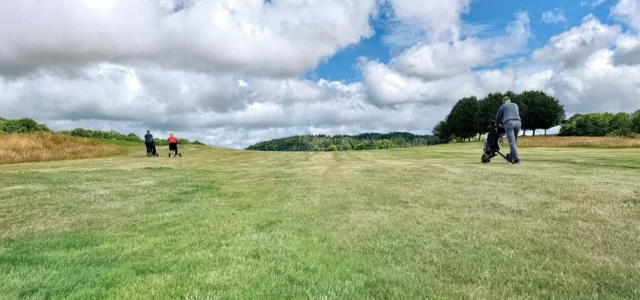
Walking is an ordinary part of club golf in Australia, but the way people walk varies a lot. Plenty of members carry, plenty more push a buggy, and motorised carts are common at some clubs and tightly limited at others. Which of those you do most decides which of these bags makes sense.
- The Melbourne sandbelt. Royal Melbourne, Kingston Heath, Victoria, Metropolitan, Yarra Yarra and their neighbours sit on sandy ground that drains quickly and plays firm from spring. The walking is gentle rather than steep, which suits a light carry bag well. A buggy is common too, but several sandbelt clubs ask golfers to keep pull buggies off the greens to protect the bentgrass surfaces, so you park short of every green and walk the last stretch with a putter. If you alternate between buggy and shoulder, the strap channel on the Hoofer Lite and the pass-through on the Ultralight Pro become practical rather than a footnote.
- Summer heat and water. From December to March, a round in Adelaide, Perth, western Sydney or inland Queensland can be played in temperatures well over 30 °C. Water quickly becomes the heaviest single thing you carry after the clubs: every litre is a kilogram, so two bottles add more weight than the gap between the lightest and heaviest bag on this page. An insulated pocket like the COBRA’s earns its place in those conditions, and a bag with a hip pad that sits well matters more when your shirt is soaked through.
- Carts and their rules. Where motorised carts are allowed, clubs set their own conditions. Ballarat Golf Club’s 2025 rules, for example, keep carts off tees, at least 20 metres from any green and out of the rough except at marked crossings, with no more than two carts per group. If you ride, a stand bag spends most of the round strapped to the back of a cart, and a cart-friendly design matters more than its weight.
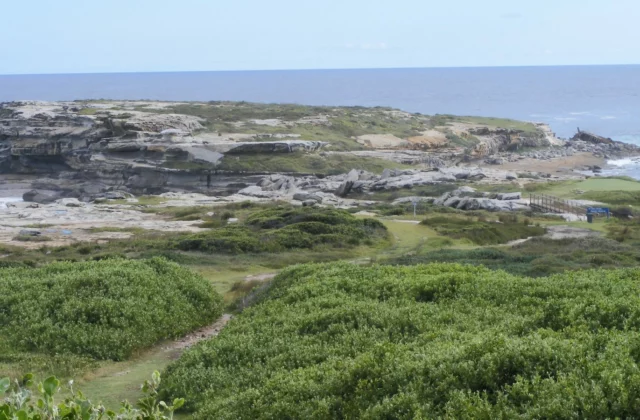
- Tasmania and the coast. Barnbougle Dunes, Lost Farm and Cape Wickham are long walks over dunes, often in a stiff coastal wind. That is where a bag that hangs level and a hood that keeps sand and showers out of the grips are tested hardest.
- Queensland’s wet season. In the north you can play all year, but summer brings heavy afternoon storms. None of these four is waterproof, so if your golf is mostly in Brisbane or further north, a rain hood is the minimum and a waterproof bag may be the better buy.
Buying one in Australia
All four bags, where they are stocked, go through the same few channels. A specialist golf store with a large wall of bags is the place to load a bag with your own clubs and walk around with it, which is the only reliable way to judge balance and strap fit. Your club pro shop carries fewer models but can often order one in. Online stores have the widest range of colours and the most frequent markdowns, especially when a new generation lands, as it has just done at Sun Mountain. Second-hand bags turn up regularly, but check the legs, the base mechanism and the strap clips before handing over any money.
Whatever you buy, ask how strap or leg failures are handled under warranty and keep the receipt. Beyond the maker’s warranty, the Australian Consumer Law gives you rights if a product is not of acceptable quality, so a strap clip that snaps within a season is worth raising with the seller.
Choosing for an Australian season
- Weigh your current bag fully loaded first. Bathroom scales will do: weigh yourself with the bag and without it. If the total is well over 9 kilograms, emptying the pockets will save you more than any new bag.
- Count your clubs and check your putter grip. Fourteen clubs and an oversized putter grip will feel crowded in any four-way top on this list.
- Plan for summer, not spring. Buy for the water you will be carrying in January, not the single bottle you take in October.
- Be honest about the buggy. If you push or ride half your rounds, a buggy-friendly bag with more pockets will serve you better than the lightest carry bag in the shop.
The number on the label is worth knowing. It is the straps, the balance and what you choose to put in the pockets that decide how the bag feels walking up the 18th in February.
How this page was put together
This page presents products and reports public opinion. It is not a test: nobody at Panxis Golf carried, weighed or measured these bags. Specifications come from the makers’ published material, as shown on the brands’ product pages and reproduced on authorised retailers’ listings: Titleist for the Players 4 Carbon, including the 1.4 kg figure from Titleist’s Australian listing; Sun Mountain for the Eclipse E-2.5 and for the new E-series announced on 1 October 2026; COBRA for the Ultralight Pro; and PING for the Hoofer Lite. Pound figures published in the United States have been converted to kilograms and inches to centimetres. The only measured weights mentioned are MyGolfSpy’s, and they are credited to MyGolfSpy. The cart rules quoted are from Ballarat Golf Club’s published 2025 cart usage rules; the note on buggies and sandbelt greens reflects published reporting on those clubs’ policies, which can change.
Prices were read on 26 October 2026, in Australian dollars including GST, on the product pages of The House of Golf, together with the recommended retail prices shown there. Drummond Golf, checked first, did not list any of the four stand bags on that date. Neither retailer listed the standard Sun Mountain Eclipse E-2.5, so no Australian price is given for it; the H2NO E-2.5 price is from The House of Golf. Titleist’s recommended price of A$399 is from Titleist’s Australian website. Prices and stock change often.
What golfers say was read in published reviews from Golf Monthly, Golfalot, Today’s Golfer, National Club Golfer, Plugged In Golf, Golf Times, Skratch, The Birdie Report, GolfTested and MyGolfSpy, in owner threads on the GolfWRX forums and in retailer customer reviews. Some were read only through search excerpts. We looked for Australian reviews of these four bags and found none detailed enough to use. No one is quoted by name, nothing is counted, and no impression is presented as a statistic. There are no commercial links on this page, no affiliate arrangement and no commission of any kind. If content on this site is ever paid for by a brand, it will carry an advertising notice at the top of the page, before the first line.