Titleist Pro V1 on firm Australian greens: A$84.95 a dozen and what golfers say, for and against
On firm summer turf the ball decides whether an approach holds, and the Titleist Pro V1 is the ball most Australian golfers measure that against. The 2025 model on paper, its price, what reviewers found and what golfers say, with its successor expected around the end of our summer.
In brief
- The current Pro V1 is the 2025 generation: three-piece, urethane cover, low driver spin and a soft feel, according to Titleist.
- The Pro V1 and the Pro V1x were both listed at A$84.95 a dozen in Australia in September 2026, just over A$7 a ball.
- Golfers praise predictable carry and approaches that stop on firm greens; they criticise the cost of every ball lost and, in some cases, the 2025 feel off the driver.
- A new Pro V1 reached the USGA Conforming Ball List on 14 September 2026 and is expected in 2027.
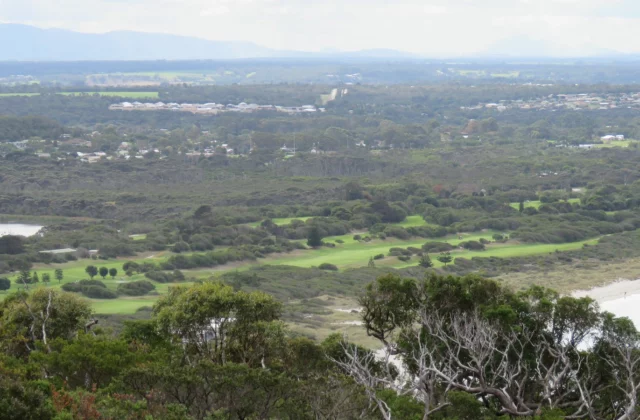
On a firm Australian fairway in February, the ball you play decides a surprising amount: how far the drive runs, and whether a mid iron into a baked green stays on the putting surface or bounds into the back bunker. That is where the Titleist Pro V1 earns its reputation, and its price. This page covers what the current Pro V1 is, the specifications Titleist publishes, what it was selling for in Australia in September 2026, and what golfers who play it keep saying for and against.
Which Pro V1 is on the shelf
The Pro V1 sold in Australia today is the 2025 model, launched worldwide in January 2025. It will not stay current for long. On 14 September 2026, new Pro V1 and Pro V1x balls with a split arrow printed beside the name were added to the USGA Conforming Ball List, and Golf Monthly reported that they are expected to become the 2027 generation. Titleist has made no announcement, but it has replaced the ball on a two-year rhythm for many years. For an Australian buyer that timing is awkward, because the new model is likely to arrive around the end of our summer.
What kind of ball it is
The Pro V1 is a three-piece urethane-covered ball. Titleist describes it as the ball for a penetrating, mid-height flight with low spin off the driver and strong spin around the green, with a soft feel. The four-piece Pro V1x is its higher-launching, firmer-feeling partner, which spins a little more on full shots. Neither is aimed at a handicap bracket. The difference between them is flight and feel, and it tends to show more with the irons than off the tee.
Specifications published by Titleist
These come from Titleist’s 2025 launch material and product listing. Panxis Golf measured none of them.
- Core: faster high gradient core, reworked for 2025 to raise ball speed and iron and wedge spin while keeping long game spin down.
- Casing: speed amplifying, high-flex casing layer for low driver spin.
- Cover: soft cast urethane elastomer for greenside spin.
- Dimples: spherically tiled 388 tetrahedral design for a penetrating, consistent flight.
- Versions: white or high optic yellow, and Enhanced Alignment, where the sidestamp line is more than 65 per cent longer than standard.
Titleist summed up the update as more speed off the tee, more control with the irons and more spin with the wedges. Its ball engineers told Golf Digest they wanted extra spin with irons and wedges without adding any off the driver.
Related models: the Pro V1x (dual core, 348 dimples); the Pro V1 RCT for indoor radar units; and the 2026 Pro V1x Left Dash, a high-launch, low-spin, firmer ball. The Pro V1 Left Dot, a lower-flying version released in September 2025, is limited to the United States and Canada.
Price in Australia
An Australian retailer listed the Titleist 2025 Pro V1 12-pack in white at A$84.95 in September 2026, with the Pro V1x 12-pack at the same A$84.95. On the day the page was read, the white Pro V1 was shown as unavailable to buy online, so check stock at your local store before driving over. At that price, each ball costs just over A$7.
What independent reviews found
Golf Monthly’s review, run on a launch monitor and on the course, compared the Pro V1 with the Pro V1x: roughly 200 rpm less driver spin and a few metres less carry for the reviewer’s swing, but a higher, slightly longer 7 iron, and around 400 rpm less spin on a pitch of about 45 metres. His strongest impression on the course was how well the Pro V1 held its line in headwinds and crosswinds. Golf Monthly’s full review sets out the numbers.
Golfalot compared the 2025 ball with the 2023 ball and found a 0.5 mph gain in ball speed, about 300 rpm less driver spin and a little more wedge spin; in a blind test on the course the reviewer picked the newer ball correctly only half the time. MyGolfSpy’s 2025 ball rankings put the Pro V1x first and the Pro V1 among the runners-up. GolfMagic rated the Pro V1 among the best balls around the greens, but its reviewers preferred the feel of TaylorMade’s TP5.
What golfers are saying
Opinions were read on the GolfWRX forums and in customer reviews at retailers in the United States, Britain and Sweden. Shop reviews rate the ball very highly and say little; the forum discussions carry the nuance.
Praise that recurs:
- Predictable carry. Players comparing premium balls describe the Pro V1 as the one whose flight they can plan around, and some went back to it after a season with a competitor.
- Stopping power on approach. A short iron that lands, takes a hop and pulls up is the picture players describe, which is worth a lot on firm, fast greens.
- Soft on and around the green. Golfers who find the Pro V1x firm or clicky off the putter stay with the Pro V1 for chipping and putting feel.
Criticism that recurs:
- The cost of a lost ball. Nobody questions the quality. Losing a A$7 ball into a dam, the native scrub or a creek is the complaint, and it is the drawback shoppers mention when they mention one.
- Mixed feelings about the 2025 ball. Some long-time users say it feels wrong off the driver or flies lower than they would like, and a few say it jumps off the irons and carries further than expected. Several switched to the 2025 Pro V1x as a result.
- Little change from 2023. Forum members and reviewers agree the step is modest. Old stock is still perfectly playable.
- Confusing names. The Titleist X is the higher-spin, firmer ball, while other brands use their X differently, so comparisons with Callaway’s Chrome Tour often get tangled.
Worth it for you?
The Pro V1 is money well spent if you usually hole out with the ball you started with, if your home course has firm summer greens where spin decides whether an approach holds, and if you want one model all year so that your distances in metres stay reliable. Swing speed is not the barrier people assume. Independent robot testing has not shown softer, cheaper balls adding distance for slower swings, so choose on flight and short game.
It is harder to justify if you lose three balls or more per round: more than A$21 gone before you reach the clubhouse. Top-grade recovered balls or a mid-priced urethane ball are the sensible choice until more of them stay in play. Our article on lake balls, dam balls and grading explains the categories, and choosing a golf ball for firm, fast conditions covers the differences between models.
Other balls to consider
- Pro V1x: A$84.95 a dozen, a higher flight, more spin and a firmer feel.
- Pro V1x Left Dash: high launch, low spin, firm feel, for players chasing distance.
- Srixon Z-Star, TaylorMade TP5, Callaway Chrome Tour: the premium urethane rivals, rated close to the Pro V1 by several reviewers, with feel the usual tiebreaker.
- Recovered Pro V1s: good value in the best grade only.
Where to buy it in Australia, and when
Australian retailers list the 2025 Pro V1 and Pro V1x, along with the 2026 Pro V1x Left Dash, with yellow and alignment versions of some models. Your club’s pro shop will sell the same ball and is the easiest place to buy a single sleeve to compare with a rival over a few rounds before you spend A$85 on a box.
Watch the calendar. With the next generation on the conforming list, the 2025 ball is likely to be superseded in the first months of 2027, just as the summer season winds down. Previous generations have been cleared out once their replacement landed; this year the GolfWRX classifieds still showed unopened 2023 boxes selling well below new-ball prices. If you are settled on the current ball, stocking up in a clearance makes sense. If you would rather have the newest version, waiting costs little.
How this page was put together
This is a product presentation and a summary of public opinion, not a test. Specifications are Titleist’s, from its January 2025 launch, product pages and announcements on the Left Dot and 2026 Left Dash. News of the next generation comes from the USGA Conforming Ball List as reported by Golf Monthly and GolfWRX in September 2026. The price was read at Drummond Golf in September 2026, in Australian dollars. Review findings are credited to Golf Monthly, Golfalot, MyGolfSpy, GolfMagic and Golf Digest; distances they published in imperial units are converted to metres here. Golfers’ opinions were read on the GolfWRX forums and in retailer reviews in the United States, Britain and Sweden; no one is named, nothing is counted and no impression is presented as a statistic.
Nobody at Panxis Golf hit these balls for this page. There are no commercial links, no affiliate arrangements and no commissions. If content on this site is ever paid for by a brand, it will carry an advertising notice at the top of the page, before the first line.