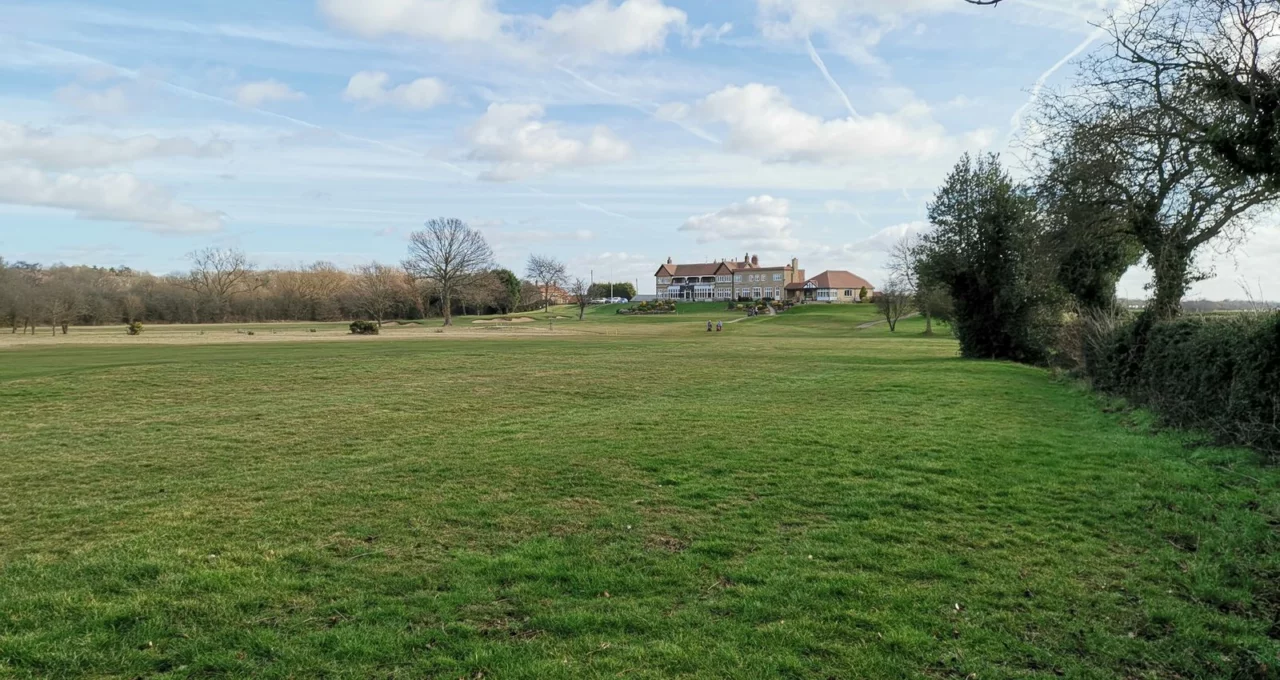
Lindrick Golf Club, Club House — Photo Chris Morgan / Wikimedia Commons, CC BY-SA 2.0
Lindrick Golf Club
Holes
18
By
71
Length
6,606 yards
Green fee
—
Best season
All year
The club was founded in 1891 as the Sheffield and District Golf Club and took the name Lindrick in 1934. Old Tom Morris laid out the original nine holes on Lindrick Common; three years later they became eighteen.
Its place in the record is the 1957 Ryder Cup, which Great Britain and Ireland won here after trailing three to one, turning it round on the final day for a seven and a half to four and a half victory. It was the home side’s first win since 1933 and the last for another twenty-eight years, which is why the course is still spoken about in a way its size and location would not otherwise explain.
The ground itself straddles a boundary: the sunken green at the par-five fourth sits where the old Yorkshire, Derbyshire and Nottinghamshire county lines met.
What it asks of you
Par 71 over some 6,600 yards, which is modest until the wind gets up on ground with nothing to stop it. Common land, heath and moor rather than parkland, on limestone that drains, so the course plays firm when clay courses in the same counties are shut.
Heather, gorse and silver birch frame generous fairways and punish the ball that finishes a few yards wide rather than the one that is badly struck. Accuracy is the currency here, not length. The greens are quick, well bunkered and subtly contoured, and greenside bunkering is the element specialist reviewers single out most often.
Firm and fast is the normal condition rather than the exception, and it is the reason members get twelve months of proper golf out of the place.
What players say about it
Visitors are welcome by arrangement and the review record is solid. The notes below summarise recurring themes across specialist golf sites, traveller review pages and player discussion threads. They are other people’s opinions, not ours: we have not played the course. We report what comes back repeatedly rather than isolated remarks, and we do not name or quote individual reviewers.
What comes up in its favour
- Conditioning is praised without much qualification. Immaculate is the word that appears most, and the firm limestone turf is credited for it.
- The greenside bunkering is singled out by people who write about architecture as the best feature of the course.
- Year-round playability matters a great deal in this part of England, and reviewers who have suffered winter golf on Midlands clay say so with feeling.
- The Ryder Cup history is a genuine draw, and the course wears it lightly rather than trading on it.
What comes up against
- Blind shots are the most common complaint. There are a number of blind tee shots and blind greens, and first-time visitors lose balls simply because they could not see where they finished.
- Swirling wind over open common ground makes club selection awkward, and that frustrates players used to a sheltered course.
- Length is modest, and better players sometimes find it less of a test than the reputation implies.
- The location, between Sheffield and Worksop, is off the usual visitor circuits, which is why the course is less played than its quality warrants.
Getting there and when to go
Lindrick sits on the A57 west of Worksop, around twenty minutes from Sheffield and close to the M1, which makes it an easy stop on a journey north or south rather than a destination in itself. Doncaster Sheffield and Leeds Bradford are the nearest airports.
The course plays all year, and that is one of its selling points: the limestone drains and the turf stays firm through a wet winter. Late spring, when the gorse is out, and early autumn are the most attractive months. Visitor booking is by arrangement.
Green fees
Rates and visitor tee times are handled by the club and vary by day and season. See the club’s own site.
How this page was made
The factual frame comes from public sources: OpenStreetMap for the location, Wikipedia and published architecture and championship coverage for the history and the 1957 Ryder Cup, and the club’s own site for access and booking. The opinion section summarises public reviews and player discussions read in September 2026; we report recurring themes rather than individual voices, and we do not reproduce or attribute quotes.
We have not played this course, and nothing here is a substitute for that. The club has not paid for this page, has not seen it before publication and has no say in what it says. If you know the course and something here is wrong or out of date, write to us and we will correct it.