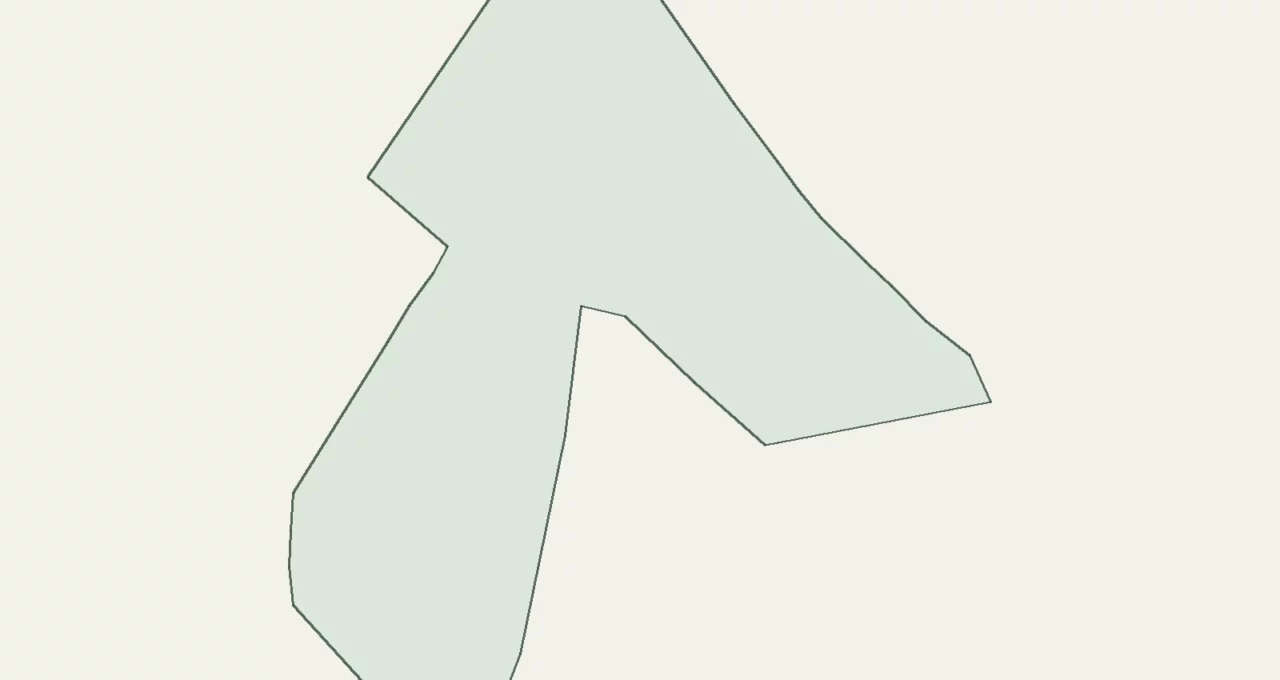
Layout of Seaford Golf Club from OpenStreetMap survey data (ODbL licence).
Seaford Golf Club
Holes
18
By
69 (white, yellow and blue tees); 72 (red tees)
Length
6,546 yards from the white tees, 6,242 yellow, 5,700 blue, 5,551 red (club scorecard); 6,234 yellow on the club's course overview
Green fee
—
Best season
Year-round; chalk base, the club says the course is rarely closed
Seaford Golf Club sits on a chalk ridge above East Blatchington, the old village that has grown into the western side of Seaford, on the East Sussex coast between Brighton and Eastbourne. Its address is 111 Firle Road, Seaford, BN25 2JD, and the course runs north from the clubhouse onto Bullock Down, at the edge of the South Downs National Park. Locally the club is often called Seaford Blatchington, which helps to tell it apart from Seaford Head Golf Club, a separate club on the other side of the town towards the headland. The two are easily confused, and the club’s own directions page tells visitors not to follow any signs for Seaford Head.
This is an eighteen-hole downland course of par 69, measuring 6,546 yards from the white tees on the club’s scorecard, with a standard scratch score of 71 according to the club’s history page. It was laid out by J.H. Taylor, five times Open champion, and opened on this site in 1907. The club itself is twenty years older: it dates its foundation to 1887 and describes itself as the oldest golf club in Sussex. Top 100 Golf Courses, which calls Seaford the archetypal downland golf course, places it tenth in its Sussex ranking.
From Seaford Head to Bullock Down
The club’s history begins in 1887, at a time when, it says, there were no more than forty golf clubs south of the Scottish border. The first course was a twelve-hole layout on Seaford Head, extended to eighteen holes in 1889. That course belongs to the club’s past only: today’s Seaford Head Golf Club is a different club, and the two should not be mixed up.
By 1904 membership had grown and a larger clubhouse was needed. According to the club, it could not agree terms with the landowner at Seaford Head, who had his own plans for the layout of the course and for building on the land. The club moved, and in 1907 it settled on Bullock Down at East Blatchington, where it still plays. J.H. Taylor, whom the club describes as a five-time Open winner, a Ryder Cup captain and one of the leading golf architects of his era, was commissioned to design the new course. He worked with what the land offered, using the old dew ponds and the flint quarries on the down. Taylor’s original layout, the club records, measured 5,814 yards with a bogey of 81.
The course did not stay still for long. In 1911 the present 7th hole was created, and the present 17th was formed by combining what had been the 16th and 17th. In 1930 the 1st hole was lengthened from 260 to 354 yards by turning it into a dog-leg to the right. Top 100 Golf Courses adds two further dates that the club’s history page does not give: a plateau green built at the 12th in 1937, and work in 1951 by John Morrison, the Colt partner, who reportedly removed several bunkers. The club’s own pages do not mention Morrison; one of them says instead that a Mr Hawtree later made a tweak to Taylor’s design, without a date. We have not been able to reconcile the two accounts.
The years after the Second World War were difficult. The club says it went into financial decline, and that in 1955 a member, Miss Alida Dormer, later Mrs Alida Snow, bought the freehold, leased it back to the club, paid for improvements to the clubhouse and then managed it. She added the Dormy House in 1958. In 1968 the club bought the freehold back from her at what it calls a generous price, and it still owns the whole course and some adjacent land. A centenary history by John Walsh was published in 1986, and the club says a copy can be seen in the general manager’s office.
Work on the course continues. The club has engaged the architect Ken Moodie, of Creative Golf Design, for a five-year programme of bunker rebuilding, scrub clearance and changes to the tee boxes, together with new paths and a new irrigation system, with a borehole planned. When we read the site in October 2026, the home page reported nine holes completed and bunker work continuing until April 2027, with three holes affected and one hole out of play for a week in October. Anyone planning a round in the coming months should expect some temporary arrangements.
What the course asks of you
Seaford is a par 69 with only one par 5, and that shapes everything. From the white tees the card has four par 3s: the 3rd, 7th, 12th and 15th. The single par 5 is the 16th, at 555 yards. Everything else is a par 4, and most of those are long: the 2nd, 5th, 6th, 8th, 9th, 13th and 14th all measure more than 400 yards from the whites, and the 8th, at 446 yards, is stroke index 1. The front nine is a par 34 of 3,236 yards, the back nine a par 35 of 3,310.
The club’s scorecard gives four sets of tees. The yellow tees measure 6,242 yards and the blue tees, added recently according to the club, 5,700 yards, both par 69 for men. The red tees measure 5,551 yards, and from them the course becomes a par 72, because the 2nd, 8th and 13th are played as par 5s. The club’s course overview, however, gives the yellow tees as 6,234 yards rather than 6,242. For course rating and slope we could not read the club’s own table; the scorecard listing on The Social Golfer, which matches the figures shown by GolfPass, gives the white tees a rating of 72.1 with a slope of 120, the yellow tees 70.3 and 120, and the red tees, for men, 67.1 and 114. These are third-party figures and the club or England Golf should be considered the reference.
The ground is downland on chalk. The club describes the course as climbing only about 120 feet from the clubhouse to the 8th green, with gentle gradients, firm fairways and sloping greens, and says the free-draining ridge keeps it open when other courses are closed. Taylor’s use of the land is still visible: the club points to the old flint quarries in front of the 6th green and to the left of the 7th. Top 100 Golf Courses notes that there are no blind shots and no water carries, but adds that playing to handicap is difficult. Being high ground about a mile from the sea, the course is exposed, and the wind is the constant in almost every hole tip the club publishes.
The opening stretch
The 1st, a par 4 of 372 yards from the whites, is the hole that was turned into a dog-leg in 1930. The club advises keeping the tee shot down the left, using a telegraph pole in the distance as a line, and warns that the green slopes from back to front so that downhill putts run very fast. One published review notes out of bounds into neighbouring gardens on this hole. The 2nd, 436 yards and stroke index 3, is described by the club as one of the toughest on the course: the fairway falls from left to right, the view of the green is better from the left, and higher handicappers, it suggests, often do better treating it as a par 5. The same review describes gorse threatening holes 2 to 4, and the 4th as a narrow fairway lined with gorse on both sides from tee to green.
Pits, quarries and the long par 4s
At the 6th, 421 yards, the club calls the tee shot a decision: the closer the drive finishes to the pit in front of the green, the better the angle, but finding the pit makes par hard. Top 100 Golf Courses describes the green as fronted by a deep grassy pit. The 7th, a par 3 of 163 yards created in 1911, has trouble on every side of the green, and the club notes that the safe miss to the right leaves a hard par. The 8th, the stroke index 1 hole and the high point of the course, asks for a drive down the right, according to the club, with cross bunkers threatening the tee shot according to Top 100 Golf Courses, and a long, contoured green that needs enough club when the flag is at the back.
The short holes and the finish
The 12th, 182 yards, is the hole that received a plateau green in 1937 according to Top 100 Golf Courses. The club calls it deceptive: there is dead ground in front of the green that cannot be seen from the tee, two deep bunkers left and right, and the wind matters. The 15th, at 221 yards the longest par 3, has cross bunkers short of the green; the club says there is more room between them and the putting surface than it appears, and that the better miss is to the left. The 16th, the only par 5, runs 555 yards from the whites. The club advises the left side of the fairway, because tall fir trees on the right can block the second shot, and warns that a bunker short and right of the green catches many players; Top 100 Golf Courses gives it the nickname Grant’s Folly. The green is deep, so the approach should be played longer than it looks.
The 17th, a par 4 of 398 yards and stroke index 4, is the hole the club’s history calls the finest on the course. It was created in 1911 out of two older holes. Out of bounds lies to the left, though the club says there is more room on that side than it seems; a drive finishing to the right of the barn leaves an obscured second shot; and when the ground is firm the ball should land short, because the ground runs away. The 18th, 399 yards, is played towards a copse of trees to the left of the clubhouse, with a second shot to a well-guarded green below the clubhouse terrace.
The club has also added two extra holes, known as 17a and 18a, beside the main course, so that members can play shorter rounds of eight or eleven holes without getting in the way of groups coming off the 16th. Practice facilities include a grass driving range of about 350 yards with three covered bays, a chipping green with practice bunkers, a putting green and a three-hole par 3 academy course for beginners.
What golfers say
The points below summarise the golfer reviews published on Top 100 Golf Courses, eight of them between 2019 and 2026, and on GolfPass, which shows more than eighty reviews but which we could only read through search engine extracts. They are other people’s opinions, not ours. Nobody from Panxis has played the course, and we name no reviewer.
What comes up in its favour
- The views. Reviewers keep returning to the outlook over the English Channel, the Sussex Downs and, towards the east, the Seven Sisters cliffs and Cuckmere Haven.
- The greens and the condition of the course: greens described as quick and true, fairways firm, and the course well maintained.
- Playability through the year. Several reviewers mention that the course rarely closes, which they put down to the chalk drainage.
- Variety despite the card. Even with so many long par 4s, reviewers say the holes do not feel repetitive, because they play in different directions to the wind and require every club in the bag.
- Taylor’s features: the dew ponds, the deep pits in front of the 6th and 7th, the bunkering and the strong finishing stretch come up in several reviews, along with the par 3s.
- The welcome. Friendly staff and the food and beer in the clubhouse bar are mentioned more than once, and reviewers also note that the course is being improved.
What comes up against
- Wind and difficulty. The exposure and the number of long par 4s make the course hard work on a windy day, and some reviewers found fast greens difficult to hold in the wind.
- Tight early holes. The out of bounds at the 1st and the gorse on the 2nd to 4th punish a wayward start.
- Pace of play. On GolfPass this is the lowest-rated category, and comments are split between rounds that were slow on busy days and rounds described as quick.
- Weather. Sea mist and rain have spoiled the views for some visitors.
- The par. One reviewer feels that turning former par 5s into par 4s makes the course play differently from its reputation, and at least one finds it easier than its card suggests.
Getting there and when to go
The clubhouse is at the top of Firle Road in East Blatchington, on the north-western side of Seaford. The club’s directions are to leave the A259 coast road at the War Memorial triangle on the eastern side of the town centre, follow the signs for East Blatchington and continue for about a mile to the top of the road. From the north and west, the club suggests the A27 towards Eastbourne, then the A26 to Newhaven and the A259 to Seaford; from the east, the A27 towards Brighton as far as the Drusillas Park roundabout, then through Alfriston to Seaford. Once again, do not follow the signs for Seaford Head Golf Club, which is elsewhere in the town.
Seaford railway station, at the end of the branch line from Brighton via Lewes and Newhaven, lies a little over a mile from the clubhouse in a straight line by our measurement on the map, and Bishopstone station, also on the branch, is at a similar distance to the south-west. The walk up from the town climbs onto the down, so a taxi may be worth considering with a full bag.
Visitors book tee times through the club’s online visitor booking page, up to ten days in advance according to the green fees page; groups of eight or more book as a society through a separate form, and the club tailors society packages that can include breakfast, buggies, competitions and a meal after the round. The club has twelve electric buggies, as well as electric and pull trolleys for hire, and advises booking buggies early through the pro shop. The course is walkable, the club says, and reviewers agree that it is undulating rather than hilly. The Dormy House offers en-suite rooms for golfers who want to stay, with breakfast and dinner available, and the clubhouse has a lounge bar with local ales and a terrace overlooking the 18th green and the 1st tee.
The club divides its year into a winter season, from late October to late March, and a summer season for the rest of the year. Because of the chalk, it says the course is rarely closed, which makes Seaford one of the more reliable options in Sussex in winter. Late spring and summer bring the longest evenings and the clearest chance of the views, but the wind blows in every season, and sea mist can roll in at any time of year. Until April 2027, check the club’s news page for the state of the bunker works before you set out.
How this page was made
The factual frame comes from public sources: OpenStreetMap for the location and our distance measurements; the club’s website, read in October 2026, for the address, the history, the scorecard, the hole-by-hole tips, the course overview, the improvement programme, the practice facilities, the visitor, society and buggy information, the Dormy House and the directions; Top 100 Golf Courses for its description, its Sussex ranking, the 1937 and 1951 alterations, the named bunker on the 16th and its golfer reviews; The Social Golfer for the course ratings and slopes; GolfPass, read only through search engine extracts because the site refused our requests, for its ratings and recurring review themes; and the English Wikipedia article on East Blatchington for the village. Wikidata identifies the club as Q7440377.
Where sources disagree, we say so. The yellow tees measure 6,242 yards on the club’s scorecard and 6,234 on its course overview. The red tees measure 5,551 yards on the club’s scorecard but 5,577 on The Social Golfer, which also shows different yardages at the 5th and 12th and different stroke indexes. For later changes to Taylor’s design, Top 100 Golf Courses names John Morrison in 1951, while the club’s pages mention only a tweak by a Mr Hawtree. The club calls itself the oldest golf club in Sussex, Top 100 Golf Courses says it is believed to be, and Wikipedia says one of the oldest. Top 100 Golf Courses mentions a 24-bed Dormy House, while the club’s wedding page refers to ten twin bedrooms. The ratings and slopes we quote are third-party figures; the club publishes a rating table that we could not read, and we have not seen an England Golf certificate.
The opinion section summarises golfer reviews on Top 100 Golf Courses and on GolfPass, read in October 2026. We report recurring themes rather than individual voices, and we reproduce no quotations from reviewers. Nobody from Panxis has played or visited this course, and this page is no substitute for a round.
The club has not paid for this page, has not seen it before publication and has no say over its content. This page contains no commercial link and earns us no commission. If you know the club and something here is wrong or out of date, write to us and we will correct it.
Other courses nearby
Closest to this one in our British directory:
- Seaford Head Golf Club — 2 mi
- Worthing Golf Club — 22 mi
- Dale Hill Golf Club — 22 mi
- The Richmond Golf Club — 48 mi
The hole to know
Par 4 of 398 yards from the whites, formed in 1911 by joining two older holes and called the finest on the course by the club's history; out of bounds left, a barn on the right and ground running away from the green.