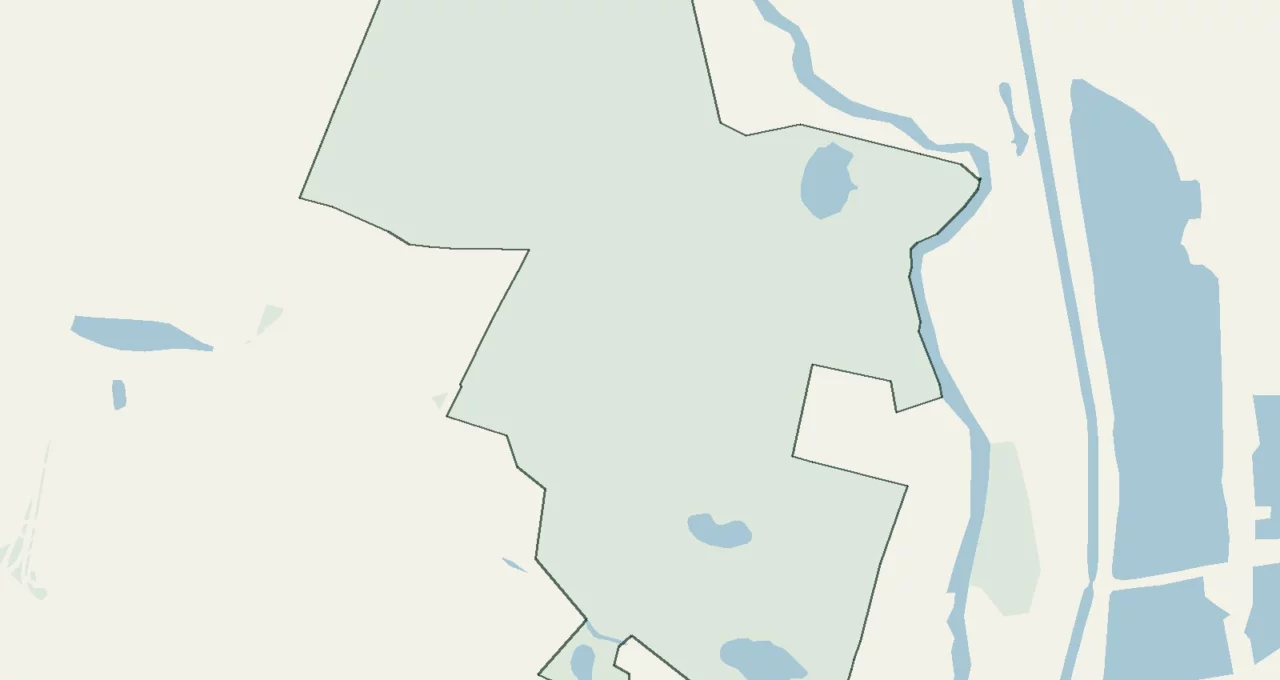
Layout of The Buckinghamshire Golf Club from OpenStreetMap survey data (ODbL licence).
The Buckinghamshire Golf Club
Holes
18
By
72 from the back and club tees, 74 from the front tees (Where2Golf)
Length
6,880 yards from the back tees, 6,401 club tees, 5,692 front tees (Where2Golf; Wikipedia's hole lengths total 6,880); a 2017 report gives 7,200 championship yards after the redesign
Green fee
—
Best season
—
The Buckinghamshire is a private members’ golf club on Denham Court Drive, Denham, in the south-east corner of Buckinghamshire, on the western edge of Greater London. Its 18-hole parkland course, designed by the former Ryder Cup captain John Jacobs, opened in 1992 on the estate of Denham Court, a Grade II listed country house that now serves as the clubhouse. The club calls itself “The Buckinghamshire”; older directories, Wikipedia and OpenStreetMap use Buckinghamshire Golf Club or Buckinghamshire Golf Course. Its website is buckinghamshiregc.com.
Two points are worth settling at the outset. First, this is not Denham Golf Club, the older Harry Colt course on Tilehouse Lane, which lies a little over two kilometres to the north-west going by the two courses’ coordinates in OpenStreetMap; the two are separate clubs. Second, the course has changed a good deal in recent years: a bunker and lake redesign completed in 2017, a switch of the front and back nines announced in 2024, and a further renovation of bunkers and drainage reported in 2025. Older scorecards and reviews therefore number the holes differently from today.
The club is the home of the Ladies European Tour, according to its own website and to trade press reports from 2012, 2015 and 2018, and it has staged professional events on the European Seniors Tour and the Ladies European Tour.
An old house and a modern course
The house is much older than the golf. Buckinghamshire Council’s Heritage Portal describes Denham Court as a fourteenth-century aisled hall incorporated into a seventeenth-century house, largely rebuilt in the eighteenth and nineteenth centuries. It records that William Bowyer acquired the manor at the turn of the seventeenth century and that the house later belonged to Sir William Bowyer, a patron of John Dryden; the poet is said to have worked on translations of Virgil there in the 1690s and to have described the garden as one of the most delicious spots of ground in England. The same record traces the estate through a London banker in 1813, the Lambert family from 1840 and the Swithenbank family from 1885, before its sale to Middlesex County Council in 1936. In the late 1950s the house became a children’s home run by Hillingdon Borough Council. Historic England lists it at Grade II (list entry 1124488); the Heritage Portal notes that the east arm of the old moat is formed by the River Colne.
According to the Heritage Portal, the estate was sold in May 1990 to Kajima Investment BV, and the Colne Valley Golf Company was set up to turn the land and house into a golf course and clubhouse. A 2012 trade report says the course was developed by Kajima UK; later reports, in 2015 and 2018, describe the Japanese brewer Asahi as the owner, in the 2018 report from the outset until the end of 2016. We could not establish how the two Japanese companies’ roles fitted together. The course opened in 1992, a date given by Wikipedia, Top 100 Golf Courses and every trade report we read.
Ownership has changed twice since. Golf Business News reported in November 2018 that Arora Hotels, part of the Arora Group, had bought the club from Eagle Resorts, which had acquired it at the end of 2016. In May 2024 the club reopened the house after what it describes as an investment of more than ten million pounds, with a restaurant, wine bar, whisky room, lounges, locker rooms and seven bedroom suites, and announced further investment in the course.
Who designed it, and who has changed it
All the sources we read credit the original design to John Jacobs, the English professional and teacher who captained Europe in the Ryder Cup. Top 100 Golf Courses quotes him as saying he wanted a course with interest and beauty for golfers of all levels, a challenge or a gentle walk round. The same site says thousands of native trees were planted during construction.
In 2012 the club commissioned the architects Thomson Perrett and Lobb to review the course. In 2015 Golf Business News reported a two-million-pound programme, designed with Tim Lobb, including a reservoir, buggy paths, a new irrigation system, redesigned lakes on what were then the 7th and 8th holes and the relocation of many bunkers. A 2017 report put the final cost of the redesign at three million pounds, said the course had been lengthened to 7,200 championship yards and that 112 bunkers had become 64. Top 100 Golf Courses says the bunker area was cut by more than half. One golf directory names Tim Lobb as architect with a date of 2017; we treat that as the redesign, not the original layout.
In 2024 the nines were switched, so that the old 10th became the 1st and the old 1st became the 10th, according to Wikipedia and to the club’s reopening announcement, which says the Heron’s Bar now overlooks the finishing hole and the River Colne. In August 2025 Golf Course Architecture reported a further three-million-pound renovation overseen by European Golf Design: 68 bunkers renovated with new sand, native rye replacing longer fescue around bunker edges, a new back tee on the par-3 18th and 100,000 linear metres of drainage, with work on the practice range to follow. The club’s managing director linked the drainage work to wetter winters.
What it asks of you
The club publishes no scorecard on its current website, so the figures here come from third-party sources and predate at least some of the recent work. Where2Golf lists three sets of tees: 6,880 yards, par 72, from the back tees; 6,401 yards, par 72, from the club tees; and 5,692 yards, par 74, from the front tees, with a standard scratch score of 73, 71 and 73 respectively. The hole-by-hole lengths on Wikipedia add up to the same 6,880 yards, and a scorecard site gives the 6,401-yard card hole by hole. We found no published course rating or slope. The 2017 report’s figure of 7,200 championship yards suggests that the longest tees now go well beyond 6,880 yards, but no card we found shows them.
The card is a balanced par 72 with four par 3s, ten par 4s and four par 5s. Top 100 Golf Courses describes large teeing areas, big, fast greens it ranks among the best in the area, and plenty of water. Where2Golf describes gently undulating, easy walking terrain, generally generous fairways, and the Colne and the Misbourne making occasional forays into play, mostly in the middle of the round as the holes were then numbered. Wikipedia says the Misbourne flows through the course; the club describes itself as on the banks of the Colne. Both are right: the Misbourne joins the Colne at Denham.
Two holes recur in every description. The hole now played as the 16th, formerly the 7th, is a long par 4 that Top 100 Golf Courses says is crossed by a ditch about 200 yards from the tee and by a stream 60 yards short of the green, with a pond to the right of the putting surface. The hole now played as the 17th, formerly the 8th, is a short par 4 that sweeps round a lake and leaves an approach over water; Tim Lobb singled it out in 2012 as a standout hole that offers a direct line to the green or a safe lay-up and pitch. A recent review notes that taking it on from the tee asks for a carry of about 265 yards. The old 18th, now the 9th, is a par 5 with a large oak tree in the middle of the fairway, a feature reviewers mention again and again.
The card, hole by hole
This is the pre-2024 card renumbered to today’s order, following the switch of nines described above: back-tee yardage first (from Wikipedia), then the club tees in brackets (from a scorecard site). We have left out stroke indexes, which will have changed with the renumbering, and the lengths may differ from today’s card after the 2025 work, including the new back tee on the 18th.
- 1st (formerly the 10th): par 4, 430 yards (413).
- 2nd (formerly the 11th): par 5, 504 yards (476).
- 3rd (formerly the 12th): par 4, 429 yards (392).
- 4th (formerly the 13th): par 4, 448 yards (409).
- 5th (formerly the 14th): par 3, 178 yards (153).
- 6th (formerly the 15th): par 4, 382 yards (351).
- 7th (formerly the 16th): par 3, 190 yards (158).
- 8th (formerly the 17th): par 4, 470 yards (430).
- 9th (formerly the 18th): par 5, 533 yards (501).
- 10th (formerly the 1st): par 5, 505 yards (481).
- 11th (formerly the 2nd): par 4, 375 yards (352).
- 12th (formerly the 3rd): par 3, 212 yards (197).
- 13th (formerly the 4th): par 4, 447 yards (424).
- 14th (formerly the 5th): par 5, 482 yards (480).
- 15th (formerly the 6th): par 4, 354 yards (331).
- 16th (formerly the 7th): par 4, 413 yards (387).
- 17th (formerly the 8th): par 4, 363 yards (332).
- 18th (formerly the 9th): par 3, 165 yards (134).
As renumbered, the outward nine measures 3,564 yards and the inward nine 3,316 yards from the back tees, each a par of 36. The round now ends on a par 3 played towards the clubhouse.
What golfers say
The public reviews we found are on Top 100 Golf Courses, which carries both an editorial description and reader reviews written between 2018 and 2026, and on the Hole19 app, where the overall rating was visible to us but the review text was not. Some reviews predate the 2017 redesign or the 2024 renumbering, so their hole numbers do not always match today’s. The points below summarise what recurs. They are other people’s opinions, not ours; nobody from Panxis has played the course, and we name and quote no one.
What comes up in its favour
- Course condition is the most consistent theme, with conditioning described as immaculate and greens as excellent.
- Service and hospitality are widely praised, from the welcome at the gate to the clubhouse, and several reviewers describe the day as an experience rather than just a round.
- Reviewers enjoy the strategy of the water holes, especially the run that now forms the closing stretch, which one calls ideal for match play.
- The practice facilities are described as very good.
- Several reviewers rate it among the best courses close to London and think it deserves a higher place in national rankings.
What comes up against
- Some find the course enjoyable but not outstanding, and note that it is a modern, built course rather than a traditional or natural one.
- The long par 4 with two water crossings divides opinion: admired by some, it strikes others as awkward, its hazards in effect turning it into a three-shot hole.
- The par-3 finishing hole, the old 9th, is described by one reviewer as feeling bolted on, and by another as a tight tee shot between trees that some will love and some will hate; the tree in the fairway of the par 5 now played as the 9th draws the same mixed reaction.
- The green fee is described as high, even by reviewers who consider it worth paying.
Facilities and how to play it
The club’s website presents The Buckinghamshire as a private members’ club with a limited number of places in individual, family, colt (18 to 29), country and overseas, and professional categories; membership enquiries go through a form on the site. The website has no visitor booking page and publishes no visitor arrangements. An older directory entry on Where2Golf says visitors were welcome on weekdays and at weekends with advance booking and a handicap certificate, and several reviews describe visiting fourballs and company golf days, but we cannot confirm the current policy. Contact the club before planning a visit, on +44 1895 835 777 or by email to reception@buckinghamshiregc.com, both given on its website.
The house, according to the club’s reopening announcement, has the Orangery restaurant, a wine bar, a whisky room, lounges, locker rooms, seven bedroom suites and the Heron’s Bar with a patio overlooking the 18th. Wikipedia describes it as a wedding venue. A reviewer writing in 2019 mentioned a Japanese-style communal bath in the locker room, a legacy of the Japanese owners; we do not know whether it survived the renovation. The 2015 work added buggy paths, and the 2025 report says the practice range is to be renovated. The club’s head professional is named on Where2Golf as Lewis Atkinson; we could not confirm that this is current.
Getting there and when to go
The club’s address is Denham Court Drive, Denham, Buckinghamshire, UB9 5PG. Wikipedia says it is reached by Denham Court Drive off the M40 near its junction with the M25, and that the course and its surroundings form part of Denham Country Park. Distances given for central London vary with the starting point: the club says 15 miles from Notting Hill and 10 miles from Heathrow, a 2018 trade report 18 miles from the centre of London and 12 from Heathrow, and Where2Golf 21 miles north-west of central London. Denham Golf Club, Stoke Park and Beaconsfield are all within easy reach for golfers combining courses in the area.
The club publishes no seasonal information. Its managing director said in 2025 that the new drainage was meant to keep conditions at a high standard through increasingly wet winters, which suggests the club itself sees winter as the testing season. Whatever the season, check with the club before planning a date.
Green fees
The club publishes no visitor prices and decides access itself: contact the club through its website for current arrangements and prices.
How this page was made
The factual frame comes from public sources: OpenStreetMap for the location and outline of the course and for the distance to Denham Golf Club; Wikidata for the identifiers; the club’s website for its name, address, contact details, membership categories, the River Colne and the May 2024 reopening, including the switch of nines; the English Wikipedia article for the 1992 opening, John Jacobs, the 226-acre estate, the Misbourne, the access road, the tour events and the back-tee yardages hole by hole; Buckinghamshire Council’s Heritage Portal for the history of Denham Court and the 1990 sale; Golf Business News for the 2012 review by Thomson Perrett and Lobb, the 2015 investment, the 2017 redesign figures, the 2018 sale and the 2024 reopening; Golf Course Architecture for the 2025 renovation; Top 100 Golf Courses for its course description and the reader reviews; Where2Golf for the tee lengths, pars, standard scratch scores and older visitor information; a scorecard site, Golfing Record, for the club-tee yardages; and Hole19 for its rating.
Where sources disagree, we say so. The developer in 1990 to 1992 was Kajima according to the Heritage Portal and a 2012 report, while a 2018 report says Asahi owned the club from the outset. Wikipedia says the club has hosted the Ladies European Masters since 2012; a 2018 report says it did so for four consecutive years from 2012. Wikipedia dates the Senior Tournament of Champions to 1996 to 2000, while a 2015 report speaks of six European Senior Tour events. The scorecard site describes the course as over 6,800 yards but its card totals 6,401 yards, which is the club-tee length on Where2Golf. Distances to London differ between sources, as noted above. One directory, 1Golf, classifies the course as links; every other source calls it parkland, which matches the ground. Historic England’s listing page, GolfPass, 1Golf and Today’s Golfer refused our requests, and a further trade article on the 2016 sale was blocked; we found no current scorecard, course rating or slope, and the club’s course tour pages no longer exist.
The opinion section summarises reviews read in October 2026. We report recurring themes rather than individual voices, and we reproduce no quotations from reviewers. Nobody from Panxis has played or visited this course, and this page is no substitute for a round.
The club has not paid for this page, has not seen it before publication and has no say over its content. This page contains no commercial link and earns us no commission. If you know the course and something here is wrong or out of date, write to us and we will correct it.
Other courses nearby
Closest to this one in our British directory:
- Denham Golf Club — 1 mi
- Moor Park Golf Club — 4 mi
- Stoke Park — 5 mi
- Beaconsfield Golf Club — 6 mi
The hole to know
Formerly the 8th: a short par 4 of 363 yards from the back tees on the pre-2024 card that sweeps round a lake and leaves an approach over water; Top 100 Golf Courses calls it quirky but entertaining, and the architect Tim Lobb named it a standout hole in 2012.