The evening nine: what fading light, dew and the November clock change do to your round
The hour before dark is the quietest and often the cheapest window on a public course, and a nine-hole loop fits between work and dinner. It is also a different game: the light, the dew, the cooling air and the clock all change how the round plays. Here is what to expect and how to finish before the light goes.
In brief
- A low sun shows the slopes on the greens better than any other light; once it drops behind the trees the light turns flat, so read from below the hole and trust your feet.
- Dew slows the greens and takes spin off wedges, and cool air costs a few yards: expect putts to come up short and take one more club into greens late in the round.
- Tee off at least two hours before sunset for nine holes and treat the 25 to 35 minutes of civil twilight as a margin, not a plan; daylight saving time ends on November 1, 2026.
- Nine-hole scores count for handicap under the World Handicap System only if all nine holes are played; a hole stopped by darkness is recorded with your most likely score.
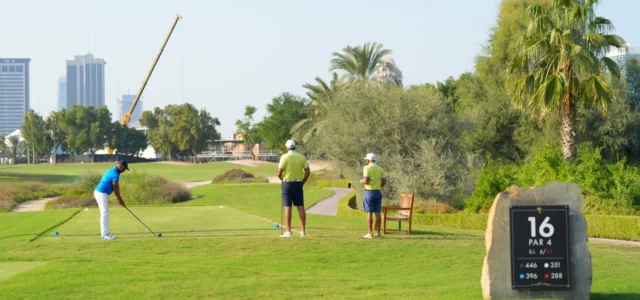
There is a version of golf that only exists between about five o’clock and dark. The course empties, the rate drops, the wind usually lies down, and a nine-hole loop fits between the end of the workday and dinner. It is also a different game from the one you play at nine in the morning. The light changes how you read greens and follow the ball, the dew changes how the ball reacts, the air cools enough to take a few yards off your irons, and the clock becomes the hardest opponent on the card. Here is what actually changes when the light goes, how to time the round so you finish, and how the American calendar, from Arizona to the Northeast, shapes the evening nine in the fall.
Why the evening nine is worth planning for
Most players treat the late tee time as leftover golf: whatever the course has not sold, played in a hurry. That undersells it. Late afternoon is often the quietest window of the day on a public course, because the morning leagues and the tournament groups are gone and the after-work crowd thins out quickly once the days shorten. Many daily-fee and municipal courses price it accordingly, with a twilight rate that starts at a posted afternoon hour and, at some facilities, a cheaper late rate after that.
It is also good golf to learn from. Nine holes with no one pushing from behind lets you play an extra ball on the hole where you keep making the same mistake, or hit three putts from the spot that always fools you. The evening loop is where many golfers build the game they then take to their Saturday round.
The catch is that the conditions that make it pleasant also make it tricky. None of the changes below is dramatic on its own. Together, over the last forty minutes of light, they are enough to turn a good nine into a frustrating one if you do not see them coming.
What low light does to your eyes
The first change arrives well before sunset. When the sun drops low, two things happen to the course in turn.
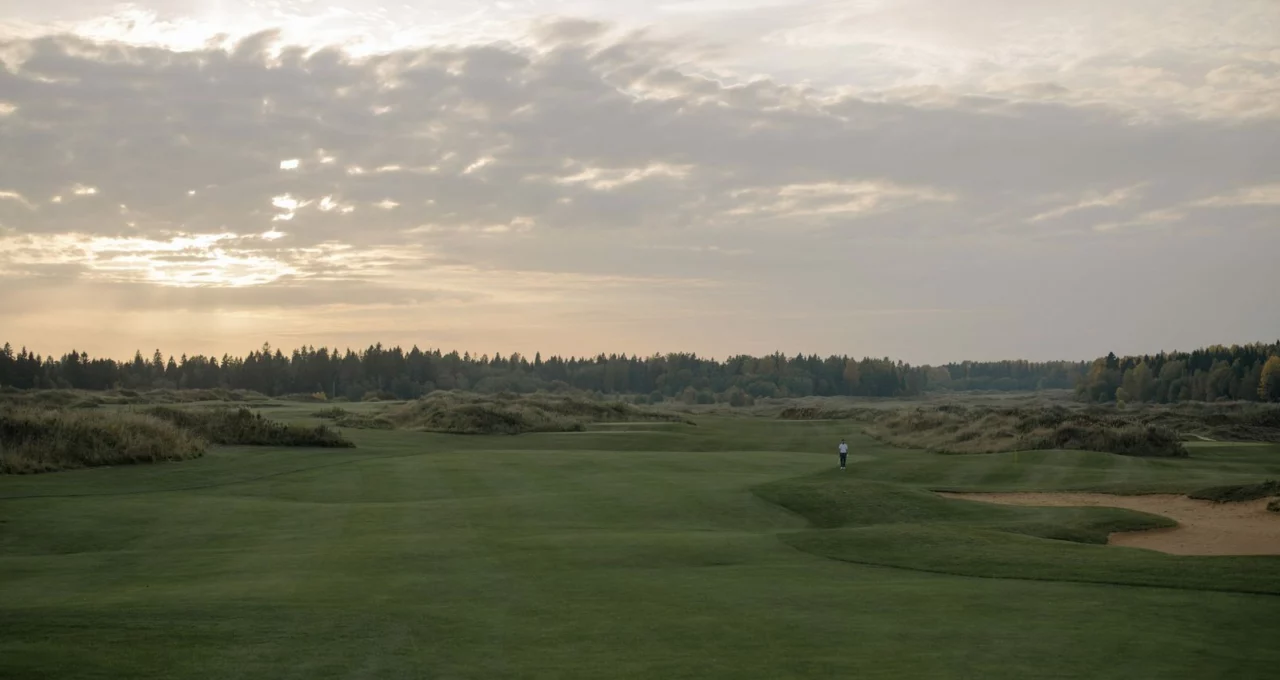
For a while the light gets better for reading greens. A low sun from the side throws long shadows across every ridge and hollow, so slopes that look flat at noon suddenly show themselves. Experienced players love this window: the contours of a green are never easier to see than in the hour before the sun touches the tree line.
Then the sun goes behind the trees or the horizon and the light turns flat. The shadows disappear, the green turns to a single even tone, and the breaks you could see twenty minutes ago vanish. This is the moment to slow down on the greens rather than speed up. Read the putt from below the hole, where your eye catches the tilt more easily, and trust your feet: if you feel the ground sloping as you walk onto the green, the putt will break that way even if you cannot see it.
Low light also costs you depth perception and ball tracking. A white ball against a pale evening sky is easy to follow on the way up and hard to follow on the way down, especially into a sun that is still glaring when you face west. Three habits help:
- Before you hit, pick a landmark beyond the target, a tree, a bunker face, a house, and note where the ball lands against it rather than trying to follow the whole flight.
- Ask your playing partners to watch each other’s shots, every time, from the moment the light starts to go. Four pairs of eyes find balls that one pair loses.
- Switch to a high-visibility ball for the last holes. Yellow and orange balls stand out far better than white once the sky goes gray, and that alone can save you two or three searches.
Sunglasses that helped at four o’clock can work against you at six. Take them off as soon as the sun is behind the trees.
Dew, cool air and how the ball behaves
The second set of changes comes from the ground and the air. On a clear, calm fall evening the grass cools quickly once the sun is low, and dew starts to form, often before sunset in hollows and on shaded greens.
Dew does three things you will notice. Wet greens are slower, so putts that were rolling out at four o’clock come up short at six. Water between the clubface and the ball reduces spin, so a wedge from wet grass may come out lower and release more than you expect, the same way a flier comes out of the rough. And a ball that lands on wet fairway or fringe stops quicker and picks up moisture, which can make the next shot a little less predictable.
Dew has one benefit: it shows you the line. The trail a ball leaves on a wet green tells you exactly how a putt broke, so watch your partners’ putts and the tracks they leave. You may not test the surface of the green by rolling a ball or rubbing it, but you are free to learn from what other players’ putts have already shown.
The air matters too. Temperatures can drop quickly after sunset in the fall, particularly in dry climates and in valleys. Cooler, denser air costs a little carry, and a cold ball is a little less lively than a warm one. The effect is small, usually a few yards on a mid-iron, but it adds up with a softer, wetter landing. When the air turns cold late in the round, consider taking one more club into greens than you did on the first holes.
Timing the round so you actually finish
The most common evening mistake is not a bad swing. It is teeing off too late and spending the last two holes guessing where the ball went. Work backward from sunset, not forward from when you arrive.
A reasonable rule of thumb: a nine-hole round on an open course takes somewhere between an hour and a half and two hours, more if the course is busy or you are walking a long layout. After sunset you get a short bonus. Civil twilight, the period until the sun is six degrees below the horizon, lasts roughly 25 to 35 minutes at U.S. latitudes in October, and the fairway is usually playable for much of it. The greens are not: reading putts becomes guesswork long before you stop seeing the flag. So give yourself two hours of real daylight for nine holes, and treat twilight as your margin, not your plan.
Look up the sunset time for the day you are playing rather than relying on memory. In mid-October the sun sets around 6:20 p.m. in New York, around 6:15 p.m. in Chicago, around 7:00 p.m. in Dallas, around 6:30 p.m. in Seattle and just before 6:00 p.m. in Phoenix. Those times move by roughly a minute and a half earlier every day through the fall, and then the clock change takes an hour off the evening all at once.
Once you are on the course, a few habits keep the round moving:
- Play ready golf from the first tee: whoever is ready hits, and nobody waits for honors.
- Hit a provisional ball whenever a shot might be lost outside a penalty area. Walking back to the tee in fading light costs more than one extra swing.
- Agree as a group on when to stop searching. The Rules allow three minutes; in the evening, two is a sensible limit among friends.
- If the group ahead is slow and the light is going, ask to play through, or skip a hole and come back to it only if there is time. In a casual round, finishing in light matters more than playing in order, but start every hole if you want the nine to count for handicap.
Safety on an emptying course
An evening course is a quiet place, and quiet brings its own risks. Maintenance work often resumes late in the day: mowers clearing the last fairways, utility vehicles moving between holes, and on many courses the irrigation system coming on in the evening or overnight. Look for sprinkler heads that are already spraying, and do not assume an empty fairway means no one is on it.
Wildlife is more active around dusk across much of the country. Deer cross fairways at the edge of the woods, coyotes are common on suburban courses, and in the Southeast alligators near water hazards are worth respecting at any hour. Leave animals alone, keep your distance from water edges when retrieving balls, and if something is between you and the green, wait.
Carts are another consideration. Most courses set a time by which carts must be back at the barn, and few carts have lights worth the name. Ask at the counter when the carts are due back and plan the round around it. If you walk, wear something light-colored for the last holes so that maintenance drivers can see you.
Scoring and handicap: what counts
A nine-hole round is a real round for handicap purposes. Under the World Handicap System, administered in the U.S. by the USGA through local golf associations, you can post a nine-hole score. Since the 2024 revision, a nine-hole score is combined with an expected score for the other nine holes to produce an 18-hole score differential, so you no longer have to wait for a second nine before it counts.
The catch for the evening golfer is the last hole. Since 2024, a nine-hole score can only be posted if all nine holes were played. If darkness stops you halfway through the ninth, you record your most likely score for that hole and the round still counts. If you walk off after eight holes without starting the ninth, it does not. The partial-round rule that fills unplayed holes with an expected score applies to 18-hole rounds stopped after at least ten holes, not to a short nine. So if the light is going, start the last hole rather than skipping it, even if you have to finish it in a hurry.
Club competitions are different. In a stroke-play event, only the committee can suspend play for darkness, and players should not decide on their own to stop. If you play evening leagues, read the league rules on what happens to an unfinished round before the fall schedule starts.
Where the evening nine fits the U.S. calendar
The United States covers enough latitude and enough climate that the evening nine looks very different from one region to another, and the fall is when the differences show most.
The Northeast and the Midwest. October is the last good month for after-work golf. The light is beautiful, the courses are quiet once the school year is under way, and dew arrives early on clear nights. The deadline is the clock change: daylight saving time ends on Sunday, November 1, 2026. The week after, sunset in New York falls around 4:50 p.m. and in Chicago around 4:45 p.m., which ends the after-work round for most people until March. If you want a few more evening nines this year, play them before November.
The Pacific Northwest. Seattle sets later than the Northeast in mid-October, around 6:30 p.m., but loses its light quickly once the clocks change, to roughly 4:50 p.m. in early November. Wet evenings mean heavy dew and slow greens most of the fall, so the advice on taking more club and hitting putts firmer applies almost every time.
Arizona. Most of Arizona does not observe daylight saving time, so there is no sudden change on November 1: sunset in Phoenix moves gently from just before 6:00 p.m. in mid-October to around 5:35 p.m. in early November. In the desert, the evening nine is the comfortable option for much of the year, but temperatures fall fast after sunset in dry air, and the drop can surprise you on the last holes. Bring a layer even after a warm afternoon. Many desert courses also begin overseeding in the fall, temporarily closing or restricting some courses, so check the schedule before you plan a twilight round.
The South and Texas. Dallas and Atlanta keep light until around 7:00 p.m. in mid-October and around 5:40 p.m. after the change, which gives Sun Belt golfers a longer evening season. Bermuda grass begins to slow and go dormant as nights cool, which firms up fairways during the day and makes evening dew more noticeable on the greens.
Rates. Twilight pricing is common at public courses across the country, and the start time is usually tied to the season rather than fixed all year: it moves earlier as sunset moves earlier. Check the course’s rate sheet for the current month, ask whether the twilight rate includes a cart, and ask what time the last nine-hole tee time is sold. Some courses also sell the back nine only at twilight, starting on the 10th tee; make sure the nine you are given finishes near the parking lot.
The short version for your next evening round
- Look up today’s sunset and tee off at least two hours before it for nine holes. Twilight is your margin, not your plan.
- Read greens while the low sun shows the slopes, then slow down once the light turns flat and trust your feet.
- Expect slower, wetter greens and lower-spinning wedges as dew forms, and take one more club into greens when the air turns cold.
- Carry a high-visibility ball for the last holes, use landmarks to track shots and hit provisional balls freely.
- Ask when carts are due back, watch for irrigation, mowers and wildlife, and wear something light-colored if you walk.
- Post the score: a nine counts if all nine holes were started, and a hole stopped by darkness is recorded with your most likely score.
The evening nine rewards a little planning more than any other round you play. Arrive with a sunset time, a bright ball and a plan to keep moving, and the hour before dark becomes the best value on the course.