A Queensland golf road trip: Gold Coast to Noosa
South-east Queensland is the easiest golf road trip in the country: tight clusters, courses built for visitors, and a peak season that runs through the southern winter.

In brief
- Best from roughly May to September, when humidity drops.
- Three bases, one round a day, no drive longer than an hour.
- Couch fairways run: plan for roll and read the grain on the greens.
- Value windows are May, late September and October.
- December to March is the wet, and courses close for days at a time.
The stretch of coast from the Gold Coast to Noosa is the easiest golf road trip in Australia: warm all winter, courses every twenty minutes, and a drive that never exceeds two hours between stops. Here is how to structure it so the golf and the coast both get their share.
Why this is the easiest trip in Australia
Three reasons. The clusters are tight, so no day involves more than an hour of driving. The courses are built for visitors rather than members, so booking is straightforward and nobody asks who introduced you. And the peak season is winter, which means the trip is at its best exactly when the southern states are at their worst.
Why the winter months are the good ones
South-east Queensland golf is at its best from roughly May to September, when the humidity drops, the temperature sits in the twenties and the courses are in condition. That is exactly when the southern states are unplayable, which is why the region fills with Victorians and Tasmanians every winter.
Book earlier than you would expect for those months. The good morning tee times on the Gold Coast in July are not available in June.
The shape of the week
The mistake on a Queensland trip is a round a day for seven days plus the driving. One round a day for five, with a rest day or a beach afternoon in the middle, produces better golf and a better week, and the fixed costs of getting there are the same either way.
Three bases rather than six is the other half. Unpacking once in each cluster and driving twenty minutes to each course beats a new hotel every night, and it means a wet morning can be swapped for a dry afternoon without rearranging everything.
Days one and two: the Gold Coast
The highest concentration of resort golf in the country, with courses built for visitors rather than members: online bookings, buggies included, and packages that combine accommodation and rounds.
Base yourself once and play two different courses rather than moving hotels. The driving between Gold Coast courses is short, and the time saved is better spent on a practice ground.
Day three: Brisbane and the hinterland
An hour north, the golf changes character: parkland courses, older layouts, and public courses that are cheaper and quieter than the Gold Coast resorts. This is the day to play somewhere unranked, which is usually the round people remember.
Days four and five: Sunshine Coast and Noosa
North again, and the coast opens up. The Sunshine Coast has resort courses and public layouts within a short drive of each other, and Noosa itself works as a base for two nights with the golf spread around it.
This is the part of the trip to slow down: one round a day, an afternoon at the beach, and dinner somewhere that is not the clubhouse.
Where the courses actually are
The trip works because the clusters are tight. The Gold Coast puts the highest concentration of resort golf in the country inside twenty minutes end to end, most of it built for visitors, with online bookings and packages that bundle rooms and rounds.
The Brisbane ring and the hinterland behind it are the quieter middle of the trip: public and semi-private courses that take bookings from anyone, at rates well below the coastal resorts, and a landscape that changes as soon as you leave the motorway.
The Sunshine Coast and Noosa are the northern end, with fewer courses, better settings and a pace that suits the last two days of a week. Base yourself once in each cluster rather than moving every night; the time saved goes into the practice ground or the pool.
Further north again, Port Douglas and Cairns extend the same idea into the tropics, with a dry season that is genuinely reliable from June to September and a wet that closes courses for days at a time between December and March.
What it costs and when to book
Winter is the peak, which is the opposite of the southern states, and prices follow. The value windows are May, and again in late September and October: the same courses in comparable condition, at a fraction of the July rate, with tee times available at short notice.
Book flights first, then tee times, then accommodation. Doing it the other way round is how people end up with a good room and a seven o’clock start an hour away. Packages that bundle rooms and rounds are usually better value than paying course by course on the Gold Coast, and worth comparing rather than assuming either way.
Ask about buggy policy while you book. Several courses make them compulsory in the heat, which changes the budget and never appears in the headline price.
How Queensland courses play
Three differences from southern golf. The grass is different: couch and similar warm-season grasses give tighter lies and more release, so the running chip works and the high flop does not. Water is in play far more often, and it is not decorative. And the wind is a sea breeze that gets up in the afternoon, which is another reason to tee off early.
Take one more club into the breeze and land approaches short of the flag. The ball will run.
How couch fairways change the golf
Queensland courses run on warm-season grass, and it plays differently from the bent and poa of the southern states. The ball sits up on couch more than it does on cool-season turf, which makes chipping easier and full shots slightly different.
Around the greens, the grain runs: a chip played against it grabs, one played with it releases. On the greens themselves grain affects speed noticeably, with putts running with the grain quicker and the surface looking silvery in that direction. Read the shine as well as the slope.
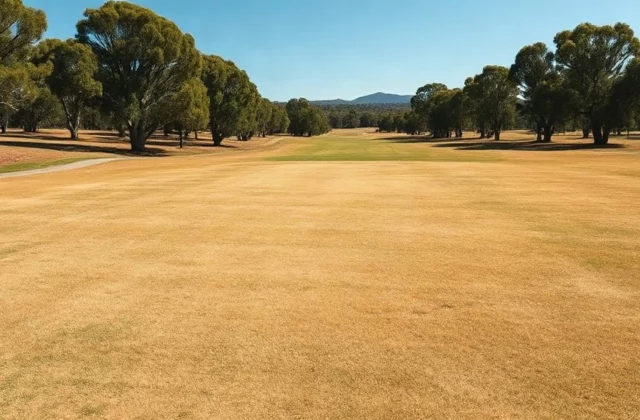
And fairways that look burnt in the dry are firm rather than dead. Plan for run off the tee, land approaches short of the flag, and take one less club than the number suggests when the ground is baked.
What to take
- Two litres of water minimum, even in winter; the humidity does the work the temperature does not.
- A brimmed hat, sunglasses and high-SPF sunscreen reapplied at the turn.
- A spare glove, because sweat destroys grip as effectively as rain.
- Your Golf ID, because several resort courses ask visitors for a handicap.
Playing well as a visitor
Resort courses take visitors as a matter of course, and the only thing that gets noticed is pace. Keep in touch with the group ahead, let a faster group through if a hole opens, and leave the buggy on the side of the green nearest the next tee.
Repair your pitch mark and one more. On couch greens in the dry, an unrepaired mark takes weeks to heal, and the courses you are visiting are carrying far more traffic in winter than at any other time of year.
The heat, even in winter
Queensland winter is mild rather than cool: 22 to 26 degrees in the middle of the day is normal, and the sun is stronger than the temperature suggests. Hat, sunscreen at the turn, and at least a litre and a half of water per round.
In summer, the calculation changes completely: play at dawn or not at all, and expect afternoon storms.
Where to book and what to ask
Book directly with the clubs where you can: their own pages carry the visitor conditions and the seasonal rates, and the pro shop knows what the website does not. Four questions cover it: the aeration dates, whether buggies are compulsory, whether there is a handicap requirement, and whether a club competition blocks the course on your day.
Golf Australia and Golf Queensland list affiliated clubs and their conditions, including the public courses that never appear in resort brochures. If you need a handicap to get on, a social or virtual club affiliated with Golf Australia issues the same GA Handicap a member holds.
And if the resort courses are full or beyond the budget, the public and council courses of the same corridors are considerably cheaper, take bookings from anyone, and sit on the same couch fairways. A week built on those with one resort round is a better week than four days spent chasing availability.
Doing it without hiring a car
The Gold Coast and Sunshine Coast clusters both work with a single base and short taxi rides, and several resort courses run their own shuttles for guests. It is worth asking, because it removes the one part of a Queensland trip that nobody enjoys.
If the trip stretches to Brisbane and the hinterland, a car becomes necessary. Book it with the flights rather than on arrival, because winter is peak season for everything in south-east Queensland, not just golf.
If you only have three days
Take the Gold Coast alone. Two courses, one base, no driving beyond twenty minutes, and the afternoons free. It is the version of this trip that people repeat every year.
Practical planning
- Fly into the Gold Coast and out of the Sunshine Coast if the fares allow, so the drive is one-way rather than a loop.
- Book resort rounds as packages where they exist; the combined rate is usually better than paying separately, and the tee time is secured.
- Keep one morning free for weather or fatigue. Five straight rounds sounds better on paper than it plays on the fourth day.
Green fees vary sharply between resort and public courses and between seasons. Confirm rates and cart policies when you book.
Where this shows up on a course
Three courses from our directory worth the detour.
- Lake Karrinyup Country Club: Alex Russell around a wetland lake north of Perth, rated the best course in the state: real elevation change, kangaroos on the fairways, and no way on without a member.
- Royal Adelaide Golf Club: An open links on real dune land with a railway running through it, and the crater hole at the eleventh: MacKenzie’s advice, Clayton’s trees, and a finish reviewers call weak.
- Bankstown Golf Club: Established in 1928 in south-western Sydney: 6,068 metres of parkland with holes along the Georges River, a Group One rating and a course record of 66.
We have not played these courses; each page says what it is based on.