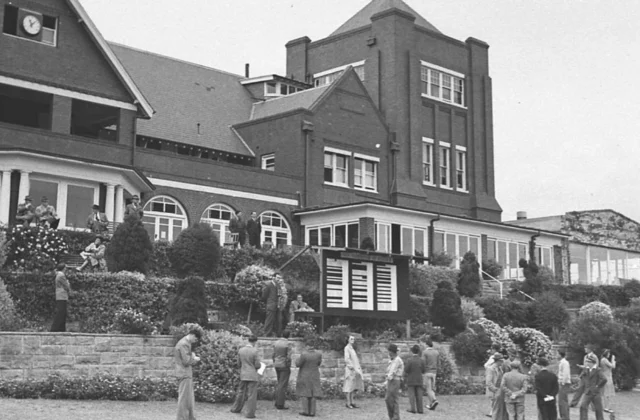
Chipping on firm Australian surrounds: bump, pitch or lob
Around a firm Australian green the safest chip is usually the lowest one. Check the lie and the length of green in front of you, default to a bump and run with a mid-iron, and save the high soft shot for when there is no other way.
In brief
- Two checks before any chip: what is under the ball, and how much green you have to work with.
- Kingston Heath and NSW Golf Club pair bentgrass greens with couch fairways; dormant winter couch leaves tight lies.
- The bump and run with a 7 to 9-iron forgives a heavy strike that would ruin a lob.
- Choose a dinner-plate landing spot and look at it, not at the flag.
- Moore Park Golf in Sydney charges A$11 for its chipping and putting greens if you are not playing a round.
Miss a green at a Sandbelt course in February and you rarely find the ball sitting up in lush rough. More often it is on a tight, sandy collar a few paces from the putting surface, with a firm bentgrass green running away from you. Reach for the lob wedge there and the ball either skulls across the green or stays where it was. That lie is the case for owning just three chip shots and knowing exactly when to play each one.
This is not a technique overhaul. It is a system for choosing, built on the ground under your ball and the green in front of it, with a club selection that usually ends up lower in loft than your instinct suggests.
Read the ground before you touch a club
Every chip starts with two checks, done in this order.
- The lie. Is there grass under the ball, or is it sitting on bare, firm ground? A ball perched on a cushion lets the club slide under it. A ball on a hard, closely mown or worn surface does not.
- The runway. How much putting surface lies between the edge of the green and the flag? Plenty of green means the ball can spend most of its journey rolling. Very little, or a bunker in the way, means it has to fly and stop.
Answer both before you walk to the bag. Golfers who pull a wedge first and then look at the shot are matching the shot to the club instead of the club to the shot.
Why Australian surrounds push you toward less loft
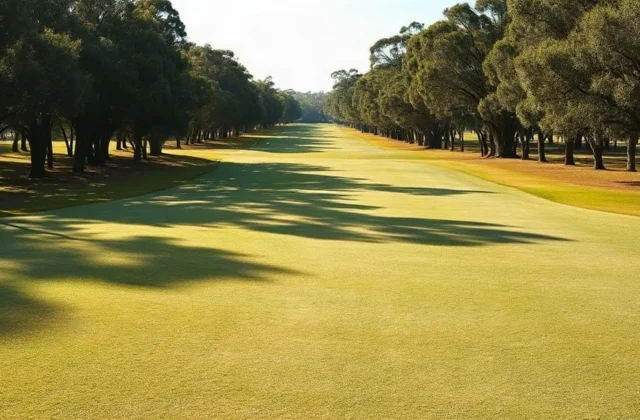
Grass type matters as much as technique here, and it varies around the country. At Kingston Heath and at New South Wales Golf Club, two of the most admired courses in Australia, the greens are bentgrass and the fairways are couch. Couch is a warm-season grass: it grows once temperatures sit above about 15 degrees and turns dormant and light brown in winter.
That gives many southern courses two chipping seasons. In summer, the couch is actively growing but the sandy ground under it is dry and fast, so balls land and release. In winter, dormant couch around the greens can leave a thin, tight lie with very little grass between the ball and the soil. Both conditions punish the high, open-faced shot and reward a ball that gets onto the green early and rolls.
If you are not sure what grass your course uses on its greens and surrounds, ask in the pro shop. It changes how the ball comes off the face and how much it releases, and it is the kind of local knowledge a visitor never has.
Shot one: the bump and run
This is the default, the shot for most chips you will face, and the one club golfers play least.
- Club: 7-iron, 8-iron or 9-iron, depending on how much green you have to cover.
- Set-up: narrow stance, ball back of centre, most of your weight on the lead foot, hands a touch ahead of the ball.
- Motion: rock the shoulders like a long putt. Wrists quiet, no hit.
- Target: land it just onto the putting surface, a metre or so past the fringe, and let it run.
It suits firm Australian conditions because it keeps the leading edge out of the ground. A slightly heavy strike with an 8-iron still sends the ball most of the way. The same mistake with a 60-degree wedge on a tight lie moves the ball a metre.
Learn your ratio with each club on the practice green: how far the ball carries versus how far it rolls. Write the numbers on a card and keep it in the bag until you do not need it.
Shot two: the stock pitch-chip
When the ball is further off the green, or there is a strip of rough to carry, move up to a pitching wedge or a 50 to 52-degree gap wedge.
Put the ball in the middle of the stance, keep the weight slightly forward, and let the arms and chest swing together. Plan for roughly equal parts carry and roll, then adjust for slope and green speed. On firm summer greens the roll will be longer than you expect; on a soft winter green, shorter.
The fault that ruins this shot is slowing down. A long backswing followed by a nervous, decelerating hit gives you the classic pair of misses: one fat, one thin. Make the backswing only as long as the shot needs, then keep the club moving through to a finish of the same length.
Shot three: the high soft one, rationed
Sometimes there is no runway at all. You are short-sided, the flag is just over a bunker, and the green slopes away. Only now does the 56 or 60-degree wedge earn its turn.
Open the face first, then take your grip. Widen the stance slightly, play the ball a little forward, and swing along your body line while keeping the face pointing at the sky through impact. The ball should rise quickly and land softly.
Ration it strictly. The shot needs grass under the ball. From a bare, firm or dormant lie it is a gamble with poor odds, and a bump and run that finishes four metres past the hole, even if it means a longer putt, is almost always the better percentage play. Hit it only if you have rehearsed it on a practice green that week.
Pick a spot, not a hole
Whatever the shot, choose a landing spot about the size of a dinner plate and look at it, not at the flag, during your rehearsal swing. Judging a carry of five metres is much easier than judging a whole chip of twenty-five metres with an unknown amount of release.
If the bounce of the club seems to dig on soft ground or bounce off hard ground, the wedge itself may be part of the problem. Wedges come with different bounce and grind options, and firm, sandy surrounds usually suit a different sole than soft, wet ones. That is a question for a fitter, not for a practice session.
Where to practise it in Australia
Your own club’s practice green. If your club has a chipping green, it is the only place where the grass under your ball matches what you will face on the course. Check the signs first: some practice greens are for putting only.
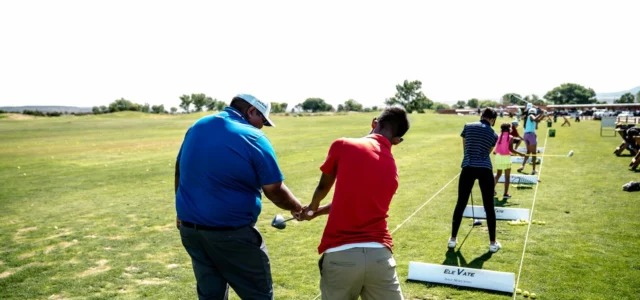
Moore Park Golf, Sydney. The public course near the CBD has dedicated chipping and putting greens beside its golf shop. They are free for Moore Park members and for anyone playing a round, and cost A$11 for a practice-only session. The Sydney Golf Academy based there lists 30-minute private lessons with PGA-accredited professionals at A$88, which is a sensible way to spend half an hour if the high shot is the one that scares you.
Your wedges. Some specialist golf stores offer a free club fitting, with about an hour to allow, and others run custom fitting appointments and sell custom-built wedges. Either is a place to ask whether the bounce on your sand and lob wedges suits the ground you play on.
At home. A backyard lawn is fine for the bump and run with an 8-iron, which is the shot that needs the most repetition. Ten minutes a few evenings a week beats one long session a month. If you are deciding whether a club or a pay-and-play course suits your practice habits better, access to a chipping green is worth putting on the list, and worth asking about when you book as a visitor.
Panxis Golf has no commercial relationship with any course, academy or retailer mentioned here.
A week of short-game homework
- From one spot off the practice green, chip with a 7-iron, a 9-iron and a pitching wedge to the same flag. Note how far each rolls.
- Play twenty bump and runs before you hit a single lob.
- In your next round, say the lie and the runway out loud before every chip.
- Hit the high soft shot only from a lie with grass under the ball, and count how often you actually needed it.
On firm Australian surrounds the lowest-lofted club that gets the ball onto the green is usually the right one. Trust that for a month and your up-and-down count will rise before anything in your swing changes.
How this page was put together
The club-fitting offers mentioned above (a free session of about an hour, and custom fitting appointments) come from Drummond Golf and House of Golf in Australia. Panxis has no commercial link with either store.