Chipping basics: three shots that cover every lie
You need three shots around a green, not twelve, and the one to default to is the low runner with an 8-iron. Almost every amateur uses too much loft, because a rolling ball looks like a mistake and scores like a par.
In brief
- Two questions decide the club: how much green, and what is the ball sitting on.
- The low runner has the smallest margin of error, because the club never works under the ball.
- Aim at a dinner-plate landing spot, not at the hole.
- Deceleration causes the fat-thin pair. Pick a spot and accelerate to it.
- Bermuda grass grabs the club: the low runner is the safe play in the South.
Most amateurs own a dozen ways to chip and trust none of them. You need three: a low runner, a standard pitch, and a soft high shot for when there is no green to work with. Learn to pick between them by reading the ground rather than by reaching for the wedge with the biggest number on it.
The single decision that separates good chippers from the rest is loft, and almost every amateur uses too much of it. The reason is that a high, soft chip looks like what golf is supposed to look like, and a ball trundling along the ground looks like a mistake. On a scorecard the trundling ball wins comfortably.
Pick the shot from the lie and the room you have
Before you choose a club, answer two questions. How much green is there between you and the hole, and what is the ball sitting on?
Plenty of green and a clean lie means the ball should spend most of its trip rolling. Almost no green, or a bunker in the way, means it has to fly. A ball sitting down in thick rough limits what you can do regardless of how much green there is.
Everything else, including which wedge is in your hand, follows from those two answers. Make the answers explicit for a month, out loud if it helps, and the club selection stops being a guess.
The low runner, for two thirds of your chips
This is the shot to default to, and most amateurs almost never play it.
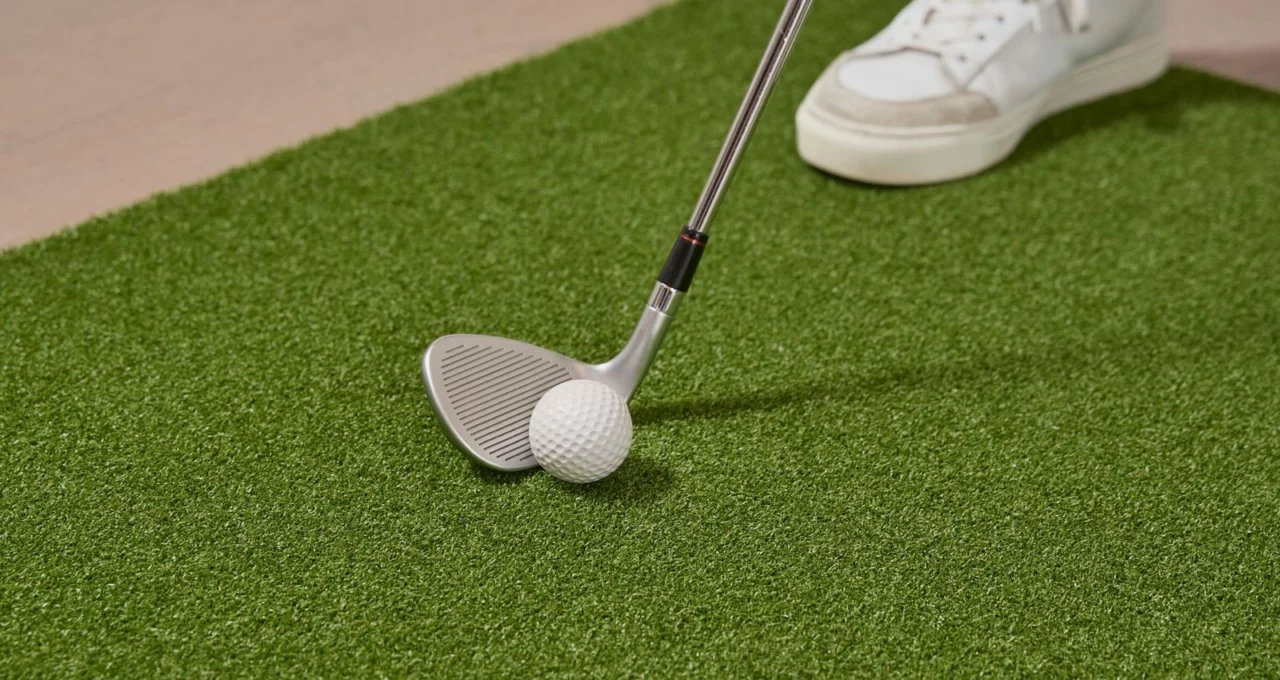
Take an 8-iron or 9-iron, play the ball back of center, put about 60 percent of your weight on the lead foot and keep it there, and make a putting-length stroke with the hands slightly ahead of the ball. The ball comes out low, lands a yard or two onto the green and releases to the hole.
It has the smallest margin of error of any shot around a green, because the club never has to work underneath the ball. A strike half an inch heavy still moves the ball roughly the right distance, where the same strike with a lob wedge leaves it at your feet.
Professionals use it far more than television shows, because television shows the spectacular ones. The reasoning is simple: rolling is easier to judge than flying, and a ball on the ground is subject to fewer variables.
The standard pitch, for a normal twenty yards
Same setup, more loft. A pitching wedge or a 52-degree, ball in the middle of the stance, a longer swing with the arms and the body turning together rather than the hands flicking.
The ball carries roughly half the distance and rolls the rest, which is a useful rule of thumb to plan with. This covers the shot you face after missing a green by a normal amount, which is most of the time.
The mistake here is deceleration. Golfers take too long a backswing, sense it is too much, and slow down through the ball, which produces the fat-thin pair. Pick a landing spot, make a swing long enough to reach it, and accelerate through. Let the loft do the work rather than scooping at impact.
The soft high shot, for when you have nothing to work with
Short-sided, over a bunker, downhill green, pin cut three paces on: now you genuinely need height.
Open the face of a 56 or 60-degree wedge before taking your grip, widen the stance a touch, put the ball forward of center, and swing along your body line with the face staying open through impact. The ball climbs, lands soft and does not run far.
Practice this one before you use it. It is the least forgiving shot in the bag, it requires a decent lie with grass under the ball, and it is the shot most often attempted with no rehearsal at all. From a tight lie with no cushion, the low runner is almost always the better choice even when it leaves a longer putt.
The landing-spot habit
Amateurs aim at the hole. Better players aim at a spot on the green and let the ball do the rest.
Pick an area the size of a dinner plate where you want the first bounce, look at it during your practice swing, then hit it. Distance control improves without any technical change at all, because you have given your brain a target it can actually judge: a spot ten yards away is a far easier judgment than a hole thirty yards away with twenty yards of roll in between.
Say it out loud for one round. It feels ridiculous and it works.
Bounce, and why your wedge digs
The rounded sole of a wedge is designed to skid rather than dig, and presenting the club with the shaft leaning far forward removes that protection and puts the leading edge into the turf.
On chips, let the shaft stay closer to vertical than feels natural, particularly from soft turf. If your wedge digs no matter what you do, the bounce on the club may simply be wrong for the ground you play: low bounce for firm, sandy conditions and tight lies, higher bounce for soft turf and a steeper strike. A fitter can tell you in five minutes from your divots.
The American ground problem
Grass type changes this more than technique does, and the country has two very different ones.
Around cool-season greens in the North, the ball tends to sit up on bentgrass or ryegrass collars, and a lofted chip is a reasonable proposition from a decent lie.
Around Bermuda greens in the South, the grass is dense and grabby: it holds the clubhead and closes the face, which turns a lofted flop into a genuine risk. Into the grain the club will be grabbed and the shot comes up short; down grain the club slides and the ball runs. The low runner is the safer play by a wide margin on Bermuda, and southern golfers who watch northern television golf tend to learn this the hard way.
Where to practice it in the U.S.
The short-game area at your own course is the answer and it is usually free with a green fee, but it is not universal: many public facilities have a putting green with no chipping allowed, and the sign is often the only warning. Ask at the counter before buying a bucket, because a facility with a proper short-game complex is worth driving past two that do not have one.
Municipal and county facilities with a full practice complex are the best value in American golf for this, and practice fees are usually a few dollars. If your club has one, use it in the first hour after the crew has cut, when the surface is what you will face on the course.
A patch of lawn works for the low runner, which is the shot you should be hitting most anyway, and ten minutes of chipping at home three times a week will move your up-and-down rate faster than a range membership.
For the equipment side, any club fitter can check the bounce and grind on your wedges, and a PGA professional’s short-game lesson is the highest-value hour of instruction most amateurs never book. Panxis Golf has no commercial relationship with any facility, retailer or coach mentioned here.
What to work on this week
- Take three balls to the practice green and play each with a different club from the same spot. Watch how the roll changes.
- Hit twenty low runners with an 8-iron before you touch a lob wedge.
- Name your landing spot out loud before every chip for one full round.
- Ask the two questions, lie and room, before you pull a club.
Two of the three shots above require no new technique, only the decision to use less loft than instinct suggests. Make that decision for a month and your up-and-down rate will move before your swing does.