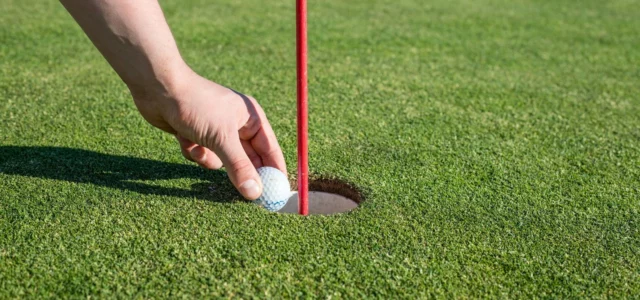
Muni range at first light: 20 minutes of practice before work
Twenty minutes is not a compromise. Short, spread out sessions are how motor skills stick, and forty balls with a plan beat two hundred without one. Four minutes to wake the body up, eight on one change, six playing imaginary holes, two on the tee shot that costs you most.
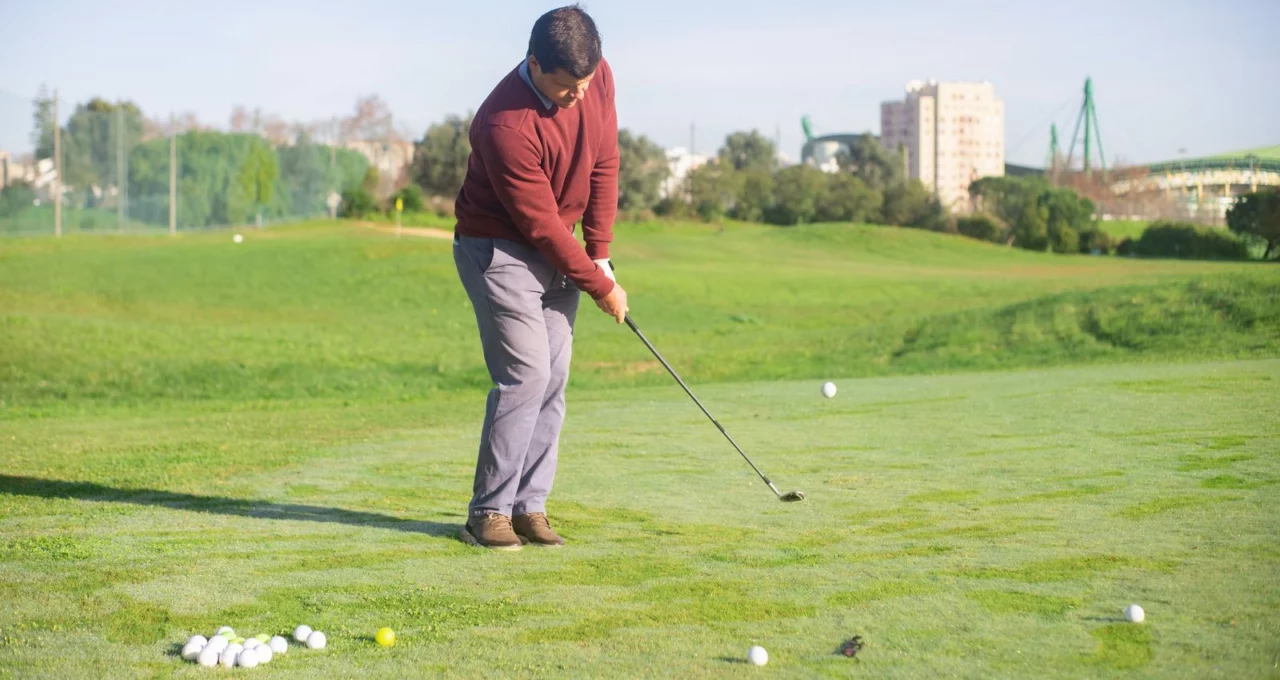
In brief
- Forty balls, which is the smallest bucket on the board. Three mornings spread over the week beat one long Sunday session.
- Minutes 0 to 4: two minutes of movement without a ball, then eight half wedges with the feet together. The driver stays in the bag.
- Minutes 4 to 12: one change, one club, one five word thought, fifteen balls at a real target. Minutes 12 to 18: change club and target on every ball.
- Finish with your hardest tee shot, played once with a full routine. Daylight saving time ends November 1, 2026: a lit range keeps the habit alive after that.
Twenty minutes on a range before work sounds like a compromise, the session you settle for because the real one does not fit. It is closer to the opposite. Short, frequent practice is how motor skills are actually learned, and a golfer who hits forty balls with a plan three mornings a week will usually improve faster than one who hits two hundred on a Sunday.
The catch is that twenty minutes leaves no room for the things most golfers do on a range: the driver first, the long search for a feeling, the phone propped on the bag. What fits in the time is a short list, in a fixed order, and it is the same list every time.
Why twenty minutes is enough
Motor learning research has said the same thing for decades. Practice spread over several sessions holds better than the same amount crammed into one, because the brain consolidates a movement between sessions rather than during them. The Monday session is not wasted when Wednesday feels no better. The gain shows up on Friday.
The second argument is fatigue. On a long session the last fifty balls are hit with a tired body and a drifting pattern, and they are the most recent thing your body rehearsed. A twenty minute session ends while the strike is still good, which is the version of the swing you want to keep.
The third is honesty. A clock forces a choice. With an hour, a golfer can work on everything and therefore on nothing. With twenty minutes, you work on one thing, and you know on the way to the car whether it happened.
Forty balls is the right number, which in practice means the smallest bucket on the board. More than that and you are rushing; fewer and there is not enough to fill the last block. Count them into three piles when you arrive, if it helps you respect the plan.
Minutes 0 to 4: wake the body up, then half swings
Morning is the worst time of day to make a fast, rotational movement cold. The discs in your spine take on fluid overnight and are at their stiffest in the first hour or two after you get up, which is why back specialists warn against loading a twisting spine straight out of bed. You will not have time for a proper warm-up, so do the short version and do not skip it.
Two minutes, no ball: ten slow trunk rotations with a club across your shoulders, ten hip hinges with the club along your spine, and ten swings with two short irons held together, getting a little longer each time. Then eight balls with a wedge, feet close together, swinging to hip height and no further. The narrow stance forces balance and a centered strike, and by the eighth ball you should have heard something solid.
Leave the driver in the bag. You are not hitting it today.
Minutes 4 to 12: one change, one club, fifteen balls
This is the part of the session that builds something, and it only works if you arrive knowing what it is. Decide in the car, not on the mat. The best source is your last round: the shot that cost you the most strokes, not the one that annoyed you most. For most golfers who shoot in the 90s that is contact with the irons or the club face at impact, not the driver.
Pick one club, a 7 or 8 iron, and one swing thought short enough to say in five words. Put an alignment stick or a spare club on the ground along your feet, pick a real target, a flag somewhere between 130 and 160 yards rather than the open field, and hit fifteen balls at it. Take your time between them. Fifteen deliberate balls in eight minutes is a comfortable pace; fifteen in three is a machine gun, and it teaches nothing.
If the change is not working after fifteen balls, it is not going to start on ball sixty. Stop, note it, and bring the question to your next lesson or your next session. Forcing it builds a compensation.
Minutes 12 to 18: play golf, not swings
Everything in the first two blocks is what coaches call block practice: the same shot, over and over. It feels productive, and it is how a change gets built. It is also a poor predictor of what happens on a course, where you never hit the same club twice in a row.
The classic study here is by Shea and Morgan, published in 1979: people who practiced a task in a mixed, random order performed worse during practice than those who repeated one version, and clearly better when they were tested later. Golf coaches have built on that ever since. The lesson for a short session is to finish random.
So play four holes on the range with the next twelve balls, three shots each: a hybrid or fairway wood off the “tee” at a marker, then an iron at a green, then a wedge at the nearest flag inside 80 yards. Change club and target on every single ball, and go through your full pre-shot routine each time, from behind the ball. Score yourself honestly: did the shot finish where a playable next shot would be? Write the score on your phone, not the swing thought.
This block is the one golfers cut when they run late, and it is the one that carries over to Saturday. If the clock is tight, shorten the first block instead.
Minutes 18 to 20: the first tee shot of the day
Keep the last five balls for one rehearsal that matters. Pick your hardest regular tee shot, the one on the hole where your round usually goes wrong, and play it once with the club you really use there. Full routine, one ball, then walk away from the mat for a few seconds before the next. That is exactly how the shot comes on the course: cold, once, with consequences.
If your range has a practice green by the exit, spend the last two minutes on ten putts from three feet instead, all around the hole. Short putts are where a busy golfer’s scores leak, and they need no warm-up.
What to leave out
- The driver. It is the least useful club to practice in a short session and the most tiring. Give it its own session once every two weeks.
- Filming every swing. Film one swing of the change at the start of the week and one at the end. In between, the camera eats the clock.
- Setting yardages. Range balls fly shorter and less consistently than your own ball. Use them for gaps between clubs, never for the number you trust on the course.
- A new tip from this morning’s video. The change you chose in the car is the only one on the mat.
Making it fit a working day
The session fails in the logistics, not on the mat. Put the bag in the car the night before, with the wedge, the 7 iron, a hybrid, an alignment stick and a towel on top. Keep an old pair of sneakers in the trunk: spikes are not needed on a mat, and your office shoes will not thank you for a wet grass tee.
Twenty minutes of half-paced golf will not leave you soaked, but a cold morning will leave you stiff for the office. A light layer you can take off after the first block solves both.
Three mornings a week is the target. Two works. One is maintenance. What matters more than the count is that the sessions are spread out: Monday, Wednesday and Friday beat three mornings in a row.
Where American golfers can practice before work
The practical question is not where the best range is but which one opens early enough and sits between your home and your office. That rules out most entertainment venues, which are built around evenings and open late in the morning, and it points to three kinds of facility.
The first is the public course with a range. At municipal and daily fee courses, the range usually opens around the first tee time, and in summer the first groups go off close to sunrise. Buying a small bucket at the pro shop counter at first light is the cheapest practice in the country, and the grass tee, when there is one, is a better surface than any mat.
The second is the standalone practice center, usually mats only, often near a highway exit and often floodlit. Lights matter more than they seem. Daylight saving time ends on Sunday, November 1, 2026, which gives an hour of morning light back for a few weeks, and then the late fall mornings close in fast across the northern half of the country. A lit range is what keeps a morning routine alive through November.
The third is the indoor simulator studio, which is how golfers in Chicago, Minneapolis or Boston keep the habit through the winter. Some sell memberships with keycard access outside staffed hours; ask before you sign, because early access is exactly what you are paying for. A simulator also changes the last block for the better: you can play three real holes of a real course on screen, with a number for every shot.
If you belong to a private club, check the rules for the practice ground before assuming it is open at dawn: many clubs start the day by picking and mowing the range. And if nothing opens early near you, the second and fourth blocks work in a backyard net and on a carpet, which is where a good number of American golfers do their weekday practice already.
A week of mornings
- Monday: movement, eight half wedges, fifteen balls on the one change, four range holes, one hard tee shot.
- Wednesday: the same, same change, same order.
- Friday: the same again, then one filmed swing of the change to compare with Monday’s.
- Saturday on the course: no swing thoughts at all. Play the targets you rehearsed.
Forty balls, three mornings, one change at a time. For more on building a longer session when you have the hour, see how to make a range session count, and for the ten minutes before a round, the warm-up that saves the first three holes. Panxis Golf has no commercial relationship with any facility mentioned here.