How to make a range session actually count
An hour beating drivers feels like practice and changes nothing. Warm up before you train, work one thought with one club, then finish by playing nine imaginary holes with a full routine.
In brief
- The first fifteen balls are preparation, not practice: wedges with feet together.
- If the swing thought needs more than five words, it is too complex for today.
- Two thirds block practice, one third changing club and target every ball.
- Never set yardages from range balls: use the session for gaps between clubs.
- Mats hide a fat strike. Use grass for iron work whenever you can.
An hour on the range beating drivers feels like practice and changes almost nothing. The golfers who improve on a bucket of balls do three things differently: they warm up before they train, they train one thing at a time, and they finish by rehearsing golf rather than swings.
The underlying problem is that a range is an environment golf never provides. Flat lie, same club, same target, no consequence, and another ball immediately. Everything below is a way of making that environment resemble a golf course for at least part of the session.
Ten minutes of warm-up, then start
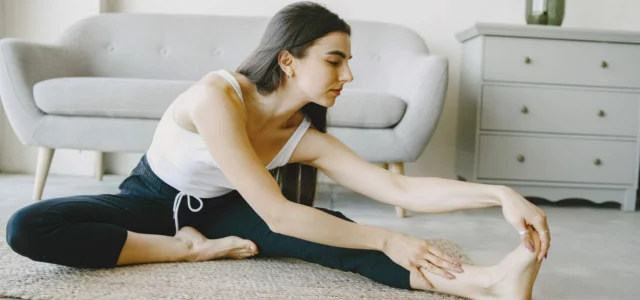
Begin with wedges at half speed and work up. The first fifteen balls are not practice, they are preparation, and hitting them at full effort is where most range injuries and a fair number of bad habits come from.
Feet together with a wedge is the best opening drill in golf: it forces balance, centers the strike and takes about three minutes. By the time you reach a 7-iron the body should be moving freely and you should have hit something solid.
One thought, one club, twenty balls
Pick a single change and give it a block of balls with the same club. Alternating between driver and wedge while thinking about three positions is how a golfer leaves the range having practiced nothing at all.
A useful test: if you cannot say your swing thought in five words, it is too complicated to practice today. Anything longer is a description of a swing rather than an instruction to a body.
Twenty balls is enough for one change in one session. If it is not working after twenty, it is not going to start working after sixty, and the sixty will build a compensation instead.
Give every ball a target and a shot shape
Range mats hide the fact that most golfers aim nowhere in particular. The mat lines you up parallel to a bay, the balls go into an open field, and nothing tells you that you have drifted twenty yards right over the course of a season.
Pick a specific flag or marker, lay a club on the ground to check your alignment for the first few balls, and name the shape you intend before each swing. Hitting a ball without a target is the golf equivalent of typing with your eyes shut.
Block practice builds it, random practice keeps it
Repeating the same shot twenty times, which coaches call block practice, is how a change becomes comfortable. It produces rapid visible improvement inside a session, which is why everybody does it and why everybody stops there.
It is also why the change disappears on the first tee. A golf course never gives you the same shot twice, and a skill rehearsed only in blocks is stored as a repetition rather than as a decision.
Spend the first two thirds of the session on repetition and the last third on random practice, changing club and target on every single ball. It feels worse, the shots are less consistent, and every study of motor learning since the 1970s says it transfers considerably better. Feeling worse in practice is the price of feeling better on the course.
Finish by playing nine holes on the range
Take the scorecard of the course you play most and hit the shots in order. Driver on the first, then the club the drive would have left you, then a wedge to the flag. Go through your full pre-shot routine on every one of them, including standing behind the ball and picking a target.
Twenty-five balls played this way is more useful preparation than a hundred hit at nothing, because it rehearses the two things that actually happen on a golf course: choosing, and committing.
What to measure while you are there
Range balls fly meaningfully shorter than premium balls, typically five to ten percent, and they are also inconsistent between themselves. Do not use a range session with range balls to set your yardages.
Use it to compare clubs against each other instead. The gap between your 8-iron and your 9-iron is real information even when the absolute number is not, and gapping is what most amateurs actually need to know.
If the range has a launch monitor bay, one session recording carry distances with your own ball is worth a season of guessing on the course.
Grass or mat, and why it matters
A mat forgives a strike that is an inch behind the ball, because the club skids into it. Grass does not. A golfer who practices exclusively on mats can develop a strike pattern that works perfectly on the range and produces heavy shots on a course, without any way of knowing.
If you have access to a grass tee, use it for iron work even if it costs more. If you only have mats, pay attention to where the club is contacting the mat rather than to where the ball goes, and be aware that a slightly fat strike is invisible.
Mats also punish the hands and wrists over time, particularly in cold weather. That is a reason to take fewer balls rather than more.
Where to practice in the U.S.
Standalone driving ranges and practice centers exist in most metropolitan areas and are the cheapest place to hit balls, though many are mats-only. Municipal facilities with a grass tee are worth seeking out and are usually the best value in a city.
Entertainment venues will sell you a bay by the hour, which is fine for the block practice portion and poor for the rest, since the balls, the mats and the targets bear little relation to a golf course.
Indoor simulator centers rent bay time with a commercial-grade monitor included, and one hour there produces a full carry chart, which is the most valuable single output of any practice session. Some large golf retailers also have monitor bays for the same purpose.
The most underused facility in American golf remains the short-game area and the practice green attached to your own course, which is free with a green fee, and which is where the strokes are. Panxis Golf has no commercial relationship with any facility or retailer mentioned here.
How often, and the case for shorter sessions
Three short sessions a week beat one long one, and the gap is not marginal.
Motor learning responds to repetition distributed over time rather than to volume in one sitting, because consolidation happens between sessions rather than during them. A golfer hitting sixty balls on Tuesday, Thursday and Saturday will hold a change that a golfer hitting two hundred on Saturday will lose by the following weekend.
The practical version for somebody with a job: thirty minutes at a range on the way home twice a week, plus ten minutes of chipping or putting at home most evenings. That is a considerably better programme than a two-hour Sunday and it is easier to sustain.
The other argument for shorter sessions is quality. The last twenty balls of a long session are hit tired, with a deteriorating pattern, and they are the ones your body remembers most recently. Stopping while the strike is good is a real technique, not a rationalization.
A session worth repeating
- Ten minutes of wedges with feet together before anything else.
- Twenty balls on one change, with one club and one five-word thought.
- Twenty balls changing club and target on every single swing.
- Nine imaginary holes with a full routine on each shot.
- No yardages set from range balls; gaps between clubs only.
That is around sixty balls and about an hour. It is fewer balls than most golfers hit and considerably more practice than most golfers do.