From the dome to the grass tee: a 60-ball practice plan for Canadian golfers
Canadians hit a lot of balls away from the course, under domes from November to April and in heated stalls after work. Split a 60-ball basket into warm-up, one change, variety and your home course, and the off-season becomes a head start.
In brief
- Start with ten half-swing wedges, feet together, before any full swing.
- Give one change twenty balls with one club and a five-word thought, then stop.
- Change club and target on every ball for the next twenty: it sticks better on the course.
- On winter mats, check where the club touched the mat; in spring, do iron work on grass.
- Two short dome or simulator visits a week beat one long Saturday session.
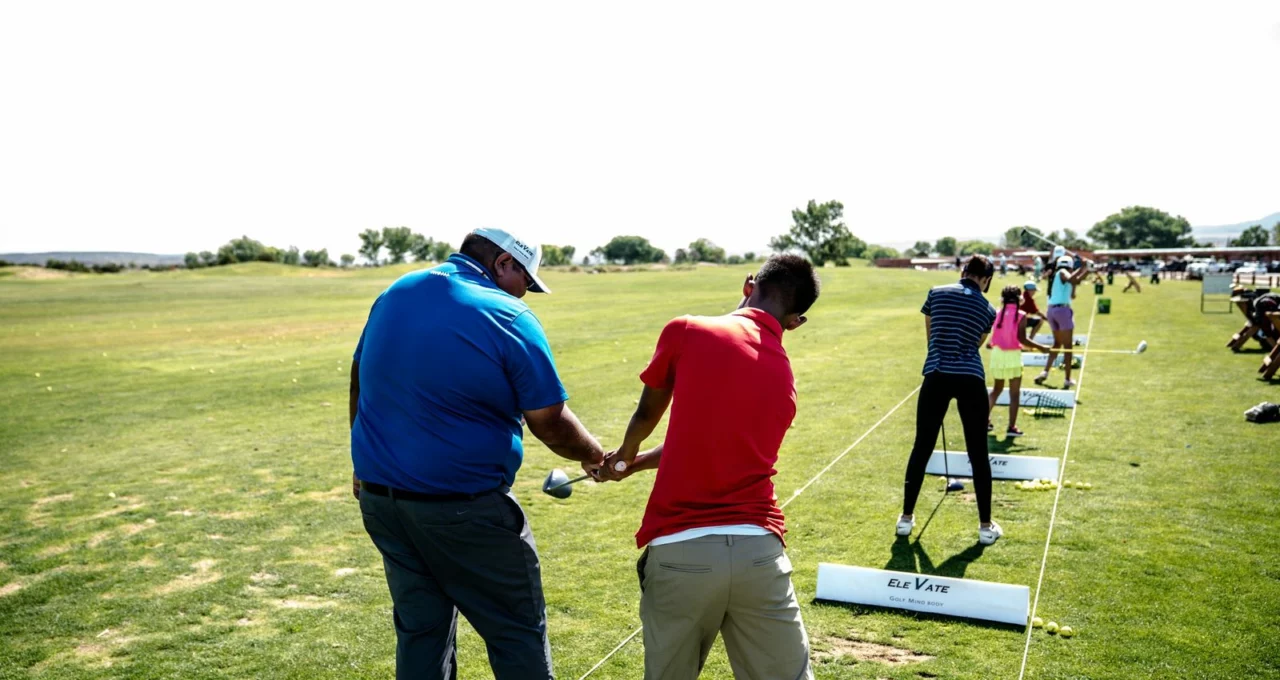
Canadian golfers do a lot of their hitting away from a golf course. From November to April it happens under an inflated dome or in a heated stall, and even in July plenty of us fit in a bucket after work because a full round will not fit into a weeknight. That makes the practice session more important here than in places with a twelve-month season, and it makes a wasted session more expensive.
The good news is that the difference between an hour that moves your handicap and an hour that only tires your arms is not talent. It is structure. What follows is one structure that works in a dome in February and on a grass tee in August.
Why the range lies to you
Start with the problem. A practice bay gives you a perfectly flat lie, the same club for as long as you want, a fresh ball the moment the last one lands and no consequence for a bad swing. A golf course gives you none of those things. Hitting two hundred balls in that artificial setting can make a swing feel grooved without making it any more useful on the first hole.
Under a dome the distortion is worse. You cannot watch the full flight, the net stops the ball at a fraction of its carry, and the only feedback is contact and start line, or whatever the simulator screen tells you. None of that is a reason to stay home. It is a reason to decide, before the first ball, what you are there to learn.
A 60-ball plan in four blocks
A 60-ball basket is the smallest bucket at many Canadian ranges, and it is enough. Spread it like this.
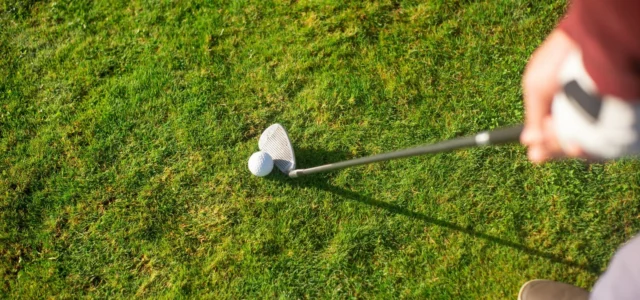
Block one, about 10 balls: wake up. Take a wedge, put your feet together and make half swings. It is slow, it centres the strike and it tells you straight away whether your balance is off. Build to three-quarter swings and move up to a mid iron only once something has come off the middle of the face. On a cold spring evening this matters more, not less: stiff muscles and a full-speed driver on ball number three is how backs get hurt.
Block two, about 20 balls: one change. One club, one target, one swing thought short enough to say in five words. “Finish facing the target” qualifies. A paragraph about wrist angles and hip turn does not. Hit the twenty, check whether the change is showing up, and stop there. If twenty balls have not shifted anything, sixty more will usually build a workaround rather than the fix.
Block three, about 20 balls: never the same shot twice. Now change club and target on every ball. Seven iron at the 150 flag, then a wedge at the short target, then a hybrid at the far left marker, then a punch that stays under an imaginary branch. The results will look worse than block two. That is expected. Researchers in motor learning call this random or variable practice, and it has been shown to hold up better away from the practice area than repeating one shot, precisely because each swing requires a decision.
Block four, about 10 balls: play your home course. Pull up the scorecard of the course you play most. Hit the tee shot you would hit on the first, then the approach that drive would leave, then the next hole. Full routine every time: stand behind the ball, pick a target, one rehearsal, go. If you play a nine-hole loop on weeknights, rehearse those nine holes.
That is sixty balls in roughly an hour, and it covers warming up, changing something, testing it under variety and rehearsing golf.
Aim at something every single time
Mats in a covered stall push you to line up with the divider, not with a target. Over a winter of dome sessions that can quietly drift your alignment several degrees. At the start of each block lay a club on the mat or the ground pointing at a specific flag, and check that your feet and shoulders match it for the first few swings. Then name the shot before you hit it: “low draw at the red flag”. Swinging with no target is not practice, it is exercise.
Mats, grass and the winter habit
A mat forgives. If the club reaches the ground an inch behind the ball, it skids forward and the shot still looks fine. On turf the same swing takes a divot before the ball and comes up short. A golfer who spends five months hitting only off mats can arrive at opening day with a strike that has no business on grass, and no way of having known.
Two fixes. On a mat, put a strip of masking tape or a thin line of foot powder just behind the ball and check where the club actually touched. And once courses and ranges open their grass tees in the spring, do your iron work there, even if the bucket costs a little more. Mats are also hard on wrists and elbows in cold air, so in a dome, fewer good balls beat many tired ones.
What a session can and cannot measure
Range balls are usually built for durability, not distance, and they vary from ball to ball. Do not set your yardage chart from them. What they can tell you is the gap between clubs: if your 8-iron and 9-iron land in the same spot, that is real information regardless of the absolute number.
For real carry numbers, book a stall or bay with a launch monitor and bring a sleeve of the ball you play on the course. An hour like that gives you numbers you will use every round. Our guide to launch monitors covers what those numbers mean.
Where to practise in Canada, summer and winter
A few examples of what exists, all checked on the facilities’ own sites in September 2026. They show the range of options; your own city will have its equivalents.
- Markham Golf Dome, north of Toronto, describes itself as a 53,000 square foot, six-storey indoor range with 40 stalls on two decks. When the weather turns, it adds a 100-stall outdoor range with target greens, plus putting and chipping greens.
- The Golf Dome at the National Golf Academy in Calgary has 32 double-decker stalls under a climate-controlled dome 350 feet long and 85 feet high. It charges by the minute per station, 60 cents, with unlimited balls, which rewards exactly the kind of focused one-hour plan above.
- Musqueam Golf in Vancouver advertises 80 heated stalls across two covered levels, open year-round. Its listed baskets start at 30 balls, with a 60-ball basket at $8.75, and the West Coast climate means the practice there barely stops for winter.
Beyond domes and ranges, indoor simulator centres rent bays by the hour and are the easiest place to build a carry chart in January. Entertainment venues with scoring games are fine for block two and poor for everything else. And the most overlooked facility of all is the practice green and chipping area at your own course, which costs nothing extra with a green fee and is where most strokes are saved. For the short game, our piece on three chip shots gives you a plan for that area.
Panxis Golf has no commercial relationship with any facility mentioned here.
Three short visits beat one long one
The research on skill learning is consistent: practice spread across several days sticks better than the same volume crammed into one sitting, because the brain consolidates between sessions. Sixty balls on Tuesday, Thursday and Saturday will hold a change that 180 balls on Saturday alone will lose by the next weekend.
There is a second reason to stop early. The last thirty balls of a long session are hit tired, the pattern degrades, and those are the swings freshest in your memory when you walk out. Leave while the strike is still good.
For a working golfer through a Canadian winter, a realistic routine is two 45-minute dome or simulator visits a week plus five or ten minutes of putting on the carpet most evenings. When the courses open, swap one dome visit for a grass tee and add the practice green before your round. It is less time than a Sunday marathon and it will produce more on the first tee in May.
The checklist to keep on your phone
- Ten wedges with feet together before any full swing.
- Twenty balls, one club, one five-word thought.
- Twenty balls with a new club and a new target every swing.
- Ten balls playing the opening holes of your home course, full routine.
- On mats, check where the club touched; on grass, do the iron work.
- Trust gaps between clubs from range balls, not the yardages themselves.
Sixty balls, one hour, a clear purpose for each of them. That is how a long Canadian off-season turns into a head start rather than a rusty April.