Tiger’s 6-iron at Glen Abbey, and why you should play the other shot from a fairway bunker
Tiger Woods carried a 6-iron 218 yards over water from Glen Abbey's 18th fairway bunker in 2000. For everyone else the fairway bunker is decided by the lip, a three-quarter swing and ball-first contact, adjusted for firm Canadian spring sand and deep summer sand.
In brief
- Choose the club that clears the lip with room to spare, not the one that reaches the green.
- One more club, a three-quarter swing, and extra caution in cold spring and fall air.
- Barely dig in, choke down half an inch and hover the club: Rule 12.2b forbids grounding it near the ball.
- Firm wet sand plays like a tight lie; soft summer sand often calls for a wedge out.
- Hopeless lie: two penalty strokes to drop back on the line outside the bunker.
In the final round of the 2000 Canadian Open at Glen Abbey, Tiger Woods found a fairway bunker on the right of the 18th hole, 218 yards from the flag with a large pond in front of the green. He hit a 6-iron over the water to about 18 feet and went on to beat Grant Waite. It is still remembered as one of the great shots of his career.
Glen Abbey is a public course in Oakville, so you can stand in roughly that spot yourself. Please do not try to repeat the shot. For almost everyone else, a fairway bunker is where a decent hole turns into a double bogey, and the damage is done by the decision long before the swing.
Why sand turns small errors into big ones
From grass, hitting an iron a fraction heavy costs you a few yards. From sand, the club slows sharply as soon as it touches the surface, and the same mistake can leave the ball in the bunker or dribbling a short way down the fairway. Catch it thin instead and the ball can shoot straight into the face. Fairway bunker play is therefore about clean contact first and distance a distant second.
Step one: study the face, then the yardage
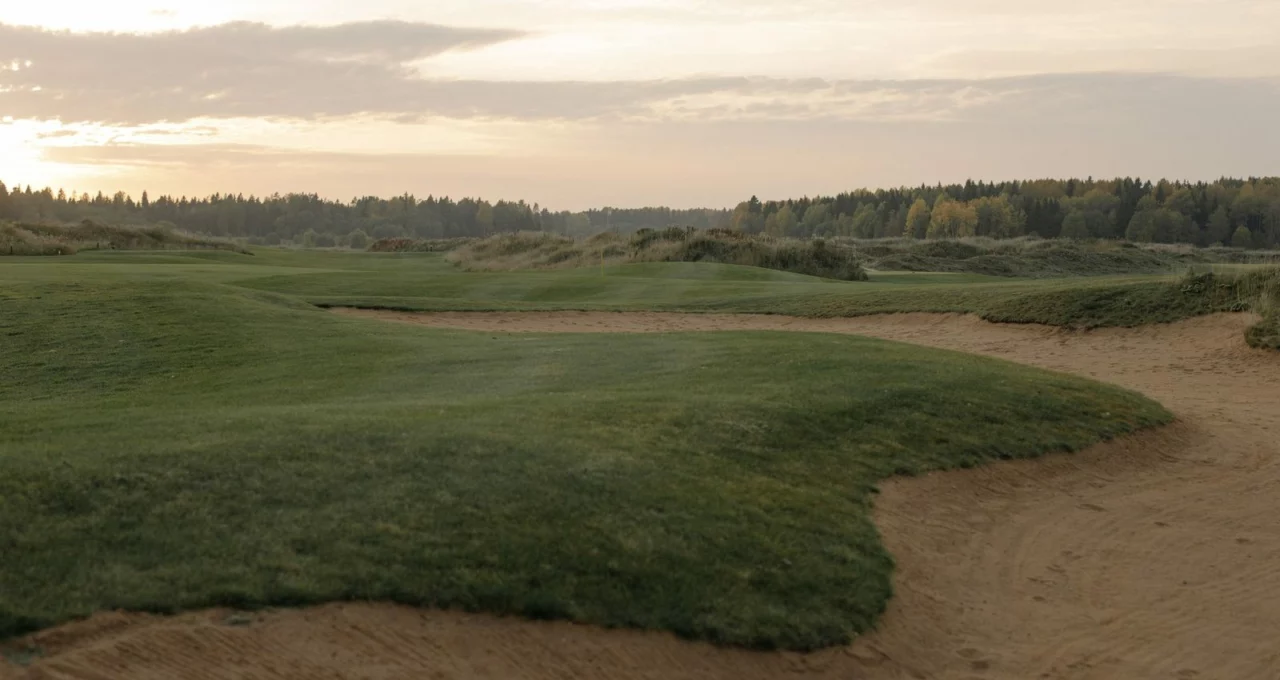
Before you think about the flag, look at the front lip and how close your ball is to it. Then choose the club with enough loft to get over it comfortably, even if it cannot reach the green.
Your launch will be lower than normal from sand, because you will swing a little shorter and nip the ball cleanly. A club that would just clear the lip from grass may catch it from the bunker. Allow extra height.
Distance from the lip matters as much as its height. With the ball well back from a low edge, a mid iron may be sensible. With the ball close under a tall face, a wedge back to the fairway is often the only real option. When Cape Breton Highlands Links began restoring its 57 Stanley Thompson bunkers in 2011, the point was to bring back their original character, not to make them easier.
Step two: one club more, three-quarter swing
Sand gives you a less stable base than turf, and a full swing on unstable footing invites sliding, dipping and falling back, all of which put the club into the sand before the ball. Take one club more than the yardage suggests and make a controlled three-quarter swing.
Early- and late-season Canadian rounds add another reason for caution: cold, dense air shortens carry. In April or October, the extra club is even more important.
Step three: a quiet setup built for ball-first contact
Barely dig in. This is the opposite of a greenside bunker shot. Wriggle your feet just enough to feel stable. Digging deep lowers your body relative to the ball and makes a fat shot almost certain.
Choke down slightly. Because you are standing a touch lower than on grass, shorten your grip by about half an inch.
Ball a fraction back, hands slightly forward. This encourages the club to meet the ball before the sand.
Hover the club. Under Rule 12.2b of the Rules of Golf, which Golf Canada publishes in Canada, you may not touch the sand with your club right behind or in front of the ball, on a practice swing or on the backswing. Holding the club just above the sand at address keeps you legal and, for many players, helps them sweep the ball cleanly.
Step four: stay tall and quiet
The best single swing thought is to maintain your height through impact. Players chasing extra distance tend to sink into the shot, and that sends the club into the sand early. Keep the lower body calm, the head steady and the chest level, and let the arms swing. A clean three-quarter strike beats a full swing that finds sand first every time.
How Canadian sand changes the shot
Spring and after rain: once the snow is gone, many bunkers stay wet and firm for weeks. Compact sand behaves like a tight lie, so the club bounces rather than digs, contact is easier and the ball comes out hotter than expected. Consider slightly less club.
Dry midsummer: sand is fluffier and your feet sink more. The ball can sit down, and the margin for a clean strike shrinks. From a soft, deep lie, the honest choice is often a lofted club or a wedge out.
Standing water: a puddle in a bunker is an abnormal course condition. Rule 16.1c lets you take free relief elsewhere in the bunker, or relief back on the line outside the bunker for one penalty stroke.
When to take your medicine
Lay up with a wedge if any of these apply: the ball is sitting down, you have a downhill lie, the ball is against the back edge, or the lip is steep and close. Play to your favourite full-wedge distance and accept a bogey. The golfers who follow that rule consistently keep their scores intact on bad ball-striking days.
Ask yourself a simple question: would this shot come off four times in ten? If not, you are gambling with strokes you already have. If the lie is truly hopeless, Rule 19.3b lets you drop outside the bunker back on the line from the hole, for two penalty strokes.
One ten-minute session fixes the fear
The technique is simple; confidence is what most golfers lack. Draw a line in the sand and make practice swings (with no ball) that brush the sand just after the line, never before it. Then hit five balls with a 7-iron, thinking only about where the club meets the surface. Feeling one crisp strike from sand changes how you stand over the next one.
Where to practise fairway bunker shots in Canada
Few practice facilities have a fairway-style bunker. Most short-game areas, where they have sand at all, offer a greenside bunker. Ask at the counter whether the practice area includes a bunker and whether it is open before you pay for balls.
At your home club, ask the professional whether you may hit a few shots from a course fairway bunker at a quiet hour, early morning or late evening in the long days of June and July, and rake carefully afterwards. A short-game lesson in real sand with a PGA of Canada professional, found through the association’s Find a Pro directory, is the fastest way to lock in the contact.
If a trip to Glen Abbey, home of Golf Canada and the Canadian Golf Hall of Fame and host of 30 Canadian Opens, is on your list, the 18th tee will give you a chance to test your decision-making more than your 6-iron. Panxis Golf has no commercial relationship with any course, facility or coach mentioned here.
Your fairway bunker routine
- Check the lip and your distance from it; choose a club that clears it with room to spare.
- Take one more club than the yardage, and a three-quarter swing.
- Barely dig in, choke down half an inch, hover the club.
- Ball slightly back, stay tall, hit the ball before the sand.
- Poor lie, downslope or close lip: wedge out to a full-wedge distance.
Tiger’s 6-iron was the exception that made the highlight reels. The rest of us save our strokes by choosing the shot we can actually play.