Grip, stance and aim: what Mike Weir’s hockey hands teach a new golfer
Most slices and hooks start before the club moves. Choosing your side, holding the club in the fingers, keeping cold hands relaxed and aiming the face before your feet are free fixes, and winter is the ideal time to make them.
In brief
- Stand on the side that feels natural: Mike Weir kept his left-handed hockey habit and won the Masters.
- Hold the club in the lead-hand fingers with about two knuckles showing.
- Grip pressure around four or five out of ten, and warm, dry hands on cold days.
- Hinge from the hips and use three ball positions for the whole bag.
- Aim the clubface at a nearby spot first, then set feet and shoulders parallel.
Ask a Canadian golfer why they slice and you will hear about swing plane, hips, the new driver. You will rarely hear about hands and feet, yet the way you hold the club and stand to the ball settles most of what the golf ball does before the backswing even starts. Both cost nothing to fix. Both can be rebuilt over a winter indoors. And both are the first things a coach looks at.
Start with the hockey question
Plenty of Canadians pick up a golf club after years of holding a hockey stick, and the first decision is which side of the ball to stand on. There is no rule. Mike Weir, raised in Brights Grove near Sarnia, was a natural left-handed shot in hockey and simply carried that over to golf, even though he is right-handed. As a teenager he was told he might be better switching sides, and in 1984 he wrote to Jack Nicklaus to ask. Nicklaus replied that if he was a good player left-handed, he should not change anything. Weir won the Masters in 2003, still the only major won by a Canadian man.
The lesson for a beginner is practical: stand whichever way feels natural when you make a relaxed practice swing. The major manufacturers build left-handed versions of their clubs, so being a lefty is no reason to force yourself to the other side.
Lead hand first: count your knuckles
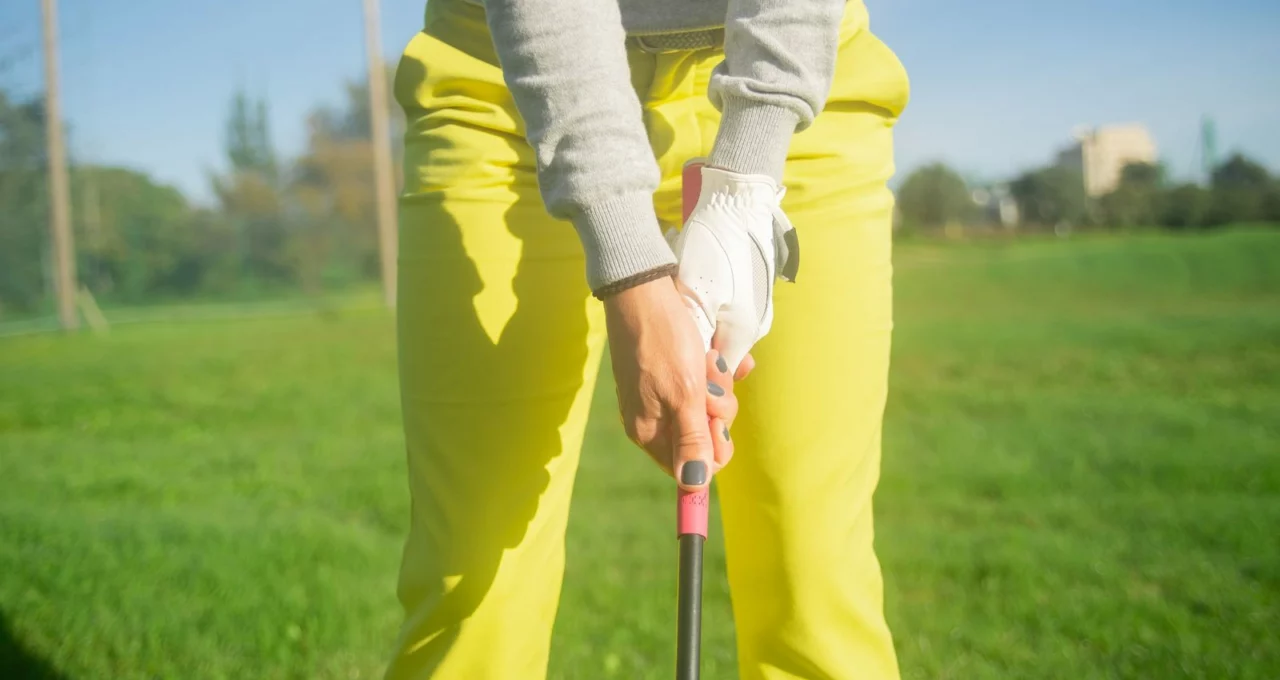
Once you have chosen a side, put the lead hand on the club (the left hand for a right-handed player, the right for a lefty like Weir). The grip should run across the base of the fingers, not up through the palm. Close the hand and look down. Two knuckles showing is the neutral reference, and the crease between thumb and index finger should point roughly at your trail shoulder.
Why fuss over knuckles? Because the clubface follows the hands. Show only one knuckle and the face tends to arrive open at impact, which is the classic weekend slice. Show three or four and it tends to arrive shut, which produces the hook. Players fight these shapes for whole seasons with swing changes when the cause is a hand rotated a few degrees on the grip.
Expect the corrected hold to feel strange and slightly powerless for a couple of weeks. That discomfort is why most people give up on it by the back nine. Push through it on the range, not during your club’s Saturday game.
Overlap, interlock or ten fingers
How the trail hand joins the lead hand matters far less than the position of the lead hand. Interlocking the little finger with the index finger tends to suit smaller hands and many juniors; overlapping suits larger hands; a ten-finger (baseball-style) grip is a sound choice for beginners, seniors and anyone with weak or arthritic hands, and it will feel familiar to hockey players. Pick one that lets both hands act as a single unit.
Pressure, and what cold does to it
On a scale of one to ten, most coaches ask for something around four or five. Grip hard and your forearms lock, the wrists stop hinging and the club cannot release. Grip too softly and the club twists in your fingers, so face angle becomes a coin toss.
Canadian golf adds a variable most instruction books ignore: temperature. On a raw April morning or a frosty October tee time, hands stiffen, rubber grips lose tackiness and gloves get damp. The natural reaction is to squeeze. That squeeze kills clubhead speed and is a big reason cold-weather drives come up short. Keep hands warm between shots with winter mitts or a hand warmer in your pocket, dry the grips with a towel, and consciously relax your hands at address rather than choking the life out of the club.
The most damaging moment for tension is not address but the top of the backswing, when the urge to hit at the ball takes over. Sore hands after a round usually mean you are re-gripping there.
Grip thickness is a gear setting
Grips come in undersize, standard, midsize and jumbo. Too thin and the hands turn over too quickly, pulling shots left for a right-hander. Too thick and they cannot rotate, leaving shots out to the right. Your glove size is a starting clue, and any club pro shop or fitter can check it against your hand in a minute. Grips also harden with age and with seasons spent in a cold garage or car trunk, so if yours feel slick or shiny, replacing them is cheaper than any new club.
Posture comes from the hips
Stand up straight, put your hands on the creases at the front of your hips and hinge back from there until your chest tilts toward the ball. Let the arms hang straight down. Flex the knees a little, no more.
From that position your hands sit roughly below your shoulders, the arms have room to swing and your weight rests over the middle of your feet. Bending at the waist with a rounded back pushes your hands out in front of you and usually leads to standing up through impact. A quick side-view check: a line down from the shoulders should land near the balls of the feet.
Three ball positions for the whole bag
Play the driver opposite the inside of your lead heel. Place mid irons a couple of ball-widths ahead of centre. Put wedges just behind centre. Everything else slots in between.
These positions exist because the swing bottoms out at about the same place in your stance every time. Move the ball and you change where in that arc contact happens. A driver played from the middle is struck on the way down and launches low with too much spin; a wedge played up by the front foot gets caught thin.
Aim the face, then build your stance
Set the clubface behind the ball looking at the target, then arrange your feet, hips and shoulders parallel to that line. Most golfers do the reverse and aim their body at the flag, which leaves the face pointing right of the target for a right-hander. The body then pulls across the ball to compensate, and a slice is born.
Choose an intermediate target, a divot or discoloured patch of grass a couple of feet ahead of the ball, and aim at that instead of a pin 150 yards away. On the range, lay a club or alignment stick along your toes every session; alignment drifts without you feeling it.
Where to get your setup checked in Canada
You cannot see your own grip, posture and aim, which is why a professional’s eye pays for itself quickly.
- A PGA of Canada professional. The association’s Find a Pro directory searches by region, and zones such as the PGA of British Columbia, PGA of Ontario and PGA of Manitoba keep their own listings.
- Municipal programmes. Toronto’s five City courses deliver lessons through their golf partner, Thistle Golf Ltd, and the City promised 30 free learn-to-golf clinics in 2026. Many other municipalities run similar clinics each spring.
- A winter simulator. The off-season is the best time for setup work, because nothing is at stake. The free Golf Canada app can log rounds played at Golf Canada member simulator facilities, so the progress you make indoors stays on record.
A phone on a small tripod is the do-it-yourself version: film face-on and from directly behind the ball along the target line, then compare the footage to the checkpoints above. It costs less than a green fee and shows the truth. Panxis Golf has no commercial relationship with any coach, facility or association mentioned here.
Your pre-round checklist
- Play the side that feels natural, hockey habits included.
- Lead hand in the fingers, about two knuckles visible.
- Pressure around four or five, and warm, dry hands on cold days.
- Hinge from the hips, arms hanging, weight mid-foot.
- Driver at the lead heel, mid irons slightly forward, wedges just back of centre.
- Clubface to an intermediate spot first, then feet and shoulders parallel.
Nothing here needs strength or talent. It needs a few honest minutes in front of a camera or a coach, ideally before the snow melts.