Grip and setup: the free fixes most golfers skip
Two things decide most of what the ball does, and neither happens during the swing. Grip and setup are free to change, need no athleticism, and are where nearly every self-taught fault begins.
In brief
- Two knuckles on the lead hand; three closes the face, one leaves it open.
- Grip pressure four or five out of ten, and no tightening at the top.
- Posture starts at the hip crease, not by bending the back.
- Three ball positions cover the whole bag: lead heel, two balls forward, just back of center.
- Aim the clubface first at a spot two feet ahead, then build the stance.
Two things determine most of what your golf ball does, and neither of them happens during the swing. The way you hold the club and the way you stand to it are free to change, take no athleticism, and are where nearly every self-taught fault begins.
They are also the two things almost nobody works on, for a simple reason: they are static, they are boring, and changing them makes the ball go worse for a fortnight. Everything below is worth doing anyway, because a swing built on a poor grip is a swing spent compensating.
The grip decides where the clubface points
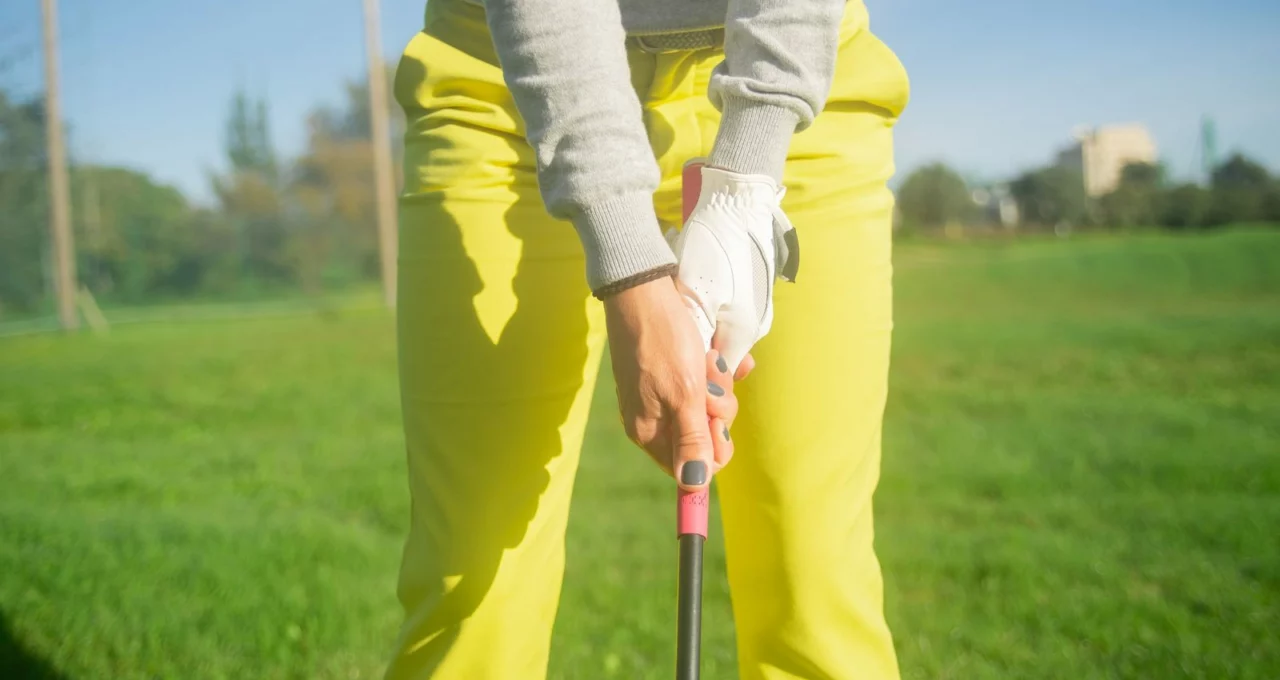
Hold the club so that when you look down at address you see two knuckles on your lead hand, and the V formed between thumb and forefinger points somewhere around your trail shoulder.
See three or four knuckles, which is a strong grip, and the face will tend to arrive closed, producing a hook or a smothered pull. See one knuckle, a weak grip, and the face will tend to stay open, producing the slice that most amateurs fight for years and try to fix with everything except the grip.
The mechanism is worth stating because it explains why nothing else works. The clubface points where your hands put it. If your hands are rotated so that returning them to a natural position leaves the face open by four degrees, then every swing you make will start the ball right, and every compensation you invent to stop that will create a second fault to manage.
This is the single most common cause of a persistent ball flight, and the single least popular thing to change, because a corrected grip feels wrong for about two weeks. It also feels weak in the hands at first, which is exactly the sensation that makes golfers abandon it on the third hole.
Which grip style, and does it matter
Less than people think. The overlap, the interlock and the ten-finger grip all work, and the choice is mostly about hand size and comfort: interlocking suits smaller hands, overlapping suits larger ones, and the ten-finger grip is a perfectly legitimate option that gets unfairly dismissed.
What matters is that both hands work together rather than fighting each other, and that the club sits in the fingers of the lead hand rather than in the palm. A club held in the palm cannot hinge properly, which costs speed and control at once.
Pressure: firm enough to control, light enough to swing
Squeeze at ten out of ten and your forearms lock, the wrists stop hinging and the club stops releasing. At two, the club moves in your hands during the swing and the face position becomes random. Four or five out of ten is the range most coaches ask for.
A useful test: hold the club out in front of you and have somebody pull it gently. If it comes out easily you are too light; if your forearms are visibly tense you are too tight.
The commonest error is not gripping too tight at address but tightening during the swing, usually at the top, and usually because the golfer is about to hit at the ball rather than swing through it. If your hands are sore after a round, that is the cause.
Grip size is an equipment question, not a technique one
A grip that is too small encourages the hands to work too actively through impact, which shows up as a hook. Too large and the hands cannot release, which shows up as a block or a fade.
It is a cheap thing to get right and an easy one to get wrong, because clubs come with a standard size that fits an average nobody is. Glove size is a rough guide, and a professional can check it in a minute with a chart. Regripping a set costs a fraction of any club in it.
Posture starts from the hips, not the back
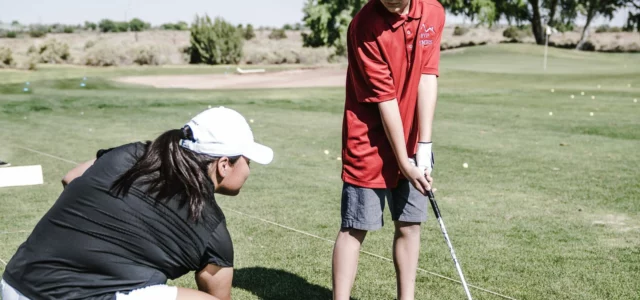
Stand tall, put your hands on your hip creases, and push your hips back until your upper body tilts forward. Let your arms hang. That is the posture.
Done this way, your hands end up under your shoulders where the arms can swing freely, your weight sits in the middle of your feet, and your spine keeps its natural shape. Bending from the waist with a rounded upper back does the opposite: it puts the arms in front of the body and produces the standing-up move through impact that golfers spend years trying to cure.
Two checks. From the side, your shoulders should be roughly over the balls of your feet, not behind your heels. And your knees should be softened rather than bent: a deep knee bend feels athletic and prevents the hips turning.
Ball position, three positions and no more
Driver off the lead heel, mid irons about two ball widths forward of center, wedges just back of center. That covers the entire bag, and the clubs in between fall on a line between those points.
The reason it matters is the bottom of the swing arc. The club reaches its lowest point at roughly the same place relative to your body on every swing, and moving the ball moves where in the arc you strike it. A driver played from the middle of the stance gets hit on the way down, which produces a low spinning drive. A wedge played off the front foot gets caught thin.
Golfers who play every club from the same spot are compensating for one club or the other on every single shot, and they usually do not know which.
Alignment: aim the clubface first, then the body
Set the clubface at the target first, then build your stance parallel to the line it is on.
Doing it the other way round, which is what most people do instinctively, aims your body at the flag and therefore points the clubface right of it, because the ball sits away from your feet. Then, because the face is open to the target, you subconsciously pull across the ball to bring it back, and you have manufactured a slice out of good intentions.
Two practical aids. Pick a spot two feet in front of the ball on the target line and aim the face at that instead of at a flag 150 yards away, which is far more accurate. And lay a club on the ground along your toe line every practice session, because alignment drifts and you cannot feel it drifting.
Get it checked, because you cannot see it
Grip, posture and alignment are the three things a golfer genuinely cannot self-diagnose. What you feel and what you are doing diverge, sometimes enormously, and no amount of thinking about it closes the gap.
A single lesson with a PGA professional shows all three in about a minute, and so, nearly as well, does a video taken from behind on a phone propped against a bag. Film down the target line, with the camera on the ground behind the ball, and compare what you see with what you thought you were doing.
Most players who take one lesson a year would improve more by spending it here than by taking five lessons on the swing itself. It is unglamorous, which is precisely why it is available.
Where to get it checked in the U.S.
The PGA of America directory lists teaching professionals by location, and a single half-hour lesson on setup costs less than a green fee at most public courses. Group clinics at municipal facilities are cheaper still and cover exactly this material, since it is the foundation every coach starts from.
For the equipment half of the question, many large golf and sporting goods stores have a repair bench that will check and change grip size while you wait, and most club pro shops do the same. Ask for the size to be checked against your hand rather than against the box.
If you would rather do it alone, an alignment stick or a spare club on the ground and a phone on a small tripod costs almost nothing and gives you the same three answers. Panxis Golf has no commercial relationship with any coach or retailer mentioned here.
What to check before your next round
- Two knuckles visible on the lead hand, Vs pointing toward the trail shoulder.
- Grip pressure at four or five out of ten, and no tightening at the top.
- Hips pushed back, arms hanging, weight in the middle of the feet.
- Three ball positions: lead heel, two balls forward of center, just back of center.
- Clubface aimed at a spot two feet ahead of the ball, body built parallel to it.
None of this is glamorous and all of it is free. It is also where the majority of amateur ball flight problems begin, and where they end.