How to start playing golf: lessons, gear and what it costs in 2026
Six lessons before a full set, seven used clubs rather than fourteen new ones, and a par-3 course before an eighteen-hole round. The wasted money in a first year is predictable and avoidable.
In brief
- Grip and setup account for most beginner faults, and two lessons fix them.
- Seven used clubs cover a first season. Fewer clubs means fewer decisions.
- Check shaft weight from the first week: too heavy and the ball will not fly.
- Four rules and five points of etiquette cover day one.
- Nobody is good enough to book a tee time. Book the tee time.
Golf in America has never been easier to start or harder to get a tee time. On-course participation passed 29 million players in 2025, the eighth straight year of growth, and rounds played set another record. Here is how to get into the game this year without wasting money in the first six months.
The wasted money is the point of this article. Almost every beginner spends it in the same three places: a full new set bought before there is a swing to fit it to, range balls hit with no plan, and an eighteen-hole round attempted far too early. All three are avoidable.
Lessons before equipment
Buy six lessons before you buy a full set.
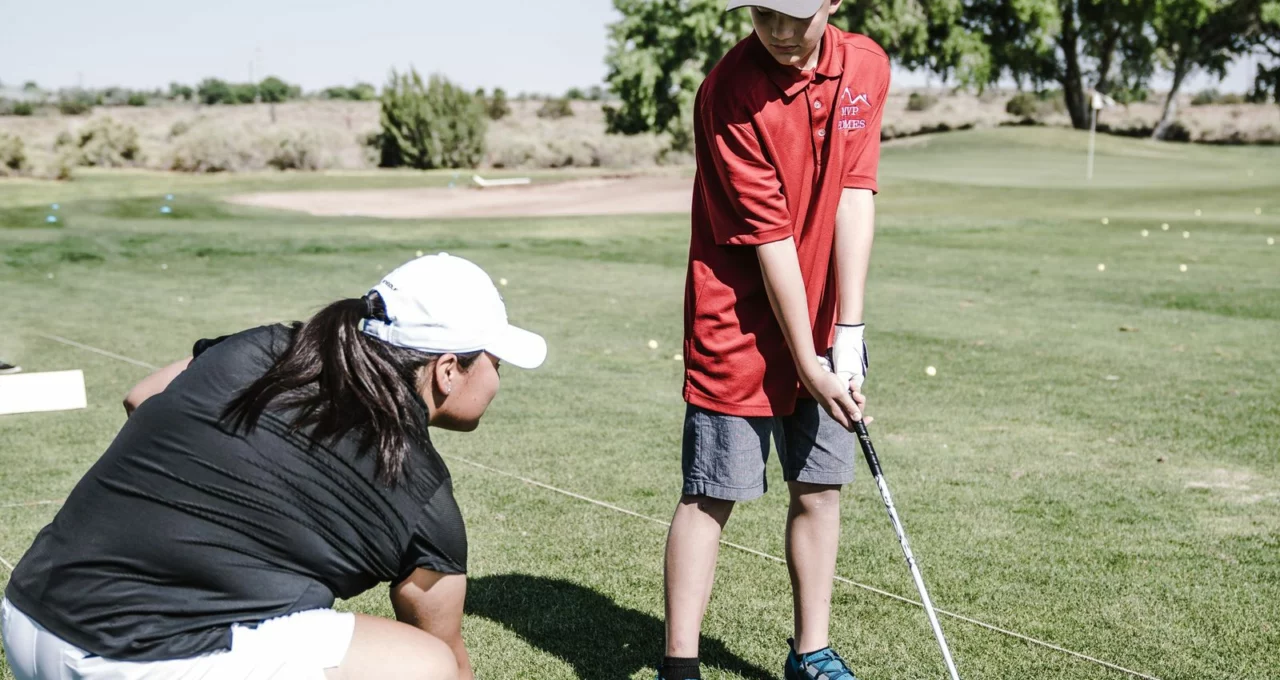
A PGA professional will fix your grip and setup in two sessions, and those two things account for most of what goes wrong for a beginner. They are also the two things you cannot diagnose yourself, because what you feel and what you are doing are not the same.
Between lessons, practice the one thing the lesson covered rather than hitting a bucket with no plan. Twenty balls three times a week beats a hundred balls once, which is true for every golfer and especially true when the movement is new.
Group clinics cost considerably less than private lessons and work better for many beginners, because you spend the hour watching other people make the same mistakes you are making, and because nobody in the group is watching you specifically. Most municipal courses and standalone ranges run them through the season.
Where to play at the start
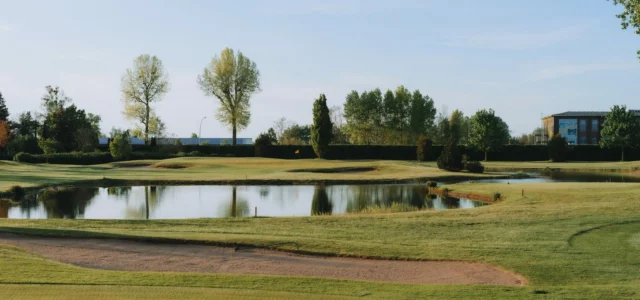
Municipal courses are the backbone of American golf: no membership, no initiation fee, book online, and nobody minds a beginner who keeps up.
Par-3 and executive courses are better still for a first round. A shorter course means fewer lost balls, less pressure from the group behind, and a realistic chance on every hole, which is what makes somebody want to come back.
Twilight rates, usually starting mid-afternoon, cut the green fee substantially at the same course, and in summer you will finish eighteen holes comfortably. Nine holes after work is a real round of golf and it posts for handicap.
Play with somebody who has played before if you can, and ask them not to coach you. That request is worth making explicitly.
Clubs: buy used, buy fewer
Distance is the last thing to worry about. A beginner who carries a 7-iron 120 yards has everything needed to break 100; the player chasing 250 yards off the tee is the one still shooting 110 next summer.
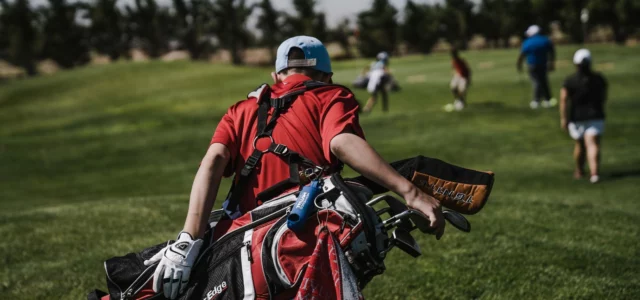
Seven clubs cover a first season comfortably: a driver or 3-wood, a hybrid, three irons, a wedge and a putter. Fewer clubs means fewer decisions, and decisions are what beginners get wrong. A lighter bag also means you will walk, which means you will play more.
Buy them used. The pre-owned market in the United States is the deepest in the world, and a three-year-old premium iron set costs less than a new game-improvement set while performing at least as well. Budget for new grips, which is the cheapest improvement available on any purchase.
Get the lie angle checked once your swing settles, which is usually after a season. A full fitting on a beginner’s swing measures a swing that will not exist in six months.
One exception worth making: shaft weight. If the clubs are too heavy and too stiff for your swing speed, the ball will not get airborne with mid-irons and you will conclude that you cannot play golf. That is a five-minute check in any fitting bay and it matters from the first week.
The rules and etiquette you need on day one
Far less than you fear. Four rules cover almost everything: a lost ball or one out of bounds costs stroke and distance, a penalty area costs one shot, an unplayable lie costs one shot, and cart paths and sprinkler heads give free relief.
The etiquette list is shorter still. Stand still and quiet while somebody hits. Do not walk across a line on the green. Repair your pitch mark, rake the bunker, and let a faster group through. Shout fore if a ball goes toward anybody.
Nobody minds a high score. They mind waiting, so pick up when the hole has gone wrong, take two clubs to the ball, and keep moving. Ability is not the standard on an American golf course; behavior is.
The handicap question
A Handicap Index is not required to play, but it is required for most competitions and for many public courses’ club events, and it is the only objective measure of whether you are improving.
It lives in GHIN, and to hold one you must belong to a club certified by an allied golf association: either a traditional club, a men’s or women’s club at a public course, or an associate membership through your state or regional association.
Costs vary by association and generally sit in the thirty to sixty dollar range per year. Check your own association’s rate rather than a national average, because they differ significantly by state, and several bundle championship entry and other benefits.
What the first year actually costs
Lessons, a used set, green fees at municipal rates, and range balls.
The largest variable is where you live: a round in a metropolitan area can cost four times what it costs an hour outside it, and resident cards at city courses change the arithmetic again. Two habits keep the total down more than any other: play twilight, and play nine holes on weekdays instead of eighteen on Saturdays.
Compared with other adult sports the total is moderate, and compared with the equipment-first version of starting golf it is roughly half.
The mistakes that cost a season
Buying a full new set before you have a repeatable swing. Practicing only with a driver, because it is the club that produces the visible result and the least useful feedback. Playing eighteen holes before you can comfortably get around nine.
And waiting until you are good enough to book a tee time, which is the one that keeps people out of the game entirely. Nobody is good enough. Book the tee time.
The first six months, week by week
A sequence that works, and that costs less than the equipment-first version.
Weeks 1 to 4: two group clinics or two lessons, and two range visits a week of twenty balls each, practicing only what the lesson covered. No course yet.
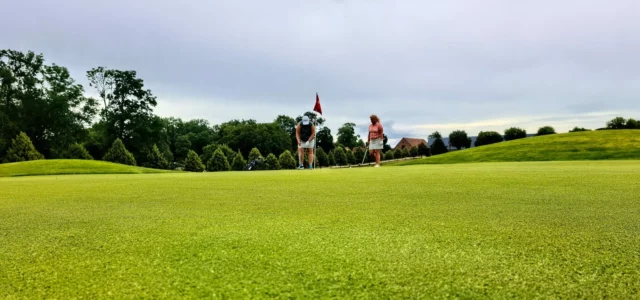
Weeks 5 to 8: a par-3 course, three holes at a time, with borrowed or rented clubs. Learn the flow of a round rather than the score.
Weeks 9 to 16: nine holes at a municipal course at twilight, once a week. Add ten minutes of putting before each round. Buy your used set somewhere in here, once the swing has stopped changing weekly.
Weeks 17 to 24: eighteen holes for the first time, a GHIN Index, and a nine-hole league if one runs.
Six months, in that order, produces a golfer. The same six months spent buying clubs and hitting drivers produces somebody who thinks they are not built for the game.
Where to start in the U.S.
- Lessons: your nearest municipal course or range will have a teaching professional, and the PGA of America directory lists coaches by area. Ask about a beginner block or a group clinic rather than single lessons.
- Where to play: your city or county parks and recreation page lists the municipal courses, the par-3 and executive courses and the resident card, none of which appear reliably anywhere else. GolfNow and TeeOff show what is available across a metro area.
- Clubs: buy pre-owned through an online used-club specialist, a manufacturer’s certified pre-owned program or a pro shop trade-in rack, and have the shaft weight checked before you commit.
- A handicap: through your state or regional golf association, which runs GHIN memberships for golfers without a club.
Panxis Golf has no commercial relationship with any retailer, association or platform mentioned here and earns nothing from your purchases. Participation figures come from the National Golf Foundation’s 2025 research.