Family golf in Canada: three formats, what counts for a handicap and where juniors play for less
When one player hits it 200 yards and another 60, one ball each and every stroke counted is the wrong game. Change the format and the same family, on the same course, has a much better afternoon before the season ends.
In brief
- Maximum Score (Rule 21.2) lets each player pick up at a set limit, such as double par, and still keep a real total.
- In foursomes (Rule 22) two partners share one ball, alternating tee shots on odd and even holes.
- Golf Canada lists foursomes as not acceptable for score posting, and the scramble is not among its authorized formats.
- Youth on Course listed Canadian membership at C$64.95 a year with C$5 walking rounds at participating courses (November 2025).
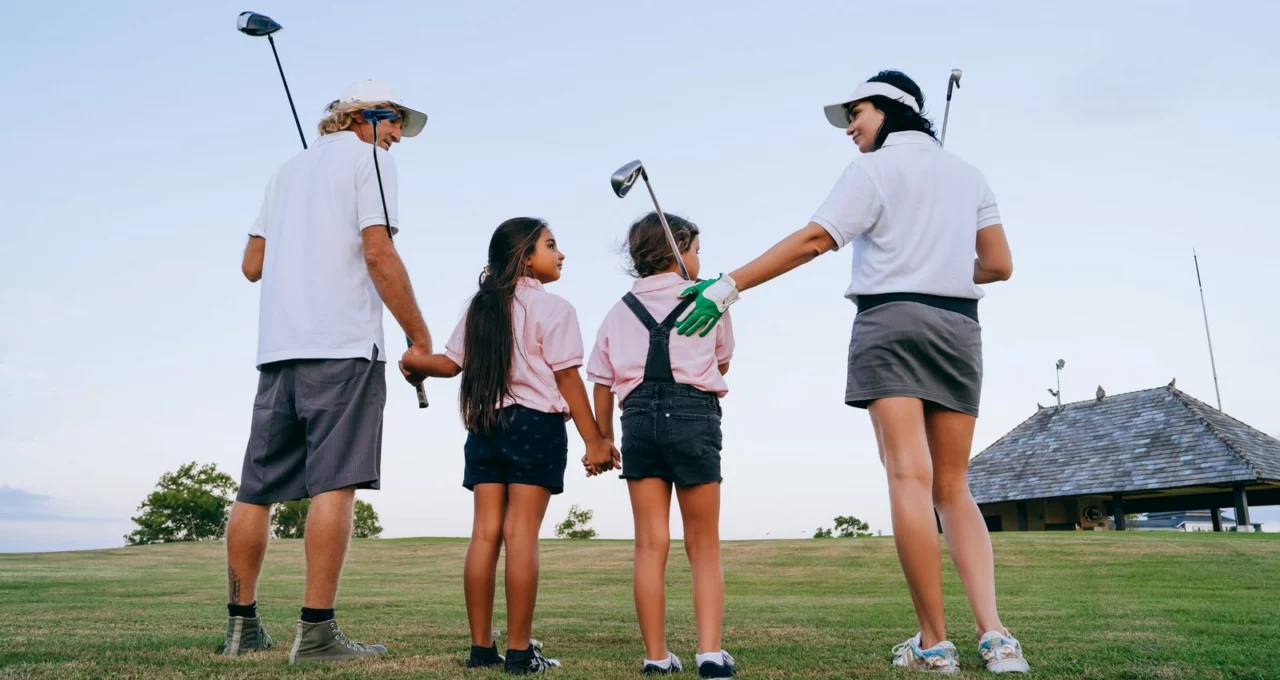
Picture the tee sheet on Thanksgiving weekend: a grandfather who still hits it 200 yards, a mother who plays twice a month, twin thirteen-year-olds who took lessons this summer and an eight-year-old who mostly wants to drive the cart. Put all six on the first tee with one ball each and a pencil, and by the third green somebody is sulking. The trouble is rarely the people. It is the format. Individual stroke play asks every player to finish every hole, and when the gap between the longest and shortest hitter is 150 yards, that single rule decides how the whole afternoon feels. Swap it for a format built for mixed levels and the same group comes home happy, often before dark.
This piece looks at three ways to do it, in the order most families actually need them, then at what Golf Canada counts for a handicap, where young Canadians can find programs and cheap rounds, and how to fit a family nine into the last weeks of the season.
Start with the people, then choose the rules
Before anyone argues about formats, look at who is coming. Three questions sort out most groups:
- How many players, and how many real beginners? Two players suit a shared ball. Four or more with one or two beginners suit a team format.
- Does anyone want their own score? A teenager who has started tracking rounds will not be thrilled by a team total.
- How long will the youngest last? For most kids under ten, nine holes is the ceiling, and six is fine.
Answer those and the format almost picks itself. What follows is written for the three most common answers.
The capped card: a real score without the 13
Start here if you have a junior who already plays a bit and wants a number to write down. The Rules of Golf include a form of stroke play called Maximum Score (Rule 21.2). The committee sets a limit per hole, and once a player reaches it, they stop and record the limit. On a family outing, whoever is holding the pencil is the committee.
Pick the limit to match the player rather than the course. A common choice is double par, so 6 on a par 3, 8 on a par 4 and 10 on a par 5. A junior who is breaking 55 for nine might play to triple bogey instead. The grandfather with the 200-yard drive can keep counting every stroke if he likes; nothing stops players in the same group from having different caps.
Why it works so well with kids:
- No hole ever ends in double figures, so one bad hole cannot ruin the card.
- Nobody plays more than a fixed number of shots, which keeps the group moving.
- The total still means something, so a twelve-year-old can compare this Sunday’s nine with the one in August and see progress.
You can shorten the holes as well. Many families let the youngest player start from the 150-yard post or from the front edge of the fairway. It is the same logic as picking the right set of tees for your game, pushed one step further for a small child.
If you want a winner, switch the card to Stableford points: two for a net par, one for a net bogey, none when you pick up. Stableford and other scoring systems are explained in our guide to formats of play.
One ball, two players: foursomes for a grandparent and a teenager
When the group is just two people with very different games, sharing a ball is often the best afternoon either of them will have. In foursomes, which most Canadians call alternate shot, the partners take turns hitting the same ball (Rule 22). One player hits the tee shot on the odd holes, the other on the even holes, and from there they alternate until the ball is in the hole.
It sounds like the stronger player carries the weaker one. In practice the opposite happens. A grandparent who leaves the ball in the trees has to watch a fourteen-year-old try to punch it out, and quickly learns to aim for the middle of the fairway. The teenager learns that the next shot belongs to someone else, so a sensible 120-yard layup beats a hero shot into the water. The two end up planning each hole together, which is exactly the conversation you hoped for when you booked.
Three adjustments for a big gap:
- Separate tees. In a club event partners normally play from the same tees. In a friendly round, agree that each player tees off from the set that suits their length.
- Let the nervous one start. The first tee shot is the scariest of the day. Hitting it early beats waiting.
- Put two pairs head to head. Mother and daughter against father and son, match play, one point per hole. With four people and only two balls, you will be quick.
The team scramble, and two rules that share the load
For a first outing, or any group with a child under about ten, the scramble is the gentlest format there is. Everyone hits a tee shot, the team picks the best one, and every player hits the next shot from that spot. Repeat until the ball drops. One score per hole for the whole team.
Nobody spends five swings in a bunker, because the team simply moves on from the best ball. Pace looks after itself. The weakness is familiar to anyone who has played in a charity tournament: the best player’s shot gets chosen almost every time, and everyone else becomes a spectator. Two house rules fix it.
- A quota of drives. Over nine holes, every player’s tee shot must be used at least twice (three times if there are only three of you). Suddenly the eight-year-old’s 60-yard drive that stays in the short grass is worth celebrating, and the whole group cheers when it is chosen.
- The youngest putts first. On each green, the least experienced player gets the first putt. If it goes in, the hole is over. Children forget most drives, but they remember the putt that won the hole for the family.
A variation for groups of five or six: split into two scramble teams, each with an adult and a child, and play against each other. It keeps the numbers manageable and gives the kids a rival.
What counts for a handicap in Canada, and what does not
If one of your teenagers has an Official Handicap Index, they will want to know whether a family round goes on their record. Golf Canada publishes a list of authorized formats for score posting. It includes individual stroke play and match play, four-ball, best-ball-of-four and Stableford. It says that foursomes, in stroke play or match play, is not an authorized format, and that scores made that way cannot be posted. The scramble is not on the list at all.
So the answer is simple. The capped own-ball round and a Stableford card can go into the handicap record, provided the course has a valid rating and the round meets the posting rules; the alternate-shot round and the scramble are just for fun. Tell the teenager before you start, so nobody feels cheated on the 9th green.
Where Canadian families can find junior programs and cheaper rounds
Golf Canada’s junior page points families to three national programs, and each one can make family golf easier.
First Tee – Canada. Launched by Golf Canada and First Tee in 2021, it runs through six regional chapters: British Columbia, Alberta, the Prairies, Ontario, Quebec and Atlantic Canada. It has a school program delivered in physical education classes, a community program built on games for children of different ages and abilities, and facility programs on golf courses for youth aged 7 to 16. A child who has been through a few sessions arrives at a family round knowing the basics of etiquette, which helps everyone.
Youth on Course. The program arrived in Canada through Alberta in 2019 and has since spread to other provinces. Participating courses set aside tee times at designated hours for young members. On the Youth on Course page for Canadian members, updated in November 2025, membership was listed at C$64.95 a year, with a C$5 walking green fee at participating courses and an Official Handicap Index through Golf Canada included. Check the course directory before you book, because not every course takes part and the times are limited.
RBC Community Junior Golf. This one supports First Tee – Canada programming at municipal courses across the country. That matters for families, because municipal nine-hole and par-3 layouts are where a family scramble fits best.
Beyond the national programs, ask your provincial association and your nearest club. Many run junior camps in summer and team events for parents and children, but formats and dates vary from course to course, so the club’s own calendar is the place to look. If your kids want coaching before the next family nine, our guide to getting value from golf lessons helps you pick the right format and pro.
Before the snow: choosing the course and the tee time this fall
Late September and October are a lovely time for a family round in most of Canada: quieter tee sheets, cooler air, the colours on the trees. They also bring a few traps.
- Frost delays. On cold mornings, many courses hold the first tee times until the grass has thawed. A 10:30 or noon start is often a better bet than the first slot of the day.
- Shorter days. The light goes quickly after mid-October. Nine holes in the early afternoon beats eighteen that end in the dark.
- Layers. Kids get cold before adults notice. A toque, gloves between shots and a thermos of something warm keep an eight-year-old in the game until the last green.
- Closing dates. Courses shut at different times depending on the region and the weather. Call ahead, and read our notes on closing out the season for the rest of your autumn golf.
As for the course itself, a short one is usually the right choice. Executive and par-3 layouts give every player a real chance of reaching a green, and our guide to nine-hole courses in Canada explains what to look for. When you book, mention that you are a family group with a young player. Staff can often put you in a gap on the tee sheet so nobody is breathing down your neck.
Pace still matters, even on a quiet afternoon. Play ready golf, let a faster two-ball through on a par 3, and keep the scramble moving by having the next player ready while the team chooses a ball.
Small habits that make kids ask to go back
- Jobs for everyone. Scorekeeper, flagstick holder, bunker raker, ball spotter. A child with a role is part of the team even on the holes where their shots are not chosen.
- Mini contests. Closest to the pin on the par 3s, longest putt made, fewest balls lost. Side games let the weakest player win something.
- One tip per nine. A round is not a lesson. Save the swing talk for the range.
- Snacks on the turn. Hunger ends more family rounds than bad shots do.
- Quit while it is good. If the youngest has had enough after five holes, walk in smiling. Wanting to come back is the whole goal.
A plan for your Thanksgiving weekend nine
- Count your players and their levels, then pick the format: capped own ball for a keen junior, foursomes for two, scramble with a drive quota for a mixed crowd.
- Book nine holes on a short or municipal course for early afternoon, after any frost delay, and mention the young player.
- Agree the caps, tees and house rules on the first tee, not on the fourth green.
- Pack layers, water and snacks, and give each child a job.
- Keep one card, add a side game on the par 3s, and let the youngest putt first.
- Tell any teenager with a handicap which rounds will count, then try a different format next spring.
The best format is the one that gets the whole family back on the first tee next season. Pick one, bend the rules to suit your group, and enjoy the last warm afternoons before the courses close.