Family golf in Australia: Ambrose, foursomes or a capped card, and where juniors get started
When one player hits it 190 metres and another 60, playing your own ball with every shot counted is the wrong game. Pick a format built for uneven levels and the whole family gets round nine holes together, still smiling.
In brief
- Foursomes (Rule 22) puts two partners on one ball, alternating tee shots on odd and even holes.
- In Ambrose, a house rule of at least three drives per player, used by Yarrambat Golf Club, keeps everyone involved.
- A maximum score per hole is an official form of stroke play under Rule 21.2; Golf Australia counts maximum score competitions for handicapping, but not team Ambrose or foursomes cards.
- MyGolf, Golf Australia's introductory junior program, is designed for children aged 5 to 12.
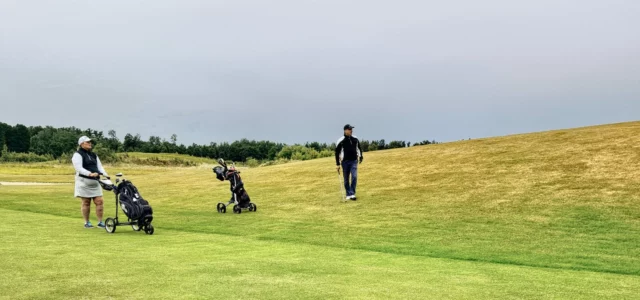
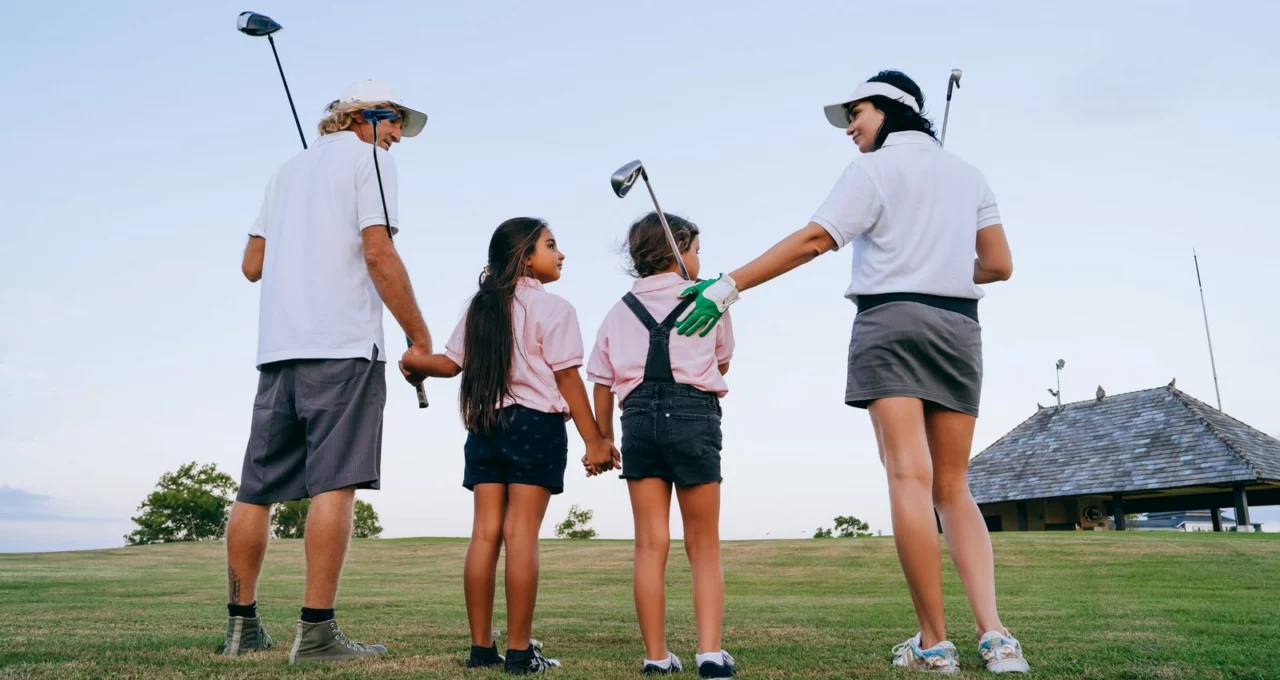
Picture a spring Sunday with three generations on the first tee. Grandad still plays off 18 and hits it 190 metres. Mum is a social golfer who breaks 50 for nine on a good day. The 14-year-old has just started lessons, and the eight-year-old mostly wants to drive the buggy. Send that group out to play their own ball, every shot counted, and the eight-year-old is picking a ball out of the scrub on the second while the group behind stands on the tee with arms folded. The people are fine. The format is the problem. Swap it for one built for uneven levels and the same four can get round nine holes in good time and still be talking about it at dinner.
Start with the gap, not the format
Before choosing a game, look honestly at how far apart your players are. Three questions sort most families out in a minute:
- How many of you are playing? Two players suit a shared-ball game. Three or four open up team options.
- Does anyone want a score of their own? A teenager who has started keeping a card usually does. A first-timer usually does not care.
- How long will the youngest last? For most kids under ten, nine holes is the limit, and six can be plenty.
The answers point to one of three games. None of them needs special equipment, just a pencil and five seconds of agreement before the first drive.
Foursomes: two golfers, one ball
This is the game Australians associate with club foursomes days and the Ryder Cup foursomes sessions. The Rules of Golf cover it under Rule 22. Two partners share a single ball. One hits the tee shots on the odd holes, the other on the even holes, and from there they alternate until the ball drops.
It is ideal for a parent with one child, or a grandparent and grandchild, because nobody is carried and nobody is left out. Each shot is played from wherever the partner put it. That changes behaviour quickly. The stronger player starts thinking about leaving a flat lie and a clear line rather than bashing it as far as possible. The junior learns that a 40-metre chip onto the fairway is a genuinely useful shot. You end up discussing every hole, which is half the fun.
Three tweaks make it work when the gap is wide:
- Let the junior tee off from the forward markers on their holes. In a club event a side plays from one set of tees, but in a private family round you set the terms.
- Hand the nervous player the odd holes, so they hit the very first shot and get it over with.
- If four of you are out, split into two pairs and play a simple match. Only two balls are in play, so the round moves along nicely.
Ambrose, the Aussie name for a scramble
Everyone else calls it a scramble. Here it is Ambrose, and most club golfers have played one at a charity day or an end-of-season event. Everyone tees off, the team picks the best ball, everyone plays their next shot from that spot, and so on until someone holes out. One score per hole goes on the card.
For a first family outing it is hard to beat. Nobody spends five swings in a bunker, the pace looks after itself, and the eight-year-old’s one decent shot of the day can end up being the one the team plays. The catch is that the best player’s ball tends to get chosen every time, and the others start to feel like spectators.
Club Ambrose days solve that with a rule you can borrow. Yarrambat Golf Club in Victoria, explaining the format to its members this month, asks for every player’s drive to count at least three times, and for the ball to be placed within one ball width of the chosen spot. For a family, those two rules keep everyone involved and stop anyone from quietly improving their lie. Add one of your own: the youngest putts first on every green, and if it drops, the hole is over.
If everyone in your group holds a handicap and you want a net score, the traditional Australian team calculation that Yarrambat also lists is simple: add the handicaps together and divide by 8 for a team of four, 6 for three and 4 for two.
Own ball, with a ceiling on every hole
Sooner or later the teenager will want their own card. The way to give them one without a three-hour round is a maximum score per hole. Rule 21.2 of the Rules of Golf sets this out as an official form of stroke play: the committee chooses a limit, and once a player reaches it they pick up and write it down. On a family day, you are the committee.
Set the ceiling by player rather than for the whole group. Par plus four could be the right cap for a beginner, par plus two for a teenager who is making contact most of the time, and a net limit for anyone with a handicap. The cap does three jobs at once. It ends the 13 on a par 4. It keeps the group moving. And it leaves a card worth comparing next month, which is how juniors notice they are improving.
Australian golfers already live on Stableford, so it is a natural fit here: picking up simply means no points on that hole, and the scoring still works. Our guide to the formats you will meet at Australian clubs explains how Stableford, par and stroke fit together.
Does any of this count for a handicap?
This is the question a keen teenager will ask, so it is worth knowing the answer. Golf Australia’s handicapping guide for clubs builds handicaps from individual scores: singles stroke rounds, including Stableford, par and maximum score competitions, plus some four-ball cards under set conditions. A social round outside a competition can count as well, but only if your home club accepts those scores, the round is singles Stableford played under the Rules of Golf, a marker accompanies the player on every hole, and the player nominates it for handicapping before the first shot. Nine-hole scores are accepted at the club’s discretion.
A team Ambrose card or a foursomes card is not on that list, so treat those rounds as practice and fun. The capped own-ball game is the only one of the three that could turn into a handicap score, and only if it meets those conditions. If your junior is heading that way, check with the pro shop first, and have a read of our piece on playing your first competition.
Matching the game to the family
- A mum and her ten-year-old on their first nine together: foursomes, junior from the forward tees.
- Three siblings of 7, 11 and 15 with a parent: four-person Ambrose, three drives each, youngest putts first.
- Two teenagers who want to beat each other: own ball, capped, Stableford points, loser carries the bag.
- Grandparents, parents and kids across two groups: Ambrose on the front six, then pairs in foursomes coming home.
- Not sure how the day will go: start in Ambrose and switch to own ball once everyone is warmed up.
Spring timing, tees and the length of the round
Late September is a good moment to start. The weather is kind, the spring school holidays give families midweek time, and on Sunday 4 October clocks go forward in New South Wales, Victoria, South Australia, the ACT and Tasmania, which opens up after-work nines. Queensland, Western Australia and the Northern Territory stay on standard time, so evening light there changes less.
Book a quiet slot, such as a weekday during the holidays or a late tee time once the comp field has cleared, and tell the club you are a family group with a young player. Nine holes is plenty for kids, and a short course or a nine-hole layout gives everyone more chances to reach the green. Our guide to nine-hole courses in Australia is a good place to look.
Tee choice matters more than people think. A 330-metre par 4 is three decent shots for an adult and eight for a child who hits it 60 metres. Let juniors start from the forward markers, or from a spot on the fairway about 150 metres out, and see how choosing the right tees applies to the adults as well. Keep the pace honest: play ready golf, let quicker groups through without being asked, and use the habits in our pace of play guide.
Where Australian families can find a way in
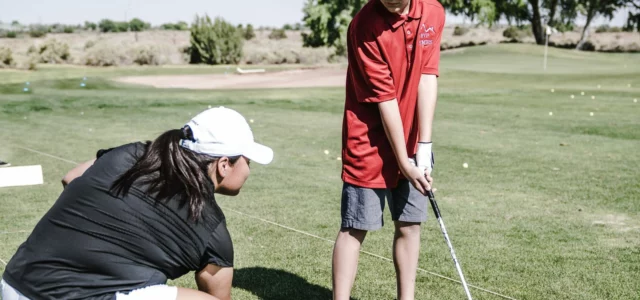
MyGolf. Golf Australia’s national introductory program is designed for children aged 5 to 12. It runs at clubs and facilities around the country, and Golf NSW notes it is delivered by accredited PGA of Australia Members and Golf Australia Community Instructors. It uses games rather than drills, which suits a child who will later be playing Ambrose with the family. You can find a venue near you through the MyGolf site with a postcode search.
Jack Newton Junior Golf. In New South Wales, this long-running junior body offers camps and clinics for all levels, with a strong school focus, plus junior tournaments once a child is ready to play for a result.
NSW Ambrose. For a parent and teenager who both hold a Golf Australia handicap, Golf NSW runs a two-person, nine-hole nett Ambrose with men’s, women’s and mixed categories, played at participating venues from April to October 2026. Partners can come from different clubs, and the leading pairs in each category are invited to a final during NSW Open week. Ask at your club whether it is a host venue before the season closes.
Your own club. Many clubs run nine-hole comps, twilight events and junior clinics. Ask whether juniors can play with a member at quiet times, and whether there is a family or junior membership category. If your family is still weighing up whether to join or pay and play, our guide to membership or pay and play sets out the trade-offs.
Keeping kids keen
- Give every player a role: scorer, bunker raker, flag holder, keeper of the snacks.
- Run small side bets on the par 3s, such as nearest the pin or longest putt holed.
- Limit coaching to a single tip each nine. A round is not a lesson.
- Pack water, sunscreen and a hat. Spring sun in Australia is stronger than it feels.
- Walk in early if the youngest has had enough. Wanting to come back matters more than finishing.
Before you head out: a quick checklist
- Book nine holes at a quiet time, ideally on a short or nine-hole course.
- Pick the game on the first tee: foursomes for two, Ambrose for a group, capped own ball for a teenager.
- Agree the house rules out loud: three drives each in Ambrose, youngest putts first, a cap per player.
- Put each player on the tee that suits their length, in metres, not pride.
- Keep one card and one side game.
- If a junior wants a handicap score, ask the pro shop how your club handles social rounds before you start.
The right game is the one that has everyone asking when you are going back. Try one of the three before the holidays finish and adjust the rules as you go.