Sixty balls under the floodlights: a range hour that carries over to the course
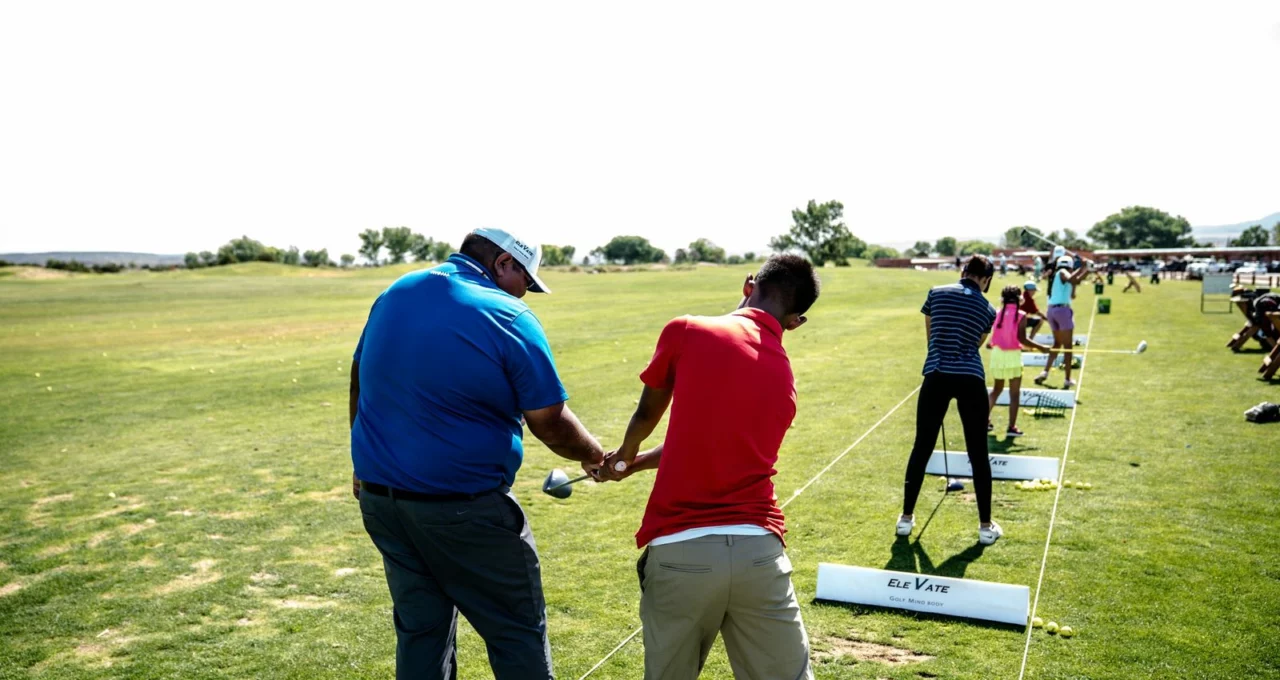
A floodlit bay with ball-tracking and unlimited balls is built for volume, not learning. Set a ball count, spend ten minutes on soft wedges, give one change twenty balls, then finish by playing your home course shot by shot.
In brief
- Decide on about sixty balls before you arrive, even if the booking includes unlimited balls.
- The opening wedges are a warm-up: feet together, half pace, especially on a cold mat.
- One change, one club, twenty balls; if it needs more than five words it is too complicated.
- Finish with random practice and nine holes of your own course, full routine every shot.
- Use tracking screens for gaps between clubs, not yardages, and keep going through winter with short, frequent sessions.
The floodlights come on, the Toptracer screen shows a 260-yard drive, and the next ball rolls out of the dispenser before you have asked yourself why the last one worked. That is how most British range sessions go: a bucket or an hour’s booking, a driver, and a vague feeling of having done something useful. It rarely survives contact with the first tee on Saturday.
An hour of genuine practice looks different. It starts slowly, narrows to one change, and ends with golf rather than swings. Here is how to build it, and how to get the most from the kind of range most of us actually have access to.
Why the bay flatters you
A range bay is the only place in golf where the lie is perfect, the target never changes, nothing is at stake and a fresh ball arrives the moment you want one. None of that happens on a course. A session that is useful has to take some of those comforts away on purpose, at least for part of the hour.
Modern bays make the flattery worse. The ball-tracking at Trafford Golf Centre in Manchester, which advertises 53 bays with Toptracer and Power Tee, or the Trackman screens in every floodlit bay at Hoebridge Golf Centre near Woking, will show you carry, curve and a virtual flag on every shot. That information is valuable. It is also very easy to spend sixty minutes chasing a number on a screen instead of rehearsing anything you will need at the weekend.
The “unlimited balls” trap
More UK ranges now sell time rather than buckets. Hoebridge, for example, lists a premium bay for up to four people with unlimited balls at £20 for an hour. Good value, but a pricing model that quietly rewards speed. Nobody hitting a ball every twelve seconds is practising; they are exercising.
Decide your number before you arrive. Sixty balls in an hour, with a pause between each, is plenty. If the machine will keep feeding you, put the extra balls to one side and leave them there.
Start with wedges and your feet together
Whatever the bay costs, spend the first ten minutes on wedges at half pace. These opening fifteen or so balls are a warm-up, not training, and thrashing them at full speed on a cold mat is how wrists and lower backs get sore in November.
Stand with your feet touching and hit soft pitches. It forces you to stay balanced and to find the middle of the face, and within a few minutes the strike tightens up. Work up through a 9-iron to a 7-iron. When the body turns freely and a couple of shots have felt solid, the real session can begin.
Choose one change and say it in five words
Pick a single thing to work on. Then try to describe it in five words or fewer: “turn chest past the ball”, “finish on the lead foot”. If it takes a paragraph, it is a swing theory rather than a practice instruction, and the body cannot act on a paragraph.
Give that one change twenty balls with one club. Not driver on one ball and wedge on the next. If nothing has improved after twenty, sixty more will not rescue it; they will only groove whatever compensation you have found to make the ball go straight. Stop, and ask a PGA professional to look at it. Trafford runs an on-site PGA Academy, and The PGA’s own directory, PGA Play, lists around 8,000 PGA Professionals you can search by location.
Give every ball a flag and a shape
Mats and bay dividers line you up with the bay, not with a target, and a whole season of drifting slowly right can pass unnoticed. Pick an actual flag, a sign or a marker. For the first few balls, check your feet and shoulders against a club laid on the mat, then take it away before you swing if you want the session to feel like the course.
Before each shot, name the flight: a small draw, a straight one, a lower punch. On an exposed British range with a crosswind blowing across the bays, that choice is not decoration. It is exactly the decision you will face on the fourth tee.
Two thirds repetition, one third variety
Hitting the same shot over and over is what coaches call block practice. It makes a change feel comfortable fast, and the visible improvement is so pleasing that most golfers never do anything else.
The trouble is that golf never asks for the same shot twice. A move rehearsed only in blocks tends to vanish when every shot needs a new club and a new target. So split the session: roughly the first two thirds as repetition on your one change, and the final third as random practice, where the club and target change on every ball. It feels clumsier and the shots are less tidy. Motor learning research since the 1970s has consistently found that this kind of variable practice carries over to the course better. A worse-feeling final twenty minutes is the price of a better-feeling Saturday.
Play your home course from the mat
Finish by playing nine holes of the course you know best, shot by shot. Driver off the first, then whatever club that drive would leave, then a pitch to the green. Go through your whole routine each time: stand behind the ball, choose a target, one rehearsal swing, commit.
Most tracking bays now include virtual courses, which is fine, but your own card is better, because it makes you rehearse the tee shots that actually cause you trouble. Twenty-five balls hit like this do more for your scoring than a hundred hit at the 150-yard marker, because they practise choosing and committing, which are the two things that happen on every hole.
Numbers to trust, numbers to ignore
Range balls are usually built for durability rather than distance, typically flying five to ten percent shorter than a premium ball, and they vary from one to the next. Do not set your yardages from them, however precise the screen looks.
What the session can tell you is the gap between clubs. Whether your 8-iron and 9-iron are ten yards apart or four is real information, even if the absolute figures are a little short. If you want proper carry distances with your own ball, book time on a launch monitor and take a sleeve of what you play.
Mats, grass and the British winter
A mat lets the club bounce into the ball even when you have hit an inch behind it. Grass does not forgive that. A golfer who only ever practises on mats can build a strike that looks perfect in the bay and produces heavy irons on soft turf, with nothing to warn them.
Grass tees are uncommon on busy covered ranges, and in winter they are often closed anyway. If you can find one, use it for iron work. If you cannot, watch where the club meets the mat rather than where the ball finishes, and treat a slightly thick contact as a miss even when the screen calls it a good shot.
Mats in the cold are also hard on the joints. On a raw January evening, fewer balls with a longer pause between them is the sensible choice, and a proper warm layer between shots matters more than one more bucket.
Where to practise in Britain
Three kinds of facility cover most of the country. Covered, floodlit ranges with ball-tracking are now common near big towns and suit after-work sessions: Trafford Golf Centre opens from 7am to 11pm Sunday to Wednesday and until 11.30pm Thursday to Saturday, with last balls served 35 minutes before closing, and it is card-only. Hoebridge’s Trackman range runs 9am to 10pm Monday to Saturday and 9am to 9pm on Sunday, with the last balls an hour before closing.
Entertainment venues such as Topgolf, which lists UK sites in Chigwell, Watford, Surrey and Glasgow, are good for a sociable evening and for a block of repetition, much less so for the rest of this plan, since the targets and game formats are built for fun rather than for your course.
The most under-used option is still the practice ground and short-game area at your own club, or at a course you visit on a green fee. It is often grass, often free, and it is where most shots are saved. Under the Rules, on the day of a stroke-play competition you may use any practice area and practise putting or chipping near your first tee, but not play practice shots out on the course before your round (Rule 5.2b).
Panxis Golf has no commercial relationship with any facility or retailer mentioned here.
Little and often, especially after the clocks go back
Three shorter sessions a week beat one long one by a clear margin. Learning consolidates between sessions, not during them, so sixty balls on Tuesday, Thursday and Saturday will hold a change that two hundred on Sunday will lose by the next weekend.
That matters in Britain because the season shrinks fast. The clocks go back on 25 October 2026, and from then on evening golf on the course is over for months. A floodlit bay on the way home twice a week, plus ten minutes of chipping or putting at home most evenings, will keep a swing through winter far better than a long session once a month.
Shorter also means better quality. The last twenty balls of a long hit are struck tired and the pattern deteriorates, and those are the swings your body remembers most recently. Stopping while the strike is good is a deliberate technique, not laziness. It is also what lets you walk onto the first tee with a recent memory of solid contact.
The one-hour plan
- Set a ball count before you arrive, around sixty, even if the bay offers unlimited balls.
- Ten minutes of soft wedges with your feet together.
- Twenty balls, one club, one change you can describe in five words.
- Twenty balls changing club, target and shot shape every time.
- Nine holes of your own course, full routine on each shot.
- Use the screen for gaps between clubs, not for your yardage chart.
Fewer balls than the machine would give you, and a great deal more practice than most bays ever see.