Golfer’s elbow: how to recognize it, treat it and keep playing without making it worse
An ache on the inside of the elbow that comes back after every range session is usually an overloaded tendon, not bad luck. Most cases settle without surgery, provided you stop feeding the problem, rebuild the tendon gradually and know which signs need a doctor rather than a forearm strap.
In brief
- Golfer's elbow, or medial epicondylitis, irritates the tendon of the wrist flexors where it attaches to the bony bump on the inside of the elbow.
- Numbness in the ring and little fingers, a pop or swelling after one shot, or an elbow that locks are reasons to see a doctor before treating it yourself.
- Progressive loading, from isometric holds to slow wrist curls, is the core of treatment; cortisone shots give relief that often fades.
- Every U.S. state allows some form of direct access to a physical therapist, and the AAOS OrthoInfo site has a patient guide worth reading first.
It starts as a dull ache on the inside of the elbow after a long range session, the kind you shake off on the drive home. A few weeks later it is there when you lift a coffee cup, grip a car door or carry your bag to the first tee. Golfer’s elbow is one of the most common overuse complaints in the game, and one of the most stubborn when it is ignored. The good news is that most cases settle without surgery, as long as the player understands what is irritated, stops feeding the problem and rebuilds the tendon gradually. This guide explains how to recognize it, what the usual treatments do, how to keep playing without making it worse, and when an ache needs a doctor rather than a forearm strap.
A word before going further. This article is general information for adult golfers, not a diagnosis. Elbow pain has several possible causes, and a few of them need prompt medical attention. The section on warning signs comes early for that reason.
What golfer’s elbow actually is
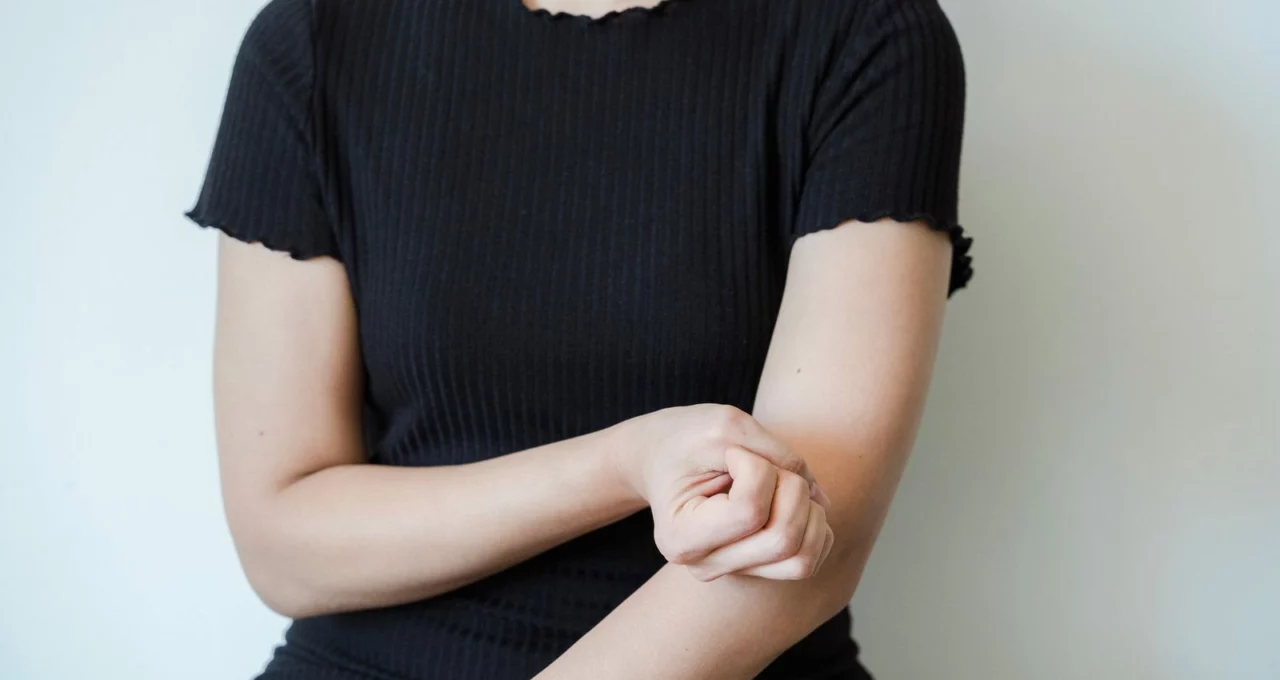
The medical name is medial epicondylitis. The medial epicondyle is the bony bump on the inside of the elbow, on the side of the little finger when your palm faces forward. The muscles that bend the wrist and turn the palm down attach to it through a common tendon. Repeated gripping, wrist flexion and sudden loads, such as the club hitting the ground hard, irritate that tendon where it joins the bone.
The “itis” is a little misleading. In long-standing cases the tissue usually shows signs of degeneration and failed repair rather than classic inflammation, which is why many specialists now talk about tendinopathy. That distinction matters for treatment: a tendon that has lost its tolerance to load gets better when it is loaded again in a controlled way, not when it is simply rested forever.
One surprise for many golfers: despite the name, plenty of golfers with elbow pain have it on the outside of the lead elbow, the condition usually called tennis elbow. The two have the same logic, an overloaded tendon on a bony point, and much of the advice below applies to both. The location of the pain tells you which tendon group is involved.
How to recognize it
The typical picture is easy to describe:
- Pain and tenderness on the inside bump of the elbow, sometimes spreading a few inches down the forearm.
- Pain when you grip firmly, shake hands, carry something heavy with the palm up, or flex the wrist against resistance.
- Stiffness in the morning or after rest, easing once the arm warms up, then returning after activity.
- In golf, a sharp twinge at impact, especially on fat shots, shots off hard ground or range mats.
A simple check: rest your forearm on a table, palm up, and bend the wrist up against light resistance from your other hand. If that reproduces the pain on the inside of the elbow, the flexor tendons are the likely source. Press gently on the bump itself: the tender spot is usually right on it or just below.
Warning signs that mean see a doctor first
Do not treat it yourself, and get checked promptly, if any of the following applies:
- Numbness or tingling in the ring and little fingers, or weakness of the hand. The ulnar nerve runs right behind the inside of the elbow and can be irritated or trapped there.
- Pain that began with a fall, a pop, or a single violent shot, followed by swelling or bruising.
- An elbow you cannot fully straighten or bend, or that locks or catches.
- Pain at night or at rest that does not change with movement, fever, or a hot, red, swollen joint.
- No improvement at all after six to eight weeks of sensible self-care.
A physician can confirm the diagnosis with a clinical exam, and will order an ultrasound or an MRI only if something does not fit.
Why golfers get it
The tendon does not care about your handicap. It cares about how much load it receives and how fast that load increases. The usual culprits are familiar to anyone who has spent a winter hitting balls into a net.
Sudden volume. The first warm weekend of spring, a golf trip with 36 holes a day, or a new resolution to hit two buckets every evening. Tendons adapt to load slowly, much more slowly than muscles, and a jump in practice is the most common trigger.
Hard contact. A heavy, steep strike that digs into firm ground or a thin range mat sends a shock up the shaft into the forearm. Mats do not give the way turf does, and practicing on them for weeks is a classic start.
A death grip. Squeezing the club, especially with the trail hand, keeps the forearm flexors working hard through the whole swing. Players who flip the wrists through impact or “hit at” the ball with the right hand add to the load on the inside of the trail elbow.
Life outside golf. Hours on a mouse and keyboard, gardening, carrying children, a new gym routine heavy on pull-ups and curls. The tendon adds all of it up.
Treatment: what usually works
Most cases improve with conservative care, but it takes patience: weeks for mild cases, often several months for established ones. The treatments with the best support share one idea, which is to calm the tendon down and then rebuild its capacity.
Relative rest, not total rest. Cut back or pause whatever provokes the pain, golf included if needed, but keep the arm moving in daily life. A useful rule many physical therapists use: activity is acceptable if pain stays low during it and is no worse the next morning.
Progressive loading. This is the core of rehabilitation. It often begins with isometrics, holding the wrist still against resistance for 30 to 45 seconds, which many people find eases pain. It then moves to slow eccentric and full-range wrist curls with a light dumbbell, palm up, lowering for three to four seconds. A flexible rubber bar used in a twisting motion is a popular, inexpensive tool, and there is a version of the exercise designed specifically for the inside of the elbow. Grip strengthening and forearm rotation with a light hammer complete the program. The load goes up only when the current level is comfortable.
Ice and short-term pain relief. Ice after activity and over-the-counter anti-inflammatories can ease symptoms for a few days. They do not repair the tendon, and anyone with stomach, kidney or heart issues should ask a pharmacist or doctor first.
A counterforce strap. A strap worn a couple of inches below the elbow is meant to spread the pull on the tendon. Some golfers find it helps them play; the evidence is modest. It is a crutch, not a cure.
Injections. A cortisone shot can bring quick relief, but research on elbow tendinopathy, mostly on the outer version, has found that the benefit fades and that relapses are common in the months that follow. Platelet-rich plasma and other injections have mixed evidence. Surgery is reserved for the small minority who fail many months of well-run rehabilitation.
Playing through it without making it worse
You do not always need to stop playing completely. Many golfers keep a reduced game going while they rehabilitate, as long as the pain stays mild and the next morning is no worse.
- Play from the fairway: tee up when the rules allow, use preferred lies in casual rounds, and avoid hacking out of thick rough.
- Skip the range mats. If you practice, hit off grass and chip and putt more than you hit full shots.
- Relax the grip. On a scale of one to ten, aim for a four. Check that the trail hand is not doing all the work.
- Warm up the forearms: wrist circles, gentle stretches and a few half swings before the first full one.
- Ride or use a push cart rather than carrying the bag.
Equipment can help at the margin. Grips that are worn smooth make you squeeze harder; a fresh grip, or a slightly larger or softer one, can lower grip pressure. Graphite shafts in the irons transmit less vibration than steel, and some players with elbow problems feel the difference. Neither replaces rehabilitation, and a club fitter, not a forum, should decide on grip size.
Prevention: keep the tendon ahead of the load
Once the elbow is quiet, the aim is not to go back to exactly what caused the problem.
- Build volume gradually. After a layoff, add range sessions and rounds over several weeks rather than all at once.
- Keep the forearm program. Two short sessions a week of wrist curls, grip work and rotation are cheap insurance.
- Train the whole chain. A swing powered by the hips and upper back puts less strain on the arms. Our guide to five exercises for the swing covers the basics.
- Fix the strike. A lesson on shallowing the angle of attack and hitting the ball before the ground protects the elbow as much as the scorecard.
Where U.S. golfers can get their elbow assessed
Physical therapists. According to the American Physical Therapy Association, every state allows some form of direct access, so you can see a physical therapist without a physician’s referral, although the conditions vary by state and your insurer may still require one before it pays. The APTA’s online directory lets you search by location. A therapist will check whether the pain comes from the tendon, the nerve or the neck, and build the loading program.
Sports medicine physicians and orthopedic surgeons. For warning signs, or when nothing improves after six to eight weeks, a primary care sports medicine physician is a good first stop, and the American Academy of Orthopaedic Surgeons publishes a patient guide to medial epicondylitis on its OrthoInfo site that is worth reading before the appointment. Check what your plan covers before booking imaging.
Your PGA professional. A teaching pro cannot treat a tendon, but can spot the steep strike, the death grip or the trail-hand flip that keeps irritating it. Mention the elbow before the lesson starts.
The season. In the northern states, the months when courses close are the ideal window to rehabilitate fully rather than half-heal and reinjure in April. In the Sun Belt, where golf never stops, schedule two or three lighter weeks and favor short-game practice on grass.
A practical plan for the next six weeks
- Today: run the wrist-flexion check and press on the bump. If any warning sign applies, book an appointment before anything else.
- Week one: cut full swings and range mats, keep chipping and putting, start daily isometric holds.
- Weeks two to four: add slow wrist curls and the rubber-bar exercise every other day, increasing the weight only when it is comfortable.
- Weeks four to six: reintroduce full swings off grass, a few at a time, with a relaxed grip, and judge each session by how the elbow feels the next morning.
- After that: keep two forearm sessions a week, and ask a coach to look at your strike.
Golfer’s elbow rewards the player who is patient for a few weeks and punishes the one who keeps hitting through it for a few months. Listen to the next-morning test, load the tendon gradually, and the inside of your elbow should go back to being something you never think about.