Buying a driver in 2026: fitting, used clubs and the humidity factor
The faces are all at the regulatory limit. What differs is the shaft, and that is the part most buyers never think about.
In brief
- Count your fairways hit before you book a fitting.
- Judge dispersion, not the three longest drives.
- Ten to twelve balls per set-up, or you are comparing luck.
- Grip size and shaft length cost less than a model year and change more.
- Used: check shaft reference, length and that the hosel wrench is included.
A driver is the most expensive club in the bag and the one Australians replace most often, usually after watching somebody else hit one. Before you spend, two questions matter: what actually differs between models, and whether your current driver is the problem at all.
What you are really buying
Every major manufacturer has been at the legal limit for face performance for years. What separates models is forgiveness on off-centre strikes, adjustability of loft and lie, and above all the shaft. The shaft is what most golfers ignore and what most affects where the ball finishes.
So there is one buying rule: the right driver is the one you have hit with your own swing. Twenty minutes on a launch monitor settles a question no review can.
Get fitted, and what to ask for
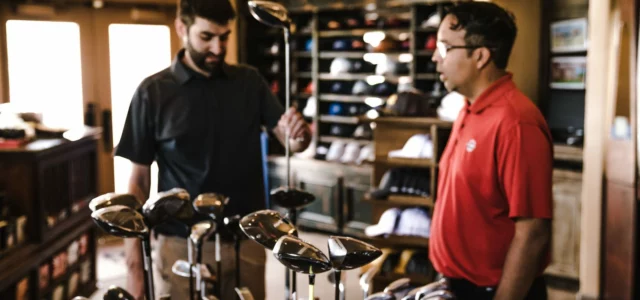
The large Australian golf retailers run fitting bays with launch monitors, and most credit the fitting fee against a purchase. Book the session warmed up rather than first thing, take your current driver so there is a baseline, and ask for dispersion numbers rather than carry distance alone.
Ten metres tighter dispersion is worth more shots than five metres of extra carry, every round.
Used is the smart money
The Australian pre-owned market is smaller than the American one but deep enough, and a two-year-old premium head with the right shaft beats a new head with the wrong one every time.
Check two things on any used purchase: the exact shaft model and flex, which listings describe badly, and whether the adjustable hosel comes with its wrench.
Where the money actually goes
A new premium driver is the single most expensive club in the bag and the one bought for the worst reasons. Before spending, sort the decision into three parts: the head, the shaft and the fitting, in ascending order of how much each will change your golf.
The head is the part with the marketing budget and the smallest practical difference between models within a generation. The shaft decides your dispersion and is the part most buyers never think about. And the fitting is what tells you which combination suits you, which no review can.
Timing the purchase
New models land in the Australian spring, ahead of the summer season. Buying in autumn gets you last season’s model considerably cheaper, technically almost identical, and still available across the shaft range.
The one thing worth doing first
Before any of this, count the fairways you hit with the driver you already own. Fourteen holes, one number, three rounds. Below four, the club is not the problem, and no purchase fixes a strike.
The heat and humidity factor
Two practical points specific to this market. Grips degrade faster in Queensland and Northern Territory humidity than anywhere else, and a slipping grip costs more shots than any head design will save. Regrip annually if you play in the tropics.
And the ball flies further in summer heat: a driver fitted in July at 12 degrees will launch differently in January at 35. Fit in the season you play most.
The three numbers that decide it
A launch monitor shows twenty numbers, and three of them decide a driver purchase.
Launch angle tells you how high the ball leaves. Plenty of amateurs launch too low because their loft was chosen after somebody explained that less loft means more distance. Below roughly 150 kilometres an hour of clubhead speed, the opposite is almost always true.
Spin decides whether the ball carries or falls out of the air, and it is controlled through loft, centre of gravity and shaft. And smash factor, ball speed divided by clubhead speed, tells you how cleanly you are striking it: if that number moves around a lot between shots, the strike is the problem and not the club.
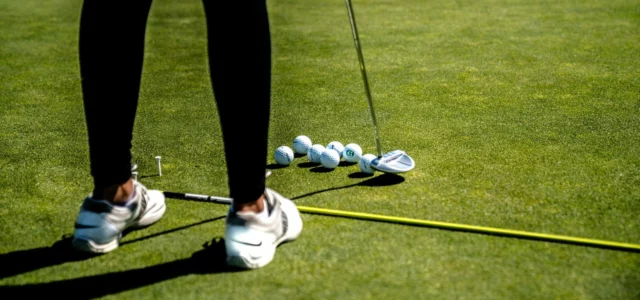
Insist on enough shots per configuration. Five tells you nothing, because the best and worst shots in a series are thirty metres apart for a mid-handicapper. Ten or twelve per set-up, and you judge the average alongside the width of the spread.
The two parts nobody looks at
Grip size and shaft length cost less between them than the difference between two model years, and both change where the ball goes.
A grip that is too thin lets the hands work too actively and shuts the face; one that is too thick slows them and leaves it open. If you chronically pull it left or push it right, have the grip diameter measured before you think about another head.
Stock drivers are longer than they used to be, because length sells metres in a catalogue and dispersion on a course. Two or three centimetres off the shaft costs almost no measurable ball speed and visibly improves the strike for most amateurs. It only goes one way, so measure before you cut.
When a new driver is justified
Run this test next round: count how many of the fourteen fairways you hit. Below four, the problem is strike or club selection off the tee, not the club itself.
A change makes sense when the driver is seven or eight years old, when your swing has changed substantially, or when your miss is consistently one-directional and a different shaft corrects it. Everything else is preference, and preference is fine as long as nobody calls it improvement.
The test before you book a fitting
Count two things over three rounds: fairways hit, and which side your misses go. If five misses out of six go the same way, you have a systematic bias, and that is exactly what a different shaft or loft can correct.
If the misses spread both ways, the strike is the issue, and an hour with a PGA professional is a better investment than a new club. That distinction costs three rounds and a pencil, and it regularly saves several hundred dollars.
What used clubs hide
Three things devalue a used driver and none of them shows in a photograph. The face can be fatigued on a very heavily played head, which shows as hairline marks along the weld. The adapter can belong to a different model from the shaft, which makes the head useless until you find the right one. And the shaft may have been cut down, which changes the swing weight and appears in no listing.
Check that the wrench for the adjustable hosel is included, and buy from somewhere that takes returns. On current models sold privately the counterfeit risk is real: ask for the serial number before you pay.
Where to buy
- A specialty retailer with a fitting bay, so you can hit several heads back to back on a launch monitor.
- The pre-owned market, once you know exactly which head and shaft suit you.
- Your club or public course professional, who can order most brands, adjust length and grip, and check the fit again after a few rounds.
And the short version, in one sentence and for the whole purchase: the driver you have hit beats every driver you have compared. Everything else, from the model year to the discount, comes second to whether your dispersion tightens and you find more fairways.
Panxis Golf has no commercial relationship with any retailer and earns nothing from your purchases.
Where this shows up on a course
Three of the longest courses in our directory, where the tee shot decides the round.
- Royal Adelaide Golf Club: An open links on real dune land with a railway running through it, and the crater hole at the eleventh: MacKenzie’s advice, Clayton’s trees, and a finish reviewers call weak.
- The Australian Golf Club: The oldest club in Australia, rebuilt twice by Nicklaus for television: conditioning tour professionals call the best they have played, on a site that is entirely manufactured.
- Lake Karrinyup Country Club: Alex Russell around a wetland lake north of Perth, rated the best course in the state: real elevation change, kangaroos on the fairways, and no way on without a member.
We have not played these courses; each page says what it is based on.