Laser or GPS? Prices, pennant rules and the Australian way to choose
A GPS tells you where the green is, a laser tells you where the flag is. Distance devices are legal under the Rules of Golf, slope is not, and your club's local rules can ban them outright: read those before you spend.
In brief
- Rule 4.3a allows distance information but not elevation or club recommendations; a second breach is disqualification.
- A committee can prohibit distance-measuring devices through Model Local Rule G-5: check your local rules and pennant conditions.
- On 17 September 2026, an Australian golf retailer listed GPS units from A$160.95 and mainstream lasers from A$398.95.
- GPS suits unfamiliar courses and quick play; a laser suits golfers who play one course and want the exact flag number.
- Check subscriptions and course mapping before comparing sticker prices.
Browse an Australian golf retailer’s website this week and the distance-measuring range runs from a Bushnell Wingman Mini GPS at A$160.95 to a Bushnell Pro X3+ laser at A$848.95, with watches, handhelds and lasers in between. That spread is the real question hiding behind “laser or GPS”: not which technology is better, but how much of your money a number is worth, and which kind of number your golf actually needs.
Here is a way to decide, built around how Australians play: Saturday Stableford comps, pennant, plenty of courses played once on a trip, and summer afternoons when nobody wants a five-hour round.
Two different questions, two different tools
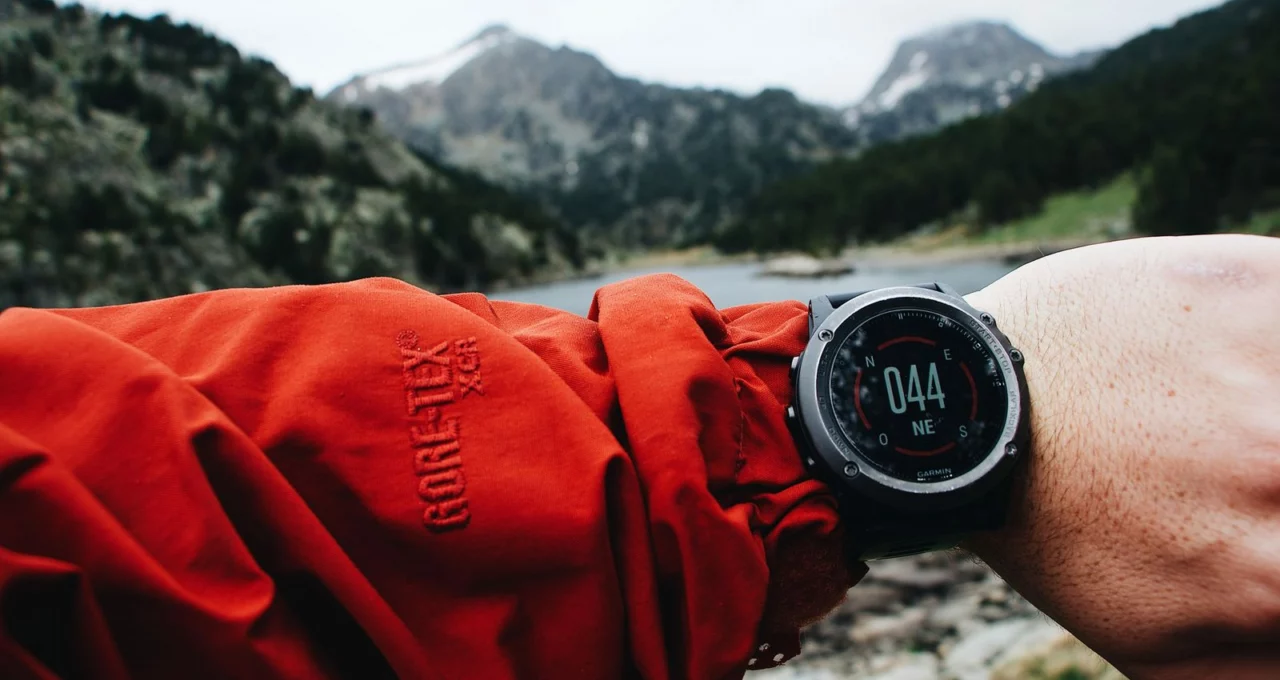
A laser rangefinder answers “how far is that thing I can see?” You point it at the flag, a bunker lip or a tree, press the button, and get a figure accurate to about a metre. A GPS, on your wrist, clipped to the bag or on your phone, answers “how far is the green?” It reads your position against a mapped course and gives front, middle and back, plus distances to hazards the map knows about, without you aiming at anything.
Everything else follows from that difference. The laser is exact but needs a line of sight and a steady hand. The GPS is instant and works around corners and over rises, but its number to the flag is an estimate unless the pin position is fed in.
What the Rules of Golf say, and what your club can add
This is where many club golfers are working from out-of-date memories. Under Rule 4.3a of the current Rules of Golf, getting distance or direction information from a distance-measuring device is allowed in a round. What is not allowed is measuring elevation changes, or using a device that recommends a club or a line of play based on where your ball lies.
Two consequences follow. First, a slope function must be off in any round played under the Rules, which is why tournament-legal lasers have a visible switch. Second, the committee running the competition can go further and ban distance-measuring devices altogether through Model Local Rule G-5, so the local rules sheet or the pennant conditions are what decide the matter at your club, not the box the device came in.
The penalty is worth knowing. A first breach of Rule 4.3 is the general penalty, two strokes in stroke play or loss of hole in match play; a second breach is disqualification. More on the rules club golfers regularly get wrong is in this guide.
What things cost in Australia right now
Regular prices at a major Australian golf retailer on 17 September 2026, with a second retailer’s published RRP for comparison where it lists the same product:
| Device | Type | Retailer price | Published RRP |
|---|---|---|---|
| Bushnell Wingman Mini | GPS speaker | A$160.95 | |
| Bushnell Phantom 3 Slope | Handheld GPS | A$207.95 | A$259.99 |
| Garmin Approach G12 | Clip-on GPS | A$229.95 | |
| Garmin Approach S12 | GPS watch | A$249.00 | A$349.99 |
| Nikon Coolshot 20i GIII | Laser | A$398.95 | |
| Bushnell Tour V6 | Laser | A$497.95 | A$599.99 |
| Garmin Approach Z30 | Laser | A$599.95 | A$699.99 |
| Bushnell Pro X3+ | Laser with slope | A$848.95 |
The second retailer also listed a Shot Scope PRO L2 laser at an RRP of A$299.99 and a Precision Pro NX9 Slope at A$429.99. Prices shift with promotions, so use the table to understand the bands rather than as a quote. For a model-by-model look at this year’s devices, see our 2026 rangefinder and GPS comparison.
The bands tell a story. Around A$160 to A$250 buys a GPS that gives you the green. Around A$400 to A$600 buys a mainstream laser. Beyond that you are paying for stabilisation, slope and optics, which a low handicapper may value and a weekend Stableford player rarely needs.
The case for GPS on Australian courses
Much of Australian club golf is played on courses you know well, but a lot of it is not: interclub pennant away days, a country course on a road trip, a resort week in Queensland. On an unfamiliar course, front, middle and back numbers plus the carry over a greenside bunker are most of what a decision needs, and a GPS delivers them before you have taken the headcover off.
It is also the friendlier tool for pace. A glance at the wrist costs nothing, while four players each lasering every approach adds up over eighteen holes, which on a 35 degree afternoon is a genuine cost. See our notes on pace of play.
And the middle-of-the-green number is the one most club golfers should be playing to anyway. Aiming at the flag with a mid-iron is how bunkered pins turn a net par into a zero on the Stableford card.
The case for a laser
If you play the same course every Saturday, you already know the layout; what changes is the flag. A laser gives you that exact number, which matters most inside about 130 metres, where a club golfer’s wedge gaps are ten metres or less and the difference between front and back pin can be two clubs.
A laser also has no maps to update and no subscription. It does need a clear sightline, so blind approaches and hilltops are its weak point, and golfers with less steady hands should try one before buying; the models that vibrate or beep when they lock onto the flag help a great deal.
Watch out for the ongoing costs
Before comparing sticker prices, check whether full course data or extra features on a GPS or app require a paid subscription, and whether your home course and the ones you travel to are mapped. A cheaper device with an annual fee can end up dearer over three seasons than a laser with none. The CR2 battery a laser uses is a small cost by comparison; one retailer listed a Bushnell CR2 at A$13.95.
Where to buy in Australia
Specialist golf retailers list rangefinders and GPS units online, publish RRPs and sale prices, and often have shops where you can handle a device first. Before paying, ask whether you can try the device: a laser’s lock-on speed and the brightness of its display are things you judge by using it, not by reading about it.
Your club pro shop is worth asking too. If it keeps a demonstration unit, a few holes with it will settle the laser-or-GPS question faster than any comparison chart. And before you buy anything, read your club’s local rules and your pennant conditions so you know whether devices are allowed at all.
Panxis Golf has no commercial relationship with any retailer or manufacturer mentioned here and earns no commission on what you buy.
Try the free version first
A phone app with course maps will give you front, middle and back numbers for nothing or very little. Play three rounds with one, and at the same time write down how far your clubs actually carry, as described in our guide to the five numbers worth tracking. If you find the phone slow to pull out, a watch or clip-on GPS is the natural upgrade. If you find yourself wishing for the exact flag number on your home course, that is the laser talking.
How to choose in five minutes
- Mostly one home course, exact flag numbers wanted: laser, with a visible slope switch if it has slope.
- Lots of unfamiliar courses, walking quickly: GPS watch or clip-on.
- Tight budget: a phone app plus a written carry chart.
- Competition golfer: read the local rules, keep slope off, and remember a second breach of Rule 4.3 is disqualification.
- Whatever you buy: learn your carry distances first, or no number will help.
How this page was put together
Prices were recorded on 17 September 2026 from the Drummond Golf website (Australia), with published RRPs from GolfBox. Panxis has no commercial link with either retailer.