Laser or GPS on Canadian courses: blind doglegs, mountain drops and Rule 4.3
The right distance device depends on the holes you play. A GPS handles blind approaches through Ontario and Quebec forest; a laser shines on the open drops of the Rockies. Know your carry distances and the Rules of Golf before you pay for either.
In brief
- A GPS gives front, middle and back numbers even when trees hide the green; a laser needs a line of sight.
- Slope readings help on mountain courses but ignore altitude: Banff sits around 1,400 metres.
- Rule 4.3a allows distance information but not elevation measurement: two strokes, then disqualification.
- The free Golf Canada app gives green yardages for more than 1,500 Canadian courses.
- Test how fast a laser locks on before you buy, and learn your carry distances first.
Canadian golf throws two very different kinds of hole at a distance device. On one side there is the forest parkland course of Ontario, Quebec or the Maritimes, where the green on a dogleg sits hidden behind a wall of maples. On the other there is the mountain course in Alberta or British Columbia, where the green is in plain view, 60 feet below the tee. A laser rangefinder and a GPS each handle one of those holes very well and the other one less well. That, more than brand or price, is how to choose.
First, a reality check. The number on the screen only helps if you know how far your clubs actually carry. A golfer who gets 152 yards and has no idea whether that is a 7-iron or an 8-iron has paid for precision they cannot use. Sort out your real carry distances first, then buy the device.
Two tools, two jobs
A laser rangefinder measures the distance to whatever you point it at: the flagstick, a bunker lip, a tree at the corner. It is accurate to about a yard, and most current models give a short vibration when they lock on the flag instead of the trees behind it. It needs a line of sight and a few seconds.
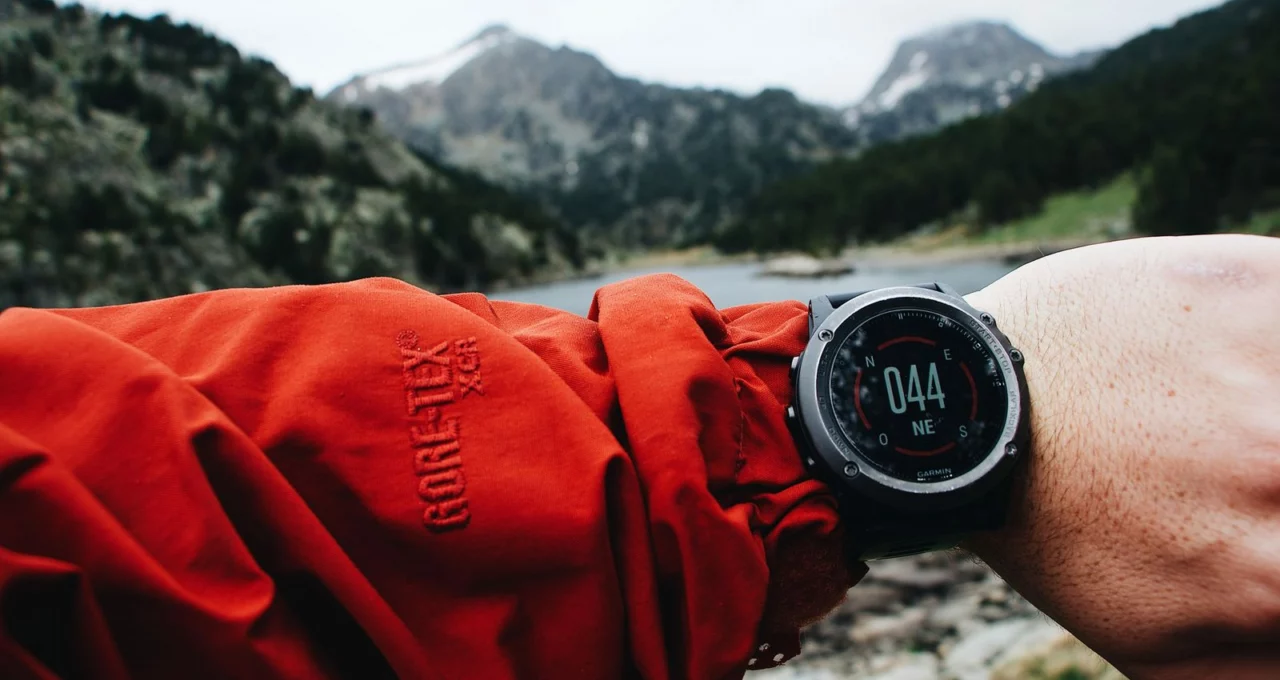
A GPS device, whether a watch, a handheld unit or a phone app, uses a map of the course. It shows the distance to the front, middle and back of the green, and to mapped hazards, as soon as you reach your ball. There is nothing to aim. The distance to the flag itself is an estimate, since the map knows the green but not today’s hole location.
The hole you cannot see: forest courses
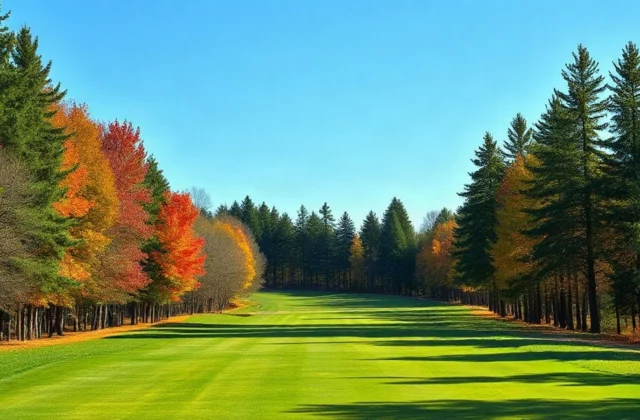
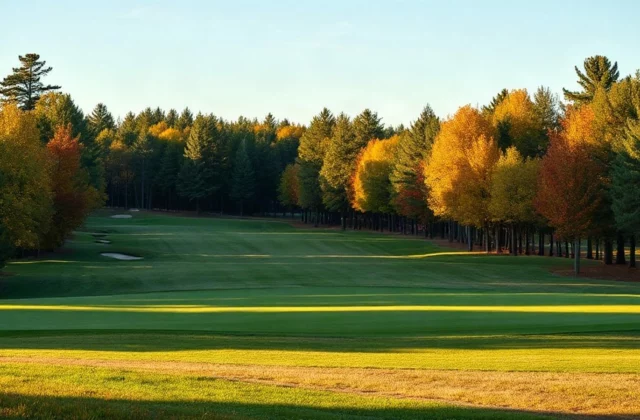
On older tree-lined layouts, many approach shots are partly or fully blind. The fairway bends around the trees, or the green sits over a rise. A laser has nothing to hit, and you end up pointing it at a tree and doing mental arithmetic.
A GPS gives the same three numbers whether the green is visible or not, plus the carry over the bunker you cannot see. For golfers who mostly play wooded parkland courses, particularly unfamiliar ones, that is a strong argument for GPS.
Morning fog is the other forest and lakeside problem. In spring and autumn, low cloud often sits over courses near water until mid-morning. A laser can struggle to lock through it; a GPS does not care.
The hole you can see too well: mountain courses
In the Rockies, the green is usually in plain view, and a laser shines. The difficulty is not the distance but the elevation change, and the thin air on top of it.
Many rangefinders offer a slope function that adjusts the number for the height difference between you and the target. A shot of 150 yards to a green well below the tee can play a club or more shorter. On a mountain layout that is useful information.
Two cautions apply. First, slope readings do not account for altitude. The town of Banff sits at about 1,400 metres above sea level and Calgary at roughly 1,050 metres; the ball carries further in that thin air regardless of the slope, and no device reading corrects for it. Second, the Rules of Golf restrict slope, as the next section explains.
What the Rules allow
Golf Canada follows the Rules of Golf written by the R&A and the USGA, and Rule 4.3a is the relevant one. It permits you to get distance or direction information from a distance-measuring device during a round. It does not permit you to measure elevation changes, or to use a device that interprets the information for you, for example by recommending a club based on where your ball lies.
The penalty is not small. A first breach of Rule 4.3 carries the general penalty, two strokes in stroke play or loss of hole in match play. A second breach after an intervening event means disqualification. A committee can also adopt a Local Rule that bans distance-measuring devices altogether for an event, so read the conditions of competition for your club championship or provincial qualifier.
In practice that means:
- If you play competitions, buy a laser with a tournament mode that switches slope off in a way others can see.
- If a GPS app offers “plays like” distances or club suggestions, turn those features off for competitive rounds.
- If you are unsure, the Rules of Golf app, which Golf Canada links to from its rules page, has the full text on your phone.
For more of the rules club golfers regularly get wrong, see our guide to the rules of golf.
Why three numbers often beat one
The flag distance feels like the most valuable number. For most club golfers it is not.
Take an approach over a pond to a front hole location. The laser says 141 to the flag. The golfer pulls the club that carries 141, catches it slightly thin, and the ball finds the water. A GPS on the same shot shows 136 to the front, 146 to the middle and 157 to the back. The golfer notices that the safe number is the front edge plus a margin, takes the club that carries 148, and finishes on the middle of the green with a long putt.
The second golfer used less precise data and made the better decision. Middle-of-green golf is the percentage play for almost anyone above single figures, and a GPS puts that number in front of you by default.
Laser or GPS: a quick comparison
| Situation | Laser rangefinder | GPS (watch, handheld, app) |
|---|---|---|
| Blind shot on a wooded course | No target to lock on | Front, middle and back as usual |
| Exact distance to the flag | About one yard | Estimate only |
| Downhill shot in the mountains | Slope mode helps in casual rounds | Flat distances only |
| Morning fog near a lake | May struggle to lock | Unaffected |
| Pace of play | A few seconds per reading | Instant glance |
| Running cost | A battery now and then | Some apps and devices need a subscription |
Start with the free option
Before spending anything, try the phone you already carry. The Golf Canada app is free and provides front, middle and back green yardages for more than 1,500 Canadian courses, and it is the same app many golfers already use to post scores for their Handicap Index. Other free and paid apps cover Canadian courses too.
Play three rounds with nothing but those numbers and your honest carry distances. If your scoring holds up, a GPS device is all you need, and you may not need a device at all. If you keep wishing you knew the exact distance to a back flag on a two-tier green, a laser is the next step.
Phones have drawbacks: battery drain over four hours, which a small power bank solves, and the time it takes to pull the phone out. A watch removes both, which is why many golfers move from the app to a watch after a season.
Where to try and buy in Canada
Specialist golf stores carry the main rangefinder and GPS brands. The in-store test is worth doing: point a laser at a distant sign and see how quickly and reliably it locks, because that speed decides whether you will actually use it on the course.
Your club’s pro shop is worth asking about a demo unit for a round. A device used on your own course tells you more than any specification sheet.
Manufacturers’ refurbished programmes and last season’s models are often the best value, since the underlying optics and satellite chips change slowly from one year to the next. Check the warranty that comes with any refurbished unit.
Panxis Golf has no commercial relationship with any retailer, manufacturer or app mentioned here and earns no commission.
Five questions before you buy
- Do you know your carry distances? If not, fix that first.
- Are your usual courses wooded with blind shots, or open and hilly? The first favours GPS, the second a laser.
- Do you play competitions? Then slope must switch off visibly, and club-suggestion features must be disabled.
- Have you tried three rounds with the free Golf Canada app?
- Have you tested how fast the laser locks, in a store or with a demo unit?
A distance device will not make the swing for you. What it does is remove the guesswork from the decision, and on Canadian courses, from maple-lined doglegs to mountain drops, the right device is the one that fits the holes you actually play.