Laser or GPS watch? Distance devices, the R&A rules on slope and UK prices
A laser suits a golfer on a familiar course who wants the exact pin number; a GPS watch suits one who travels and wants the shape of the hole at a glance. Neither helps until you know how far you hit each club.
In brief
- Rule 4.3a(1) allows distance devices but not elevation readings, so slope must be switched off.
- A committee can ban distance-measuring devices under Model Local Rule G-5.
- Front, middle and back numbers often lead to better decisions than a precise pin reading.
- Entry-level lasers and GPS watches start around £109 to £149 at UK retailers.
- Try a free phone app for three rounds before buying anything.
Pacing from the 150-yard marker post still works, but plenty of British club golfers now carry a laser rangefinder or a GPS watch, and many more are wondering which to buy. The honest answer depends on the courses you play, whether you compete, and how much you want to spend, which in the UK currently ranges from around £100 to well over £500.
First, an unpopular point. A device that tells you it is 147 yards is only useful if you know which club carries 147 yards. For most amateurs the missing information is not the distance to the flag but their own honest distance chart. Get that first, then buy the gadget.
What the Rules allow
Under Rule 4.3a(1), The R&A allows you to get distance and direction information from a distance-measuring device during a round. What you may not do is measure elevation changes, or use a device that interprets distance, for example by recommending a club or line based on where your ball lies.
That makes slope readings the key issue. A rangefinder that adjusts yardage for uphill or downhill shots must have that function switched off when you play under the Rules, which includes rounds you intend to submit for handicap. Many models have a visible switch or faceplate so playing partners can see slope is disabled.
Committees can also go the other way. Model Local Rule G-5 lets a committee prohibit distance-measuring devices altogether. Check the competition terms before you play.
Lasers: exact numbers to the flag
A laser gives you the distance to the flagstick itself, usually to within a yard or so. Good ones lock onto the pin and vibrate to confirm they have found the flag rather than the gorse behind it.
That precision pays inside 150 yards and on par 3s, where the pin position can change the club by two or three.
The limits are practical. You need a clear line of sight and a steady hand. On a blind approach over a links dune, or round a dogleg through trees, there is nothing to aim at. Heavy rain and sea mist make things harder too, and a laser wet on the lens is little use. Stabilised models help golfers whose hands are not rock steady.
GPS: the shape of the hole at a glance
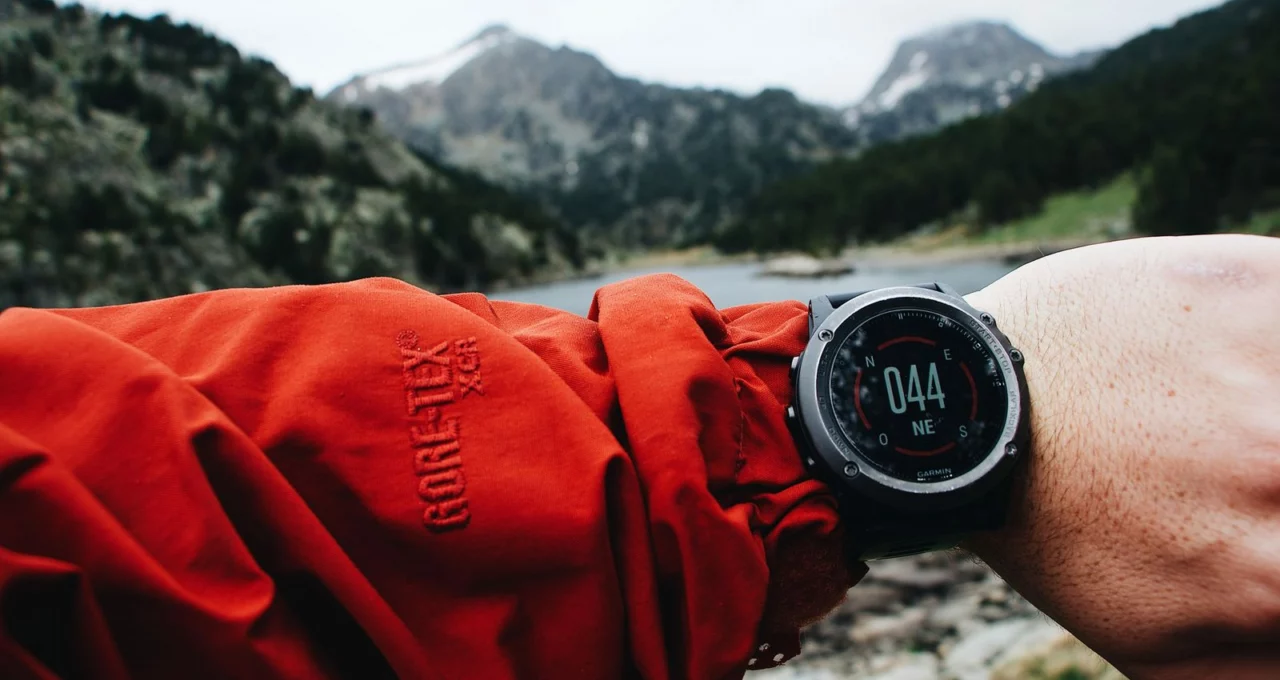
A GPS watch or handheld shows front, middle and back of the green as soon as you reach your ball, with no aiming. On an unfamiliar course, those numbers plus the carry over a bunker or burn give you nearly everything you need for a decision.
It is also faster. A glance at the wrist costs nothing, while four golfers each lasering every shot quietly adds time to a round.
The trade-off is that GPS works from a mapped green rather than the actual flag, so the number to the pin is an estimate unless the course publishes pin positions and the device supports them. Before buying, check that the courses you play are mapped for that device, and whether full features need a subscription.
Why front, middle and back is underrated
The middle number is the one most club golfers should play to most of the time, and the front number tells you what you must carry, which is the number that decides whether a shot is safe.
Imagine a laser reading of 147 to the flag. The golfer takes the club that goes 147. Another golfer sees 132 to the front, 141 to the middle and 152 to the back, notices the flag is near the front with a burn short of the green, and takes the club that goes 145. Less precise information, better decision.
What they cost in the UK
These prices were listed at a UK golf retailer in September. Several were reduced, so treat them as a guide to price bands rather than a promise.
| Device | Type | Price |
|---|---|---|
| Garmin Approach S12 | GPS watch | £109 |
| Shot Scope G5 | GPS watch | £109 |
| Shot Scope PRO L2 | Laser | £149 |
| Blue Tees Series 2 Pro Plus | Laser | £139.99 |
| Bushnell Tour V6 Shift | Laser with slope | £299 |
| Garmin Approach S70 47mm | Premium GPS watch | £549 |
| Garmin Approach Z82 | Laser with GPS | £549 |
The pattern is clear. A capable entry-level laser or GPS watch now costs little more than £100. Premium models add features such as slope, stabilisation, colour screens and hybrid laser-GPS designs, which some golfers value and many never use.
Which one suits you
| Laser | GPS watch or handheld | |
|---|---|---|
| Best for | Regular home course, exact pin distances | Visiting new courses, playing quickly |
| Accuracy | To the flag, about a yard | To the green edges; pin is estimated |
| Speed | A few seconds and a clear line | Instant |
| Blind shots | No target to lock on | Works anywhere |
| British weather | Lens and sightline suffer in rain and mist | Unaffected, though screens can be hard to read in rain |
If you play the same course most weekends and care about exact pin numbers, a laser suits you. If you travel, play unfamiliar links and heathland courses, or simply dislike stopping to aim, a GPS watch keeps you moving. Plenty of low handicappers carry both, the watch for the hole and the laser for the flag; that is a reasonable destination, not the place to start.
Where to buy distance devices in Britain
Specialist golf retailers. Many of them list rangefinders and GPS watches from Bushnell, Garmin, Shot Scope, Nikon, Blue Tees and Precision Pro, which makes it easy to compare price bands side by side.
In person before you buy. A laser is worth trying in the hand. How quickly it locks onto a flag is what decides whether you use it or leave it in the bag. Ask your club professional whether they have a demonstration unit you can take out for a round.
Last season’s model. When a new version arrives, the previous one often drops sharply. At a UK golf retailer in September, the Bushnell Tour V5 Slim Shift was £229 against a £399 original price, while newer V6 and V7 models sat above it.
Panxis Golf has no commercial relationship with any retailer or manufacturer named here and earns no commission.
Try the free option first
Before spending anything, use the phone in your pocket. Many GPS apps give front, middle and back numbers for British courses at little or no cost.
The downsides are real but modest: battery drain over four hours (a small power bank solves it), slower than glancing at a watch, and some clubs have their own expectations about phones on the course, so check. The benefit is that three rounds with a free app and an honest distance chart will tell you whether you need a better device, or simply better knowledge of your wedge distances and bunker carries. If you are unsure what is permitted, our guide to the Rules of Golf club golfers get wrong covers the basics.
Before you buy
- Learn your carry distances first.
- Play three rounds using front, middle and back numbers from a phone app.
- If you compete or submit handicap scores, make sure slope can be switched off visibly.
- Check your courses are mapped and whether a subscription is needed.
- Try a laser in the hand, and look at last season’s model before paying full price.
How this page was put together
Prices were recorded in September 2026 at Clubhouse Golf (UK). Panxis has no commercial link with this retailer.