Second-hand golf clubs in the UK: grades, trade-ins and the checks that matter
A used set in your specification beats a new set in someone else's. The risk is not old technology but the wrong shaft, a mismatched set or a cracked driver, and a few checks remove most of it.
In brief
- Get measured first: flex, length and lie matter more than the model year.
- Learn the condition grades, and insist that sets are complete with matching shafts.
- Iron sets, hybrids and putters are the best second-hand buys; worn wedges are not.
- Several retailers run trade-ins, as do many club pro shops.
- Add new grips and a lie and loft check to the price before comparing deals.
Pick up any British golf retailer’s sale page in September and you will see last season’s clubs discounted hard. On the day this page was updated, one UK retailer listed a TaylorMade SIM 2 Max driver, a model several generations old, at £279 against an original £449. Go one step further, to clubs somebody has already played, and the numbers drop again. That is the whole appeal of second-hand golf equipment: better clubs than your budget would otherwise stretch to.
The catch is rarely the technology. A good iron from four or five years ago still does its job. What goes wrong is specification and condition: a shaft that does not suit you, a set built for someone taller, or a driver with a crack you did not hear.
Why fit matters more than the model year
Much of what golfers credit to a new club is really fitting: the right shaft weight and flex, a length that lets you stand to the ball comfortably, a lie angle that matches the way you strike it, and a grip size that suits your hands. Improvements from one year’s model to the next are modest by comparison.
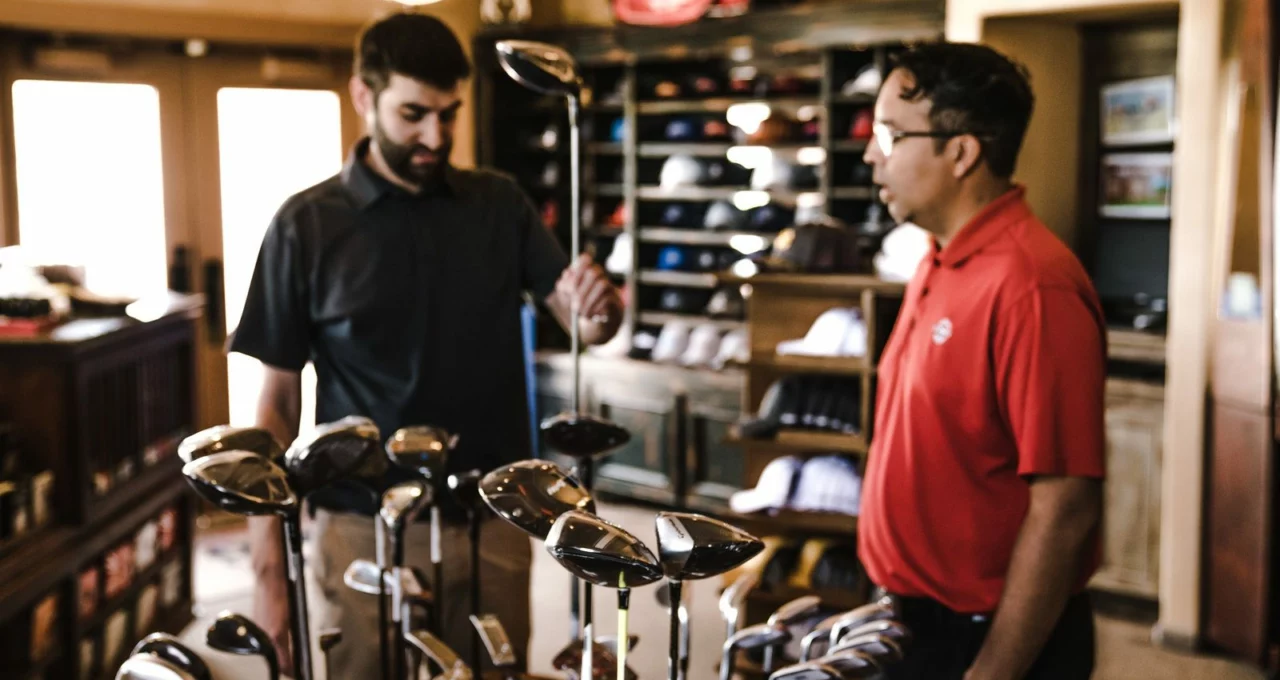
So a second-hand set in your specification will serve you better than a brand new one in somebody else’s. Before you browse, know your numbers: shaft flex and weight, club length and lie for irons, loft and shaft for a driver. If you have never been measured, book a fitting first. Several British retailers run fitting centres, and an hour on a launch monitor is cheap insurance against a £300 mistake.
Reading the condition grade
Reputable sellers grade condition, and it pays to understand what the words mean before you compare prices. One UK retailer publishes its own condition guide for trade-ins, and it is a useful template for judging any listing:
- At the top end, clubs used for a couple of rounds at most, with minimal marks to the face and topline and grips with no wear.
- In the middle, visible marks on the crown or topline, some wear to faces and grooves, minor stone chips, cosmetic marks on shafts and grips that may be losing their tackiness.
- Lower down, heavy groove wear, larger chips or dents, rust spots or pitting on steel shafts, and grips that need replacing soon.
- At the bottom, cracks, rattles, missing badges, weights or ferrules.
Its guide also insists that all shafts in a set match by type and flex and that sets are complete, with no missing 7-iron. Apply the same standard when buying: an iron set with one odd shaft is a common, rarely disclosed problem.
Wear that matters and wear that does not
Iron heads are tough. Stone chips and bag chatter on a 6-iron look worse than they play, and a well-kept iron set a decade old can perform very much as it did new.
Grooves are a different matter, and it is on wedges that worn grooves cost you. Drag a fingernail down the face: if it does not catch the groove edges, expect less spin and more release, especially from damp rough on a British autumn morning.
Shafts do not go soft with age, whether steel or graphite. What does happen is damage: dents and kinks in steel, and cracks or bag wear in graphite, all of which you can see. Steel shafts that have lived in a damp garage may also show rust spots, which the same guide treats as a grade-lowering fault.
Grips simply wear out. Assume any second-hand club needs new ones, and count that in the price from the start.
Checks to make before handing over money
- Sight down the shaft for kinks or ripples, especially just above the hosel.
- Look for a ferrule that sits proud or a glue line at the hosel: signs the club has been reshafted. Not a deal-breaker, but you need to know what shaft you are really buying.
- Tap a driver or fairway wood face and listen. A dull note or a rattle points to a crack or loose material inside.
- Study the sole. Wear concentrated towards the toe or heel of irons can mean the lie was wrong for the previous owner, or that the clubs have been bent.
- On any premium driver from a private seller, check the serial number with the manufacturer. Counterfeits look convincing in photographs.
- Confirm dexterity, flex and length in writing if you cannot inspect the club in person.
Which clubs to buy second-hand
| Club | Second-hand? | The reason |
|---|---|---|
| Iron sets | Yes, the best value | Heads last for years and designs move slowly |
| Hybrids and fairway woods | Yes | Durable, with plenty of shaft options on the market |
| Drivers | Yes, at two or three seasons old | Prices fall quickly, performance barely changes |
| Wedges | Be wary | You are paying for grooves, and grooves wear out |
| Putters | Yes, ideal | Feel is personal, so it is the cheap way to experiment |
Treat the wedge row seriously. A half-price wedge with half its grooves left is not a bargain, and spin around the green is the one equipment difference most club golfers can genuinely feel.
Where to buy and sell used clubs in the UK
Specialist pre-owned retailers often offer an online trade-in tool that asks for brand and model, then dexterity, shaft flex, loft and your own assessment of condition before giving a price, which is a good discipline for describing your old clubs honestly wherever you sell them.
High-street chains have entered the trade-in market too: in 2022 one large British golf chain partnered with a pre-owned specialist on trade-ins. Golf Monthly reported at the time that customers could trade in drivers, fairway woods, hybrids, iron sets, putters and, for the first time, wedges in store against new equipment of the same value or more.
Some online retailers run their own trade-in service by phone or enquiry form. According to the terms of one, the team issues a quote with an agreed valuation, arranges a free DPD return, checks the clubs against the grade on arrival and applies the credit to a new order. The service is for UK residents only, and a quote is valid for three days.
Your club’s professional is the option people forget. Pro shops often take members’ part-exchanges, know how the clubs were treated and can adjust lie and length as part of the deal.
Private sales on marketplaces are cheapest and riskiest. Buy only from sellers who photograph the actual club from several angles, show the serial number and accept returns.
Panxis Golf has no commercial relationship with any retailer named here and earns no commission.
Timing the swap
Values fall once a newer model is announced, and the big manufacturers usually unveil new ranges around the turn of the year, ready for spring. That makes the autumn good for buying last season’s clubs and poor for selling your own. If you are doing both, sell before the new launch and buy after it.
Trade-in is quicker and pays less than a private sale. Fresh grips and the original headcover and adjustment tool both lift what a buyer will pay.
The costs after the purchase
Budget for a set of new grips and a lie and loft check at the same time. Second-hand irons are often a degree or two off, either from a previous owner’s fitting or from contact with a tree root, and irons that are too flat send the ball right of target. A professional with a loft and lie machine can check and correct a set quickly, and together these two jobs turn someone else’s clubs into yours.
Before you buy
- Know your specification and walk away from anything that does not match it.
- Learn the seller’s condition grades, and insist on matching shafts in a set.
- Fingernail-test the grooves on any wedge.
- Check premium driver serial numbers with the manufacturer.
- Add grips and a lie check to the price before comparing deals.
How this page was put together
The TaylorMade SIM 2 Max price was noted in September 2026 at Clubhouse Golf (UK). Panxis has no commercial link with this retailer.