Putter fitting in the UK: aim, length and lie before the brand
The putter is the club you use most and the one most often bought on looks. Aim, length, lie and balance decide whether it helps, and all four can be checked in half an hour before you spend a penny.
In brief
- Buy the head shape you aim straight; aim is personal and a fitter can measure it.
- Many off-the-shelf putters are too long for the golfer's natural posture.
- If the toe or heel lifts at address, putts start offline before the stroke.
- Rule 10.1b bans anchoring, but arm-lock putters held against the forearm are allowed.
- Try a demo on real greens: links, parkland and winter temporary greens all putt differently.
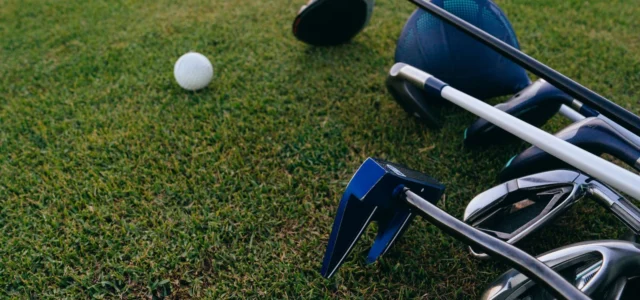
Walk along the putter wall in a British golf shop and the choice runs from about £119 for a Cleveland or Wilson model to £269 and beyond for a premium mallet, before you reach the tour-level names. Most golfers choose by looks and by the feel of three putts on a carpet. Yet the putter is the club you use most in a round, and whether it helps you comes down to measurements that cost little to check.
Three matter: length, lie angle and how the head is balanced. A fourth, how easily you aim it, turns out to matter most of all. Get those right and the name on the sole is almost irrelevant.
Aim first
A putter you aim straight will hole more putts than a theoretically better one you aim slightly left. At ten feet, a face pointing a couple of degrees off line is enough to miss the hole before you have made a stroke.
Aim is highly personal. Some golfers aim a plain blade with a single sight line perfectly and are hopeless with a large mallet covered in lines. Others are the reverse. It has nothing to do with ability.
A good fitter will check your aim with a laser or camera from around ten feet with two or three head shapes. The results are often surprising, and they cut the choice down faster than anything else. Buy the shape you aim straight, whatever it looks like.
Length: many off-the-shelf putters are too long
Most putters are sold at around 34 or 35 inches. For many golfers that is longer than their natural posture needs.
Too long, and your hands move away from your body, your eyes end up inside the ball line, and the face tends to aim left. You then compensate with your hands through impact, and that compensation is what fails under pressure in the monthly medal.
To check, take your normal stance with arms hanging naturally and ask someone to measure from your hands to the ground. The right length puts your eyes over or just inside the ball without reaching. Shortening an existing putter is a workshop job.
Note that cutting a putter down changes how the head feels, making it seem lighter. A good fitter adds head weight to compensate. A shortened putter that feels “dead” usually needs weight, not a new length.
Lie angle: look at the sole
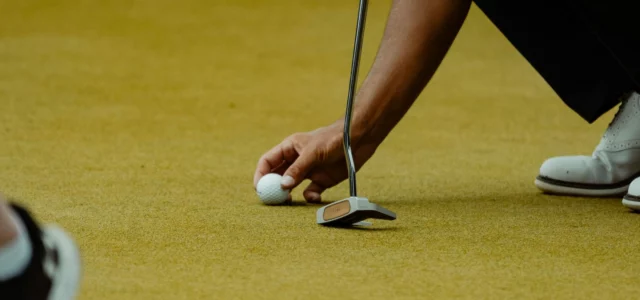
Address a ball normally and look at the sole of the putter. If the toe is off the ground, the face tends to point left. If the heel is up, it tends to point right.
Either way, putts start offline before your stroke begins, and practice cannot fix an error built into the equipment. Many putters can have their lie angle adjusted by a fitter with a loft and lie machine, and it is one of the cheapest putting improvements available.
Balance: match the head to your stroke
Balance the shaft on one finger a few inches below the grip. If the face points to the sky, the putter is face-balanced and suits a stroke that moves fairly straight back and through. If the toe hangs down, it has toe hang and suits a stroke with more arc.
Most golfers have some arc, simply because they stand to the side of the ball and bend forward. A face-balanced mallet may look forgiving, but a golfer with a pronounced arc can end up fighting it. A fitter watching your stroke for five minutes can tell you which family suits you, and half the shop wall drops out of contention.
British greens change through the year
The putter you choose has to work on the greens you play. In Britain those vary a great deal: quick, firm links greens exposed to wind in a dry July; slower, softer parkland greens in winter; and at many clubs, temporary greens cut into the fairway when frost or maintenance closes the main ones.
That is a good reason to try a putter outdoors on real grass before buying, and ideally on your own course. Many club pro shops keep demo putters you can take out for a round. A putter that feels perfect on a shop mat can feel very different on a slow, bumpy winter green or a fast links surface.
Grips and the anchoring rule
Oversize grips quieten the wrists and suit golfers whose hands take over under pressure. They also change the club’s balance. They are allowed; choosing one is personal preference.
Anchoring is not allowed. Rule 10.1b says you must not hold the club or a gripping hand against any part of your body, or use a forearm held against your body as an anchor point, although holding the club against your forearm is permitted. That is why arm-lock putters, which rest along the lead forearm, are legal, while pressing the end of a long putter against the chest is not. If you are considering either, have it fitted properly rather than adapting a standard putter.
What fitting will not fix
Distance control. A fitted putter helps the ball start on your chosen line. It does not decide how hard you hit it.
Three-putts are overwhelmingly a speed problem, so buying a new putter to cure them usually misses the point. Ten minutes of long putts on the practice green before a round will do more for that number. What fitting improves is the start line, which is where short and medium putts are won and lost.
Where to get a putter fitted in the UK
Retail fitting centres. One specialist retailer runs custom fitting centres in Warrington, Manchester and London’s Soho, staffed by PGA professional club fitters, and says it refunds the fitting fee if you buy on the day. Its putter range on the day this page was updated ran from £119 for Cleveland HB Soft 2 and Wilson Infinite models to £179 for a reduced Odyssey Ai-ONE Silver #7 and £269 for Evnroll’s Neo Classic in black.
Golf centres with fitting suites. Hoebridge Golf Centre in Surrey offers custom fittings with its PGA professionals using Trackman. Ask whether a putter fitting is offered specifically, since not every centre covers the putter in the same depth as irons or woods.
Your club professional. Many pro shops can adjust length and lie, supply a demo for a round, and see your stroke on the greens you actually play. For golfers who have already had an iron fitting, the same professional often has your specification on file.
The second-hand market. Putters are a sensible used buy, since there are no grooves to wear out, which makes it a cheaper way to experiment with head shapes.
Panxis Golf has no commercial relationship with any retailer, venue or brand named here and earns no commission.
Before you spend anything
- Set your current putter down at address and check whether the toe or heel lifts.
- Balance it on a finger and see whether it suits your stroke.
- Have your aim tested with two or three head shapes.
- Try any putter on real grass, ideally your own greens, not just a shop mat.
- If three-putts are the problem, work on speed before buying.
How this page was put together
Putter prices and range were taken from Clubhouse Golf (UK) on the day this page was updated. Panxis has no commercial link with this retailer.