Rangefinder or GPS: which one lowers your scores
A laser gives you the flag; a GPS gives you front, middle and back without stopping. Neither helps a golfer who does not know their carry distances, which is the measurement to buy first.
In brief
- Laser for exact pin numbers on courses you know; GPS for unfamiliar ones and for pace.
- Front, middle and back is usually a better decision than a single pin number.
- Slope must be visibly switched off in competition, or it is a disqualification.
- Check your courses are mapped and whether full GPS data needs a subscription.
- Range a flag in the store before buying a laser, to see how fast it locks on.
A laser tells you the exact distance to a target you can see. A GPS tells you the distance to the front, middle and back of a green you may not be able to see. Both are legal in normal play. Which one helps you depends on the courses you play and how quickly you want the number.
Before either, one uncomfortable point. A device that reports 147 yards is only useful to a golfer who knows what they carry a 9-iron. For most amateurs, the distance measurement is not the missing information; the honest distance chart is. Buy the device second.
What a laser rangefinder does well
Point, press, and you have the distance to the flag itself, accurate to about a yard. Modern units lock onto a flagstick and give a small vibration to confirm they have found it rather than the trees behind it.
That precision matters most on approach shots inside 150 yards, where a ten-yard error is the difference between a putt and a chip. It also matters on par 3s, where the flag is the target and the green depth can be thirty yards.
The limits are practical. You need a clear line of sight, a reasonably steady hand and a few seconds. On a blind approach, over a hill, or around a dogleg, a laser has nothing to shoot at, and in fog or heavy rain it struggles. Golfers with unsteady hands find the lock harder, and the stabilized models exist for exactly that reason.
What a GPS does well
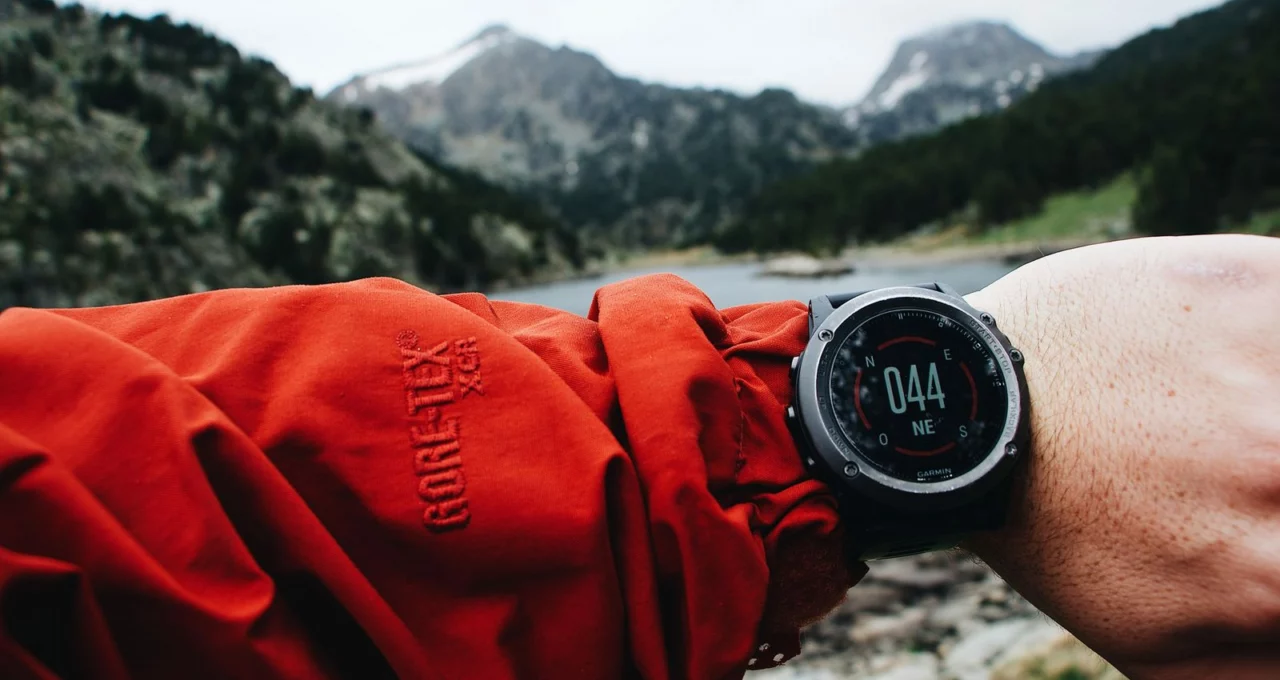
A watch or handheld gives you front, middle and back numbers the moment you arrive at the ball, with no aiming and no pause. On a course you do not know, those three numbers plus the carry over the bunker in front tell you almost everything a decision requires.
It is also faster, which matters more than golfers admit. A watch you glance at costs no time at all, and a group of four all lasering every shot is one of the quiet causes of a five-hour round.
The trade-off is precision. GPS reads the green as a mapped shape rather than finding the flag, so the number to the pin is an estimate unless the course publishes daily pin positions and the app supports them.
Two practical notes: check that your course is mapped before buying, since coverage is excellent in the United States but not universal, and check whether the app requires a subscription for full course data.
Front, middle and back beats a pin number
This is the argument for GPS that most golfers underrate. The middle number is the one you should be playing to most of the time, and the front number tells you what you must carry, which is the number that actually decides whether a shot is safe.
A golfer with a laser gets 147 to the flag and hits the club that goes 147. A golfer with front, middle and back sees 132 front, 141 middle, 152 back, notices the flag is near the front and there is water short, and hits the club that goes 145. The second golfer is playing better golf with less precise information.
Slope, and when you must switch it off
Slope-adjusted distances, which add or subtract yards for elevation, are genuinely useful on hilly courses and are not permitted under the Rules of Golf in competition unless a local rule allows them.
Devices sold for tournament use have a switch or a removable faceplate that visibly disables the function, so that a fellow competitor can see it is off. It is your responsibility to have it disabled, and using a slope reading in a qualifying round is a disqualification in most formats.
If you play competitive golf at all, buy a model with a clearly visible tournament mode. If you never do, slope is a genuinely useful feature in mountain and desert golf, where a 150-yard shot playing 30 feet downhill is a different club entirely.
Which one for which golfer
| Laser | GPS watch or handheld | |
|---|---|---|
| Best for | Same courses, exact pin numbers | Unfamiliar courses, walking quickly |
| Precision | About a yard, to the flag | Estimated to the pin, exact to green edges |
| Speed | A few seconds and a clear sightline | Instant, no aiming |
| Blind shots | Nothing to shoot at | Works anywhere |
| Ongoing cost | None | Sometimes a subscription for full data |
If you play the same two or three courses and want exact numbers to the flag, a laser is the better tool. If you travel to unfamiliar courses, walk quickly, or dislike stopping to aim, a GPS watch keeps play moving and gives you the numbers that shape a decision.
Plenty of low-handicap golfers carry both: the watch for the layout, the laser for the shot. That is a reasonable end point, not a starting point.
Where to buy in the U.S.
Large U.S. golf retailers stock the mainstream brands and, importantly, many let you range targets inside the store. That is the only way to judge how quickly a device locks on, which is the difference between a device you use and one that stays in the bag. Big sporting-goods chains carry the mainstream models too.
Used-equipment specialists and the manufacturers’ own outlet programmes list used and refurbished lasers, where last season’s model is frequently half the price and functionally identical, since the underlying optics change slowly.
Your club’s pro shop will usually let you borrow a demo for a round, which tells you more than any specification sheet. Ask; most professionals would rather you tried it than returned it.
Panxis Golf has no commercial relationship with any retailer or manufacturer and earns no commission on what you buy.
The free option most golfers skip
Before buying anything, use the phone in your pocket. Free and low-cost GPS apps cover essentially every American course, give front, middle and back numbers, and are accurate enough for the decision you are actually making.
The objections are real but small. Battery life suffers over four hours, which a small power bank solves. Taking a phone out on every shot is slower than glancing at a watch and looks worse to a playing partner. And some clubs restrict phone use on the course, which is worth checking.
What the phone gives you is the answer to the question this article opened with: whether you need distance measurement at all, or whether you need to know how far you hit your clubs. Play three rounds with a free app and honest yardages, and you will know which device to buy, if any.
Before you spend
- Play a round using only front, middle and back numbers from a free phone app. If your scores hold up, a GPS is enough.
- Check whether your regular competitions allow slope before paying extra for it.
- Confirm your courses are mapped, and whether full data needs a subscription.
- Range a flag in the store before buying a laser, to see how fast it locks.
- Learn your carry distances first. A precise number is useless without a club you trust to hit it.
The device does not hit the shot. It removes one excuse, which is worth about a stroke a round to a golfer who already knows how far the ball goes, and nothing at all to one who does not.
How this page was put together
Product availability and used-equipment pricing mentioned on this page come from PGA TOUR Superstore, Golf Galaxy, Dick’s Sporting Goods and 2nd Swing (United States). Panxis has no commercial relationship with these retailers.