Eight rulings Australian club golfers get wrong, from E-5 to green-topped stakes
Burleigh has the two-stroke alternative to stroke and distance in effect at all times; Spring Valley has not adopted it. Many Saturday rules mistakes on Australian courses come from local rules as much as from the rulebook, and eight situations cause most of them.

In brief
- Model Local Rule E-5 only applies where the club has adopted it: check before you play.
- Say "provisional" out loud, or the second ball is in play.
- Green on a stake marks a no play zone: never play the ball from there.
- Measure penalty area relief from where the ball last crossed the edge, not where it splashed.
- Venomous snakes are a dangerous animal condition, with relief allowed anywhere on the course.
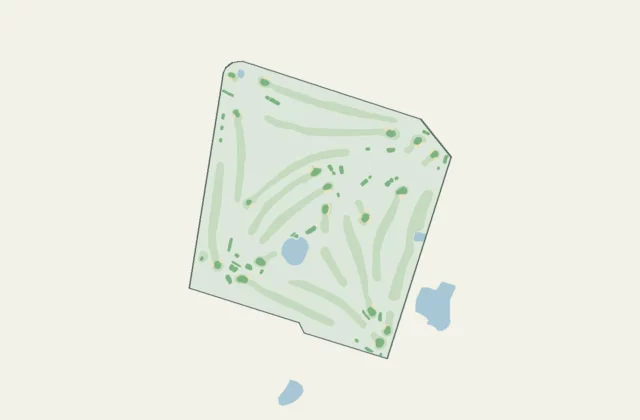
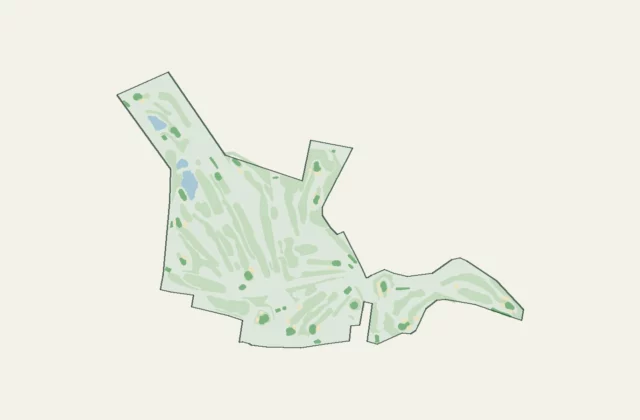
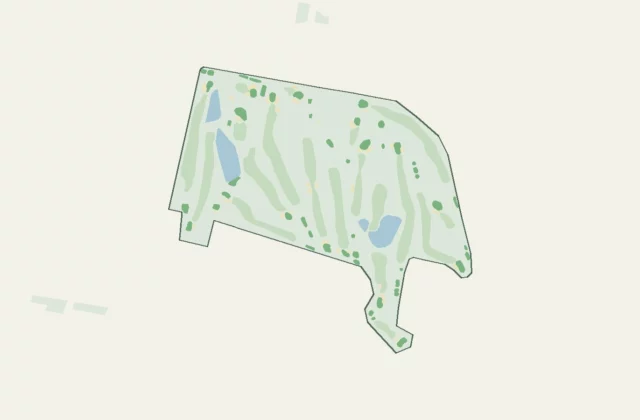
Two Australian clubs, two answers to the same lost ball. At Burleigh Golf Club on the Gold Coast, the local rules say Model Local Rule E-5, the two-stroke alternative to going back after a lost ball or out of bounds, is in effect at all times. At Spring Valley Golf Club, a Sandbelt course in Melbourne’s south-east, the local rules say the club has not adopted E-5, so stroke and distance is the only way to proceed. Same Rules of Golf, different course, different ruling.
That is the first lesson about the rules Saturday golfers get wrong: many mistakes are not about the rulebook at all, but about the local rules on the noticeboard. Here are eight situations that trip up club golfers on Australian courses, with what the Rules actually say.
1. Assuming the two-stroke drop applies everywhere
E-5 lets a committee offer an alternative to stroke and distance: for two penalty strokes, you drop in the fairway area near where the ball was lost or went out of bounds, instead of walking back. It exists only where the club has adopted it. Burleigh has it on at all times, unless an event’s conditions say otherwise, and not if you have already played a provisional. Spring Valley does not have it at all.
So before a round on an unfamiliar course, find out. If E-5 is not in effect and you did not hit a provisional, the long walk back is the only option.
2. Forgetting to say “provisional”
If your ball might be lost outside a penalty area or out of bounds, you may play a provisional ball to save time. The key word is the announcement. Hit another ball without clearly saying it is a provisional and that second ball is in play under stroke and distance, even if you then find the first one in the middle of the fairway.
The search limit is three minutes from when you or your caddie begin looking. After that, the ball is lost, even if someone finds it seconds later. Spring Valley’s local rules put it plainly: anyone who thinks their ball may be lost should play a provisional, and announce it before making the stroke.
3. Dropping in the wrong place from a penalty area
For a ball in a penalty area, including one that is known or virtually certain to be there even though not found, you have options for one penalty stroke. From a yellow penalty area: stroke and distance, or back on a line from the hole through the point where the ball last crossed the edge. A red penalty area adds lateral relief within two club-lengths of that crossing point, no nearer the hole.
The mistakes are measuring from where the ball splashed rather than where it crossed the edge, and taking penalty-area relief when you only think the ball is in there. If it is not known or virtually certain, the ball is lost and it is stroke and distance.
Check the colour on each hole, too. At Spring Valley, the local rules make the same pond a red penalty area when you play the 12th and a yellow one when you play the 13th. Our full guide to penalty area options covers the four choices in detail.
4. Playing a ball from a no play zone
This is the one most specific to Australian courses, where clubs protect native vegetation, dams, turf nurseries and practice areas. A no play zone means you must not play the ball as it lies, even if you can find it and hit it.
How it is marked varies. Burleigh uses white stakes with green tops for no play zones in the general area, where you take free relief. At The Vines Golf Club of Reynella, at the gateway to Adelaide’s southern wine region, all the dams are no play zones defined by red and green stakes. At The Coast Golf Club in Sydney, the penalty area left of the 17th changed from red to red with green tops, which means a ball that comes to rest there must not be played, and you take penalty relief as for a red penalty area.
The simple habit: green on a stake means do not play it. Then work out whether the relief is free (general area) or costs a stroke (penalty area).
5. Hacking at an unplayable lie three times
You can declare your ball unplayable anywhere except in a penalty area, and only you decide. For one penalty stroke: stroke and distance, back on the line from the hole through the ball, or within two club-lengths no nearer the hole.
In a bunker, the back-on-the-line and lateral options keep you in the bunker for one stroke, and there is an extra option: back on the line outside the bunker, for a total of two penalty strokes. On a firm Australian course where a ball can plug under a steep face, that is often the cheapest shot available.
One stroke taken early usually beats three swings from under a tea tree.
6. Taking relief from the wrong things, or not taking it
Free relief applies to abnormal course conditions: immovable obstructions such as cart paths and sprinkler heads, ground under repair, temporary water and animal holes. Take the nearest point of complete relief, no nearer the hole, and drop within one club-length. Complete relief means for your stance and swing too, and the nearest point is not always the nicest point.
Local rules widen or narrow the list. At Burleigh, staked trees are treated as no play zones and you must take relief. At The Vines, gardens and plantings of native grasses in the general area are integral objects, with no free relief, unless marked as no play zones. A divot hole in the fairway gives no free relief under the Rules.
Snakes are the Australian exception worth knowing. The Rules of Golf list venomous snakes as a dangerous animal condition, and relief is allowed wherever your ball is on the course, including a limited free option inside a penalty area. Better still, do not go looking for a ball in long grass beside a dam in spring.
7. Arguing about the flagstick
You may putt with the flagstick in the hole. If the ball hits it, there is no penalty, and the ball is played as it lies. You must decide before the stroke whether it stays in or comes out. This has been the rule since 2019, and it still starts arguments on Saturday mornings.
8. Dropping from shoulder height, and cleaning a muddy ball
Drops are made straight down from knee height, meaning the height of your knee when standing, without spinning or throwing the ball. Shoulder-height drops ended in 2019. The ball must come to rest in the relief area.
Off the green, you generally may not lift and clean your ball just because it has mud on it. The exception is when a preferred lies local rule is in effect. The Coast, for example, has listed preferred lies of 15 cm in fairways only in its course conditions. On the putting green, you may mark, lift and clean at any time, and repair damage such as pitch marks and spike marks.
Where to check the rules in Australia
Start with the club. Many Australian clubs publish their local rules and current course conditions on their website and on the noticeboard: Burleigh, Spring Valley, The Vines and The Coast all do, and The Coast also publishes short “Rules in Focus” explainers on topics such as provisional balls and red and yellow penalty areas.
For the full text, The R&A publishes the Rules of Golf online, and the free official Rules of Golf app is worth having on your phone. For competition golf, including how rules and scoring fit together, read our guide to your first club competition.
Panxis Golf has no commercial relationship with any club or organisation mentioned here.
When you are not sure
In stroke play, you can complete the hole with two balls: tell your marker before you play which ball you want to count, finish the hole with both, and report the facts to the committee before you sign your card. In a social round, agree how to proceed and sort it out in the clubhouse.
What does not work is guessing, picking the ball up and moving it. Once the ball has been moved, the good options are often gone. And a dozen minutes spent reading a club’s local rules before the round, a few metres from the pro shop, prevents more rulings than any rulebook.