The Australian Open at Kingston Heath: the spectator’s guide
Kingston Heath in December is a lesson in how firm ground changes decisions: the field lands short, uses the run and misses on the safe side.
In brief
- Practice days give more room, more relaxed players and fewer people.
- Hold one position and let the field come to you.
- Count how many take on a tucked pin. It will be very few.
- Volunteering costs less than a weekend ticket and puts you inside the ropes.
- State amateur events are free, close to home and almost unattended.
The Crown Australian Open runs from Thursday 3 to Sunday 6 December 2026 at Kingston Heath Golf Club, on the Melbourne Sandbelt. For a spectator it is the best-value week in Australian sport: world-class fields, a walkable course, and access that would be unthinkable at a major overseas.
Why Kingston Heath matters
Kingston Heath is one of the great Sandbelt courses, and for most of the year it is private. The Open is one of the few weeks when anybody can walk it. Even if you never watch a shot, walking the property is worth the ticket for a golfer who wants to understand what makes Sandbelt architecture different.
Which day to go
Thursday and Friday are the days for watching golf: the full field is in play, groups go out from both tees, and you can stand close. Saturday and Sunday are for the finish and the atmosphere, with bigger crowds and less freedom to move.
First-timers should take Thursday. If you want the trophy presentation, plan Sunday early and expect the walkways to be full.
Where to stand
Following one group for eighteen holes is the beginner’s mistake: you walk several kilometres, watch every shot from the third row, and learn nothing. Pick a spot and let the field come to you.
Three that work anywhere: the practice range in the morning, where you can watch professionals warm up at close quarters; a par 3, where seventy players solve the same problem differently; and the closing green in the afternoon.
For golfers who want to learn something specific, stand at a short par 4 and watch only the wedge shots. The gap between a good amateur and a tour player lives inside 100 metres.
Getting there and the summer factor
Early December in Melbourne can deliver anything from 18 to 35 degrees. Take a hat, sunscreen and water regardless of the forecast, and check the transport options before the day: parking near Sandbelt courses is limited and shuttle or public transport is usually the sensible route.
Comfortable shoes matter more than anything else in the bag. You will walk further than you expect.
What to take
Shoes you have walked in before, because a tournament day is a long time on uneven ground even standing still. A brimmed hat, sunglasses and sunscreen, because December in Melbourne is a serious exposure. A light rain jacket, because it is also Melbourne. And cash, in case a vendor’s terminal fails.
Spectator etiquette
Silence during the swing, no movement in a player’s eyeline, phones on silent. Photography during play is restricted and the rules change year to year, so check the tournament’s spectator conditions before you go.
Stay behind the ropes even when a gap looks inviting, and follow the marshals. The people who respect that get closer than the people who push.
The course you will be watching
Kingston Heath sits on the Melbourne Sandbelt, on the seam of sand that makes those courses firm and fast almost all year. Watching a tournament there is a lesson in how firm ground changes decisions: the players are landing the ball short and using the run, and their misses are on the side that leaves a chip rather than a bunker.
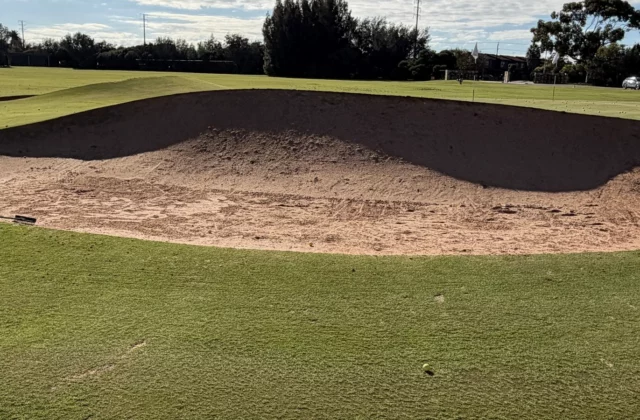
The bunkering is the other thing worth studying. Sandbelt bunkers are cut close to the greens with steep faces, and you will see very good players deliberately aim away from flags to avoid them. That is not caution, it is arithmetic, and it is the single most transferable thing on show.
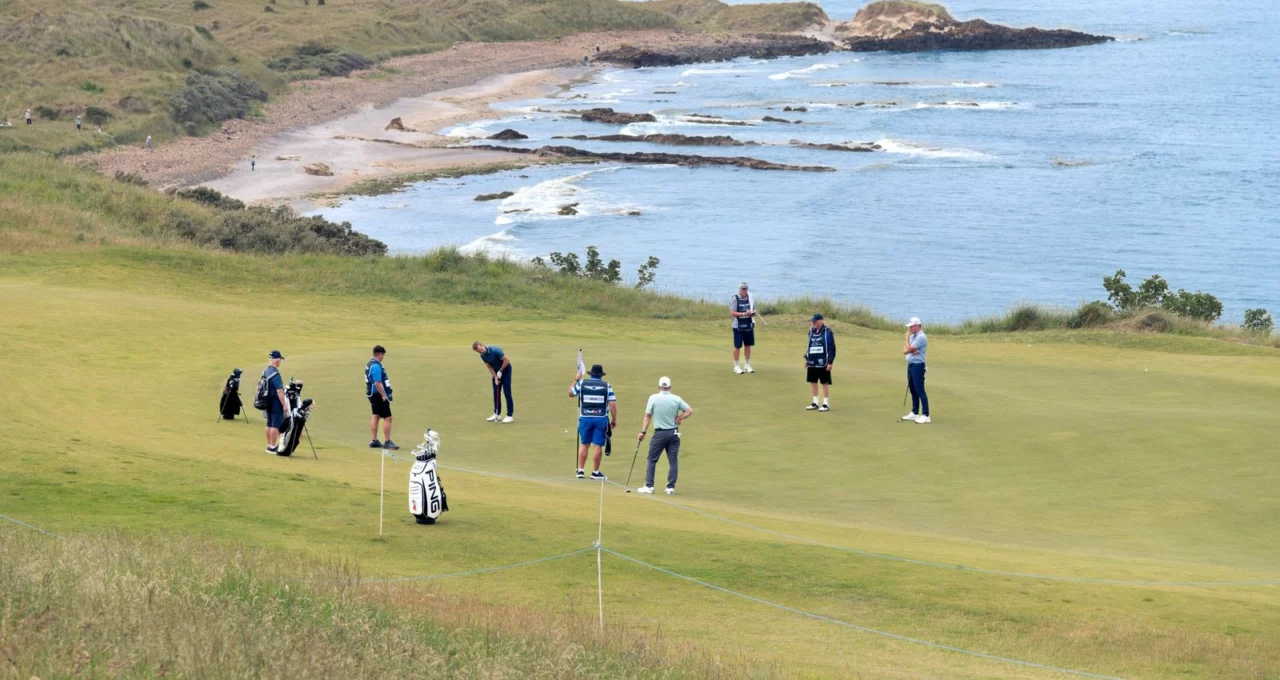
Stand behind a green with a tucked pin and count how many of the field take it on. It will be very few, and their scores will be better than the ones who did.
With children and with guests
A tournament day suits children better than a round does, because it demands no concentration for four hours and you can leave whenever you like. The practice days before the competition are the right choice: more room, more relaxed players, fewer people, and regularly a ball or a glove over the ropes.
For somebody you are trying to bring into the game, the same applies. Half a day at a par 3 with a folding chair and the question of where the players are aiming explains the appeal better than a first round in which they take a hundred shots.
What to take home for your own game
Watch three things that television does not show: the tempo of the backswing, which is slower than you expect on nearly every player; the time spent deciding before the shot; and how readily a professional plays away from a difficult flag.
Those three observations are worth more than anything in the merchandise tent.
Volunteering instead of watching
The tournament runs on several hundred volunteers, and a week inside the ropes costs less than a weekend ticket. Marshals manage the crowd, standard bearers walk with a group carrying the board, walking scorers record every shot on a handheld, and others work the practice area or the shuttles.
Standard bearers and walking scorers are closest to the golf: they see eighteen holes of every shot in a group, including the ones television never shows, the layup, the deliberate miss, the wedge played away from the flag. Registration opens months ahead and the best roles go first.
Expect real work: three or four shifts of five or six hours, often starting before dawn, in whatever the December weather does. Broken-in shoes and a genuine rain jacket are requirements rather than suggestions.
If you cannot get to the Open
The cheapest and in some ways most instructive alternative costs nothing: a state amateur championship or a pennant final at a course near you. Entry is generally free, the standard is closer to your own, and you can stand at every green.
Golf Australia and the state associations publish those calendars over the winter. Watch the same things you would at the Open: the routines before each shot, and where the field aims when the flag is in a difficult spot.
Playing Kingston Heath yourself
Outside tournament week the Sandbelt clubs take visitors on published conditions, usually midweek, usually with a handicap requirement and always with advance notice. It is worth the effort: playing a course you watched on television two weeks earlier is the most interesting combination amateur golf offers.
Write to the secretary weeks ahead rather than ringing on the day, give your handicap and your club, and ask about reciprocal arrangements if you belong to a club elsewhere. And play the forward tees, because a championship Sandbelt course from the back markers is an endurance test rather than a good day.
Tickets and practical details
- Dates: Thursday 3 to Sunday 6 December 2026, Kingston Heath Golf Club, Melbourne.
- Tickets are sold through the tournament’s official ticketing partner; check the event site for the current release and any hospitality options.
- Plan transport in advance: Sandbelt parking is limited, and shuttles or trains are the usual answer.
And if you go only one day, take a practice day. It is the best ratio of what you see to what you pay in the whole tournament.
Ticket prices and access arrangements change from year to year. Confirm them on the official tournament channels before booking travel.