Extending the season: spring and fall golf that works
The courses that open first and close last are the ones that drain, and knowing them by name adds four to six weeks of golf a year for nothing.

In brief
- Temporary greens are a maintenance decision, not an insult.
- Cold air and soft ground together cost close to a full club.
- Autumn beats spring almost everywhere except the West Coast.
- Nine holes is the format that fits when the light is short.
- New grips and a softer ball are the two cheap shoulder-season fixes.
The Canadian season is short, and most golfers make it shorter than it needs to be. April and October golf is cheap, quiet and often in better condition than August golf. The obstacle is not the weather; it is knowing which courses open first and how to play in cool conditions.
Which courses open first
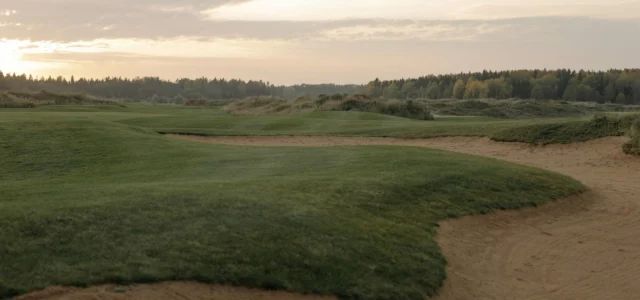
Drainage decides everything. Sandy soil and elevated ground drain fast and open weeks before heavy clay parkland. If your local area has a course on sand, that is your April course, whatever its ranking.
Southern and coastal regions open earliest, and mountain courses open last: the Rockies resorts typically open in the second week of May, and later in a heavy snow year.
Temporary greens are not an insult
Early and late in the season, many courses use temporary greens or mats to protect the surfaces. That is a maintenance decision that gets you onto the course a month earlier, and it costs a fraction of peak green fees.
Play them for what they are: a chance to work on ball-striking and course management rather than to post a score.
What counts for your handicap
Most provinces set an inactive season during which scores from home courses are not counted, and reopen it in spring. Check your provincial association’s dates rather than assuming, because rounds played on a winter trip south are usually still posted while your home course is closed.
The scoring adjustments
Cold air costs distance, and the loss grows with the club: the driver loses more than the 9-iron. Take one or two more clubs on approaches and swing at your normal tempo rather than harder.
The ground is firm in spring frost and soft in autumn rain, and both change how the ball behaves on landing. In spring, land it short and let it run. In autumn, expect approaches to stop and plan for no release.
In practical terms, a club that goes 150 yards in July often goes 140 yards in late October.
Which end of the season is better
Autumn beats spring in almost every part of Canada, and it is worth knowing before you plan around it. In October the greens have recovered from summer stress, the ground is settled rather than saturated, and the tee sheets empty out; in April the surfaces are coming out of winter and the ground is at its softest.
The exception is the West Coast, where the constraint is rain rather than frost and the dry weeks in spring are as good as anything in autumn.
The shoulder-season kit
Three thin layers with a windproof shell, winter mitts between shots, a dry spare glove in an inside pocket, waterproof shoes and a hat that covers the ears. Lower-compression balls compress properly at reduced speeds in the cold.
Keep two balls in a pocket and rotate them each hole; a warm ball flies measurably further than a cold one.
What the ground is doing in the shoulders
Soft, cold ground takes the run away entirely. A drive that finished at 240 yards in August finishes at 215 in April, and an approach that needed a 7-iron in summer needs a 6 or a 5. Cold air is denser and the ball carries less; soft ground removes the roll. The two effects add up to close to a full club.
Greens receive, which is the compensation. A ball that released twenty feet past the flag in July stops within a few paces in April, so aim at the flag rather than the middle when the surface is soft, and expect putts to be slower than they look.
Around the greens, the low runner beats the lofted wedge on wet, heavy turf, and in bunkers the sand is firm rather than soft: stand a little closer, open the face less, and take slightly less club.
Frost delays, and why they are not negotiable
Walking on frozen grass destroys the plant rather than the blade, and the two hours you spend in the clubhouse in October or April are what makes the green playable in July. Every Canadian club posts the delay before the first tee time, so ring rather than driving over.
The same logic applies to cart restrictions. Cart-path-only days on soft ground are not an inconvenience; they are the reason the fairway is not compacted for the rest of the season.
Playing nine when the light is short
In April and October the useful daylight is two or three hours shorter than in July, which makes nine holes the format that fits rather than a compromise. It counts for your handicap, it costs well under half, and it is the difference between playing once a week in the shoulders and not playing at all.
Most courses discount the twilight rate earlier in the shoulder months for exactly this reason. Ask what time it starts, because it moves with the sunset and is rarely updated on the website.
Where the value is
Compare the same course’s May, July and October rates. On most Canadian courses the shoulder months are a third to a half cheaper, the tee sheet is open, and rounds take less time because the course is not full.
Twilight in the shoulder months is short, so play mornings in October and afternoons in April, when the ground has thawed.
Where the shoulder-season value is
Green fees fall sharply at both ends of the Canadian season, and the courses that open first and close last are usually the ones on sand or gravel that drain quickly. Those are worth knowing by name in your own area, because they add four to six weeks of golf a year for nothing.
Ask the pro shop two questions in April and again in October: whether the course is on regular greens, and whether carts are restricted to paths. Both answers change what the round will be like, and neither is reliably posted online.
And take the twilight rate seriously in the shoulders. The light is shorter, so the discount starts earlier in the afternoon, and a nine-hole twilight round in mid-October is some of the cheapest golf of the year.
Making the winter count
The other way to extend the season is indoors. An hour a week in a simulator or a dome through the winter keeps the swing intact, and a block of lessons in January has time to become automatic before it matters.
The equipment jobs for the shoulders
Two small things change a cold round more than any technique. New grips, because hard, shiny grips force you to hold on tightly and cold hands make that worse. And a softer ball: below roughly ten degrees, a low-compression ball feels better and performs at least as well.
Both cost very little and both are cheapest in the off-season, when the shops are clearing stock and the workshop has time.
Practical checklist
- Identify the sandiest, best-drained course within an hour of you: that is your April and November course.
- Compare shoulder-season and peak rates at your two nearest courses.
- Assemble the cold-weather kit before you need it; the first cold round is not the time to discover the mitts are missing.
Opening and closing dates move with the weather every year. Call the course rather than trusting last season’s dates.