Golf umbrellas for links gales and winter drizzle: vents, trolley holders and what snaps first
Longridge 60 Inch Dual Canopy, Titleist Tour Double Canopy and Callaway Tour Authentic 68: UK prices on 1 November 2026 from £19.95 to £59.95, and what a golf umbrella needs on a windy links or a wet parkland.
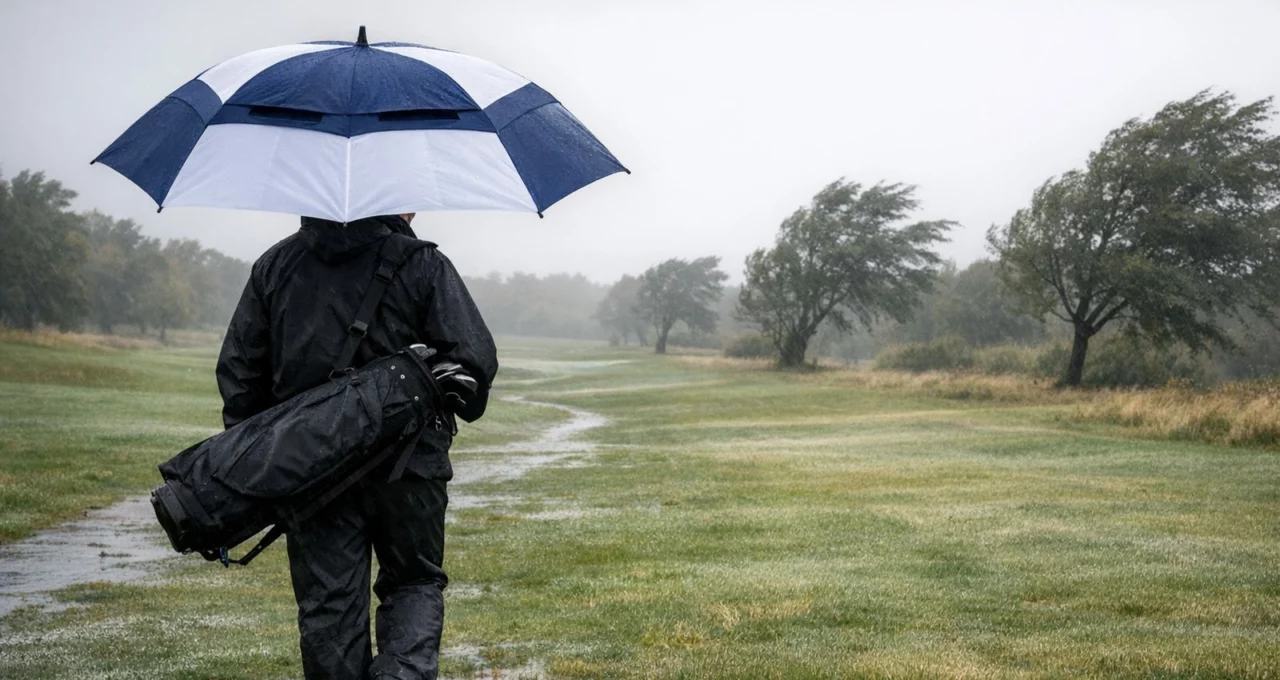
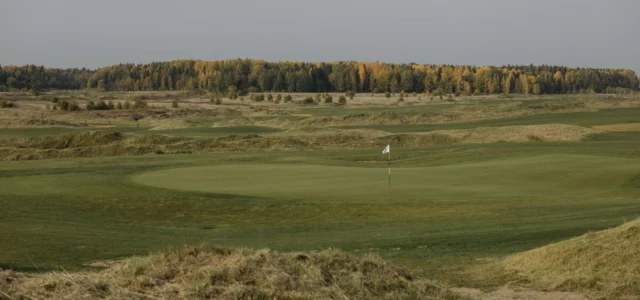
On a British golf course the umbrella usually loses to the wind before it loses to the rain. Picture the 7th on an exposed links in November: a 190-yard par 3 straight into a westerly, a squall coming in off the water, four players huddled at the back of the tee. Three umbrellas go up. One is snatched sideways and ends up the wrong way out, one rib bent at a right angle. One stays up but drags its owner half a step towards the gorse. The third, the one with a slit running round the top, shivers, breathes out through its vents and stays put. That small scene, repeated every winter weekend from Fife to Cornwall, is the real test of a golf umbrella.
This page looks at three golf umbrellas on sale in Britain this autumn, from £19.95 to £59.95, with what their makers publish about canopy, frame and wind, and what golfers say about umbrellas of this sort in public. Nothing here was opened, carried or measured by us. It is a presentation of products and a reading of published opinion, not a test, and any wind claim you read below belongs to the brand that made it.
Wind first, rain second
British golfers rarely need an umbrella for heat, and seldom face the cloudburst that empties a course in ten minutes. What they get instead is persistent rain driven by a stiff breeze, often from October to April, on courses where a hedge or a line of pines is the only shelter for hundreds of yards. That changes the order of priorities. An umbrella that keeps a huge area dry on a still day but folds in a 30 mph gust is no use on a seaside course. One that is slightly smaller but survives the gust will see more rounds.
The other British peculiarity is the trolley. A large share of club golfers here push or drive a trolley rather than carry, and plenty of trolleys come with a holder that grips the umbrella shaft and keeps it upright over the bag. That frees both hands, but it also turns the umbrella into a sail fixed to a light frame on wheels. Every golfer who has watched a trolley blow over on an exposed tee knows that the umbrella in the holder is usually the reason.
Reading the listing: which words are worth something
Golf umbrella listings are short and full of adjectives. A few terms actually tell you how the thing is built.
Double, dual or vented canopy. These all describe the same idea: an upper layer of fabric overlapping a ring of openings near the top. When a gust pushes up under the canopy, the air escapes through the gap instead of forcing the ribs backwards. It is the one design feature golfers mention again and again when an umbrella survives a blowy day. It reduces the risk of inversion; it does not remove it.
Size in inches. Golf umbrellas in Britain are still sold in inches, usually 60, 62, 64 or 68. The figure is normally the arc of the canopy measured over the top, so the shelter you actually get on the ground is somewhat narrower. A 68-inch canopy covers a player and most of a bag; a 60-inch one covers a player comfortably and the bag less well.
Fibreglass, FRP and carbon. Fibreglass (sometimes written FRP, for fibre-reinforced polymer) bends under load and springs back. Steel is stiff and strong, but once it bends too far it stays bent. When a listing names fibreglass for the shaft or the ribs, that is useful information; when it only says “strong frame”, you know nothing about the material.
Anti-inversion, gust proof, windproof. These are marketing words unless a figure and a method come with them. Some brands publish a wind tunnel speed; even then, a steady stream of air in a lab is not a gust swirling round a clubhouse corner. Use such claims to compare two umbrellas, not as a promise.
Weight and handle. Few listings give a weight, which is a pity, because a big umbrella held into the wind for four hours is hard on the forearm. A rubber or foam grip that stays tacky when wet matters too, as does whether the handle fits the clamp on your trolley.
Longridge 60 Inch Dual Canopy Gust Proof
The cheapest of the three is a 60-inch umbrella from Longridge, a name that appears across golf accessory shelves in Britain. It is smaller than the tour-style umbrellas below, which some golfers in windy places will see as an advantage rather than a shortcoming.
- What the maker’s description says, as reproduced by a British dealer: a 60-inch golf umbrella; a dual canopy with a ventilated design “that allows wind to pass through the canopy”, said to help reduce the risk of inverting in strong gusts; a poly pongee canopy fabric; a lightweight fibreglass shaft; a 30-inch frame; a soft-touch rubber handle; offered in green and white or navy and white. Rib material, opening method, weight, UV protection and any wind figure: not published on the page read.
- Who it might suit: a golfer who plays on an exposed course, wants a vented canopy without paying tour-brand prices and prefers a smaller umbrella that is easier to hold low.
Price read on 1 November 2026 at a British golf retailer: £19.95 (RRP £24.99).
Titleist Tour Double Canopy
Titleist’s tour-style umbrella is the one you see on the bags of plenty of club players and caddies. It is a full 68 inches across the arc, and the British listing read for this page is one of the few in this category to give a weight.
- What the maker’s description says, as reproduced by a British dealer: a 68-inch canopy; a double canopy with a “premium anti-inversion system”, described as “gust proof”; UV protection, without a figure; a proprietary Titleist handle; a “solid, light, high-quality frame construction”; an overall length of 43 inches; a weight of 1 kg. Shaft and rib material and the opening method are not given on the page read, and no wind speed is published.
- Who it might suit: a golfer who carries a full-size bag and wants it covered, and who will accept a kilogram on the arm or on the trolley for the extra canopy.
Price read on 1 November 2026 at a British golf retailer: £48.50 (RRP £50).
Callaway Tour Authentic Double Canopy 68 Inch
Callaway’s Tour Authentic is its staff-style umbrella, in black and white on the British listing. Of the three, its description says most about how the canopy is meant to cope with wind.
- What the maker’s description says, as reproduced by a British dealer: a 68-inch double canopy “for maximum coverage”; “Vortex technology designed to improve wind performance”; an anti-inversion strut “to reduce canopy inversion”; elastic vent straps “for added wind protection”; UPF 30+ sun protection; manual open and close; a proprietary ergonomic handle. Frame and shaft material, weight and any wind speed: not published on the page read.
- Who it might suit: a golfer who wants the largest coverage with the most detailed wind description of the three, and who is happy to open it by hand.
Price read on 1 November 2026 at a British golf retailer: £59.95 (RRP £69).
The three umbrellas compared
| Umbrella | Canopy | Frame and shaft, as published | Weight, length | Opening | Price, 1 November 2026 |
|---|---|---|---|---|---|
| Longridge 60 Inch Dual Canopy | 60 in., dual and vented, poly pongee | Fibreglass shaft, ribs not specified | Not published | Not published | £19.95 |
| Titleist Tour Double Canopy | 68 in., double, anti-inversion, UV protection | Not specified | 1 kg, 43 in. long | Not published | £48.50 |
| Callaway Tour Authentic 68″ | 68 in., double, vent straps, UPF 30+ | Anti-inversion strut, material not specified | Not published | Manual | £59.95 |
What golfers are saying
Golf umbrellas rarely get long reviews, and almost never one model at a time. This section summarises what comes up repeatedly in British golf forum threads, owners’ reviews on retailer pages and buying guides from golf media, about vented golf umbrellas in general rather than any one of the three above.
What golfers like
- A vent that lets the gust through. Owners of double canopy umbrellas describe the canopy flexing in a gust and recovering rather than flipping, and many say they would not go back to a single layer.
- An umbrella that lasts for years. Several golfers describe trolley-brand and club-brand umbrellas still working after five years or more, including one that survived the trolley blowing over more than once.
- A clear window and a good fit in the trolley holder. Golfers who use a trolley value umbrellas designed to sit in its holder, and some praise models with a transparent panel at the front so they can see where they are walking.
What golfers complain about
- Spokes that snap in one gust. The classic story is an umbrella that inverts in a sudden blast and loses two ribs on the spot, after which it is rarely worth repairing.
- Too heavy for the trolley in a breeze. Large, heavy umbrellas get blamed for tipping lightweight push trolleys over on windy days, and some golfers say they stopped clipping theirs on for that reason.
- Handles that do not fit. A thick handle or a shaft of the wrong diameter can refuse to go into a narrow trolley clamp, which is only discovered on the first tee.
- Cheap shafts and plastic parts. Golfers criticise thin graphite shafts that twist and plastic catches near the runner that crack, and some suggest steering clear of the very cheapest umbrellas altogether.
A sizeable number of British golfers also say that above a certain wind speed they leave the umbrella in the bag and rely on waterproofs and a hat instead. That is worth bearing in mind before spending on a 68-inch model for a links course. Golf Monthly has published a buying guide to golf umbrellas with its own comments on several models; those observations are theirs, not ours.
Where British weather tests a golf umbrella: links gales, winter drizzle and the odd hot day
The links coast. On the seaside courses of Scotland, Lancashire, Kent, Wales and Northern Ireland, wind decides everything. It often blows hardest exactly when rain arrives, and there is no tree line to take the edge off it. Here a vented canopy is close to essential, and a 60 or 62-inch umbrella you can hold low and angled into the weather is often more useful than a 68-inch one. Keep the umbrella in the bag on the tee, open it only while walking, and close it before you leave it on the trolley.
Inland parkland and heathland in winter. From November to March, many inland rounds are played in light, steady rain at 4 to 8°C with little wind. That is the weather the big canopies are made for: a 68-inch umbrella over a trolley keeps grips, gloves and towels dry for the full round, and a holder that clamps firmly means you are not walking 6,000 yards with one arm in the air. The drawback is mud and wet: let the umbrella dry open at home rather than leaving it folded in the boot.
Year-round golf. Britain is one of the few countries where club golf barely stops in winter, frost delays aside. An umbrella therefore lives in the bag twelve months a year and is opened far more often than its makers perhaps imagine. A fibreglass frame and a sturdy runner matter more over that kind of mileage than the logo on the panels.
Summer sun. On the rare hot day in July or August, a pale canopy with a published UPF rating gives shade on the tee and while waiting on a par 3. In Britain that is a bonus rather than the reason to buy.
Where to buy. The club pro shop is a good place to start, since you can hold the umbrella, feel the weight and often try it in the holder on your own trolley in the car park. Specialist golf shops let you open several models side by side and look at the joints and the runner. Online golf retailers usually have the widest choice and the keenest prices, especially in the run-up to Christmas, and their listings sometimes state the shaft diameter or trolley compatibility. Second-hand umbrellas turn up at club sales and on resale sites; open one fully, check that the runner locks and that the fabric at the tip is sound before paying. Wherever you buy, ask what happens if a rib breaks in the first season.
What the Rules allow, and what no umbrella can do
Rule 10.2b(5) of the Rules of Golf, published by The R&A and applied at every club affiliated to England Golf, Scottish Golf and Wales Golf, deals with protection from the elements. You may hold your own umbrella while you play a stroke. What you may not do is make a stroke while your caddie, a playing partner or anyone else shelters you, or while an object such as an umbrella has been deliberately placed to protect you from rain, wind or sun. Such shelter is allowed before the stroke, not during it. The penalty is the general penalty: loss of the hole in match play, two strokes in stroke play. So on a wet medal day, ask your partner to step away with the umbrella before you putt.
Thunder is a different matter. An umbrella offers no protection from lightning, and a tall shaft held above your head on an open fairway is the last thing you want. The Met Office advises that if you hear thunder while you are outside, you should find a safe, enclosed shelter, such as your car. On a golf course, that means leaving the course, not huddling under an umbrella or a tree.
Before you buy
- Decide where you play most. An exposed links calls for a vented, manageable size; a sheltered parkland can take a full 68 inches.
- Insist on a double or vented canopy. It is the feature golfers credit most often with surviving a gust.
- Find out what the frame is made of. Fibreglass flexes and recovers. If the listing does not say, ask before you pay.
- Try it in your trolley holder. Check the handle and shaft diameter, and think about the weight on a light push trolley in wind.
- Treat wind claims as claims. A published figure helps you compare; it does not guarantee your umbrella will survive the 14th tee.
- Look after it. Dry it open, close it before the gust does it for you, and do not leave it up on the trolley while you walk off to look for a ball.
The best golf umbrella for British golf is one that is still in one piece in March. Buy for the wind you actually face, keep the receipt and practise closing it quickly with a glove on: it is the habit that saves most ribs.
How this page was put together
This is a neutral presentation of products and a reading of published opinion, not a test. Nobody at Panxis Golf opened, carried or measured any of these umbrellas for this page, and no wind figure was measured by us. Specifications come from the makers’ descriptions as reproduced on British retailer product pages for the Longridge 60 Inch Dual Canopy Gust Proof Golf Umbrella, the Titleist Tour Double Canopy Golf Umbrella and the Callaway Tour Authentic Double Canopy 68 Inch Golf Umbrella. Where a figure such as weight, rib material or wind speed was not published on the pages read, it is left out rather than estimated.
Prices were read on 1 November 2026, in pounds sterling, at The Golf Shop Online: Longridge £19.95 (RRP £24.99), Titleist £48.50 (RRP £50) and Callaway £59.95 (RRP £69). The RRPs are those shown by the retailer. Prices change often, especially in November and December, so the figure at checkout is the one that counts.
What golfers say was read in threads about golf umbrellas on the Golf Monthly forum, in owners’ comments on retailer and brand forum pages, and in published buying guides to golf umbrellas. Some threads are several years old. Nobody is quoted by name, nothing is counted, and no impression is presented as a statistic. The lightning advice is the Met Office’s own guidance on staying safe in thunder and lightning. There is no commercial link on this page, no affiliate arrangement and no commission of any kind. If content on this site is ever paid for by a brand, it will carry an advertising notice at the top of the page, before the first line.