Women’s golf keeps growing: finding lessons, leagues and gear that fits
8.1 million of the 29.1 million Americans who played on a course in 2025 are women, and the growth is arriving through off-course formats. Lessons, leagues and a set that actually fits, in that order.
In brief
- Start at a range or a venue, then a clinic, then a par-3 course.
- Leagues are what keeps people playing: ask the pro shop, since they are rarely advertised.
- If you cannot carry a 7-iron 100 yards, the shaft is too heavy, not your swing.
- Specification matters; the label on the box does not.
- A GHIN Index through a state association costs about the price of one round.
Women are the fastest-growing group in American golf, on the course and off it. On-course participation reached 29.1 million players in 2025, of whom 8.1 million are women, and total participation including simulators and technology ranges hit an all-time high of 48.1 million. Here is how to find lessons, leagues and gear that actually fit.
Where to start, in order
Start at a range or an off-course venue, not on a golf course.
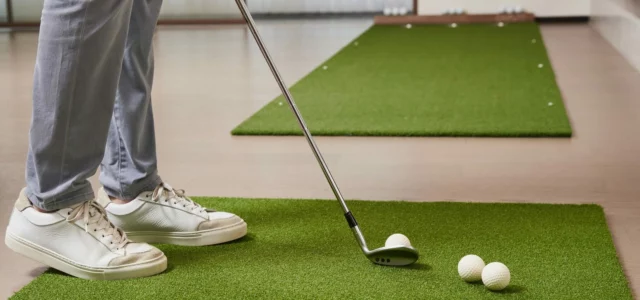
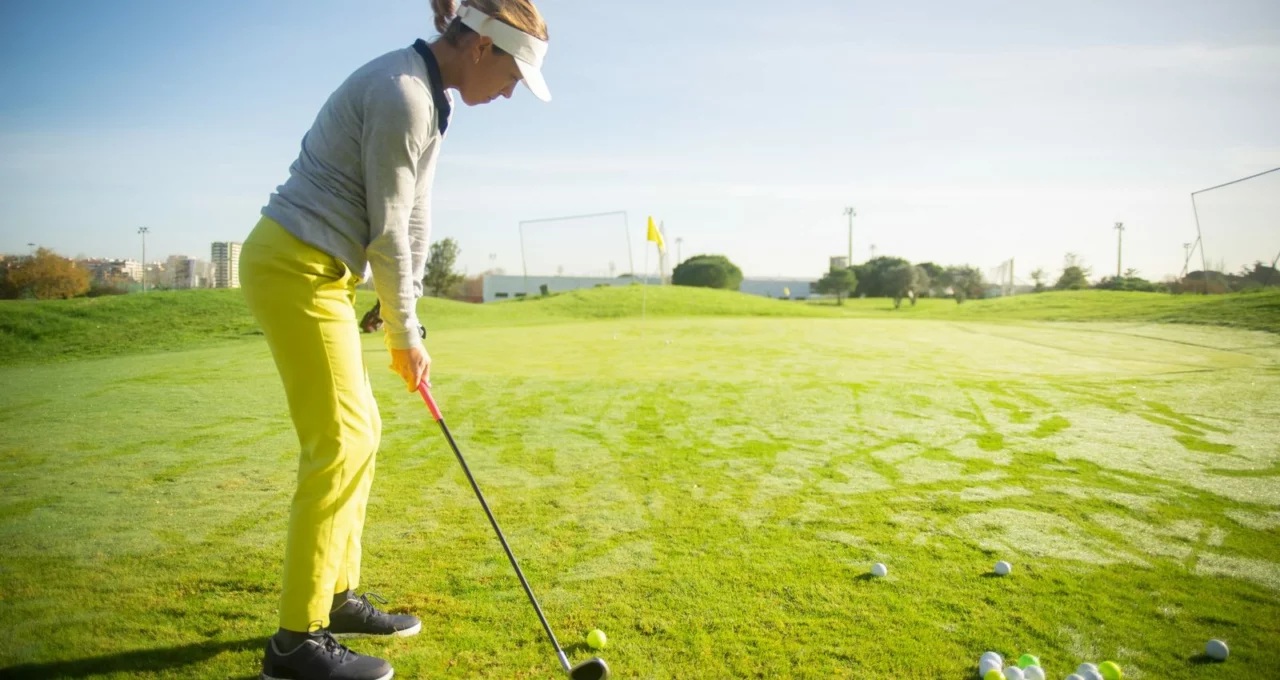
Technology ranges and simulator venues are the friendliest entry point the game currently has: no tee time, no pace-of-play pressure, no group waiting behind, and a screen that tells you what the ball did. The barrier that stops most people is not hitting the ball badly, it is hitting the ball badly while strangers wait.
Then take a beginner clinic rather than private lessons. Clinics are cheaper, they are usually grouped by ability, and they solve the biggest obstacle for a new player, which is not technique but the feeling of being the only beginner on the property. In a clinic everybody is.
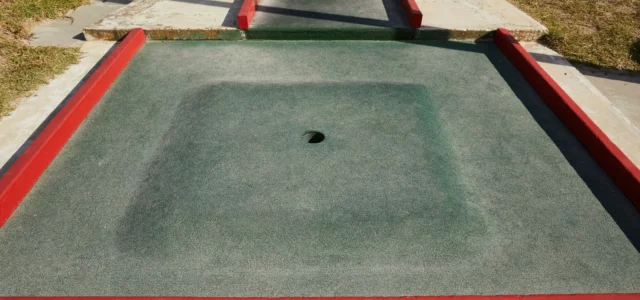
Then a par-3 or nine-hole course at a quiet time, which teaches the flow of a round in an hour without a five-hour commitment.
Leagues are the reason people stay
The single best predictor of whether somebody is still playing golf in two years is whether they play with the same people regularly.
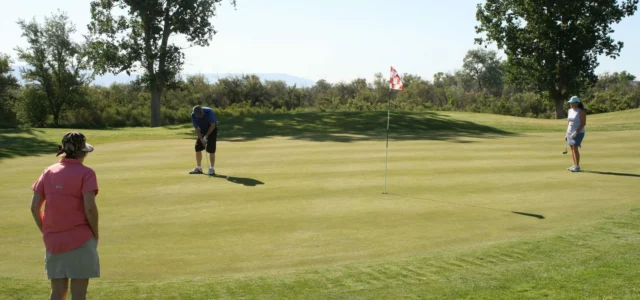
Nine-hole leagues, run at nearly every municipal course and most private clubs, are the practical answer: a fixed evening, a fixed group, two hours, and no requirement to be good. Women’s leagues at public courses are usually open to anybody who pays modest annual dues, and they generally include a handicap.
Ask the pro shop which leagues run and when entries close. A great many of them are advertised only on a noticeboard, which is the single most consistent piece of feedback from golfers who eventually found one.
Equipment that fits, and why it matters more here
The most common equipment problem among women golfers is a set that is too heavy and too stiff, frequently inherited or bought off a rack.
A player who cannot get the ball airborne with mid-irons usually does not have a technique problem. She has a shaft problem: a shaft too heavy and too stiff for her clubhead speed will not load, and no amount of instruction compensates for that.
The test is simple. If you cannot carry a 7-iron roughly 100 yards in the air with a reasonably solid strike, the shaft is too heavy or too stiff for your swing speed.
What to get checked, in order of impact: shaft weight and flex, then club length, then grip size. All three can be measured in a twenty-minute fitting, and all three can be changed on clubs you already own for a fraction of the price of a new set.
A note on labels. Clubs sold as women’s clubs are usually lighter and more flexible, which is the right direction for many players and the wrong one for a strong player with a fast swing. The specification matters; the label on the box does not. Get fitted and buy whatever the numbers point at.
Buy used and get it fitted rather than buying new off the rack. A pre-owned set correctly matched to your swing speed will outperform a new box set every time, and the saving covers the fitting several times over.
The handicap, when you are ready
A Handicap Index makes competition possible and progress measurable, and it is what lets you play a match against anybody on level terms.
It lives in GHIN, and you hold one by belonging to a club certified by an allied golf association. That includes traditional clubs, women’s clubs at public courses, and associate memberships offered directly by state and regional associations, which is how most golfers without a club membership hold one.
Fees vary by association and generally sit in the thirty to sixty dollar range per year. You need to post scores for it to mean anything, and nine-hole scores count: two of them combine into an eighteen-hole differential.
What to expect at a course, and what not to accept
Most American golf facilities are straightforwardly welcoming, and municipal courses in particular have seen everything and mind none of it.
Two practical things worth knowing. Play the tees that match your driver carry rather than the ones a starter assumes: carry multiplied by 28 gives the yardage that fits your game, whoever you are. And if a pro shop cannot answer a direct question about shaft weight or clinic schedules, another one will.
If a facility treats you as an afterthought, that is information about the facility rather than about golf, and there is almost always a municipal course within thirty minutes that behaves differently.
Where the game is heading
On-course participation passed 29 million players in 2025, the eighth consecutive year of growth, and the growth is not evenly distributed. It is concentrated among newer players arriving through off-course formats, which is precisely where women’s participation has risen fastest.
The practical consequence is commercial. Courses, retailers and manufacturers are competing for these players in a way they were not ten years ago: more women’s clinics, more league programming, more equipment built for moderate swing speeds, and considerably more willingness to answer questions.
Ask for what you need. This year they are inclined to provide it.
Where to look in the U.S.
Your municipal course’s pro shop, for beginner clinics and nine-hole leagues. Ask directly, because the schedule is often only on a noticeboard.
The PGA of America directory, for teaching professionals by location, and for the group clinics that most public facilities run through the season.
A fitting bay with a launch monitor at a large U.S. golf retailer or an independent fitter, for shaft weight, flex, length and grip size before you buy anything.
The used market through an online pre-owned golf retailer or a pro shop trade-in rack, which is where the money goes furthest once you know your specification.
Your state or regional golf association, for a GHIN membership and for women’s events at every level, from net championships to team golf.
Panxis Golf has no commercial relationship with any retailer, association or facility mentioned here and earns nothing from your purchases. Participation figures come from the National Golf Foundation’s 2025 research.
Clothing, which is a real obstacle and rarely discussed
Dress codes are written in terms that assume a men’s wardrobe, and working out what satisfies a collared-shirt rule is a genuine barrier for a new player who does not want to ask.
The practical answer at nearly every American course: a golf polo or a collarless golf top designed for the purpose, golf trousers, a skort or tailored shorts, and soft-spiked golf shoes. Denim and athletic tank tops are the items most often refused; almost nothing else is.
Municipal courses are the least restrictive and private clubs the most, and any pro shop will answer the question in one sentence if you call. That call is worth making before a first visit to an unfamiliar club, because arriving unsure is worse than asking.
On sizing, the same principle applies as with clubs: buy what fits and ignore where it is shelved. Golf shoes in particular vary enough between brands that the number on the box means little.
The first three months
- Month one: a range or off-course venue, plus one beginner clinic.
- Month two: a nine-hole or par-3 course at a quiet time, with borrowed or rented clubs.
- Month three: a nine-hole league, and a fitting before you buy your own set.
- Any time after that: a GHIN Index, and post everything.