Spikeless golf shoes after a frost delay: wet-grip reports on four 2026 models for Canadian golfers
A Canadian season starts and ends on wet grass: frost delays in October, soggy fairways after the snowmelt, months of rain on the B.C. coast. Here is what four current spikeless shoes promise, what owners and reviewers say about their grip once the turf is wet, and when a spiked pair is still the better buy.
In brief
- The four shoes: FootJoy Pro/SL (2026), ECCO BIOM C5, adidas CODECHAOS 27 and the spikeless version of the Under Armour Drive Pro Clone.
- Canadian prices read in October 2026, before tax: CODECHAOS 27 C$199.99 laced and C$240 BOA, Clone Spikeless C$200, Pro/SL C$279.99 laced; no Canadian price could be confirmed for the BIOM C5.
- Canadian listings state a two-year waterproof warranty for the Pro/SL and one year for the Clone; the ECCO and adidas terms were not confirmed for Canada.
- Owners say dew is no longer a problem; the limits are steady rain, soft winter turf on the coast, nubs clogged with clippings or topdressing sand, and worn soles that cannot be repaired.
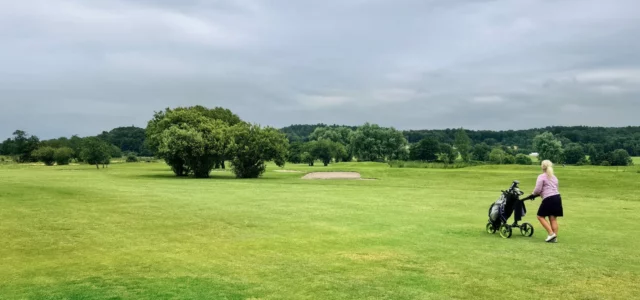
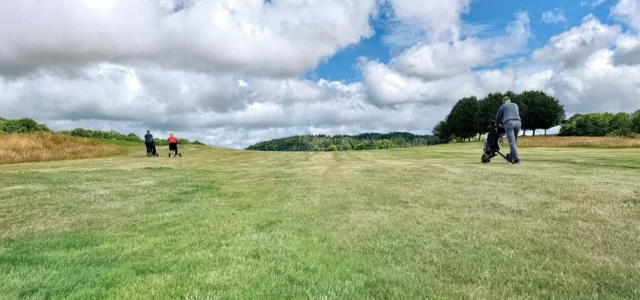
In Canada, the season of wet grass is not a rainy week in July. It is every morning from late September until the course closes, plus most of April and May, and on the coast of British Columbia it is the whole winter. A frost delay holds the first group until 9:15, the sun melts the ice into water, and the first five holes are played on turf that soaks a shoe in two minutes. That is the moment when a spikeless pair shows what its sole is made of. This page puts four current spikeless models side by side, the FootJoy Pro/SL, the ECCO BIOM C5, the adidas CODECHAOS 27 and the Under Armour Drive Pro Clone Spikeless, with the claims their makers publish, the Canadian prices that could be confirmed in October 2026, and what owners and reviewers report about grip once the grass is wet.
This is a presentation of products and of public opinion, not a physical test. Nobody at Panxis Golf has played in these shoes, and no grip figure on this page was measured by us.
Why a molded sole slips, and when
A spikeless shoe has no moving parts. Everything it does on wet turf comes from the pattern molded into the rubber, and three things decide how well that pattern works.
Depth and edges. A soft spike flexes and pushes grass blades aside. A molded nub cannot, so it relies on its edges catching the turf. The deeper and sharper the nubs, the better they hold on soft ground, and the less pleasant they feel on a paved cart path.
How far the pattern reaches toward the sides. On a downhill lie, or on a tee box that tilts toward the path, your weight moves to the outside edge of the trail foot. If the traction pattern stops short of that edge, the slide starts there. That is why the brands now talk so much about coverage at the perimeter of the sole.
The compound. Softer rubber holds better on wet grass and wears down faster. Harder rubber and TPU last longer and give a little grip back on a dewy slope.
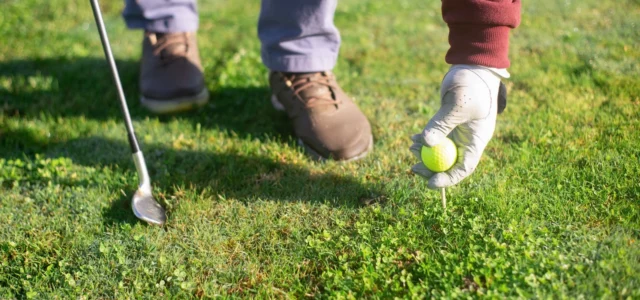
Two enemies work against all four shoes. The first is the mix of wet clippings, sand from fall topdressing and mud that packs between the nubs: once the gaps fill, the sole behaves as if it were flat. The second is asphalt. Every walk from the car, every stretch of paved path, rounds off the edges that do the gripping, and unlike spikes, those nubs cannot be swapped out in the spring.
The four shoes and what they cost in Canada
Prices below were read in October 2026, in Canadian dollars, before GST or HST.
FootJoy Pro/SL (2026)
FootJoy redesigned its best-selling spikeless shoe for 2026, with a new sole, a new last and a lighter build.
- Outsole: ARCTrax/SL, with cones and traction fins that FootJoy says are placed to maximize ground forces on any lie or surface.
- Upper and waterproofing: multi-layer Z-TEC synthetic upper. The Canadian listing carries FootJoy’s promise that the shoe will be 100 percent waterproof in normal use for two years.
- Comfort: StratoFOAM crash pad in the heel, firm EVA and a nylon spring plate in the forefoot, OrthoLite X25 fitbed, and a weight FootJoy puts at 29 percent below the previous generation.
- Fit: the new Vantage last, fuller across the forefoot with a rounder toe box. Laced and BOA versions exist, and wide sizes are offered.
Price read in October 2026 at a Canadian golf retailer: C$279.99 for the laced version. No Canadian price for the BOA version could be confirmed, so none is given.
ECCO BIOM C5
The C5 replaced the long-running BIOM C4 as ECCO’s leather performance shoe. Do not mix it up with the BIOM C5 Premium, a separate and more expensive model with premium leather and a metal BOA dial.
- Outsole: E-TTS, a traction system in three zones that ECCO presents as giving grip in several directions on wet, dry, sandy or muddy ground.
- Upper and waterproofing: ECCO Performance Leather over a GORE-TEX Surround membrane. U.S. listings mention a three-year waterproof warranty; we did not find that term confirmed for Canada, so ask the seller.
- Construction: anatomical BIOM last, FLUIDFORM direct-injected sole, removable OrthoLite insole.
- Fit: European sizes only, no separate widths; laces or BOA.
Canadian price: not confirmed. The Canadian retailers we could read in October 2026 did not list the BIOM C5, and ECCO’s Canadian online store refused to load when prices were collected. We prefer no figure to a converted or outdated one.
adidas CODECHAOS 27
adidas kept the full-length Boost midsole of its sneaker-style golf shoe and changed nearly everything else.
- Outsole: Adiwear rubber with a TWISTGRIP traction zone. adidas claims 120 percent more TWISTGRIP coverage than on the CODECHAOS 25, with reshaped nubs.
- Upper and waterproofing: TwistSkin, a stretch TWISTKNIT base under a thin film layer. U.S. retailers list a one-year waterproof warranty; the Canadian listing we read does not state one.
- Stability: AxisLock, a structure that ties upper to midsole to control twisting during the swing.
- Fit: regular fit, one width; laces or BOA, the BOA version with a zippered shroud over the dial area.
Price read in October 2026 at a Canadian golf retailer: C$199.99 laced and C$240 for the BOA version.
Under Armour Drive Pro Clone Spikeless
The Drive Pro Clone exists in a spiked and a spikeless version that look almost identical in a product photo. This page covers the spikeless one, which is listed separately.
- Outsole: hybrid TPU and rubber, with flex grooves, directional traction and rubber that wraps up the side of the shoe for support at impact.
- Upper and waterproofing: the UA Clone upper, a soft microfibre layer that stretches to the shape of the foot, over a full waterproof membrane with a one-year warranty, as stated on the Canadian listing.
- Cushioning: UA HOVR foam with Charged Cushioning and a Swing Support Strap.
- Weight and fit: 12.8 ounces according to Under Armour; regular fit, laces only.
Price read in October 2026 at a Canadian golf retailer: C$200.
The four side by side
| Shoe | Sole | Upper | Waterproof warranty | Closure | Canadian price read, Oct. 2026 (before tax) |
|---|---|---|---|---|---|
| FootJoy Pro/SL (2026) | ARCTrax/SL cones and fins | Z-TEC synthetic | 2 years (Canadian listing) | Laces or BOA | C$279.99 laced |
| ECCO BIOM C5 | E-TTS, three zones | Leather, GORE-TEX Surround | 3 years on U.S. listings, not confirmed in Canada | Laces or BOA | Not confirmed |
| adidas CODECHAOS 27 | Adiwear, TWISTGRIP | TwistSkin knit and film | 1 year on U.S. listings, not stated in Canada | Laces or BOA | C$199.99 laced, C$240 BOA |
| UA Drive Pro Clone Spikeless | Hybrid TPU and rubber | Microfibre, full membrane | 1 year (Canadian listing) | Laces | C$200 |
Tax moves these numbers more than the gaps between them. The C$199.99 laced CODECHAOS 27 comes to C$209.99 with GST alone, as in Alberta, and C$225.99 with Ontario’s 13 percent HST. The laced Pro/SL passes C$316 in Ontario.
What golfers are saying after real rounds
We looked for Canadian reviews or Canadian forum threads on these four shoes with enough owner comments to stand alone, and found none. Canadian golfers mostly comment under the same British and American reviews as everyone else. The points below are the ones that return most often in those reviews, in owner forums and in retail customer comments. They are impressions, not counts.
What owners like
- Dew is no longer a reason to switch to spikes. This comes up for all four shoes. The GolfMagic review of the 2026 Pro/SL describes greasy, windy conditions and muddier rough without the grip ever running out, and owners of the C5 and the spikeless Clone report damp morning rounds without a slip.
- Comfort over 18 walked holes. The Boost midsole of the CODECHAOS 27 is regularly described as one of the softest in golf, and the Golfalot review of the Drive Pro Clone, which tried both versions, preferred the lighter spikeless pair on a damp morning.
- Dry socks. Owners of the GORE-TEX C5 and of FootJoy’s waterproof uppers generally report dry feet after soaked fairways, and reviewers of the CODECHAOS 27 describe water beading and running off the film layer.
What owners complain about
- Steady rain, soft ground and steep wet slopes still call for spikes. Even favourable reviews draw the line there. The Today’s Golfer review of the spikeless Clone rates it highly on firm ground but points golfers who play soft winter courses toward the spiked version, and reviews of the C5 and the Pro/SL say much the same about heavy rain on hilly ground.
- Nubs that fill up. Wet clippings and mud packed into the sole after the mowers have been out are a constant theme in owner threads. The Golfalot review of the CODECHAOS 27 notes that its sole picks up debris fairly easily.
- Wear you cannot fix. Walkers, especially those who cross paved paths, describe the nubs rounding off within a season or two, and wet grip is the first thing to go. The shoe still looks fine from above.
- Waterproofing and fit over time. Some owners report a pair starting to let water in after a wet season, and a few describe sole separation on a C5 within warranty. One review of the laced CODECHAOS 27 found some moisture around the tongue. On fit, the C5 is often said to run large and the 2026 Pro/SL is criticized for a very firm forefoot.
Nobody is quoted by name, nothing has been counted, and none of these impressions is a measurement.
Where Canadians play on wet turf, and where to buy
A Canadian season is short, and both ends of it are wet. That changes the spikeless question more than any review written for a sunnier climate admits.
- Frost delays in the fall. From late September on the Prairies, and through October in Ontario, Quebec and the Atlantic provinces, many courses hold the first tee times until the frost lifts, because footprints and carts on frozen grass damage it. When play starts, the frost has turned into water, and the opening holes are played on soaked turf. A tilted tee box on those mornings is where owners most often describe a spikeless sole letting go.
- The last weeks before closing. Most courses outside coastal British Columbia close for the winter between late October and mid-November. The final rounds bring cold, slow-drying grass, leaves on the fairways and, after fall aeration, sand from topdressing that packs into the nubs.
- The B.C. coast all winter. Around Vancouver and Victoria, many courses stay open through the winter, and rain from October to March leaves the turf soft for months. That is exactly the soft winter ground where reviewers send golfers back to spikes.
- Soggy spring in Ontario and Quebec. After the snow melts, April and May bring saturated fairways and cart-path-only days, which means more walking on wet slopes and more paved path between shots.
- Hills and bridges. Courses cut into the Canadian Shield, in cottage country or in the Rockies ask a lot of the edges of a sole on sidehill lies, and wooden bridges over creeks are slick for any shoe in the morning. Cross them slowly.
Metal spikes have largely disappeared from Canadian courses, and club dress codes commonly ask for soft spikes or spikeless soles, so the real choice is between the two. Check your own club’s rules before buying.
For buying, the four shoes are sold through a few kinds of outlet. Specialist golf stores and club pro shops let you try both versions of the Clone, which matters because the spiked and spikeless pairs look nearly identical, and let you check European sizing on the C5 before you commit. Online golf retailers and the brands’ Canadian online stores often carry colours and sizes a store does not. Ordering from the United States looks cheaper until you add the exchange rate, shipping, duties and the tax collected at the border, and a waterproof warranty claim may be harder to make in Canada on a pair bought elsewhere. Whichever route you take, ask what the waterproof warranty covers, how a claim works and whether the seller is an authorized dealer, and keep the receipt. A pair bought in November may not see a fairway until April, so ask whether the exchange period still applies after the winter.
When a spiked pair still makes more sense
- You play through steady rain rather than after it.
- You walk a hilly course on spring and fall mornings.
- You play the B.C. coast in winter, or any course that stays soft for months.
- Your trail foot already slides a little on dry days, because wet turf will only add to it.
The other side is just as clear. On firm summer turf from June to August, and for golfers who ride and mostly play dry afternoons, any of these four shoes offers more grip than the conditions require. Many Canadian golfers end up with two pairs: spiked for the shoulder seasons, spikeless for summer.
Keeping a spikeless sole working
- Clear the nubs during the round. A tee or a brush through the sole after the first few dewy holes restores more grip than a new shoe.
- Check the ball of the trail foot. When the edges of the nubs there are rounded, wet grip has mostly gone, however clean the upper looks.
- Change shoes at the car. Driving in your golf shoes and crossing a couple of hundred yards of parking lot in them, all season, wears the sole faster than the golf does.
- Dry them slowly. After a soaked round, stuff them with newspaper and leave them at room temperature, not on a heater or in a cold trunk, and store them clean and dry for the winter.
For the other half of the equation on soft, sloping ground, our guide to uneven lies covers how to set up when the ground under your feet is not flat.
How this page was put together
This is a presentation of products and a reading of public opinion, not a test; nobody at Panxis Golf has worn these shoes or measured their grip. Specifications come from the manufacturers’ published material for each model, as shown on the brands’ product pages and reproduced on authorized retailers’ listings: FootJoy for the Pro/SL, ECCO for the BIOM C5, adidas for the CODECHAOS 27 and Under Armour for the Drive Pro Clone Spikeless.
Prices were read on October 25, 2026, in Canadian dollars and before tax, on the product pages of Canadian Pro Shop Online: FootJoy Pro/SL laced C$279.99, adidas CODECHAOS 27 laced C$199.99 and BOA C$240, Under Armour Drive Pro Clone Spikeless C$200. The two-year FootJoy and one-year Under Armour waterproof warranties are quoted from the same listings. The pages of Golf Town, Golf Avenue and the Canadian online stores of FootJoy, ECCO, adidas and Under Armour refused automated reading that day, and no Canadian price for the ECCO BIOM C5 or for the BOA Pro/SL could be confirmed. No price was converted from another currency. Tax totals were calculated by Panxis Golf from those shelf prices. Prices change often.
What golfers say was read in published reviews from GolfMagic, Golfalot, Golf Monthly, Today’s Golfer, National Club Golfer and MyGolfSpy, in owner forum threads and in retailer customer reviews; no Canadian publication or forum with enough owner comments on these four models was found. Nobody is quoted by name, nothing is counted, and no impression is presented as a statistic. There is no commercial link on this page, no affiliate arrangement and no commission of any kind. If content on this site is ever paid for by a brand, it will carry an advertising label at the top of the page, before the first line.