How to start playing golf in the UK, and what it really costs
You do not need to join a club to hold a handicap, and you do not need a full set to play your first round. The order matters more than the budget.
In brief
- iGolf from England Golf costs £47 a year and includes an official Handicap Index.
- Three range evenings with hire clubs before you buy anything.
- Seven second-hand clubs are plenty for a first season.
- Municipal and pay-and-play courses take bookings from anyone.
- Winter is the cheapest time to start: open lesson diaries, ready by March.
Starting golf in Britain costs less than most people assume, and the expensive route is rarely the fast one. You do not need to join a club to get a handicap, and you do not need a full set to play your first round. Here is the order that works, and what each step actually costs.
The three things you actually need
A way to hit balls regularly, somewhere to play, and, once you want to enter competitions or book certain courses, an official Handicap Index. That last one used to mean club membership. It no longer does.
England Golf is the only authorised handicapping body for the World Handicap System in England, and its iGolf scheme is the route for golfers who are not club members. A subscription costs £47 a year and includes an official Handicap Index, the MyEG app for submitting scores, and public liability insurance provided by Howden. Once you have submitted enough scores, the Index appears.
The first three months
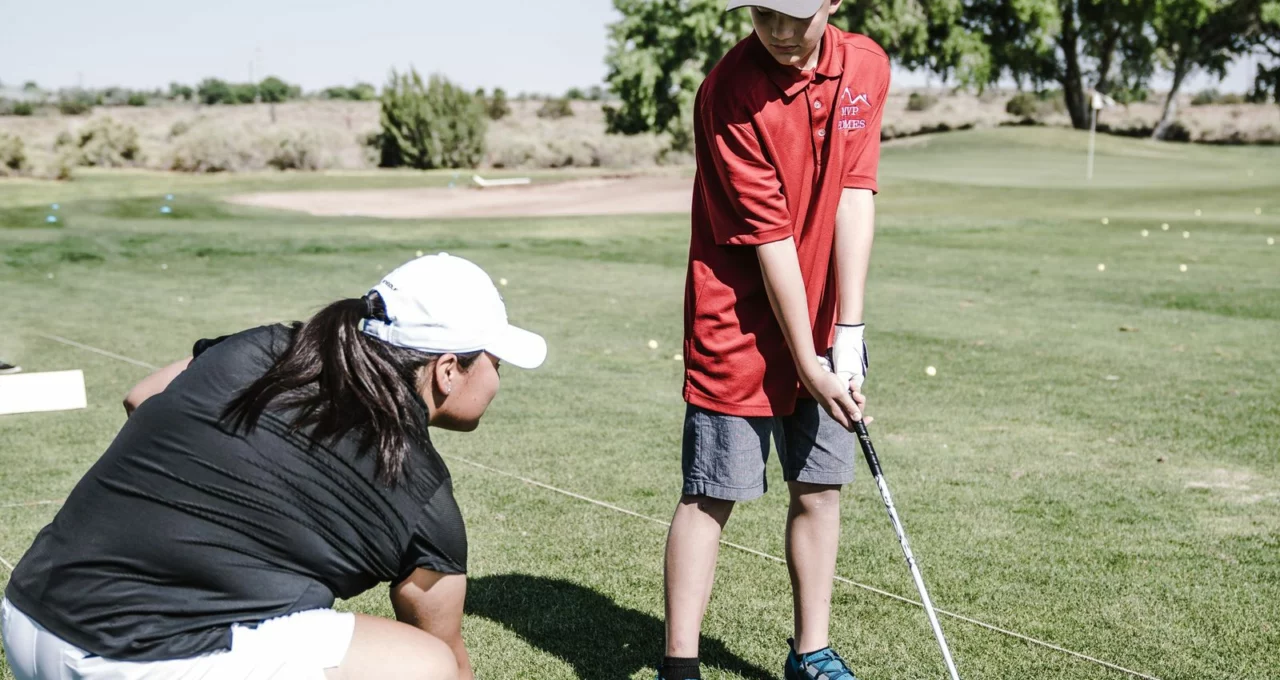
Spend them on the range and the short game area, not on the course. Six lessons with a PGA professional, spaced over three months, will do more than sixty solo range sessions: the point is not to hit further, it is to hit the middle of the face repeatedly.
Between lessons, practise what the lesson covered. One thing at a time. A bucket of balls hit with no plan is a bucket of balls wasted.
Where to play at the start
Municipal and pay-and-play courses are Britain’s great advantage over most of Europe: no membership, no joining fee, book online and turn up. Par-3 and nine-hole courses are better still for a first round, because you are not holding up a four-ball behind you while you learn where to stand.
Twilight rates, usually from late afternoon, are the cheapest way to see a proper course. On many courses they are half the daytime green fee for a round you will comfortably finish in summer.
What the first year costs
| Item | Typical outlay |
|---|---|
| iGolf subscription, official Handicap Index | £47 a year |
| PGA lessons, six sessions | varies by teacher and region, ask locally |
| Half set of second-hand clubs | pre-owned market, see below |
| Green fees | municipal and twilight rates first |
Green fees and lesson rates vary enormously between regions and even between neighbouring courses. Ring the club and ask rather than trusting a figure in an article, this one included.
Clubs: buy fewer, buy used
One practical note on distance: British courses are measured in yards, and a beginner who carries a 7-iron 120 yards is playing a different course from the card’s championship yardage. Play the forward tees until the numbers match your game.
Seven clubs are plenty for a first season: driver or 5-wood, a hybrid, three irons, a wedge and a putter. Fewer clubs means fewer decisions, and fewer decisions is exactly what a beginner needs.
Buy them pre-owned. Some specialist retailers carry very large used ranges with a published grading scale and a straightforward buy, sell and trade-in model, and several of the larger golf chains let you trade clubs in at their stores.
The month before you commit to anything
Before you spend on lessons or a subscription, go to a range two or three times and hit a bucket with a hire club. It costs a few pounds and answers the only question that matters: do you enjoy this movement, including when it goes wrong?
The ball-tracking ranges and entertainment venues that have spread across British cities make that evening genuinely sociable, because every shot gets a number and four people can play a game. For a lot of people that is now the real first contact with golf, and it is a good one, because it assumes nothing: no handicap, no dress code, no prior knowledge.
Take one lesson in those weeks, not ten. A PGA professional will set your grip and your address position, and learning those two wrong costs more time later than anything else in the game.
What you do not need
A full set, a club membership, or special clothing. For the first few weeks, comfortable sports clothing with a collar, flat shoes with some grip, and hire clubs, which almost every facility keeps, will get you round.
You also do not need a fitting. A fitting measures a swing, and a beginner’s swing changes monthly; the measurement is worthless six months later. What is worth doing immediately, if you inherit second-hand clubs, is new grips in the right size. Hard, shiny grips force you to hold on tightly, and holding on tightly is precisely the fault every beginner already has.
Your first rounds on a course
Play nine holes rather than eighteen, and play them late in the afternoon when the course is empty. A first round with a group waiting behind you is the quickest way to decide golf is unpleasant.
Take six balls at most and pick up as soon as a hole is lost. That is entirely normal in Britain: if you are not playing for a score, you lift and walk to the next tee rather than finishing a nine.
And learn exactly one point of etiquette in that first round: keep moving, and let the group behind through if a hole opens up in front of you. Everything else you will pick up along the way. That one you will not.
The mistakes that cost a season
Buying a full set before you have a repeatable swing. Practising only with a driver. Playing eighteen holes before you can get round nine without losing six balls. And waiting to be “good enough” to book a tee time, which is the one mistake that stops people playing at all.
Winter, and why it is the best time to start
From November to March most British courses are on temporary greens and mats, and that is precisely why winter is the cheapest time to begin. Lesson diaries are open, professionals have more attention to give, and someone who finishes a beginner block in March has the whole season ahead rather than half of it.
Indoor simulator bays have spread across British cities and are booked by the hour, usually by the bay rather than by the person, which makes an hour with three friends a quarter of the price. Heated ranges and domes stay open through the cold at many municipal facilities.
Where to start, in practice
- Handicap without a club: iGolf from England Golf, £47 a year, Handicap Index, MyEG app and public liability insurance. In Scotland and Wales, check the equivalent schemes with Scottish Golf and Wales Golf.
- Lessons: your nearest range or municipal course will have a PGA professional attached. Ask for a beginner block rather than single lessons.
- Clubs: a specialist used-club retailer for pre-owned, and some golf shops for a free custom fitting session once your swing has settled.
Panxis Golf has no commercial relationship with any retailer and earns nothing from your purchases.
Do it in that order and after twelve months you have a Handicap Index, a course you like, and no clubs in the garage that belong to a swing you no longer own.