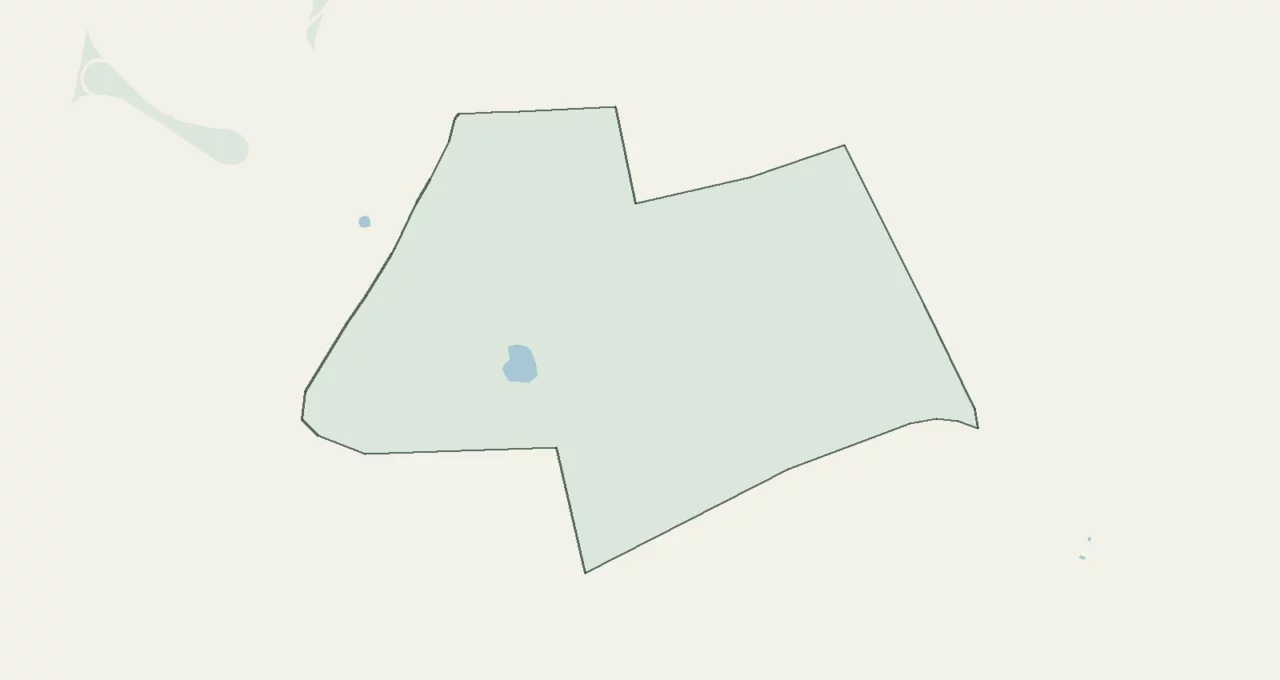
Layout of The Millbrook Golf Club from OpenStreetMap survey data (ODbL licence).
The Millbrook Golf Club
Holes
18
By
72 from the blue tees; 74 from the white, yellow and red tees (club scorecard)
Length
6,924 yards from the blue tees, 6,746 white, 6,290 yellow, 5,739 red (club scorecard); the club's course introduction gives 6,910, 6,731, 6,274 and 5,700
Green fee
—
Best season
Open all year; the club says its free-draining Greensand Ridge soil allows year-round play, with buggy bans rare; winter season from 1 November to 1 April
The Millbrook Golf Club lies beside the village of Millbrook in Bedfordshire, between Woburn and the market town of Ampthill, on the sandy high ground of the Greensand Ridge. The club gives its address as Millbrook, Ampthill, Bedfordshire, MK45 2JB. It is a single eighteen-hole course, and the club is owned by its members. According to the club, the course was laid out in 1977 and opened for play in late 1979 or early 1980. Top 100 Golf Courses credits the design to William Sutherland. The club’s own pages do not name an architect.
On the club’s current scorecard the course measures 6,924 yards from the blue tees, par 72, and 6,746 yards from the whites, par 74, which makes it one of the longest courses in the region. The club describes it as a blend of links and heathland golf: indigenous pine and silver birch line thirteen of the eighteen holes, the other five are protected by gorse and wispy fescue, and the bunkers are built in a pot style that suits the free-draining sand. Top 100 Golf Courses places it fourth in its list of the best courses in Bedfordshire.
A young course on old sand, and a club that bought itself
Millbrook is a modern course by English standards. The club says that the land was laid out as a golf course in 1977, and its 2024 to 2025 brochure adds that play began at the end of 1979 or the start of 1980, which is why some directories give 1977 and others 1980 as the opening date. Top 100 Golf Courses describes the course as having been fashioned in the late 1970s by William Sutherland, and its architect page lists him for this course and for Dunstanburgh Castle in Northumberland, a James Braid layout that, according to the same site, Sutherland updated in the 1980s. We found nothing else on his life or on how much of the present course is still his.
The club has also changed its name more than once. Top 100 Golf Courses says it was first called Millbrook, then became Lyshott Heath, and returned to the name Millbrook when it became member-owned in 2002. The Wikipedia article on the village of Millbrook also refers to the club as formerly Lyshott Heath Golf Club. Since then, the club says, it has reinvested its revenues in the course and the clubhouse rather than paying an owner, and it describes itself as a registered community amateur sports club.
The club is keen to point out how the course has matured. Its brochure states that in recent years Millbrook has hosted the Bedfordshire County Championship twice, has become the home club for all of Bedfordshire’s county men’s matches, and has been chosen as a venue by what it calls Europe’s largest developmental tour, a direct feeder to the DP World Tour. The brochure does not name the tour. The Wikipedia page on the 2023 Clutch Pro Tour lists a Tier 2 event at Millbrook, Bedfordshire, on 11 July 2023, and describes the Clutch Pro Tour as an official feeder to the Challenge Tour (the second tier below the DP World Tour) since December 2022. We cannot confirm from these sources that it is the event the club means. Top 100 Golf Courses also mentions county championships and inter-county matches at the course, and says the clubhouse lounge bar has been refurbished.
The setting is unusual for a golf course. The Millbrook Proving Ground, a large vehicle test track, sits just outside the village, and the Center Parcs Woburn Forest holiday village is next door; the club says it is two minutes away. The village itself is small, with a population of 147 at the 2011 Census according to Wikipedia, and its parish church of St Michael and All Angels is Grade II* listed. The same article notes the local tradition that the vale below inspired the Slough of Despond in John Bunyan’s The Pilgrim’s Progress.
What the course asks of you
The figures below come from the scorecard on the club’s website. From the blue tees the course measures 6,924 yards, par 72, with an outward nine of 3,680 yards and par 37 and an inward nine of 3,244 yards and par 35. From the white tees it is 6,746 yards and par 74 (3,582 out, par 38; 3,164 in, par 36), from the yellow tees 6,290 yards and par 74, and from the red tees 5,739 yards and par 74. The difference in par comes from three holes that change par with the tee: the 4th is a par 3 from the blues and a par 4 from the other tees, the 12th is a par 4 from the blues and reds and a par 5 from the whites and yellows, and the reds also play the 3rd and 18th as par 5s and the 11th as a par 3. The club’s course introduction gives a course rating of 74.3 and a slope of 133 from the blue tees, 73.3 and 135 from the whites, 71.0 and 132 from the yellows, and 74.1 and 131 from the reds.
The round starts in an unusual way, with two par 5s in a row, and the first par 3 does not come until the 7th. The club’s hole-by-hole guide describes the 1st, 452 yards from the blues, as a short par 5 that long hitters can reach in two if the drive finds the left side of the fairway, with the advice to take one more club than seems necessary for the approach; those who cannot reach are told to lay up with a mid-iron into the dip and pitch on. Putts on that green run towards the front right. The 2nd, 592 yards from the blues, is the longest hole on the card and needs three good shots. It has the only fairway bunkers on the course, and a ditch to carry with the second shot, before a short approach to one of the flattest greens on the course; in summer, the club warns, anything long runs on.
The 3rd, 459 yards from the blues and stroke index 1 from the whites and yellows, is about the tee shot: the club recommends a slight draw down the left to hold the fairway against its natural camber, leaving a long iron or fairway wood to a well-guarded green on two tiers. The 4th is the hole where, in the club’s words, you can get a shot back: from the forward tees a strong drive can find the green, and the safe play goes over the first ditch and short of the burn, leaving a pitch to a green that slopes towards the player. Its length is one of the figures that differs between the club’s own pages, as we explain at the bottom of this page.
The middle of the front nine asks for more control. The 5th starts with a climb up steps to the tee, to check that the group ahead is out of range, and a drive to the left of a downhill fairway, then with at least one club less than the yardage to a green that slopes away; the guide advises leaving the ball below the hole. The 6th, 426 yards from the blues and stroke index 3 from the white and yellow tees, needs a straight drive, ideally right of centre, followed by a mid or long iron over a pond to a small, contoured green, where every putt is said to drift back towards the water. The 7th, 174 yards from the blues, is the first of three par 3s, with a dip short and right that the club says leaves an awkward chip. The 8th, a par 5 of 589 yards from the blues, rewards a drive shaped from right to left that runs down the hill, then offers a choice between carrying a pair of trees beside the fairway and laying up short.
The 9th is short on paper, 308 yards from the blues, but the fairway runs almost at right angles to the men’s tees. The guide says this gives more than a hundred yards of landing area, with the carry growing the more directly you aim at the green, that every shot kicks to the right, and that going long means out of bounds. The club’s halfway house is inside the clubhouse, because the 10th tee sits next to it. The 10th is a par 3 of 188 yards from the back tee to an elevated green that the club says is only fifteen yards from front to back, with a bank behind that sometimes rescues a shot hit too far.
The club says most of its members would choose the 11th as their favourite hole, and warns that it is tricky at first sight. From the tee the line is a marker post, with a club that carries at least 180 yards, and the approach should be aimed right of the flag on a green with subtle slopes. The 12th, 467 yards from the whites, is a short par 5 for the men, with a drive aimed at the lone pines in the middle of the fairway and an approach to a green that slopes towards the player. The 13th, 425 yards from the blues, is stroke index 2 from the white and yellow tees and, in the club’s words, can make or break a round: a straight drive of 200 to 260 yards depending on the tee is needed just to see the green, and the approach plays uphill. Top 100 Golf Courses describes it as a severe dogleg to the right.
The 14th usually plays into a wind from the left, which the guide says makes the approach play long. The 15th, a par 5 of 531 yards from the blues, is generous from the tee and shorter for a drive drawn from right to left, but the green is an upturned saucer with a deep pot bunker short and right. The 17th, 354 yards from the blues, asks for accuracy rather than distance: the club advises aiming left of centre with a club that goes 180 yards or more, then carrying two greenside bunkers with a short iron. The 18th, 432 yards from the blues, is a strong finish with out of bounds behind and to the right of the green, particularly in summer when the ball runs, so the guide recommends a cautious approach that lands on the front left and feeds to the middle.
The hole we have chosen to highlight is the 16th, the last of the three par 3s, 164 yards from the blues, 157 from the whites, 148 from the yellows and 146 from the reds. A professional quoted by Top 100 Golf Courses names it as the signature hole. The tee sits on top of the Greensand Ridge, with wide views that Top 100 Golf Courses says reach Millbrook’s village church and the Cardington airship hangars. The green slopes away from the tee, and bunkers guard the front right; the club’s advice is to carry them for an uphill putt and, because the tee is high and usually downwind, to work out the yardage and the wind and then take one club less.
Two features run through the whole course. The first is the ground: sandy, free-draining soil that the club says plays like a links in summer and like heathland in autumn, winter and spring, with buggy bans rare and trolley restrictions only in exceptional conditions. The second is the shape of the holes. Reviewers point to doglegs that bend almost at right angles, to cambered fairways and to blind or half-blind shots, and the club’s brochure mentions double greens; one reviewer describes greens shared by the 2nd and 14th and by the 5th and 12th. The club’s practice facilities include a warm-up area open to visitors, a large putting green beside the 1st tee and, for members, a long strip of turf next to the 8th hole and a short game area.
What golfers say
The points below summarise the golfer reviews published on Top 100 Golf Courses, dated from 2016 to 2026, where the course has an average of three and a half out of five. Hole19 shows an average of 4.5 from more than a hundred ratings, but we could not read the text of those reviews and have not used them. These are other people’s opinions, not ours. Nobody from Panxis has played the course, and we name no reviewer.
What comes up in its favour
- A strategic layout. Several reviewers describe interesting, varied holes with many doglegs, where the driver is not always the right club and local knowledge of what lies around each corner pays off.
- Variety of ground. A recent review praises the mix of flat stretches, hollows and slopes and the change from one hole to the next.
- Particular holes. The 5th and 6th are singled out as strong par 4s, the 8th and 12th as good driving holes, the short 4th as a birdie chance and the tree-lined 17th as a favourite; the large double greens and the bunkering around the 3rd green also earn praise.
- Length and potential. The course plays long, and one reviewer thinks it has what it takes to be the best course in Bedfordshire.
- An attractive setting worth a day trip, and staff described as friendly and committed to improving the club.
What comes up against
- Hills. Reviewers note very undulating ground and some climbs, starting with a long uphill dogleg at the 1st.
- Holes that divide opinion: the blind or semi-blind approach at the opening par 5, the forced carry over water at the 6th, the narrow gap through the trees on the 11th and the very long 13th and 18th. One reviewer suggests that the stroke indexes of the 17th and 18th should be swapped.
- Routing. A 2026 review finds parts of the routing flawed, with the 2nd, 3rd and 15th running across the slope of the land.
- Condition, in older reviews. A 2018 review describes several years of poor condition, average fairways, bunkers still needing work and a course lacking visual appeal; reviews from 2016 and 2018 both mention a programme of bunker renovation then under way, and the Top 100 description now speaks of consistently good condition.
Getting there and when to go
The club’s directions start from junction 13 of the M1: take the A507 towards Ampthill for about three miles, past the turning for Lidlington, and turn left at the Millbrook roundabout just after the golf course. From the east, leave the A1(M) at junction 10 and follow the A507 through Stotfold, Shefford and Clophill, then stay on the A507 towards Milton Keynes past Ampthill Park and turn right at the Millbrook roundabout. The entrance shares a signposted drive with the village hall. The club puts itself about ten minutes from the M1 and twenty-five minutes from central Milton Keynes. The nearest railway station is Millbrook, on the Marston Vale line between Bedford and Bletchley, which the Wikipedia article on the village places about two miles from Millbrook; we have no information on a footpath or bus to the club.
Visitors and societies are welcome. The club asks every player to bring a set of clubs and proper golf shoes, to follow its dress code on and off the course, to repair divots and pitch marks, rake bunkers and keep up the pace of play. Tee times can be booked in person, by telephone or online through the club’s visitor tee booking page; the club says its fees are the same whichever way you book. Groups of twelve or more can arrange a society day through the club office.
The club has a fleet of electric buggies, eight according to its 2024 to 2025 brochure, as well as electric and pull trolleys and hire clubs. Booking is essential for buggies and electric trolleys, through the professional shop. The clubhouse has a bar and an informal restaurant serving breakfasts and classic golf club food; you can telephone from the 9th tee for a sandwich to collect at the counter on the way to the 10th. Opening hours change with the season, so check with the club.
The course is open all year, and its position on the free-draining Greensand Ridge is the club’s main argument for winter golf; its winter season runs from 1 November to 1 April. In summer the ground runs firm and fast, which makes the long holes play shorter but brings the out of bounds behind the 18th and the risk of running through the 2nd green into play. The woodland around the course is home, the club says, to muntjac deer, stoats, woodpeckers and dragonflies, with buzzards and red kites overhead, and on the higher holes, the 16th tee in particular, it can be windy at any time of year.
How this page was made
The factual frame comes from public sources: OpenStreetMap for the location of the course; the club’s website, read in October 2026, for the address, the course introduction with its tee lengths, ratings and slopes, the scorecard, the hole-by-hole guide, the visitor information, the buggy and trolley page, the practice facilities and the directions; the club’s brochure for 2024 to 2025, published on its website, for the opening date, the events it has hosted, the clubhouse, the wildlife and the number of buggies; Top 100 Golf Courses for its course description, its architect page, its county ranking and its golfer reviews; the English Wikipedia article on the village of Millbrook for the former name of the club, the railway station and the village; the Wikipedia page on the 2023 Clutch Pro Tour for the professional event of July 2023. Wikidata identifies the club as Q7751443; its link to English Wikipedia leads to the article on the village, and the item records no foundation date or architect.
Where sources disagree, we say so. The club says the course was laid out in 1977 and opened in late 1979 or early 1980; some directories give 1977 as the opening year and others 1980. Only Top 100 Golf Courses names an architect, William Sutherland. The total lengths differ from page to page on the club’s own site: the scorecard adds up to 6,924 yards from the blue tees, 6,746 from the whites, 6,290 from the yellows and 5,739 from the reds, while the course introduction gives 6,910, 6,731, 6,274 and 5,700. Top 100 Golf Courses gives 6,884 yards from the blues, and other details slightly different from the scorecard (177 yards for the 7th, 420 yards for the 13th, 165 yards for the 16th), and says the inward half is par 36, two shots fewer than the front nine, which matches neither the blue card (37 and 35) nor the white card (38 and 36). The 4th has two sets of lengths on the club’s website: 239, 280, 261 and 224 yards from the blue, white, yellow and red tees on the scorecard, and 225, 265, 245 and 185 yards in the hole-by-hole guide. The brochure speaks of a tour that feeds the DP World Tour, while Wikipedia describes the Clutch Pro Tour as a feeder to the Challenge Tour, and we could not establish which tour the club means.
We could not open the Hole19 reviews in full, so they have not been used. We found no hole names on the club’s scorecard and no details of the original Sutherland plan or of later changes to the layout beyond the bunker work mentioned by reviewers; we have left those out.
The opinion section summarises the golfer reviews on Top 100 Golf Courses, read in October 2026. We report recurring themes rather than individual voices, and we reproduce no quotations from reviewers. Nobody from Panxis has played or visited this course, and this page is no substitute for a round.
The club has not paid for this page, has not seen it before publication and has no say over its content. This page contains no commercial link and earns us no commission. If you know the club and something here is wrong or out of date, write to us and we will correct it.
Other courses nearby
Closest to this one in our British directory:
- Aspley Guise & Woburn Sands Golf Club — 5 mi
- Bedfordshire Golf Club — 7 mi
- South Beds Golf Club — 9 mi
- Bedford & County Golf Club — 10 mi
The hole to know
The last of the three par 3s, 164 yards from the blue tees (157 white, 148 yellow, 146 red), played from a tee on top of the Greensand Ridge to a green that slopes away, with bunkers front right; the club advises taking one club less because the tee is high and usually downwind, and a professional quoted by Top 100 Golf Courses calls it the signature hole.