Golf gifts under $50 golfers keep using: Tour Soft balls, WinterSof gloves, PuttOUT and Pitchfix
Most golf gifts under $50 end up in a drawer. The ones golfers keep using are plainer: a better dozen of balls, a pair of winter gloves, a putting target for the living room and a pocket tool built to last. Here are four of them at U.S. prices from $12.99 to $39.99, with what golfers say about each.
In brief
- The four gifts: Titleist Tour Soft balls ($39.99 a dozen), FootJoy WinterSof winter gloves ($27.95 a pair), PuttOUT Premium Pressure Putt Trainer ($39.99) and Pitchfix Hybrid 2.0 divot tool ($12.99), prices read on November 8, 2026.
- Golfers praise the Tour Soft's feel, the WinterSof's grip in damp cold, the PuttOUT's instant feedback on pace and the Pitchfix's sturdy build.
- Recurring complaints: less greenside stop than a urethane ball, thicker gloves that take getting used to, a trainer for short straight putts only, and Pitchfix markers lost when the magnet lets go.
- Skip anything that depends on the golfer's specs, check the glove size, and keep the gift receipt.
Most golf gifts under $50 end up in a garage drawer. The novelty putter, the beer-holder headcover and the ten-function gadget get one laugh at the holidays and never see a course. The gifts golfers actually use are duller and cheaper than that: a dozen balls they would buy anyway, a pair of gloves for the cold months, something to roll putts at on the living room carpet, a tool that lives in a pocket for years. This page presents four of them, each sold in the United States for less than $50 in November 2026, with what the makers publish, what golfers say about them in public, and the one or two things worth checking before you wrap anything.
What makes a golf gift under $50 work
A good cheap golf gift has three qualities. It gets used every round or every week, so it is not a one-off. It does not depend on the golfer’s swing, handicap or club specs, which you probably do not know. And it is something golfers tend not to buy for themselves, either because it feels like a treat or because they keep putting it off.
That rules out most equipment. A wedge, a putter or a driver needs a fitting or at least a conversation about lofts and lengths, and nobody wants to return a gift. It also rules out training aids that need a coach to make sense of them. What is left is a short list: consumables that are better than what the golfer usually buys, cold-weather gear, simple practice tools and small accessories built well enough to last.
One more filter is the calendar. A gift opened in December in Chicago or Boston will not see grass until March or April. A gift that works indoors, or that makes a cold round less unpleasant, earns its place sooner than one that waits in a closet for spring.
A dozen balls a notch above their usual: Titleist Tour Soft
Golf balls are the safest gift there is, because every golfer loses them. The trick is to buy a dozen that are a little better than what the golfer picks up for themselves, without paying premium-ball prices for a player who loses three a round.
The Titleist Tour Soft sits in that gap. It is a two-piece ball, the simpler construction used by most balls in this price band, and Titleist rebuilt it for 2026 from core to cover, with a softer cover, a new dimple pattern and a lower spin target off the long clubs, according to the maker’s launch material as reported by the golf press. Titleist sells it in white and yellow, and in an AIM version with a printed alignment aid. On November 8, 2026, a U.S. golf retailer listed a dozen at $39.99.
If the golfer on your list already plays a premium urethane ball such as a Pro V1, a Chrome Tour or a TP5, this is not an upgrade, and a dozen of their own ball will cost more than $50. If they play whatever is in the bargain bin, it is. Our page on premium and mid-range balls explains where the differences really show up.
Gloves for the cold months: FootJoy WinterSof
A winter glove is different from the single leather glove most golfers wear. It comes as a pair, one for each hand, and it is built to keep the hands warm and the grip secure when the leather would turn stiff and slippery.
FootJoy describes the WinterSof as a pair with a Sure-Grip Autosuede knit palm meant to hold in cool and damp weather, a Weather Shield foam fleece back to keep warmth in and wind out, and a stretch Warm+ wrist cuff. It is sold in several sizes for men and women. On November 8, 2026, a U.S. golf retailer listed the pair at $27.95.
Size is the one thing to get right. Winter gloves are thicker than a normal glove, and a pair that is too tight cuts circulation and loses most of its warmth. If you can, check the size of the golfer’s usual glove, often printed on the cuff, and ask the shop whether the winter model runs the same. Our guide to leather and synthetic gloves covers the rest.
Something to putt at all winter: PuttOUT Premium Pressure Putt Trainer
The putting cup that came with a cheap carpet mat is a classic forgotten gift. The ball rolls in, or it bounces off a plastic lip, and neither tells the golfer much. The PuttOUT trainer works differently, and it has become one of the most widely reviewed small training aids in the British and American golf press.
It is a curved ramp that folds flat. A putt hit at the right pace climbs the ramp and stays in a small target near the top; a putt hit too hard or too soft rolls back toward the golfer. The maker presents the micro target as harder to hit than a real hole, which is the point: practice against something smaller than the cup and the cup looks larger on the course. On November 8, 2026, a U.S. golf retailer listed it new at $39.99.
It works on carpet, on a hard floor with a rug and on a real practice green, and it fits in a golf bag pocket. Our page on winter practice in twenty square feet has drills that use exactly this kind of target.
A pocket tool that lasts: Pitchfix Hybrid 2.0
Every golfer has a ball mark repair tool, usually a free plastic fork that snaps in a season. A metal tool with a ball marker built in is a small upgrade that tends to stay in the same pocket for years, which is exactly what you want from a gift.
The Pitchfix Hybrid 2.0 is a switchblade-style divot tool: the pins are spring-loaded and come out at the press of a button, then fold back so the tool does not tear a pocket. A ball marker sits on a magnet on the side, and the maker lists an integrated pencil sharpener for scorecard pencils. It is sold in many colors. On November 8, 2026, a U.S. golf retailer listed it with a ball marker at $12.99.
That leaves room in a $50 budget for a second, cheaper item. A Pitchfix with a sleeve of the golfer’s own balls is a sensible pairing.
What golfers are saying
Here is what comes back, in public reviews, forum threads and retailer comments, about the four products above. These are recurring themes, not a survey, and nobody at Panxis Golf used these products for this page.
Titleist Tour Soft, praise. The feel off the putter and on chips is the first thing reviewers mention: it lives up to its name. Several reviewers say it holds more spin around the green than they expected from a two-piece ball. The 2026 version is often described as good value against tour balls that cost $45 to $50 a dozen.
Titleist Tour Soft, criticism. The same reviewers note that it does not stop on short chips and pitches the way a urethane ball does, and some found the soft feel did not translate into more control around the greens. Others point out that it is not the cheapest two-piece ball aimed at the same golfer.
FootJoy WinterSof, praise. Buyers consistently praise the grip in drizzle and damp air, the fit and the warmth on cold mornings. Several mention that they can keep them on for the whole swing, not only between shots.
FootJoy WinterSof, criticism. They are thicker than a normal glove and take a few holes to get used to; some players wear one on the lead hand only and a normal glove on the other. Warmth has a floor: in hard cold, golfers say they need hand warmers or mitts on top. At least one buyer found the grip less secure than hoped and took them off to swing.
PuttOUT trainer, praise. It is easy to set up, folds flat and gives instant feedback on pace, because a bad putt comes back. Reviewers like that it works on almost any floor, and several say the small target makes the practice more engaging than a plain cup.
PuttOUT trainer, criticism. Published criticism is thin, and the page says so. What comes back is about scope rather than faults: it trains pace and start line on short, straight putts, not reading break on a long one. And reviewers who compare versions note that the original trainer sells for less than the Premium, which matters if the budget is tight.
Pitchfix Hybrid 2.0, praise. Sturdy metal construction, a clean pocket thanks to the folding pins, and a marker that is always where you need it.
Pitchfix Hybrid 2.0, criticism. The recurring complaint is the magnet: golfers report losing markers that slipped off in a pocket or a bag. Some find the spring that opens the pins a little weak. There are far fewer detailed reviews of this tool than of the other three, so treat these points with care.
Two gifts that need no price tag
Alignment sticks. A pair of plain fiberglass sticks is one of the cheapest and most used training aids in golf: laid on the ground, they show where the feet, hips and clubface are really aimed. Brand matters little. Check that they come as a pair and that they have end caps, which protect hands and bags.
Range time or a lesson. A prepaid range card at the golfer’s usual practice facility, or a half-hour lesson with the local PGA professional, is a gift that cannot be the wrong size. Prices vary too much from one facility to the next to quote a figure, so ask the facility directly and check how long the card stays valid.
What to skip
Avoid anything that depends on the golfer’s specs: a club, a shaft, a grip size. Avoid electronics at this price, where the cheapest rangefinders and swing sensors collect the complaints that better models do not. And avoid personalized balls unless you know the exact model the golfer plays; printing a name on the wrong ball turns a useful gift into a decorative one.
Where American golfers can buy these gifts
Four kinds of shops sell everything on this page. The pro shop at the golfer’s own course is the best place for balls and gloves when you are unsure, because the staff often know what the member plays and what size they wear, and many pro shops sell gift cards that work in the shop and on the range. A specialist golf store, the big-box kind or an independent one, will have the widest choice of sizes and colors and a returns desk. Online golf retailers often have the lowest prices in November and December, but check delivery dates and the return window, which matters more for a gift than the last dollar of discount.
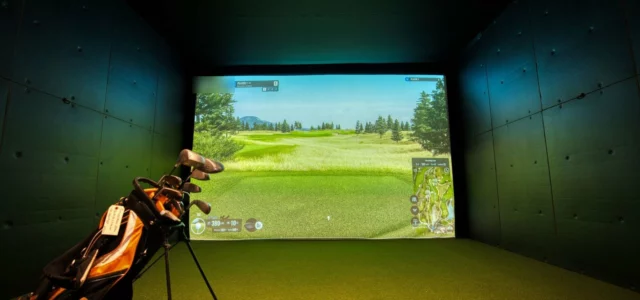
Two U.S. habits help. Many retailers extend return windows for holiday purchases into January; ask before you pay, and keep the gift receipt. And in much of the northern half of the country, indoor golf centers and simulator lounges stay busy all winter: a voucher for an hour in a bay is a gift a golfer in Minneapolis or Boston can use in January. In the Sun Belt, from Arizona to Florida, the season never stops, and the balls and glove will see a course the week they are unwrapped.
A simple way to choose
Ask one question about the golfer on your list. Do they play all winter, or do they put the clubs away? If they play, the gloves or a dozen balls will be used within days. If they stop, the putting trainer or a range card bridges the gap until spring. The divot tool works for both, and it leaves enough of a $50 budget for a second small gift. Whatever you choose, keep the receipt: golfers are particular, and a swap is better than a drawer.
For the cold months themselves, our piece on golf balls below 50 degrees explains what the weather really costs, and why warming a ball during a round can cost much more.
How this page was put together
This is a presentation of products and a reading of public opinion, not a test: nobody at Panxis Golf used these products for this page, and nothing here was measured by us. Product descriptions come from the makers’ published material: Titleist’s 2026 Tour Soft launch information as reported by the golf press, FootJoy’s WinterSof description and Pitchfix’s Hybrid 2.0 description as reproduced on retailer product pages, and PuttOUT’s description of its trainer. Where a maker does not publish a figure, it is left out rather than estimated.
Prices were read on November 8, 2026, in U.S. dollars: the Titleist Tour Soft at Fairway Jockey, the FootJoy WinterSof pair at Golf Discount, the PuttOUT Premium Pressure Putt Trainer (new) at 2nd Swing Golf and the Pitchfix Hybrid 2.0 with ball marker at Carl’s Golfland. PGA TOUR Superstore’s pages could not be read by our tools. Prices change often, especially in the weeks before the holidays; the figure at checkout is the one that counts. No price is given for alignment sticks, range cards or lessons, because they vary too much to quote one figure honestly.
What golfers say comes from published reviews (Today’s Golfer, Golf Monthly, National Club Golfer, Plugged In Golf, Golf.com, Golfalot, Golf Inside UK), retailer customer reviews and golfer forums, several of which were read only in search-engine extracts. We kept only themes that came back in more than one place, and the page says where reviews were thin. Nobody is quoted by name, nothing is counted, and no impression is presented as a statistic. There is no commercial link on this page, no affiliate arrangement and no commission of any kind. If content on this site is ever paid for by a brand, it will carry an advertising label at the top of the page, before the first line.