Forgiving irons from A$1,079 to A$2,200: a robot test, and why firm Aussie fairways suit a wide sole
Four big-headed irons built for high handicappers were on sale in Australia this spring, from A$1,079 for six Cleveland Halo XL Full-Face irons to A$1,886 for six Ping G740s. A July 2026 robot test for Golf Digest found little difference in how far the heads carry on a good strike and a large one on a bad strike, while firm summer fairways here favour the wide soles these sets share.
In brief
- On 19 October 2026 an Australian retailer listed six-iron steel sets at A$1,079 (Halo XL Full-Face), A$1,147 (King Max), A$1,295 (Quantum Max OS) and A$1,886 (G740), all 15 to 20 percent below RRP; seven clubs ran from A$1,258 to A$2,200.
- In Golf Digest's July 2026 robot test, carry on good strikes varied by under 5 metres, but the Quantum Max OS lost about 11 metres from its best to its worst impact zone and the King Max about 21.
- Owners praise easy launch, the Callaway's consistency and the Ping's sound; the recurring complaints are offset and bulk, little feedback on strike, ballooning shots for quicker swings and awkward gapping.
- Hard summer fairways and tight couch lies suit a wide sole, but coastal wind punishes high spin: try a 5-iron as well as a 7-iron and watch your worst strikes, not your best.
Spring is when plenty of Australian golfers decide the old irons have to go: the comp season is starting in the south and the long irons that never got off the deck in winter still don’t. Play off 20 or more and the shop will point you to the biggest heads on the rack, sold as super game-improvement irons, every box promising forgiveness. This page looks at four of them that you can buy here this spring, the Callaway Quantum Max OS, the Cobra King Max, the Ping G740 and the Cleveland Halo XL Full-Face, and puts the makers’ claims next to what a swing robot recorded for Golf Digest in July 2026. It adds Australian prices read on 19 October 2026, what owners praise and grumble about, and what our hard summer fairways change. It is a reading of published data and public opinion, not a test: nobody at Panxis Golf has hit any of these clubs.
The short version, in Australian dollars
All four sets were listed by an Australian online and in-store retailer on 19 October 2026, steel shafts, regular flex, right-handed, prices including GST. Every one of them was marked down by roughly 15 to 20 percent from its recommended retail price.
| Set | Released | 7-iron loft | 6 irons (5 to PW) | 7 irons |
|---|---|---|---|---|
| Cleveland Halo XL Full-Face | January 2024 | 29° | A$1,079 (RRP A$1,350) | A$1,258 (RRP A$1,575) |
| Cobra King Max | February 2026 | 29.5° | A$1,147 (RRP A$1,434) | A$1,338 (RRP A$1,673) |
| Callaway Quantum Max OS | Early 2026 | 29° | A$1,295 (RRP A$1,619) | A$1,510 (RRP A$1,889) |
| Ping G740 | March 2026 | 28° | A$1,886 (RRP A$2,219) | A$2,200 (RRP A$2,589) |
Three of the sets sit within about A$250 of each other. The Ping does not: a seven-club G740 cost A$690 more than the same number of Callaways and nearly A$950 more than the Cleveland. In the United States the gap is far narrower. An eight-club G740 set with a 50-degree wedge added was listed at A$2,515.
On the day, the six-club G740 in regular flex and the King Max with a gap wedge instead of a 4-iron were both shown as out of stock, so those combinations would have to be ordered.
What the robot actually found
Golf Digest’s 2026 iron testing, carried out at Golf Laboratories and published in July, put a super game-improvement group of four 7-irons through the same swing: the Callaway Quantum Max, the Quantum Max OS, the Cobra Baffler and the Cobra King Max. The robot swung at 82 mph (about 132 km/h), a moderate amateur 7-iron speed, with a premium ball, and hit six shots on each of six spots on the face: heel, centre and toe across the middle, then the same three low on the face. Full results: Golf Digest’s site. The magazine works in imperial units; the figures below are converted to metres and rounded.
Good strikes went the same distance. Average carry across the four heads fell within about 4.8 metres, according to Golf Digest. In the magazine’s standard game-improvement group, the spread was about 15.7 metres. Inside this category, the distance claims on the boxes largely cancel each other out.
Bad strikes did not. The magazine compared each head’s best zone with its worst. The Quantum Max OS dropped about 11.2 metres of carry, the smallest loss in the group. The King Max dropped about 20.8 metres, the largest. The Quantum Max (about 15.5 metres) and the Baffler (about 14.4) sat in between. If your typical miss is thin, off the bottom grooves, that gap is the number that matters.
Direction held up for all four. Every head kept its shots inside a smaller area than the game-improvement average Golf Digest gives, about 21 square metres. The Quantum Max OS recorded about 7.9 square metres, which the magazine describes as the tightest of any iron it tested this year. The King Max had the largest pattern of the four, about 16 square metres, yet one of the narrowest left-to-right spreads of the whole test, around 6.6 metres. In other words, its misses came up short or long rather than wide.
Two cautions: a robot repeats one swing perfectly, and a test at 132 km/h says less about a 110 km/h swing. And the Ping and the Cleveland were not in that group, so there is no comparable robot figure for either of them on this page.
The four sets, maker by maker
Callaway Quantum Max OS
The OS is the oversized member of Callaway’s 2026 Quantum family, next to the Quantum Max and the lighter Quantum Max Fast. Callaway describes a two-piece head with a “360-degree undercut” cavity, an AI-designed face, urethane microspheres to damp vibration and a sole that changes through the set. Published 7-iron specs: 29 degrees of loft, a 62.25-degree lie, 37.25 inches long and 4.8 millimetres of offset. A high-launch custom option adds two degrees to every loft. Stock shafts are True Temper Elevate 85 steel, or Mitsubishi Vanquish and Project X Denali in graphite.
Here it was the second-dearest of the four, at A$215.83 a club for a six-iron set.
Cobra King Max
Cobra opened pre-orders on 3 February 2026 and shops had it three days later, as the replacement for the DS-Adapt Max. The pitch is maximum launch for a golfer who fights a slice. Inside is a foam-filled hollow body, a face insert that Cobra says flexes more, an 80-gram weight low in the sole and a rear badge with a 3D-printed lattice, which Cobra says lowers the centre of gravity by about 2 millimetres. Lofts are about two degrees weaker than the standard King: 29.5 degrees at the 7-iron and 44.5 at the pitching wedge. Offset is 5.2 millimetres at the 7-iron and 7.6 at the 4-iron. Stock shafts are KBS Tour Lite steel and KBS PGI graphite.
At A$191.17 a club for six, it was the cheapest of the three 2026 models. It also lost the most carry on bad strikes in the robot test.
Ping G740
Ping launched the G740 in March 2026 and calls it its longest and most forgiving iron. Against the G440, the retailer’s listing quotes a sole 22 percent wider, a blade 3 percent longer and a thicker top line. The face is thin heat-treated 17-4 stainless steel, and a three-piece badge in the cavity is meant to manage how the face flexes and to improve sound. The 7-iron is 28 degrees, 37 inches, with a 63-degree lie and 0.19 inches of offset (about 4.8 millimetres). Ping offers a Power Spec 1.5 degrees stronger and a Retro Spec 2 degrees weaker at the 7-iron. Stock shafts are AWT 3.0 steel and Alta CB Blue graphite. There is no 4-iron: the set starts at the 5, on the reasoning that a high handicapper is better off with a hybrid at the top of the bag.
Here a six-iron set worked out at A$314.33 a club.
Cleveland Halo XL Full-Face
The oldest design here reached shops on 19 January 2024 and is still Cleveland’s high-launch iron. It looks the least like a traditional iron: a hollow, hybrid-shaped head, grooves running right across the face, two white grooves at the bottom for alignment, and a variable-thickness face that Cleveland says it designed with AI. The sole changes through the set, with rails on the long irons, a V shape in the mid irons and a three-tier sole on the short irons. An 8-gram weight under the grip counterbalances the club. Retailer spec tables, not a Cleveland sheet, give 29 degrees at the 7-iron and about 2 millimetres of offset. Stock shafts are KBS Tour Lite steel and UST Helium Nanocore graphite.
At A$179.83 a club for six, it was the cheapest set on this page, and it came with a choice of gap wedge or sand wedge as the seventh club.
What golfers are saying: owners and reviewers
High-handicap irons get far less online discussion than drivers or players’ irons. The buyers are often newer golfers or older golfers who post less, and three of these four sets have been in shops for under a year. We found no Australian forum thread specific to any of them; what follows comes mostly from British and American published reviews, Golf Digest’s Hot List panel comments and retailer reviews overseas. Nobody is quoted and nothing is counted.
The positives that come up most:
- Height with no extra effort. The one thing all four share is launch. Golfers who could not get a 5 or 6-iron to stop on a green describe shots that finally come down steeply. This is said most often of the Halo and the King Max, which have the most built-in help.
- A Callaway that wins people over. Reviewers who first call the Quantum Max OS chunky tend to end up recommending it to higher handicappers for how confident it looks at address and how consistent it is, which lines up with the robot’s tight pattern.
- A Ping that sounds better than it looks. Reviewers describe a crisp, muted sound and a softer feel than they expected from such a big head.
The complaints that come up most:
- Offset and bulk. On the King Max the offset is the thing reviewers say takes longest to get used to; on the Halo it is the thick top line and hybrid shape. Golf Monthly also notes a visible bulge behind the G740’s long irons at address.
- Not much feedback. A wide sole and a deep cavity soften poor strikes, and that is the downside too: on the G740 especially, reviewers say it is hard to feel where the ball came off the face.
- Too much height for quicker swings. Players with more speed describe high, spinning shots that climb in the wind, especially with the light stock graphite shafts. The Halo collects this criticism most often.
- Gapping and finish. The King Max’s weak lofts and Ping’s decision to start at the 5-iron both mean rethinking the top and bottom of the bag, and the Halo’s chrome is described as marking easily.
Where to try high-handicap irons in an Australian spring
Most reviews above were written on soft northern-hemisphere autumn turf. You are buying at the start of our summer, and three things differ.
Hard ground suits a wide sole. By December, fairways from Perth to the Sandbelt are firm and fast, and in Queensland and northern New South Wales tight couch lies leave little grass under the ball. A heavy strike on hard ground bounces into the ball rather than digging, and a wide, cambered sole like the G740’s or the Halo’s is designed for exactly that. The extra height also helps hold greens that are getting quicker.
Wind is the real test. On coastal courses, and on the open links of Tasmania or the Mornington Peninsula, a high-spinning 7-iron can drift well off line in a sea breeze. If you already hit the ball reasonably high, take the “balloons in the wind” complaint seriously and ask to try a heavier steel shaft or standard lofts rather than the high-launch options.
The timing works for you. Demo days are common at clubs in October and November, and the custom orders that sets like these often need take a few weeks. Order in mid spring and the set should be in your bag before the Christmas comps.
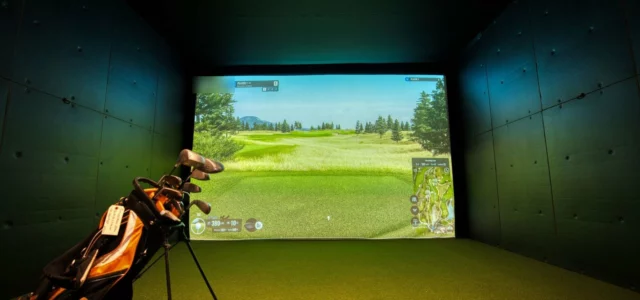
Where to try them. National golf chains and larger independent stores usually have hitting bays with a launch monitor. Ask to hit both the 7-iron and the 5-iron, and ask the fitter to show the carry gap between your best and your worst strikes: that is the figure the robot test is about. Your club’s pro shop can order all four brands, often hosts manufacturer demo days in spring, and may sell demo sets cheaply at the end of the season. Indoor simulator centres help on a wet weekend, though a mat forgives heavy strikes that real ground punishes. And because the Halo has been on sale since early 2024, pre-owned specialists are worth checking for it: look at the grooves, the shaft labels and the returns policy, and remember that buying from a business gives you the protection of Australian Consumer Law, which a private sale does not.
What to ask. Whether your preferred set makeup and flex is in stock or has to be built, how long a custom order takes, whether a lie-angle check is included, and whether the weaker-loft options from Callaway and Ping are available here. If you are swapping long irons for hybrids, our piece on hybrid or long iron covers how to fill the gap, and our comparison of this year’s game-improvement irons covers the next category up.
Is this category right for you?
Three questions sort out most golfers. Do your 5 and 6-irons rarely get airborne? Are your misses mostly thin or fat rather than left and right? Would you rather hit more greens than shape the ball? If you answer yes to all three, and your GA Handicap sits well into the 20s or beyond, a set from this page will probably make the game easier. If your 7-iron already flies high and your problem is direction, a standard game-improvement iron, or simply a fitting and a lie-angle adjustment on the set you own, may do more for you.
Whichever way you go, judge a fitting by your worst shots. The robot found almost nothing between these heads on good strikes and a big difference on bad ones, and that, more than the badge or the price, is what you are paying for.
How this page was put together
This page presents products and reports public opinion; it is not a test, and nobody at Panxis Golf has hit any of these irons. Specifications come from the makers’ published material: Callaway’s Quantum Max OS specification table (the range was also covered for Australian readers by Australian Golf Digest), Cobra’s King Max specifications as reproduced by an authorised retailer and its February 2026 launch as reported by GOLF.com, Ping’s G740 specification page and the G440 comparison in the Australian retailer’s listing, and Cleveland’s Halo XL Full-Face launch material as reported by GOLF.com. The Halo’s 7-iron loft and offset come from retailer tables, not a Cleveland sheet. The robot figures are Golf Digest’s, from its July 2026 analysis of super game-improvement irons, converted from imperial units to metres and rounded; Panxis Golf did not reproduce the test.
Prices were read on 19 October 2026, in Australian dollars including GST, on GolfBox’s website, for steel shafts, regular flex and right-handed sets, along with the stock status shown for each combination. Drummond Golf, our usual reference, refused access to its pages that day, and so did House of Golf, so neither was used. Per-club figures are the six-club set price divided by six. Prices and stock change often.
What golfers say was read in reviews published by National Club Golfer, Golf Monthly, Golfalot, GolfMagic and Plugged In Golf, in the comments of Golf Digest’s Hot List player panel and in retailer customer reviews. We looked for Australian forum discussion of these four sets and found none specific enough to use. Nobody is quoted by name, nothing is counted, and no impression is presented as a statistic. There are no commercial links on this page, no affiliate arrangement and no commission of any kind. If content on this site is ever paid for by a brand, it will carry an advertising notice at the top of the page, before the first line.