Garmin R10 numbers for spring: the four to trust, and where to hit a launch monitor in Australia
Fourteen figures after every swing, and forty balls later you only remember the longest drive. Before the first stableford of spring, learn which four numbers on a launch monitor deserve your trust, and which ones you can scroll straight past.
In brief
- Garmin publishes margins for the R10's ball speed (about 1.6 km/h), launch angle and launch direction (1 degree) and carry (about 4.5 metres), and none for spin, club path or face angle.
- Read carry over ten balls as a range, not a record: a 3-metre shift between sessions is noise.
- Set the unit 1.8 to 2.4 metres behind the ball, check alignment with a short wedge and update the weather as spring warms up.
- In September 2026 an Australian golf retailer listed the Approach R10 at A$998.95; virtual courses need a paid Garmin Golf membership after a 30-day trial.
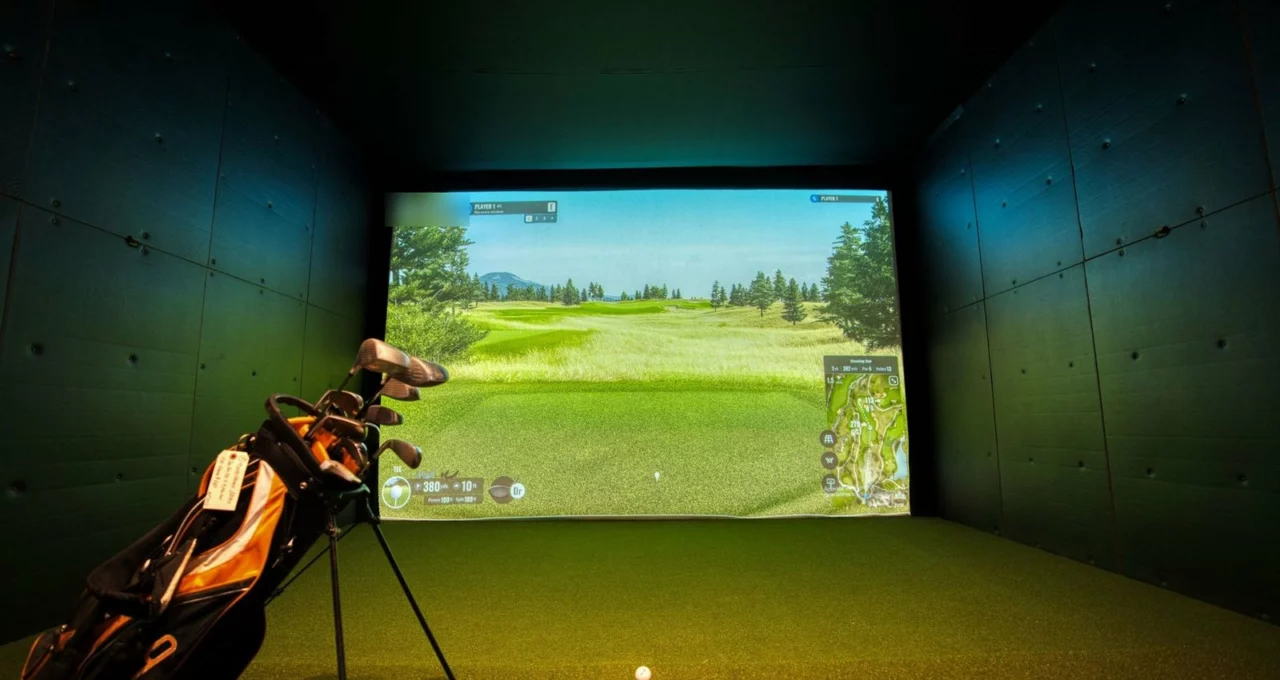
Spring is when the launch monitors come out of the cupboard. The practice fairway is drying out, daylight saving is around the corner and plenty of golfers want to know, before the first stableford of the new season, how far their clubs actually go. Then the session starts, fourteen figures flash up after every swing and forty balls later all anyone remembers is the one drive that went miles. The fix is not a better device. It is knowing which few figures on the screen deserve your trust and which ones you can quietly scroll past.
The worked example here is the Garmin Approach R10, a small radar that a lot of Australians buy as their first launch monitor, and a useful one to learn on because Garmin states how accurate some of its numbers are and stays silent on the rest. Every specification below comes from Garmin, the price was read at an Australian retailer in September 2026, and nobody at Panxis Golf has struck a ball in front of the unit.
Start with the fine print: what Garmin puts a margin on
The R10 sits on the ground behind the ball, tracks it with Doppler radar and sends the data to the Garmin Golf app on your phone or tablet. The basics, as published by Garmin:
- A pocket-sized unit. 88.5 x 70.25 x 25 mm, 148 grams on its own and 220.8 grams with the tripod. The battery runs for up to 10 hours, the case is rated IPX7 for water and the operating range is -10 to 55 °C, so a warm afternoon on the range is well within its limits.
- Fourteen metrics. Club head speed, face angle, club path, angle of attack, ball speed, launch angle, launch direction, spin axis, spin rate, apex height, smash factor, carry, total distance and deviation.
- Five published margins. Ball speed within about 1.6 km/h, launch angle within 1 degree, launch direction within 1 degree, carry within about 4.5 metres and club head speed within about 8 km/h. For the other nine metrics Garmin publishes no accuracy figure at all.
That last line is the key to the whole screen. A maker that is prepared to print a margin next to a number is telling you it measures that number with some confidence. Where there is no margin, the figure is usually calculated from other figures or estimated from a model, and each step adds its own error. So the working rule is short: lean on the numbers with a published margin, treat the others as rough hints. Club head speed has a margin too, but at roughly 8 km/h either way it is too loose to judge one swing against the next. That leaves four.
What the R10 costs in Australia, and what comes on top
In September 2026 an Australian golf retailer listed the Approach R10 at A$998.95, with a lower price of A$949 for members of its loyalty club, and showed it as sold out online at the time the price was read. That is roughly the cost of a new premium driver, which is reason enough to understand the screen before paying for one.
The device is not the whole bill. Garmin says virtual rounds on more than 43,000 courses need a paid Garmin Golf membership once the free 30-day trial ends, and links to third-party simulator software such as E6 Connect and Awesome Golf come with their own subscriptions. If simulator golf in the garage is the goal, add those running costs before comparing it with a bucket of balls at your local range.
The four worth your attention
Our earlier piece on launch monitors in Australia covers how radar and camera units differ. This section is about reading one once it is sitting behind your ball.
Launch direction: where the ball started
Start with the number most golfers ignore. Launch direction is the angle, left or right of your target line, at which the ball leaves the face. Where a ball starts is mostly decided by where the face points at impact, so this is the most dependable window a consumer radar gives you onto your clubface, and Garmin backs it with a margin of 1 degree.
Pair it with where the ball finished. A drive that starts three degrees right and keeps drifting right is a different problem from one that starts left and slides back to the right. Over a full bucket, if most balls start on the same side, you have found a pattern no amount of feel on the mat will show you as clearly.
Launch angle: why the flight looks wrong
Launch angle is how steeply the ball leaves the ground. It explains most flights that feel off: the drive that balloons and drops short, the long iron that never climbs, the wedge that comes out lower than expected. A margin of 1 degree is tight enough to compare two swings or two settings.
It earns its keep with the driver. Spring fairways are firming up, and a lower launch can mean more run, but only if the ball still carries the trouble. If you have been fiddling with the sleeve, our step-by-step on driver settings for spring explains how to change one thing at a time, and launch angle is the figure that tells you whether the change did anything. With irons, look at the gaps: a 5-iron and a 7-iron launching at almost the same angle suggests the longer club is not pulling its weight.
Ball speed: the honest strike meter
Ball speed carries the tightest margin on the list, about 1.6 km/h according to Garmin, and it answers the question every golfer asks after contact: was that a good one? For the same club, more ball speed means a quicker swing, a cleaner strike or both.
Watch the average of ten swings, never the peak. If your average driver ball speed climbs from 206 to 212 km/h over a month of speed work, that is a genuine gain. One ball at 222 km/h is a great swing, not a new baseline. The same goes for a new shaft or a higher tee: judge it on the average, not the highlight.
Carry: a range, not a record
Carry is how far the ball flies before it lands, and it is the number that picks your club on an approach. It is also the one golfers remember most generously. Hit ten balls with one club, drop the obvious mishit, and write down three figures: the typical carry, the shortest reasonable one and the longest. A 7-iron that carries between 125 and 138 metres tells you far more than the 142 you would like to quote in the clubhouse, and the width of that range is your real consistency.
Keep Garmin’s margin in mind. A shift of 3 metres between two sessions is noise; a shift of 10 is worth noticing. Our guide to wedge numbers uses the same range-not-record thinking for the short clubs.
The screen you can switch off
None of the following is useless, but none of it is precise enough to build a practice session around on a consumer radar:
- Total distance. The roll is modelled, not measured. On a real course it depends on the couch or kikuyu, the slope and how much rain fell last week. Carry is what transfers to the course.
- Club path and face angle. On the R10 these are worked out from the ball’s flight, and Garmin publishes no margin for either. Over many shots they may point the right way, but chasing them alone is a good way to spend a season fixing the wrong fault.
- Spin rate and spin axis. Garmin says Titleist Pro V1 and Pro V1x balls with Radar Capture Technology improve spin accuracy by up to 30 times and carry accuracy by up to 50 percent. With ordinary balls, and especially indoors, spin is the figure that jumps around most for no clear reason.
- Apex, deviation and smash factor. All three are calculated from other figures. Smash factor divides ball speed by club head speed, and with a margin of about 8 km/h on club speed the ratio wobbles too much to mean anything shot by shot.
- Your best ball. Not a metric, but the one everyone reads first. Leave it out of your notes.
Getting the setup right before the first ball
A radar placed carelessly turns reliable numbers into unreliable ones. Garmin’s owner’s manual spells out the steps that matter:
- Distance. Put the unit 1.8 to 2.4 metres behind the ball and enter the exact distance in the app when it asks.
- Alignment. Line the device up with the ball and the target, then check it with a short, straight wedge. If the launch direction on the screen does not match what your eyes saw, nudge the unit and hit another. A couple of degrees out here means a couple of degrees out on every direction reading that follows.
- Conditions. Set the weather and conditions in the app to match where you actually play. A carry chart built on a cool winter morning will not hold on a hot November afternoon, so update it as the season warms up.
- Indoors. Leave at least 2.4 metres between the ball and the net. And be honest about the mat: it forgives a heavy strike that a tight spring fairway would punish, so indoor iron carries tend to flatter you.
Thirty balls, one question: a spring session
Before you tee up, write one question on your phone. “How far does my 9-iron really carry now the weather has warmed up?” “Does the new driver setting change my start line?” Then split thirty balls like this:
- ten balls with a short iron to warm up, screen face down;
- ten balls with the club in question, reading only the one figure that answers your question;
- ten balls with the change you are trying, reading the same figure.
Compare the averages and the ranges, note them down and pack up. One answered question beats an hour of watching numbers scroll past. Our advice on getting more from a range session follows the same logic with or without a screen, and over a few weekends those notes (carry range, average ball speed, launch angle, start direction) will say more about your game than any single session.
What golfers are saying about the Approach R10
The R10 comes up constantly in golf forums, simulator groups and public retailer reviews, and the same themes keep returning. What follows sums up those recurring views; it is not a count, and nobody is quoted.
The good.
- Outdoor carry and ball speed. Owners who have compared it with a professional launch monitor during a fitting regularly say the outdoor carry figures were close enough to build a distance chart for the bag.
- Easy to carry. It slips into a bag pocket and lasts a long range session on one charge, which many cite as the reason they picked it over a bulkier unit.
- A cheap door into simulator golf. For golfers who want virtual rounds at home, it is often described as the most affordable option that still feels like proper golf.
The not so good.
- Indoor spin. The complaint heard most: with ordinary balls in a garage or spare room, spin readings swing from shot to shot, and the curve on screen does not always match the ball in the net.
- Path and face. Golfers hoping to fix a slice often report that these two figures did not line up with what their coach or a professional unit showed.
- Room to swing. The space needed behind and in front of the ball catches out buyers with a small room in mind.
- The subscriptions. Plenty point out that virtual courses need a membership and some simulator software costs extra, which lifts the real price.
For an independent test with measured data, the Golf Insider UK review sets the R10 against a professional launch monitor shot by shot.
Where to hit a launch monitor around Australia
You do not have to own a radar to put these four numbers to work. A few options, from the cheapest to the most personal:
- Driving ranges with ball tracking in the bays. A growing number of ranges have tracking at every bay, which is enough to sketch a carry range for a few clubs in a single spring evening.
- Indoor simulator venues. They hire bays by the hour, which is handy on a wet or windy spring afternoon. Ask whether the bay shows raw launch data or only the game view.
- Golf stores with a hitting bay. Larger stores often have a bay with a launch monitor, and a weekday morning is the easiest time to get a slot.
- Your club pro. A PGA professional who knows your swing can tell you what the direction figures mean for you, and many run launch monitor sessions on the practice fairway. Our piece on what an iron fitting reveals shows how the same numbers are used there.
If you are buying, a handful of questions sorts out the offers quickly. Which metrics work straight out of the box, and which need a subscription? How long is the change-of-mind return period, and does it cover a unit that simply does not work in your room? Is the warranty handled by the store or by Garmin? And for a second-hand unit, check that the tripod and cable are in the box and that the seller can release the device from their app account.
How this page was put together
This is a guide combined with a reading of public opinion, not a test. The dimensions, weight, battery life, water rating, operating temperature, list of metrics and accuracy figures of the Garmin Approach R10, the claims about Titleist balls with Radar Capture Technology and the number of virtual courses come from Garmin’s product page. The placement distances, the wedge alignment check and the weather setting come from Garmin’s owner’s manual for the device. Garmin states its margins in imperial units; they are given here as approximate metric conversions. The price of A$998.95, the loyalty club price of A$949 and the sold-out-online status were read on 28 September 2026 on the website of Drummond Golf, an Australian golf retailer. The carry, ball speed and launch examples are illustrations, not measurements. Golfer opinions were gathered from golf forums, simulator groups and public retailer reviews; nobody is named, nothing is counted and no impression is presented as a statistic.
Nobody here has hit a ball in front of this launch monitor. This page contains no commercial link, no affiliate arrangement and no commission of any kind. If any content on this site is ever paid for by a brand, it will carry an advertising notice at the top of the page, before the first line.