Kids and golf in Canada: First Tee, $5 rounds and a first season that sticks
Access is not the problem: First Tee Canada runs in every province, Youth on Course rounds cost $5 or less, and city par-3s charge juniors a few dollars. What keeps a child playing is fitted clubs, short outings, no scorecard and a parent who stays quiet.
In brief
- Skip cut-down adult clubs; buy a light junior set by height, ideally used.
- Start with putting and chipping games, then three holes on a par-3.
- First Tee Canada groups kids by age in six regional chapters; Toronto ran 45 junior camps in 2026.
- Youth on Course: Golf Canada members aged 6 to 18 play for $5 or less at participating courses.
- Do not keep score or coach every shot; stop while they still want more.
Canadian kids have more low-cost ways into golf than most parents realize. Golf Canada members aged 6 to 18 can play subsidized rounds for $5 or less at participating courses through Youth on Course. First Tee Canada runs programmes in every province through six regional chapters. And a nine-hole par-3 round for a child at Calgary’s McCall Lake cost $13 in 2026. The hard part is not access. It is keeping a child interested long enough for golf to stick.
That comes down to a handful of choices parents make in the first season. The test of every one of them is simple: does your child ask to go again?
Clubs that fit, or none at all
The quickest way to end a golf career at age eight is an adult club sawn off at the bottom. Shortening a shaft does not make the head lighter or the shaft softer, so the child ends up heaving a club built for an adult’s strength. They adapt by lifting with their arms and throwing the club from the top, and that move can linger long after they grow into proper equipment.
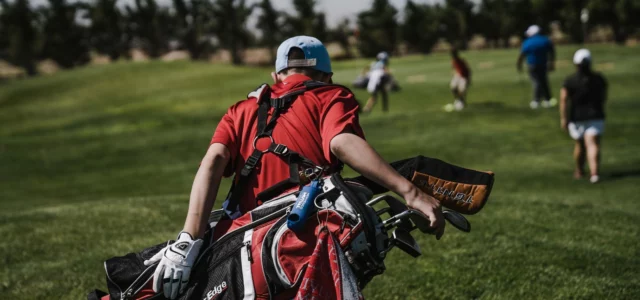
Junior sets are sized by height rather than age and weigh far less. Because children outgrow them every season or two, the secondhand market is full of them, and a lightly used set resells easily when your child moves up. Under 12, a driver or hybrid, a mid iron, a wedge and a putter are plenty.
Start with success: putting and chipping
Full swings rarely go where a beginner intends. A putt that drops does. Begin on the practice green with a game (fewest putts to hole out from three spots, closest to a tee, a ladder of distances), then move to chipping into a circle of clubs.
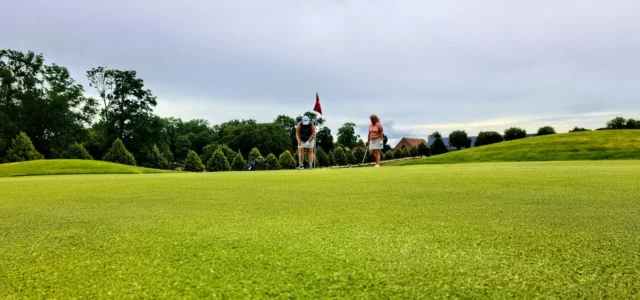
When it is time for the course, choose a short one. A par-3 or pitch-and-putt means the green is always within reach, holes are finished, and a round lasts about as long as a child’s attention.
Programmes built for kids
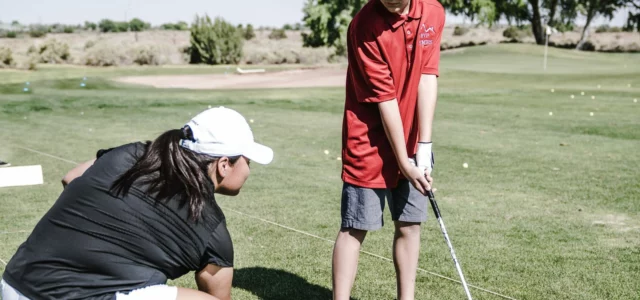
Children stay in activities where they have friends. Group programmes beat private lessons for beginners, because they are social, full of games and much less intense than one adult watching every swing.
First Tee Canada, launched by Golf Canada and First Tee in 2021, is the national youth programme. Its facility programmes group children by age (7 to 9, 10 to 11, 12 to 13, and 14 and up) and pair golf fundamentals with five key commitments, including pursuing goals and using good judgement. There is also a school programme that trains physical education teachers, and a community programme run through youth and community centres. RBC Community Junior Golf supports First Tee Canada programming at municipal courses across the country.
City programmes are often the easiest place to start. The City of Toronto announced 45 junior summer camps for children aged 7 to 14 at its municipal courses in 2026, and junior members played more than 15,000 rounds on those courses in 2025.
Play short, and play from wherever works
On a regular course, let your child tee off from the fairway 100 yards out, or from wherever gives them a real chance to reach the green in a few shots. Play three holes with a six-year-old, nine at most with an older beginner, and stop while they still want more.
Skip the scorecard for the first few outings. Counting strokes tells a beginner, hole after hole, that they are not good at this. When they ask how many they took, that is the moment to start counting.
Give them jobs that make them feel part of the game: tending the flag, raking the bunker, repairing a ball mark, reading the yardage on a sprinkler head.
Be a caddie, not a coach
A parent who critiques every swing is one of the surest ways to turn golf into a chore. Leave instruction to the coach. On the course, carry the snacks, keep things moving and react to good contact rather than good results. Never comment after a bad shot, and do not ask for their score.
Timing matters in a Canadian season
Book quiet times: a weekday late afternoon in July or August when the course empties out, not a packed Saturday morning with groups waiting behind you. Toronto’s municipal courses, for example, restrict junior membership play to weekday afternoons and to later weekend times, which is also when the courses are gentlest on beginners.
Many courses have a minimum age or require an adult to accompany younger juniors. Toronto’s junior members aged 13 and under must be supervised unless course management approves otherwise. Ask the pro shop before you go.
In winter, let it rest or try an indoor simulator or putting session for fun. A child who misses golf by April is more valuable than one who was drilled all winter.
What it costs in Canada
Golf can be one of the more affordable youth sports if you avoid new equipment and peak-time green fees. Examples from 2026 municipal rate sheets:
- Toronto, Dentonia Park: junior (18 and under) 18-hole round $20.17 on weekdays, plus HST; nine holes $13.86 at the start and end of the day.
- Toronto junior membership: $377.99 plus HST for ages 9 to 18, valid at all five City courses for the season. It sold out in 2026, so watch for next year’s sale date. A Welcome Policy subsidy is available.
- Calgary, McCall Lake par-3: $13 for ages 4 to 17, or $33 for a family of up to four.
- Youth on Course: rounds for $5 or less at participating courses at designated times for Golf Canada members aged 6 to 18, with access to more than 2,000 courses across North America.
Travel tournaments and private coaching are where costs climb, and neither belongs in the first couple of years. For general rules on green fees and visiting courses, see our guide.
When they want to compete
If your child starts asking about tournaments, a Golf Canada membership gives them a Handicap Index, and provincial associations run junior events with age divisions. At the national level, Golf Canada’s 2026 calendar included the Canadian Junior Boys at Wascana Country Club in Regina, the Canadian Junior Girls at TPC Toronto at Osprey Valley and a Canadian U15 championship at Loyalist Country Club in Bath, Ontario.
Keep perspective. The aim at twelve is a teenager who still loves the game at eighteen, not a ranking.
Where to start in Canada
- First Tee Canada: find your regional chapter (British Columbia, Alberta, Prairies, Ontario, Quebec or Atlantic Canada) through the First Tee Canada website.
- Your municipal course: junior rates, camps and often a par-3 or short course, with staff used to beginners.
- Golf Canada’s junior golf page: details of Youth on Course and RBC Community Junior Golf.
- A PGA of Canada professional: the Find a Pro directory lists coaches by region when your child is ready for more.
- Equipment: used junior sets from local marketplaces, used-club retailers or your club’s pro shop.
Panxis Golf has no commercial relationship with any programme, club or retailer mentioned here.
A first month that works
- Week 1: half an hour of putting games on a practice green.
- Week 2: add chipping, or join a First Tee or city junior session.
- Week 3: a small bucket on the driving range, half swings with a short iron.
- Week 4: three holes on a par-3 course in the late afternoon, no scorecard.
Then do it again. When your child asks for a fourth hole, you have done your job.