Getting irons fitted in Australia: free, paid or brand-agnostic
Iron fitting in Australia runs from a free in-store session to a camera-based studio with tens of thousands of combinations. The value comes from arriving with a specific problem and asking what could be changed on the clubs you already own.
In brief
- Book with a problem to solve, not a hope for distance: stronger lofts supply distance on their own.
- Lie angle, shaft weight, length and grip size move the ball more than the latest head.
- A good fitter reads your strike on the face and changes one thing at a time.
- One big chain's fitting is free; another charges A$100 an hour, waived if you buy.
- Check your wedge gaps and lie angles before paying for a new set.
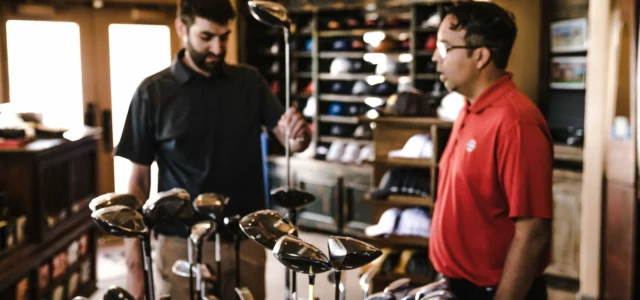
Every big golf retailer in Australia now offers some form of iron fitting, and they range from free and walk-in to a paid, appointment-only session on a camera-based launch monitor with tens of thousands of head and shaft combinations. The label is the same. What you walk out with is not, and the difference has less to do with the technology than with the questions asked in the bay.
This is a guide to getting a fitting that changes where your approach shots finish, not just the number printed on the receipt.
Start by deciding what you want to find out
Most golfers book a fitting with a vague sense that newer irons might go further. That is the one outcome a fitting is least useful for. Lofts on modern game-improvement irons are often stronger than older sets, so a new 7-iron can easily fly past your old one without making you a better player; it simply has the loft of a 6-iron.
Go in with a specific problem instead. “My iron shots start left of target”, “I strike it well on the range but thin it on the course”, “I have no club for 90 metres”. A fitter can solve a problem. A wish for distance gets solved with lofts.
What to bring and how to arrive
- Your current irons and wedges, all of them. Fitting guidance from major retailers recommends bringing your existing clubs to give the fitter reference data.
- The shoes and glove you play in, because a change in footwear alters posture and therefore how the club sits at impact.
- A realistic idea of your stock distances on the course, ideally measured with a rangefinder or GPS rather than remembered.
- Enough warm-up that the first twenty swings are representative. On a hot summer afternoon, a drink and some shade before you start matter too.
The adjustments that move your ball the most
Lie angle
When a club’s toe points up at impact, the face aims left of the path for a right-hander; when the heel is up, it aims right. The effect grows with loft, which is why it shows most in the short irons and wedges. A fitter checks it dynamically, usually with a lie board or tape on the sole, and the correction on most irons is a bend on a loft and lie machine rather than a new club.
Shaft weight before flex
Retail talk centres on regular, stiff and extra stiff. For many club golfers the weight of the shaft makes a bigger difference to rhythm and strike than its flex label, and a good fitter will try a lighter and a heavier option in the same flex before moving on. If a shaft feels as though it drags the handle, or your tempo gets quick and snatchy, weight is the likely cause.
Length and posture
Length changes where on the face you make contact and how you stand to the ball. It also interacts with lie angle: a longer club sits more upright. Any length change should be followed by a fresh lie check.
Grip size
Too thin and the hands can become overactive through impact; too thick and they can struggle to release. Grip size is cheap to change and often overlooked. It is worth asking about before you consider anything more expensive, especially if you wear a larger glove.
How to tell a fitter from a salesperson in the first ten minutes
Watch what happens before any clubs are swapped. A fitter who looks at your strike pattern on the face with tape or spray, and asks you to hit your own irons first, is building a baseline. A fitter who hands you the latest model within two minutes is selling.
Watch, too, how many things change at once. Head, shaft and length swapped together can produce a better number without telling either of you which change caused it. One variable at a time is slower and far more useful.
And ask for dispersion as well as carry. On a monitor, the width of your pattern at 140 metres is what decides whether you hit greens, not whether the average carry grew by four metres.
The best single question: “What would you change on my current clubs?” If the honest answer is a lie adjustment and new grips, a fitter who says so has earned your trust for the day you do need a new set.
The gap at the bottom of the bag
Before a new set of irons, look at your wedges. A set pitching wedge with a strong loft, followed straight away by a sand wedge, can leave a large carry gap between two consecutive clubs, and that gap usually sits exactly at the distance of your most common approach. Ask the fitter to measure carry, not total distance, for your pitching wedge and your next wedge. If there is a hole, one extra wedge fills it for a fraction of the cost of irons.
When a fitting is not yet worth it
If you are in your first season, your strike and your swing will change quickly, and clubs fitted today will be fitted to a swing you no longer own by next winter. Play a year, take lessons, then get fitted. The same goes for anyone halfway through a swing rebuild with a coach: wait until the new move holds up on the course.
Where to get fitted in Australia
The options fall into three tiers, and all of them were checked on the retailers’ own sites in September 2026.
Free fitting at a national chain. The chain’s in-store fitting service compares your swing characteristics against clubs from the major brands and is advertised as free. It says to allow an hour, recommends booking on weekends and busy periods, and notes that fittings after 4pm may be declined unless confirmed by appointment. It is the most accessible starting point given the size of the store network, and the chain also takes trade-ins in store against new gear.
Paid, credited fitting at a second chain. This chain lists an iron set fitting of up to seven irons at A$100 for a one-hour session, with the fee waived if you buy the recommended clubs. Woods, putter and a beginner package covering length and shaft flex are priced the same way, and full-set fittings are arranged through individual stores. Its fitting systems include brand tools such as PING’s nFlight.
Brand-agnostic studio fitting. A third operator runs fitting studios in Melbourne’s Sandbelt and in Perth. It uses a Foresight GC Quad launch monitor and the Club Conex hosel adapter, which lets any head be tested with any shaft, and claims more than 70,000 head, shaft and grip combinations through a fitting partnership. Its session types include irons and wedges, and a separate distance and gapping assessment. Some specialist stores also do lie and loft adjustments and regripping in their workshop.
Your club professional. A PGA professional who sees you play every week can spot things no bay will, such as a lie that looks fine on the mat and wrong from a sidehill lie on your home course. Many club workshops handle lie checks and regrips, so ask in your pro shop before booking elsewhere.
If you buy used clubs, budget for a lie and loft check afterward: a previous owner’s adjustments, or a few years of hard use, can leave a set well away from its printed specifications.
Panxis Golf has no commercial relationship with the retailers and fitters mentioned here, and earns no commission on anything mentioned here.
A sensible order of spending
- Have your lie angles checked on the irons you own, and correct them if they are out.
- Get grips sized to your hands and replaced if they are worn or slick.
- Measure your wedge carries and fill the largest gap.
- Only then book a full iron fitting, with a clear problem to solve and your old set in the car for comparison.
Pair the fitting with the grip and posture basics in our grip and setup guide and with a look at your bunker play, because an iron that finds the green side of the trap more often is the best measure of whether the money was well spent.
How this page was put together
Fitting prices and availability were checked on the websites of Drummond Golf, The House of Golf and GolfBox Custom in September 2026. Panxis Golf has no commercial link with these businesses.