Dressing for golf in an Australian summer: UPF ratings, storm shells, long pants and club sock rules
Sunderland Whisperdry Stealth, SuperSport Rainstorm, Greg Norman Freedom and ML75, Sporte Leisure Fusion and Oscar Jacobson Bowen at Australian prices from A$69.95 to A$398.95 in October 2026, plus what UPF ratings and club sock rules mean for summer golf.
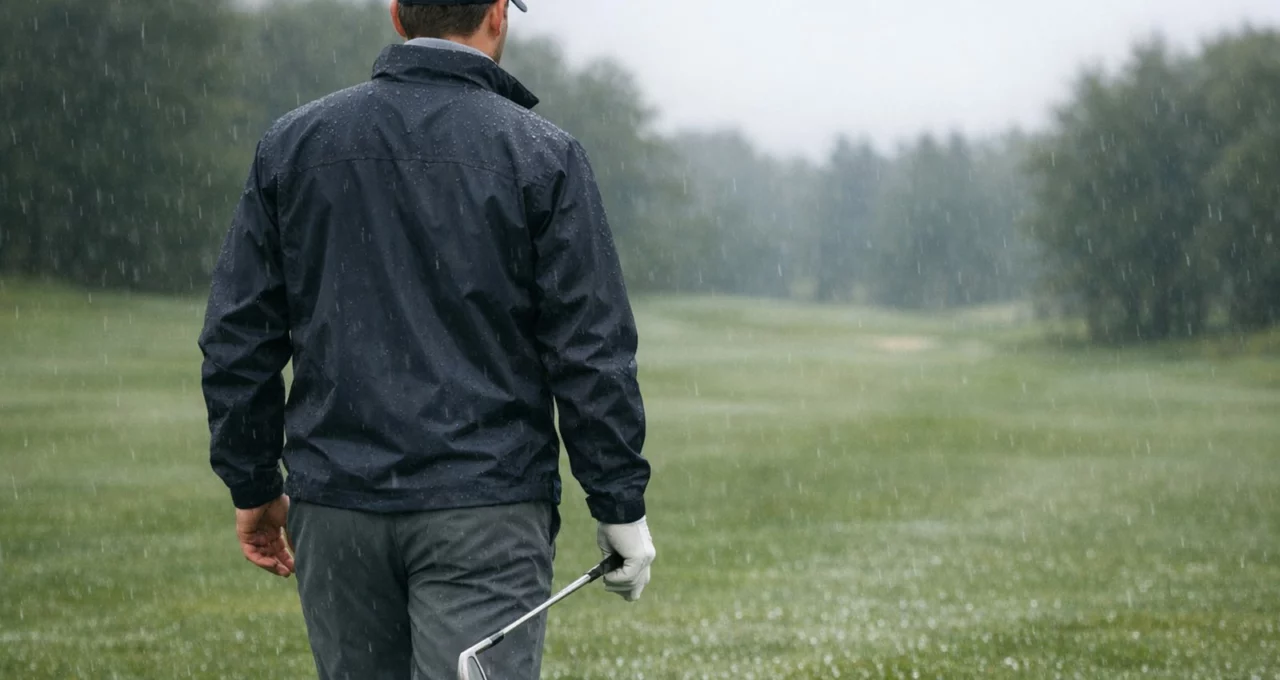
November is when the Australian golf wardrobe changes over. The vest goes back in the cupboard, the long pants get swapped for shorts on most days, and the question stops being how to stay warm on the first tee at 7 am and becomes how to get through 18 holes at 32 °C without cooking. The rain does not disappear, though. Spring storms still roll through Sydney and Brisbane in the afternoon, Melbourne can serve up four seasons in one round, and the wet season in the tropical north is only weeks away.
So this page looks at the clothing that has to cover all of that, through six garments on sale in Australia this month: two rain jackets, two polos and two pairs of golf pants, from A$69.95 to A$398.95. For each one we set out what the maker publishes, what it cost in Australian dollars in October 2026, and what golfers say about it and about garments like it in public reviews. Nobody at Panxis Golf wore, washed or played in any of these clothes. This is a presentation of products and a reading of public opinion, not a test.
Start with the sun, not the rain
In most of Australia, from now until March, the thing your golf shirt has to deal with is ultraviolet radiation. A round takes four to five hours, most of it in the open, often across the middle of the day. The Cancer Council’s familiar advice, slip on a shirt, slop on sunscreen, slap on a hat, seek shade and slide on sunnies, describes a golfer’s day almost word for word, and the shirt is the one part of it that does not wash off with sweat.
That is why the most useful number on a polo listing in this country is the UPF rating. UPF measures how much UV gets through the fabric. The Australian and New Zealand standard for sun protective clothing, revised in 2017, now uses a short scale: UPF 15 is minimum protection, UPF 30 is good and UPF 50 or 50+ is excellent. The older scale used words like “good”, “very good” and “excellent” for bands of numbers, and you will still see that wording on some swing tags. A figure you can read is better than a word, and a word is better than nothing at all.
Three things to keep in mind when you read a sun rating:
- Colour and weave matter. A dark, dense knit generally blocks more UV than a pale, open mesh. A light polo that feels cooler can let more sun through.
- Coverage matters. A short sleeve leaves the forearm and the back of the neck exposed. A collar you can turn up and a long-sleeved sun polo cover more of you, and a broad-brimmed hat does more for the ears than any shirt.
- Wear changes things. A fabric that has been stretched, faded or worn thin may not perform as it did on the day it was rated. Retire a favourite polo before it goes see-through.
The polo: what the label should tell you
Beyond the sun rating, there are three questions to put to any golf polo before you buy it for summer.
What is it made of? Most golf polos sold in Australia are polyester, usually with a few per cent of spandex or elastane for stretch. Polyester dries quickly and holds its shape. Cotton feels softer and smells less after a hot day, but it soaks up sweat and stays heavy. Blends sit in between.
How does it deal with sweat? Every maker claims “moisture-wicking”. The claim means the fabric is built to move sweat to the outside, where it can evaporate. It is not a measured figure, so treat it as a description of the fabric type rather than a promise.
Does it treat odour? Polyester is known for hanging on to smell after a humid round. Some polos carry an anti-microbial or anti-odour finish. If the listing does not mention one, assume there is none.
Greg Norman Freedom Micro Pique Polo
The Freedom Micro Pique is one of the simpler performance polos in the Greg Norman range. It is the one on this page with a sun rating given as a number.
- What the maker publishes: 91% polyester, 9% spandex pique, Play Dry moisture-wicking finish, UPF 20+, permanent anti-static and anti-microbial, anti-odour performance, tailored collar, embroidered shark logo on the back yoke, recycled buttons. Fabric weight: not published.
- Price: A$69.95, read on 31 October 2026 at an Australian golf retailer, with most colours and sizes shown in stock.
- Who it suits: a golfer who wants a plain, club-friendly polo with odour control and stretch at a modest price, and who will add a hat and sunscreen rather than rely on the shirt.
UPF 20+ sits between the “minimum” and “good” points of the current scale. It is a real, published number, which is more than many polos offer, but it is not a sun shirt.
Sporte Leisure Fusion Polo
Sporte Leisure is an Australian golf apparel brand. The Fusion is a plain interlock polo with a contrast marle print under the placket.
- What the maker publishes: 100% polyester interlock, 150 GSM, three-button placket, “Leisure Fit”, UPF rating described as “Very good”. Stretch: not published. Odour treatment: not published.
- Price: A$69.95, read on 31 October 2026 at an Australian golf retailer, all listed sizes in stock.
- Who it suits: a golfer who prefers a roomier cut and wants a fabric weight to compare. A 150 GSM interlock is a mid-weight knit for a golf polo.
The “Very good” rating uses the wording of the older Australian scale, which covered UPF 25 to 39. The listing does not give the exact number, so check the swing tag in store if the figure matters to you.
Long pants in summer: four things to check
Plenty of Australian golfers will not wear long pants again until May. Others keep them on all year: for sun on the legs, for early starts, or because their club or their own taste prefers it. Whether you buy pants or tailored shorts, the checklist is the same.
- Stretch. A golf swing asks a lot of the seat and the knees, and crouching to read a putt asks more. Look for a stated elastane or spandex content, or the words “four-way stretch”.
- Water repellency. A durable water-repellent finish (Scotchgard is one well-known name) makes dew and a passing shower bead off rather than soak in. It is not waterproofing, and it wears off over time.
- Pockets. Count them, and think about where your phone, scorecard and tees will go. Deep front pockets and at least one closing back pocket save a lot of patting down in the cart.
- Cut and length. “Tapered”, “slim” and “classic” mean different things to different brands. Check the inseam, and try them on in your golf posture if you can.
Greg Norman ML75 Microlux Pants
The ML75 Microlux is a performance pant from the Greg Norman range, also sold as a short. It is the most sun-minded garment on this page.
- What the maker publishes: 90% polyester, 10% spandex four-way stretch woven fabric, Play Dry finish, Scotchgard treatment, UPF 50+, flat front, stretch waistband with a shirt gripper, stretch pocketing. Number of pockets and leg opening: not published on the Australian listing.
- Price: A$99.95, read on 31 October 2026 at an Australian golf retailer.
- Who it suits: a golfer who wants long pants that move, shed a shower and keep the sun off the legs, without paying premium-brand money.
Oscar Jacobson Bowen Trouser
The Swedish brand sits at the tailored end of the golf range. The Bowen is a tapered trouser built to look smart in the clubhouse as well as on the course.
- What the maker publishes: tapered fit, soft-touch textured fabric with a water-repellent finish, two front slash pockets and two jet pockets, branded internal waistband gripper to keep the polo tucked. Fibre content, stretch and UPF: not published in the Australian description.
- Price: A$149.95, read on 31 October 2026 at an Australian golf retailer.
- Who it suits: a golfer who plays at a club with a firm dress code, wants a trouser that holds a crease and does not mind paying for the cut. Try it on before buying if you need to know how much stretch there is.
The rain jacket: five numbers and features to read
A golf rain jacket spends most of an Australian summer rolled up in a bag pocket. When it does come out, it usually has a short, heavy job to do: twenty minutes of thunderstorm rain, or a cold front with wind behind it. That shapes what is worth paying for.
- Waterproof rating. Given in millimetres (mm), this is the height of a column of water the fabric resisted in a laboratory test before it leaked. A higher number means the fabric stood up to more pressure. The number tells you nothing on its own about seams and zips.
- Breathability. Usually given in grams of vapour per square metre per 24 hours. It decides whether you stay dry from the inside on a warm, humid afternoon. Many golf jackets do not publish it at all.
- Sealed or taped seams. Every stitch hole is a way in for water. Sealed seams close them. If a listing does not say the seams are sealed, ask.
- Noise. A stiff shell that rustles at the top of the backswing is a distraction. Soft-face stretch fabrics are quieter, which is why golf jackets cost more than hiking ones of the same rating.
- Shoulders and sleeves. Make a full turn and a follow-through in the change room. If the jacket pulls across the back or rides up the forearm, the rating does not matter.
Sunderland Whisperdry Stealth Rain Jacket
Sunderland of Scotland specialises in golf rainwear, and its Whisperdry range is built around a soft, quiet stretch face. The Stealth is the lightest and quietest jacket in the range, according to the maker.
- What the maker publishes: 100% recycled polyester soft-touch fabric, waterproof rating of 8,000 mm, lifetime waterproof guarantee, ergonomically sealed seams, four-way stretch, waterproof lock-down zips on front and side pockets, high neck with fleece-lined collar, anti-snag cuff adjusters, drawcord waist, adjustable hem, packs into its own left side pocket. Breathability figure: not published.
- Price: A$398.95, read on 31 October 2026 at an Australian golf retailer. Only one size was shown in stock online that day.
- Who it suits: a golfer in Melbourne, Tasmania or the southern coast who plays through winter and spring rain and wants a quiet jacket with a long guarantee. The fleece-lined collar is a hint that it is aimed at cool weather more than tropical downpours.
SuperSport Rainstorm Jacket
The SuperSport Rainstorm costs about half as much as the Sunderland and promises less on paper.
- What the maker publishes: four-way stretch fabric, waterproof rating of 3,000 mm, three-year waterproof guarantee, “breathable” fabric with a moisture-wicking lining, waterproof zips, adjustable waistband and cuffs, raised collar, waterproof chest pocket for a scorecard or glove, side pockets. Breathability figure: not published. Sealed seams: not stated.
- Price: A$199.95, read on 31 October 2026 at an Australian golf retailer.
- Who it suits: a golfer in Brisbane, Sydney or Perth who needs a jacket a few times a season, for a shower rather than a day of rain, and who values a dry pocket for the card.
Between the two, the gap in waterproof rating is large: 8,000 mm against 3,000 mm. The gap in what you will notice in a short summer storm is likely to be smaller, and the Rainstorm’s lining may feel warmer on a muggy day. Neither maker publishes a breathability figure, so that part of the comparison is impossible on paper.
The six at a glance
| Garment | Key published specs | Not published | Price, October 2026 |
|---|---|---|---|
| Greg Norman Freedom Micro Pique Polo | 91% polyester, 9% spandex, UPF 20+, anti-odour | Fabric weight | A$69.95 |
| Sporte Leisure Fusion Polo | 100% polyester, 150 GSM, UPF “Very good” | Exact UPF, stretch, odour treatment | A$69.95 |
| Greg Norman ML75 Microlux Pants | 90% polyester, 10% spandex, four-way stretch, Scotchgard, UPF 50+ | Pocket count | A$99.95 |
| Oscar Jacobson Bowen Trouser | Tapered, water-repellent, four pockets, waistband gripper | Fibre content, stretch, UPF | A$149.95 |
| SuperSport Rainstorm Jacket | 3,000 mm, four-way stretch, three-year guarantee | Breathability, sealed seams | A$199.95 |
| Sunderland Whisperdry Stealth | 8,000 mm, sealed seams, four-way stretch, lifetime guarantee | Breathability | A$398.95 |
What golfers are saying
We read customer reviews on golf retail sites, published reviews of Sunderland and Oscar Jacobson garments in golf magazines, and golf forum threads on clothing and dress codes. Some of what follows is about these exact models, some about the type of garment. The same points kept coming up.
What they like
- Soft stretch shells that stay quiet. Published reviews of Whisperdry jackets describe them as light, warm and soft enough to swing in without noticing, and a review of an earlier model praises how well it breathes.
- Pants that stay cool on a hot day. Buyers of the ML75 Microlux describe them as comfortable in the heat, good value and a good fit, which is the combination most people want in a summer pant.
- Polyester polos that dry between holes. In humid Queensland and New South Wales conditions, golfers who switched from cotton say a light polyester polo that dries out on the walk to the next tee makes the back nine more bearable.
What they complain about
- Jackets that dry slowly or wet out. A published review of an earlier Whisperdry model lists slow drying as a weak point, and across brands the familiar gripe is a shell that starts to soak through after a few seasons, often because the water-repellent finish has worn off and was never renewed.
- Small pockets on rain jackets. Reviewers of Sunderland jackets mention pockets that are too small for a scorecard, a glove and a phone at once.
- Leg lengths that do not match the label. Buyers of tailored European trousers, Oscar Jacobson among them, report pairs arriving shorter in the leg than ordered. Tapered and slim cuts also feel narrower than golfers expect.
- Polyester that holds on to smell. The longest-running complaint about technical polos: after a sweaty round, some keep a smell even after washing. That is why an anti-odour treatment is worth looking for in a hot climate.
Nobody is named here and nothing has been counted. These are recurring impressions from public reviews and forums, not measurements.
Where Australians play: club dress codes, socks and shorts
Australia has a dress code culture of its own, and the sock is where newcomers get caught. Private clubs publish their own dress regulations, and they differ more than you might expect.
- Socks with shorts. At many clubs, shorts without visible socks are not allowed. The Australian Golf Club in Sydney has required short socks to cover the ankle and shorts to be tailored, worn to the knee with a belt. Brisbane Golf Club asks men for a collared shirt tucked in, a belt and visible socks with shorts.
- Colour rules. Some clubs go further. Royal Queensland has asked for socks that are predominantly white, or black socks carrying the club logo. Others, such as Federal Golf Club in Canberra, accept any colour, length or style as long as the socks can be seen. Golfers tell of being sent to the pro shop to buy white club socks before teeing off.
- Collars and tucking. A collared shirt, tucked in, is the common baseline at member clubs. Mock necks and untucked polos are accepted at some clubs and refused at others.
- Public and resort courses. Council-run courses and most daily-fee venues are far more relaxed, but a collared polo and tailored shorts will get you through almost anywhere in the country.
The rule of thumb is simple: before playing a club for the first time, read its dress regulations on its website or ring the pro shop. Pack a pair of plain white ankle socks in the golf bag. They solve more dress code problems than anything else you own.
The climate adds its own layer. On a summer morning round on a course of around 6,000 metres, you may walk eight or nine kilometres, mostly in full sun. In the north, the wet season brings humid heat in the high 20s and 30s °C with heavy afternoon storms, where a lightweight jacket and a quick-drying polo beat an insulated shell. In the south, a cool change can drop the temperature by 10 °C in an hour, and a packable jacket earns its place in the bag. And on any course, if lightning is about, the jacket does not matter: leave the course.
Where to buy, and what to ask
Golf clothing in Australia is sold through four main channels, each with its own strengths.
- Your club’s pro shop. Usually a smaller range, but it will stock what passes the club’s own dress code, including the logo socks some clubs require. Members often get a discount.
- Golf specialty stores. The widest choice of brands and sizes in one place, change rooms where you can make a practice swing in a jacket, and staff who know local club rules.
- Online golf retailers and brand websites. Handy for price comparison and odd sizes, but check the returns policy before ordering pants with an uncertain leg length.
- End-of-season sales. Rain jackets and winter layers are often cheapest in spring, as summer stock arrives.
Whatever the channel, ask three questions: what the waterproof guarantee covers and how you claim it, whether the exact UPF figure is on the swing tag, and whether pants can be returned after being tried on at home.
How to choose for an Australian summer
- Read the UPF number first. UPF 50+ on pants and a clear figure on a polo beat a vague “sun protection” claim. Add a hat either way.
- Pick an odour treatment for hot rounds. If you play in humidity, a polo that says it resists odour will smell better at the 19th.
- Buy the rain jacket for your city. A short-storm climate does not need the highest waterproof rating on the rack. A long, cold, wet winter does.
- Swing in it before you pay. Jackets and pants both. Pulling across the shoulders or the seat will not get better.
- Check your club’s sock rule. It costs nothing and saves a trip back to the car.
How this page was put together
This is a neutral presentation of products and a reading of public opinion, not a test. Nobody at Panxis Golf wore, washed or played in any of these garments. Specifications come from the descriptions published by the makers, as shown on Australian product listings: Greg Norman, Sporte Leisure, Oscar Jacobson, SuperSport and Sunderland of Scotland. Where a figure is not given, this page says “not published” rather than estimating one. The UPF scale described here is that of the Australian and New Zealand standard as summarised by ARPANSA.
Prices were read on 31 October 2026, in Australian dollars, at Drummond Golf (drummondgolf.com.au). Stock varied by size: the Sunderland Whisperdry Stealth was shown in stock in only one size online that day, and some listings directed buyers to check stock in store. Prices change with promotions, so the price at the counter is the one that counts.
What golfers say was read in customer reviews on golf retail websites in Australia and the United States, in published reviews of Sunderland and Oscar Jacobson garments in Golf Monthly and Today’s Golfer, and in golf forum threads on clothing and dress codes, some only through search excerpts. Dress code examples come from the dress regulations published by the clubs named. Nobody is quoted by name, nothing is counted, and no impression is presented as a statistic. There is no commercial link on this page, no affiliate arrangement and no commission of any kind. If content on this site is ever paid for by a brand, it will carry an advertising notice at the top of the page, before the first line.