Why your wrists ache off a home mat: Australian garage slabs, carports and summer UV
Country Club Elite, Kaizen, GolfBays, Country Club International, RooStrike and EZTee mats at Australian prices from A$309 to A$1,095 in October 2026, and why the cushion matters more than total thickness.
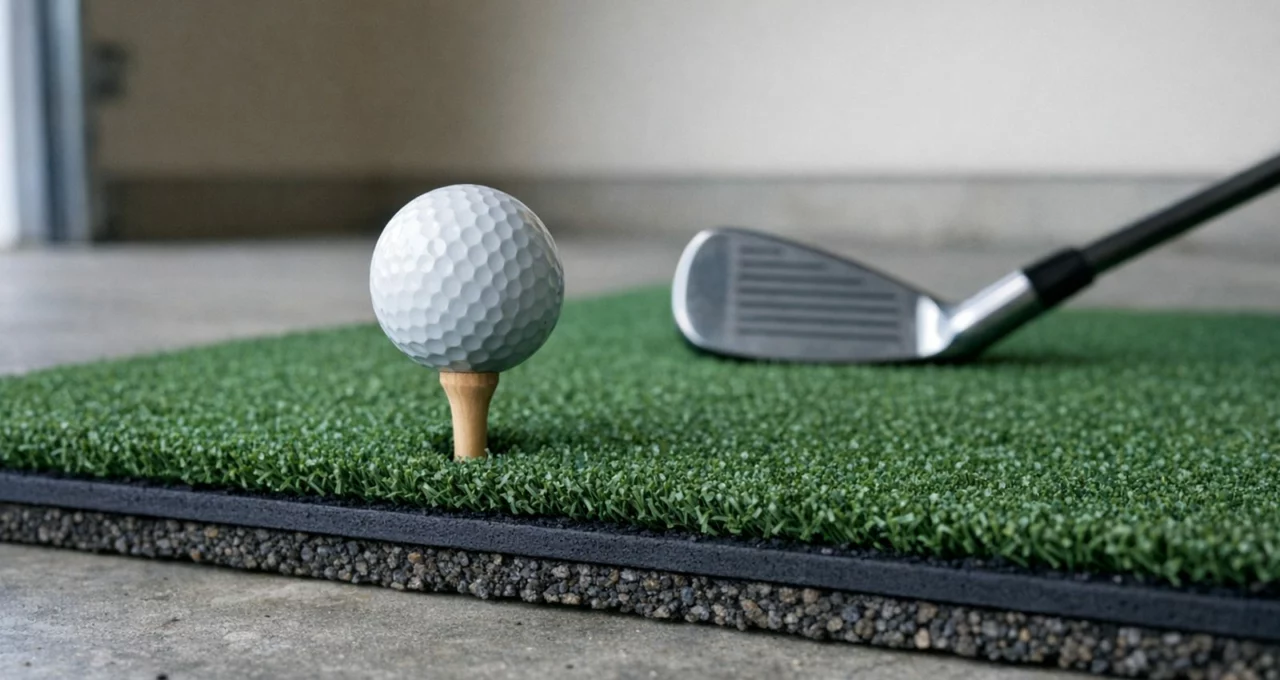
Most Australians who set up a home practice bay spend their money and their research on the net or the launch monitor, then grab whatever mat fits the space. A month later the left wrist is tender after a session of seven-irons, or an elbow aches on Sunday morning. The forum answer usually arrives in one word: thicker. Buy a thicker mat. It sounds logical and it is mostly wrong. What jars the joints is a surface that stops the club after the ball, plus a concrete slab that gives nothing back, and the total thickness on the label tells you little about either.
Summer makes the question more pressing. With longer evenings, a lot of mats move out of the garage and onto the patio, under the carport or beside the back fence, where heat and UV get to work on the turf and the foam. This page looks at six hitting mats on sale in Australia this month, from A$309 to A$1,095 for the sizes compared, at what their makers say about them and at what owners report in public. Nobody at Panxis Golf hit balls off these mats or measured them. This is a presentation of products and a reading of public opinion, not a test.
What actually hurts: the stop, not the mat
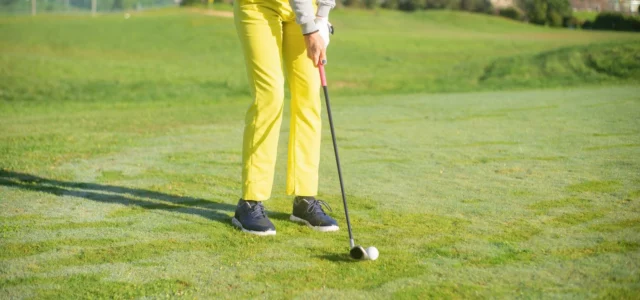
Hit an iron off a fairway and the club meets the ball, then the ground. The ground moves. You take a shallow divot and the clubhead carries on through. On a mat, nothing moves out of the way. Whatever the sole meets after the ball, it either bounces off or pushes through, and the shock that turf would have soaked up travels up the shaft into the hands, the lead wrist and the elbow.
That is why mat complaints cluster around one type of player. If you hit down steeply and take a proper divot at your club, every mat will feel firmer to you than it does to a mate who picks the ball cleanly. Owners in simulator forums make this point again and again: the same mat that one golfer calls comfortable, another calls a footpath. The swing decides how much of the club ever reaches the surface.
The second thing golfers describe is grab. Short, dense nylon can hold the leading edge for a split second rather than letting it slide, and the wrist takes the twist. A surface that lets the sole skid along tends to be gentler on the joints, even when it is not especially soft. That is the idea behind several of the newer mats below, which try to let the club go down and through instead of cushioning it more.
One caution before the products. We found no controlled study measuring how often hitting mats cause wrist or elbow injuries, and nothing here is medical advice. What follows is what makers publish and what golfers say. If a wrist or elbow still hurts after a few days off, book in with a GP or a physio rather than a new mat.
Reading a mat listing: three kinds of thick
Australian listings use the word thickness for three quite different things, and it pays to separate them.
- The turf. How long the fibres are, often given in millimetres. Longer turf can hold a real wooden tee and lets the club sink a little, but long, dense fibres can also grab and hide a heavy strike.
- The cushion. The foam, EVA or rubber layer underneath. This is the part that protects the joints, and it is the part listings describe least clearly.
- The total. Turf plus cushion plus base. A 40 mm mat with a firm rubber base can feel harder through the hands than a 30 mm mat with a softer layer, and a very soft mat can let the club bottom out on the slab beneath.
The trade-off runs the other way too. A plush surface lets a club that lands two or three centimetres behind the ball slide forward and still send it away looking respectable. On a real fairway that same swing digs in and the ball goes nowhere. Plenty of golfers who practise all winter on a soft mat say their first rounds of the season were a shock. Soft is kind to the body and generous with the truth.
When you compare listings, look for four things: the turf and the cushion given separately, the hitting area as opposed to the whole stance area, whether a real tee goes in, and whether the hitting section can be replaced on its own. A maker who sells a replacement strip is telling you where the wear goes.
Country Club Elite by Real Feel Golf Mats
The Country Club Elite is the name most Australian forum threads about mats get around to sooner or later. It is the classic one-piece design: spring-set nylon fibres bonded to polyethylene foam, dense enough to hold a wooden tee. Locally it is sold in metric sizes rather than the American foot sizes.
- What the maker lists: 5/8 inch (about 16 mm) polyethylene foam, nylon fibres with added UV stabilisers, a urethane stabilising layer, 42 mm total thickness, and a surface that takes a real tee. Weights given are 17 kg for 1.5 x 1.2 m, 20 kg for 1.5 x 1.5 m and 33 kg for 2.4 x 1.5 m. The Australian listing gives no pile height on its own and no warranty term.
- Who it suits: a golfer who wants a durable surface that takes a tee for the driver, and who sweeps the ball enough that the dense fibres do not grab.
Australian prices read in October 2026: A$1,095 for 1.5 x 1.2 m, A$1,295 for 1.5 x 1.5 m and A$2,590 for 2.4 x 1.5 m. A separate Strike turf section, 150 cm long, costs from A$269.95 for a 30 cm wide strip to A$399 for a 50 cm strip, which is useful if you only want to replace the hitting area.
Kaizen Large Stance Mat with the Divot Style strip
Kaizen is an Australian simulator brand, and its hitting strip is the most direct local answer to the sore-wrist problem. The stance mat has a 60 x 30 cm cut-out, and you choose which strip goes in it. The Divot Style strip puts fairway turf over a flexible polycarbonate layer that compresses at impact, so the club can travel down and through rather than bouncing off.
- What the maker lists: a 1.5 x 1.2 m stance mat with 15 mm nylon turf on a 20 mm rubber backing, 35 mm overall. The Divot Style strip is 60 x 30 cm, about 35 mm high, with 15 mm fairway turf, a Lexan layer and soft foam strips beneath. The maker says it protects the joints of players who dig, and that heavy shots still lose ball speed because the strike moves up the face. It is for indoor use only, and the maker warns that a strip not recessed into a mat or raised floor can be damaged by heavy contact at its back edge.
- Who it suits: a steep hitter in a garage or sim room who wants the joints looked after without the mat flattering bad contact.
Australian prices read in October 2026: A$309 for the stance mat with the standard strip, A$379 with a tee turf or 3D strip, A$468 with the Divot Style strip. The Divot Style strip alone is A$169. The stance mat was shown as sold out when the price was read.
GolfBays Standard Hitting Mat
GolfBays sells simulator enclosures in Australia, and its standard mat is the kind of plain square that comes with a lot of home setups. It is useful here as a baseline: modest thickness, holes for rubber tees, and a separate rubber frame that turns it into a drained outdoor tee.
- What the maker lists: 1.5 x 1.5 m, 29 mm total depth, a heavy rubber bottom described as shock absorbing, and holes for tee pegs. No turf height or cushion thickness is given. The optional rubber base is a 1.56 x 1.56 m non-slip frame with drainage holes, designed to hold the mat as a temporary tee area.
- Who it suits: a golfer on a budget who sweeps the ball, or who will put a proper underlay beneath it.
Australian prices read in October 2026: A$347 for the mat and A$190 for the rubber base.
Country Club International Tee Turf
Not to be confused with the Country Club Elite, the Country Club International range is a separate line sold through Australian simulator suppliers. The Tee Turf mat is built around long fibres so you can push in a real tee for every club.
- What the maker lists: 1.5 x 1.5 m, 43 mm in total, with 33 mm dense polypropylene turf on a 10 mm EVA foam base bonded to a heavy-duty rubber base. A Premium Tee Turf version uses 30 mm curly nylon turf over 10 mm NBR cushioning, 40 mm in total.
- Who it suits: someone who mostly hits woods and the driver off a tee and wants a tall, forgiving surface. Note that most of the height is turf, not cushion.
Australian prices read in October 2026: A$434.50 for the Tee Turf and A$654.50 for the Premium Tee Turf.
RooStrike Hitting Mat
RooStrike is a locally sold modular mat, and its pitch is the hitting zone: 75 x 30 cm, larger than most strips, so you can move the ball around and spread the wear rather than hitting off the same few centimetres every time.
- What the maker lists: 1.5 x 1.2 m, 38 mm, with 15 mm dense curly nylon turf, 20 mm EVA cushioning and a 3 mm non-slip rubber base. The standard insert comes fitted; a Fairway 3D insert (38 mm) and a Tee Box insert (40 mm) that takes a real tee are sold separately and sit flush with the stance surface.
- Who it suits: a golfer who expects to wear out the strike spot and wants replacement to be cheap.
Australian prices read in October 2026: A$349 for the mat with its standard insert, A$99 for each extra insert.
EZTee Green mat
The EZTee is the premium choice here among the mats made in the United States and sold by Australian simulator specialists. Its maker describes a grass-fibre system that lets the club go down and through, with no grab and no bounce, while still punishing heavy shots.
- What the maker lists: 1.5 x 1.2 m, holds a real tee, made in the USA, a “down and through” strike, no club grabbing and a divot feel without bounce. The listing gives no thickness. The seller recommends building the surrounding floor up with 20 mm gym mats and turf so the mat sits level.
- Who it suits: a golfer building a permanent sim room who has already had sore joints on a conventional mat.
Australian price read in October 2026: A$699, shown against a regular A$805. It was listed as sold out at the time.
The six side by side
| Mat | Size priced | Thickness listed | Real tee | Replaceable strike area | Price, Oct. 2026 |
|---|---|---|---|---|---|
| Country Club Elite | 1.5 x 1.2 m | 42 mm total, 16 mm foam | Yes | Strike section sold separately | A$1,095 |
| Kaizen stance mat, Divot Style strip | 1.5 x 1.2 m | 35 mm (15 mm turf, 20 mm rubber) | Tee turf strip only | Yes, 60 x 30 cm | A$468 |
| GolfBays Standard | 1.5 x 1.5 m | 29 mm total | Rubber tee holes | Not stated | A$347 |
| Country Club International Tee Turf | 1.5 x 1.5 m | 43 mm (33 mm turf, 10 mm EVA) | Yes | Not stated | A$434.50 |
| RooStrike | 1.5 x 1.2 m | 38 mm (15 mm turf, 20 mm EVA, 3 mm rubber) | Tee Box insert | Yes, 75 x 30 cm | A$349 |
| EZTee Green | 1.5 x 1.2 m | Not stated | Yes | Not stated | A$699 |
Put the Country Club International next to the RooStrike and the point of this page shows up. The first is taller, 43 mm against 38 mm, but three quarters of its height is turf. The second has twice as much cushion. If it is your wrists you are worried about, the cushion column matters more than the total, and the replaceable strike area matters more than both.
For comparison, the thin end of the market looks like The Net Return Pro Turf: a 1.5 x 3 m roll of 20 mm nylon over a 5 mm foam underlay, about 29 kg, at A$1,295. That is a surface for covering a whole bay, not a joint protector, and it shows how little price and thickness have to do with each other.
What golfers are saying
Reading Australian and international owner reviews and simulator forums, the same themes come back across brands.
What owners like:
- Pain that went away after a change of surface. The strongest praise goes to the down-and-through designs, polycarbonate and grass-fibre strips in particular. Owners describe moving off a dense one-piece mat and being able to hit a full session without a sore lead wrist the next day.
- A real tee for the driver. Owners of tee turf mats and strips say this is the detail they would not give up, because a rubber tee at a fixed height changes how they set up and where they strike the face.
- Cheap replacement of the strike area. Owners of modular mats like being able to swap a worn hitting zone for a fraction of the mat price, or to try a softer insert as their joints or their swing change.
What owners complain about:
- Mats that hide fat shots. The most common criticism of soft and long-pile surfaces: a heavy strike still slides into the ball and flies, and the first round back on grass is a rude surprise.
- Dense turf that grabs. Players who take divots describe one-piece mats catching the leading edge, with the jolt going straight to the lead wrist, while their sweeping playing partners noticed nothing.
- The slab coming through. On thinner mats, and even some thick ones, steep hitters say they can feel the concrete. The fix most often described is an extra layer of rubber or EVA underneath, not a different mat.
- A hole where the ball sits, and summer damage. Owners report the strike spot flattening, burning or wearing through, and mats left in the sun going hard, faded or curling at the edges. Replacement strips are a cost many did not plan for.
No one is quoted by name and nothing has been counted. These are the impressions that come up most often in public reviews and discussion threads, not measurements.
Where Australians hit off a mat: garage slabs, carports, patios and the summer sun
In Australia the mat usually goes in one of four places, and the floor under it shapes the experience as much as the mat does.
- The garage slab. The most common sim room in suburban Australia and the hardest floor in the house. A mat on bare concrete gets no help from below. Owners regularly lay 20 mm interlocking EVA tiles or rubber gym flooring under the mat, which also stops it creeping forward. In a single garage, check the ceiling height with the driver before anything else.
- The carport or pergola. Popular because it gives full swing height and some shade. It is still concrete or pavers underneath, so the underlay advice stands, and a carport often catches the afternoon sun at an angle the roof does not stop.
- The back patio or deck. A timber deck flexes and is kinder on the joints than concrete, but it may not be level and it may not like a heavy rubber mat holding moisture against the boards. Lift the mat after rain so the timber can dry.
- The granny flat, rumpus room or apartment. Usually a better temperature for foam, but it is often a tiled slab, and in a strata building the by-laws and the neighbours below matter as much as the mat. A thicker underlay helps with noise as well as wrists.
Then there is the season. From November to March a mat left outside sits under some of the strongest UV in the world, and dark turf on a sunny slab gets hot enough to make you think twice about kneeling on it. Several of the mats above list UV-stabilised fibres; several say nothing about it, and the Kaizen Divot Style strip is sold for indoor use only. Owners who keep a mat outdoors talk about storing it in the shade, or rolling or covering it between sessions, and about replacing the hitting strip more often than they expected. Foam and EVA also soften in summer heat and stiffen on a cold winter morning in Canberra or the Southern Highlands, so a mat can feel different from one season to the next.
Whatever the floor, your feet should stand at the same height as the ball. A small strip on concrete, with your feet on bare slab, raises the ball above your stance and changes the lie of every club. If you already have a home net, the mat is the part owners most often replace first, as we found in our look at what Australian net buyers regret.
As for where to buy, there are four main routes. A golf superstore may have mats on the floor to swing on, which is worth more than any spec sheet. A simulator specialist, often online with free shipping, carries the modular mats and knows which surfaces suit which launch monitor. Your club’s pro shop can sometimes order a mat and will know what the coaching bay uses. And the second-hand market is busy, but look hard at the strike spot before paying. Whichever route you take, ask whether the hitting strip is sold separately and at what price, what the warranty covers and for how long, whether the mat is rated for outdoor use and UV, and whether you can send it back if it turns out to hurt.
How to choose
- Start with your divots. If you take a big one at your club, joint protection and a down-and-through strip matter most. If you sweep it, a firmer surface gives you more honest feedback.
- Read the cushion, not the total. Turf height and cushion are two different numbers. A tall mat that is mostly turf is not a soft mat.
- Plan the underlay. On a slab, budget for EVA tiles or rubber flooring beneath whatever you buy, and for a frame or build-up so your feet stay level with the ball.
- Price the strip. Find out whether the strike area can be replaced and what that costs. It is part of the real price.
- Think about summer. If the mat will live outside, check for UV-stabilised fibres and a drained base, and plan where it goes when you are not using it.
- Listen to your wrists. Soreness after a session is a cue to stop and change something, not to push through. If it lingers, see a professional.
The best mat is the one you stop noticing. Owners who say they would buy theirs again chose it for their swing and their floor, not for the biggest number on the listing.
How this page was put together
This is a presentation of products and a reading of public opinion, not a test. Nobody at Panxis Golf hit balls off or measured any of these mats for this page. Features and dimensions come from the makers’ descriptions as published on Australian product pages: Real Feel Golf Mats for the Country Club Elite, Kaizen Golf for its stance mat and Divot Style strip, GolfBays for its Standard mat and rubber base, Country Club International for the Tee Turf and Premium Tee Turf, RooStrike for its mat and inserts, EZTee for the Green mat, and The Net Return for the Pro Turf. Where a listing gives no figure, the table says “not stated” rather than estimating one.
Prices were read on 30 October 2026, in Australian dollars, on Australian websites: at The Net Return Australia for the Country Club Elite, its Strike turf sections and the Pro Turf; at Kaizen Golf for the Kaizen mat and strips; at GolfBays Australia for the GolfBays mat and base; at Aussie Golf Sims for the Country Club International and RooStrike mats; and at Bayside Golf for the EZTee Green. Several of these are the makers’ or brand owners’ own shops rather than independent retailers. The Kaizen stance mat and the EZTee were shown as sold out on that date. Prices change with promotions, so the price at checkout is the one that counts.
What golfers say was read in public owner reviews and in simulator and golf forums such as Golf Simulator Forum, some only through search excerpts. Nobody is quoted by name, nothing is counted, and no impression is presented as a statistic. We found no controlled study of injuries caused by hitting mats; the physical explanation on this page reflects what makers and golfers describe, and it is not medical advice. There is no commercial link on this page, no affiliate arrangement and no commission of any kind. If content on this site is ever paid for by a brand, it will carry an advertising notice at the top of the page, before the first line.