Small golf bag for an Aussie summer: five accessories to carry and where to buy them in Australia
Late spring is the time to tip out the carry bag and decide what goes back in. Here are five accessories on sale in Australia, at prices read on 14 November 2026, the Rules position on rangefinders, and the things that can stay in the boot until the storm season is over.
In brief
- Five accessories for a small bag, prices read on 14 November 2026: the Callaway Double Divot Tool (A$19.96), the Titleist Players Terry Towel (A$39.96) and the FootJoy RainGrip, sold by hand at A$21.00 per glove.
- For storms and distances: the GolfCraft Nylon Rain Cover (A$35.96) and the Bushnell Tour V6 laser without slope (A$474.95).
- Rule 4.3a(1) allows distance information but not measuring elevation changes, and a Committee can ban rangefinders altogether with Model Local Rule G-5.
- The big umbrella, the winter kit, a dozen balls and the practice gear can stay at home, while a full water bottle and SPF 50 sunscreen earn their place.
A carry bag feels light in the car park. By the 14th it does not. Somewhere between the two, most of us discover that the side pockets hold a lot more than we remember packing. There is the sunscreen that leaked in October, a pair of winter mittens, a handful of tees from three different clubs, a scorecard pencil worn to a stub and four balls that have been through a creek. In late spring, with the comp calendar filling up and the afternoons getting hotter, it is a good moment to tip the lot onto the laundry floor and decide what goes back in.
This page puts five accessories on the short list for a small bag, from a pitch repair tool at A$19.96 to a laser rangefinder at A$474.95, with prices read in Australian dollars on 14 November 2026. Each one comes with what the maker publishes and with what golfers tend to say about accessories of that kind. Nobody at Panxis Golf used, carried or handled any of them for this page, and nothing here was measured by us. After the five comes the longer list, the things that can stay at home or in the boot.
One question for every pocket
Would you miss it during the round, or only afterwards? That one question sorts most of a golf bag, and it is harsher than it sounds. You need a repair tool on every green you reach in regulation, so it stays. You need something to dry your grips and wipe a muddy clubface, so the towel stays. Rain gear earns its spot on the days a storm cell rolls in off the ranges at three in the afternoon, and in an eastern Australian summer that is often enough to justify carrying it. A rangefinder is useful to some golfers and dead weight to others. The rest is mostly habit.
Clothing is left out on purpose, because we have already looked at the shirt, the shell and the socks in our guide to golf clothes for an Australian summer, and at what goes on your head in golf hats for the Australian sun. A hat is the one piece of kit that arguably matters more here than anything below. This page deals with what lives in the pockets.
Callaway Double Divot Tool
Repairing the mark your ball makes on the green is basic course etiquette, and the Rules of Golf allow it on the putting green at any time. Plenty of golfers do it with a tee, which works after a fashion and tends to tear the turf. A proper tool with prongs lifts the edges back towards the centre and leaves a surface you can putt across.
Callaway lists four things for its 2023 Double Divot Tool, namely what it calls Triple Track technology, a removable marker, a double or single prong design for repairs and ergonomic shaping. The page we read gives no length, no weight and no material, so nothing is said about those here. What you get, in short, is a repair tool and a ball marker in one object.
It suits walkers. If you already carry a repair tool you like, there is nothing here that makes it worth replacing.
Price read in November 2026 at an Australian golf retailer: A$19.96, marked down from A$24.95.
Titleist Players Terry Towel
No accessory works harder. It dries the grips after a shower, cleans the face of a wedge after a shot out of a soggy bunker, wipes the ball before a putt and, on a humid Brisbane morning, gets used on your forehead more than anyone admits.
Titleist lists a new terry material for maximum absorption, a woven label logo, a bleed free finish and dimensions of 20 by 40 inches, which works out at roughly 51 by 102 cm. The fibre content, the weight and the way it attaches to the bag are not on the page read. A towel of that size folds in half over the bag strap so one end stays clean while the other does the mud.
This is the towel for golfers who play early, when the fairways are still wet with dew, and for anyone in the tropics or the subtropics where a summer round means sweat on the grips by the 4th. A golfer who only plays dry winter afternoons in Adelaide could get by with something smaller.
Price read in November 2026 at an Australian golf retailer: A$39.96, marked down from A$49.95, for the black and white version.
FootJoy RainGrip
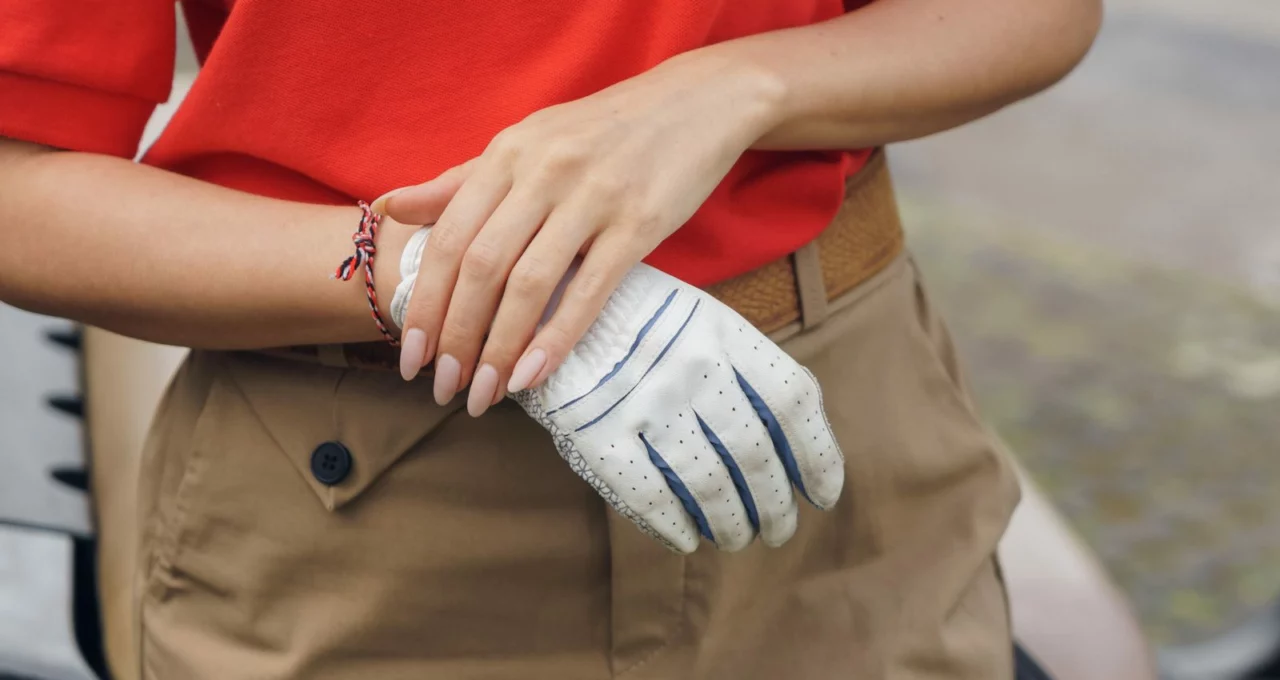
An ordinary leather glove gets slippery once it is wet, which is the opposite of what you want when the rain arrives on the back nine. A rain glove is built the other way round. FootJoy says the RainGrip has a water absorbent Sure-Grip Autosuede knit palm that gives a sure grip in rainy conditions, Quick-Dry material on the back of the fingers and an angled ComforTab closure for the fit. The page read gives no weight and no size chart beyond the sizes on offer.
Rain gloves are usually worn on both hands, and in Australia this one is sold one glove at a time, by hand and by size. At the price below, a pair means buying a left and a right, and a few sizes were shown as out of stock on the day. It is worth checking that both of your sizes are available before you set out to buy them.
It suits golfers in Sydney, on the Gold Coast and anywhere else where the summer pattern is a hot, still morning, a build-up of cloud over lunch and a storm that sends everyone scrambling for the clubhouse somewhere around the 13th. In the Top End wet season it hardly needs saying. Dry day? It stays zipped away.
Price read in November 2026 at an Australian golf retailer: A$21.00 per glove, marked down from A$26.95.
GolfCraft Nylon Rain Cover
The retailer we read listed no small rain hood that day. The closest thing on its shelves was a full rain cover that goes over the bag and the clubs together. GolfCraft describes it as made of heavy duty nylon fabric, with easy club access and a large flap with a velcro closure, and says it protects your bag and clubs in all weather conditions. Which bag sizes it fits and what it weighs were not published.
It is all about the grips. A wet bag dries in the garage overnight. A wet grip twists in your hands on the next tee shot, and most of the bad swings golfers blame on the rain start there. A nylon cover folds smaller than a stiff plastic one, which matters when it has to share a pocket with a jacket.
Walkers whose stand bag came without a hood, or who lost theirs somewhere around the 9th green two winters ago, are the obvious buyers. If your bag still has the hood it was sold with, keep using it, because it was cut for that bag.
Price read in November 2026 at an Australian golf retailer: A$35.96, marked down from A$39.95. A clear PVC version from the same maker was listed for less, at A$22.46.
Bushnell Tour V6
Now the expensive one. Plenty of Australian courses have sprinkler heads and marker posts with distances in metres, and a free phone app will give you the front, middle and back of most greens. What a laser adds is the exact number to the flag itself, or to the lip of a fairway bunker, in a second or two.
Bushnell describes the Tour V6 as the most accurate, consistent and longest ranging laser in its Tour series. The listed features are PinSeeker with Visual JOLT, where the unit vibrates and a red ring flashes when it locks onto the flag, an IPX6 weather resistant body and a BITE magnetic mount for the cart bar. The box contains the rangefinder, a carrying case, a micro-fibre cloth, a CR2 battery and a quick start guide. The maximum range, the magnification, the weight and the dimensions were not on the page we read.
The model on sale here is the plain Tour V6, without the slope function of the Shift version. That has a practical upside for club golfers, which the next section explains. It also has a cost, because on a hilly course the number you get is the straight-line distance, and judging the effect of an uphill or downhill shot is still your job.
It suits golfers who know their carry distances well enough to use an exact number, and those who play courses with few markers. For a newer golfer whose 7-iron goes anywhere from 100 to 140 metres, the same money would buy several lessons.
Price read in November 2026 at an Australian golf retailer: A$474.95, marked down from A$497.95. A lower price for members of the retailer’s loyalty scheme was also shown.
What the Rules say about rangefinders
The Rules of Golf are written by the R&A and the USGA, and Golf Australia applies them here. Rule 4.3a(1) allows a player to get information on distance or direction during a round, for example from a distance-measuring device. What it does not allow is measuring elevation changes, or using a device to interpret that information, for instance to recommend a club or a line based on where your ball lies.
That is why a slope rangefinder needs its slope function switched off for a competition round, and why the Tour V6 above, which has none, is acceptable under Rule 4.3 as it comes out of the box. A Committee can still go further. Model Local Rule G-5 lets it prohibit distance-measuring devices altogether, so read the conditions of competition before a pennant match or a club championship, where some events take that option.
Breaching Rule 4.3 brings the general penalty the first time, which is two strokes in stroke play or loss of the hole in match play. A second breach in the same round means disqualification. Distance is fine. Advice is not.
Leave these at home
Lightening a bag is mostly a matter of being honest about what you actually used in your last few rounds, which is harder than it sounds when every item in the pocket seems to come with a story about the day you needed it. These are the things that tend to ride along for no good reason.
- The big umbrella. On a buggy it is handy. On your shoulder in a sea breeze at a links course it becomes a sail, and it is heavy for what it does. Check the radar before you leave and only take it when rain is likely.
- A dozen balls. Unless your home course has water on half the holes, six balls and a sleeve in the boot will see most golfers through a round. Be honest if yours is the sort of course that eats them.
- The winter kit. Mittens, a beanie and a thermal top have no business in the bag in November anywhere north of Tasmania. Put them away until May.
- A groove brush. A tee and the damp end of the towel do the job between shots. Give the clubs a proper clean at the car.
- A ball retriever. It adds weight, it holds up the group behind and the ball in the dam is seldom worth fishing for.
- Spare markers and repair tools. One marker and one tool are plenty. The others can go in a drawer at home.
- Old gloves. A stiff, shiny glove is not a spare. Keep one good glove in reserve, plus the rain pair, and bin the rest.
- Practice gear. Alignment sticks, a speaker and a launch monitor belong at the range. On a walking round they are extra kilos for 18 holes.
Some small things are worth their place even though they are not among the five products. A tube of SPF 50 sunscreen, a full water bottle in summer, a couple of adhesive bandages and something to eat at the turn weigh very little. Golfers who talk about what they keep in their bag mention these again and again, and in an Australian summer the water bottle may be the most important item of the lot.
The five, side by side
| Accessory | Main job | What the maker publishes | When it can stay home | Price read, Nov 2026 |
|---|---|---|---|---|
| Callaway Double Divot Tool | Pitch marks and marking the ball | Double or single prong, removable marker | Never, if you reach greens | A$19.96 |
| Titleist Players Terry Towel | Grips, clubface, ball, sweat | Absorbent terry, 20 by 40 inches | Rarely, a smaller towel will do in dry weather | A$39.96 |
| FootJoy RainGrip | Holding the club in rain | Autosuede palm, Quick-Dry back | When no storm is forecast | A$21.00 per glove |
| GolfCraft Nylon Rain Cover | Dry grips while walking | Heavy duty nylon, velcro flap | If your bag still has its own hood | A$35.96 |
| Bushnell Tour V6 | Exact distance to the flag | PinSeeker with Visual JOLT, IPX6, no slope | On well marked courses, or for beginners | A$474.95 |
What golfers are saying
What follows comes from published reviews, buying guides and owner comments on retailer pages about accessories of these kinds. It describes recurring themes and is not a verdict on any one of the five models above.
What golfers like:
- Rain gloves grip when they are soaked. Reviewers describe the rain glove as the one glove that keeps the club steady in a downpour, and note that it dries out fairly quickly once the shower has passed.
- A good laser picks up the flag quickly. Reviews of Bushnell’s Tour series lasers praise how easily they lock onto the pin, with the vibration confirming that the number belongs to the flag and not to the trees behind it.
- Some golfers never take the rain gloves off. A few owners say they wear rain gloves on every round, including in humid summer heat, because they keep their hands from slipping on sweaty grips.
What golfers complain about:
- Rain gloves wear out faster in the dry. Reviewers point out that the palm material wears more quickly than leather when it is used on dry days, and suggest keeping a leather glove for fine weather.
- Two gloves take getting used to. Golfers who normally play with one glove say that wearing a second one on the other hand feels strange and a little less secure at first.
- A laser without slope is a lot of money for one number. One published review calls the non-slope Tour V6 a pricey investment for a device that only gives distance, and points out that cheaper lasers do the same job.
- Newer models make older ones harder to justify. With a later Tour model already on the market, reviewers suggest the V6 makes most sense at a discount.
Nobody is quoted by name, nothing has been counted and none of this is a measurement. We found little discussion of bag rain covers or repair tools worth reporting, so nothing is said about them here.
Where to buy golf accessories in Australia, and what to ask
- Your club’s pro shop. It stocks towels, repair tools, markers and gloves, often with the club crest, and it is the only shop open when you realise at 6.45 am that your rain gloves are in the other bag. Ask the pro whether the gloves run true to size against the brand you wear now.
- Golf chain stores. They hold the widest range of gloves in one place, so you can try two brands in the same size and feel the difference. They are also the place to pick up a rangefinder and look through it before you spend several hundred dollars.
- Online. The easiest way to compare prices and the right way to replace things you already know, such as a towel or a rain cover. Check the returns policy before you order a glove in an unfamiliar size.
- Second hand. Used rangefinders turn up on marketplaces and in some shops. Ask about the battery, the warranty and whether the original case and mount are included.
Ask before you pay. For gloves, ask whether the shop sells the rain model as a pair or by hand. For a rangefinder, ask what the Australian warranty covers and for how long, and whether the model has a slope function you would need to switch off. For a rain cover, ask which bag sizes it fits, because the listing may not say.
Before your next round
- Empty the bag completely. Put back only what you used in the last three rounds. Most of the things you thought you needed to buy are probably already in there somewhere.
- Pack for your part of the country. This varies a lot. In a Perth summer the rain kit can mostly stay home. In Brisbane, Sydney or Melbourne, where the weather can change within a round, it rides along from now until autumn.
- Keep the rain kit in one pocket. Gloves, cover and shell together, so that when the storm arrives you open one zip.
- Buy the laser last. It is the dearest item and the most optional, and lessons will do more for a newer golfer’s score.
- Weigh the bag. Bathroom scales will do. If it feels heavy by the turn, the umbrella and the spare balls are usually to blame.
A small bag is about carrying the handful of things you actually reach for. The repair tool and the towel go every time. The rain gloves and the cover go whenever the forecast mentions storms, which in much of the country means most of the summer. The rangefinder goes if you own one and use it, with any slope function off on comp days, and everything else can wait in the boot.
How this page was put together
This is a presentation of products and a reading of public opinion. Nobody at Panxis Golf used, carried or handled any of these accessories, and nothing was weighed or measured by us. The features listed are the makers’ descriptions (Callaway, Titleist, FootJoy, GolfCraft, Bushnell) as reproduced on the Australian product pages we read. Where a figure was not published on those pages, such as the weight of every item, the range and magnification of the Bushnell Tour V6 or the bag sizes the rain cover fits, it is left out and has not been estimated. The towel’s size in centimetres is a direct conversion of the inches the maker gives.
Prices were read on 14 November 2026, in Australian dollars, at Drummond Golf, for all five accessories. Promotions and stock change quickly, so the price at the counter is the one that counts. The Rules passage comes from Rule 4.3 of the Rules of Golf as published on the R&A’s website, read on the same day.
What golfers say was read in the published reviews and buying guides of Golf Insider UK, Golf Monthly, Today’s Golfer, National Club Golfer and Breaking Eighty, in a Golf Australia magazine feature on rain gear and in owner comments on retailer pages, mostly through search engine extracts and not the full pages. Nobody is quoted by name, nothing is counted and no impression is presented as a statistic. Panxis Golf has no commercial link with any brand or retailer named here and earns no commission. If content on this site is ever paid for by a brand, it will carry an advertising notice at the top of the page, before the first line.