Lag putting on Australian greens: pace drills to stop three-putting
Most three-putts start with a first putt that finishes too far away, and that is a pace problem more than a stroke problem. Here is a ten-minute pre-round ladder, a target zone that cures leaving putts short, and how Australian greens (firm bent, couch through the seasons, renovations and oiled sand) change the speed you need.
In brief
- From long range, pace matters far more than a few centimetres of line.
- Aim for a zone between the hole and a tee a metre past it, never short.
- Before the round, ladder putts at 6, 9 and 12 metres on the course's own practice green.
- Firm summer bent, dormant winter couch, dew and greens renovations all change speed.
- If long putts finish the right distance but miss on one side, test the putter face with a tee gate.
In a Saturday Stableford, a three-putt rarely feels dramatic. There is no lost ball, no penalty drop, just a quiet bogey where a par was sitting. Add up those quiet bogeys over a month of comps and they are often the biggest leak in a club golfer’s card. The fix is not a new stroke or a new putter. It is learning to get the first long putt to stop close, and that is mostly about pace.
From ten metres, pace beats line
On a long putt, being a little off line barely matters. Start a 12-metre putt a few centimetres left of your intended line and, if the pace is right, you still have a tap-in. Hit the same putt two metres too hard or too soft, and the line you agonised over was wasted.
So flip how you spend your time. Most golfers study a long putt for ages and then hit it with whatever pace turns up. A quick read of the overall slope is enough from long range; the careful attention belongs to how hard you hit it. Our guide to reading greens covers the slope side.
Aim at a zone, not the cup
Push a tee into the green about a metre behind the hole. Your target on every long putt is the space between the hole and that tee.
That zone does two jobs. It gives you a target you can actually hit, so practice produces successes instead of a string of near misses. And it cures the most common lag habit of all: leaving the ball short. A putt that stops short never had a chance to drop. A ball that rolls just past the hole kept its line through the final part of the putt, where the slope has the most effect, and gives you a clear look at the return putt.
A ten-minute ladder before you tee off
On the practice green, find one hole and drop three balls: one at about 6 metres, one at 9 and one at 12. Putt them in that order, then go back and repeat from 12 down to 6.
You are not trying to hole anything. You are calibrating how far back the putter goes for each distance. Keep the tempo the same and change only the length of the stroke, like a pendulum. Pace that depends on hitting harder with the hands is the first thing to break down under pressure.
Practise on the course’s own green if you can, because it tells you that day’s speed. Moore Park Golf in Sydney, for example, lets players on the course use its putting and chipping greens free, and charges A$11 if you only come to practise on them. The Rules of Golf (Rules 5.5b and 13.1e) also let you roll a few putts on a practice green between two holes during a round, though not on the green of a hole you are still playing.
Walk the line and feel uphill or downhill
Walk from your ball to the hole on the low side of the line. Your feet will usually tell you whether the putt is uphill or downhill faster than your eyes. That matters more for pace than any break you can see: the same distance can need a much longer stroke uphill and a much shorter one downhill.
Do it while your playing partners are putting so it costs the group no time at all, and keep an eye on pace of play.
Try looking at the hole
On the practice green, hit five putts from about 12 metres while looking at the hole instead of the ball. Most golfers leave them closer than expected.
A long putt is largely a distance-judging task, and people judge distance better when they can see the target, the same way you would look at the person you are lobbing a ball to, not at your hand. You do not have to putt like this on the course. The point is the comparison: if those five finish closer than your normal putts, your eyes and hands have been fighting over the stroke.
Australian greens change speed with the season and the day
The same green can putt very differently depending on grass, weather and maintenance:
- Firm bentgrass, like the A1 bent greens at Kingston Heath on the Melbourne Sandbelt, can run very fast when summer dries them out, so downhill lag putts need real restraint.
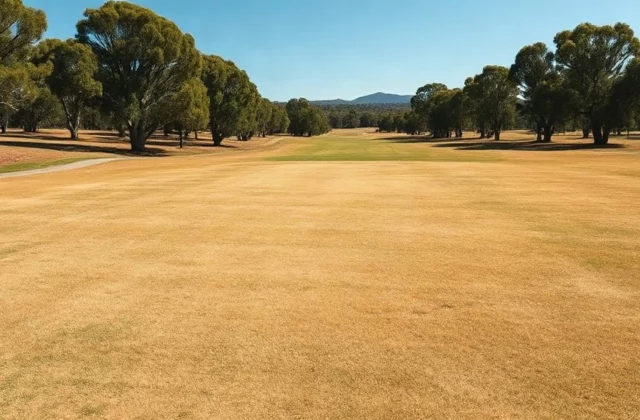
- Warm-season grass such as couch grows actively above about 15 degrees and slows or goes dormant in winter, so a green built on it can feel different from one season to the next. Grain can also make a putt with the grain run further than one against it.
- Dew and rain slow a morning green; the same surface can be noticeably quicker by mid-afternoon once it dries.
- Greens renovations, when clubs core or sand their greens, leave surfaces slower and bumpier for a while. Clubs usually post the dates, so check the notice board or course conditions page before a comp.
If you have not rolled a putt on the practice green, your first few long putts of the round are guesses. It costs nothing to find out, and practice greens are part of the green fee at most courses.
Sand greens: pace is nearly everything
Golf Australia’s archived guide to sand greens says around 400 Australian courses, mostly small rural clubs, have greens of oiled sand or similar material. There, once your ball is on or near the green you mark it, lift it and scrape a path to the hole, two passes under the standard rules and a third if loose impediments still get in the way. The scraped path gives you a smoother line than the surrounding sand, which puts even more weight on getting the pace right.
The second putt deserves a routine
Most three-putts are a poor lag followed by a missed one-metre putt, and the short one is often missed because it was hit in frustration. Treat it like a real shot: mark it, read it and use the same routine you would on the first tee. Ten more seconds on a one-metre putt is cheaper than a lost Stableford point.
Where to practise pace: course greens and home mats
A putting mat is good for stroke and start line on short putts, and much less useful for long-range pace, because a mat runs at one speed and a real green does not. An Australian golf retailer’s practice range in September 2026 included a GolfCraft Hazard Deluxe putting mat at A$65.95, a PuttOut Slim mat at A$84.95, a GolfCraft Fast Slow mat at A$94.95 and a Wellputt 13′ Pro mat at A$299.95. Use a mat for one-metre putts and the practice green for everything longer.
Rule out a start-line problem
Speed is the main issue for most golfers, but check one exception. If your long putts finish the right distance and keep missing on the same side, the ball is probably starting off line because the putter face is slightly open or closed at impact.
Test it in two minutes. Push two tees into the practice green just wider than a ball, about 30 centimetres in front of it, and putt through that gate from three metres. If the ball keeps clipping a tee, the face is not square at impact and no amount of pace work will fix it.
That is worth a lesson. One Australian golf retailer also lists a one-hour putter fitting for A$100, waived if you buy the recommended putter, though not at every store.
Panxis Golf has no commercial relationship with any retailer, club or coach mentioned here.
Try this in your next round
- Count three-putts, not total putts. That number shows whether pace is the problem.
- If you use the Golf Australia App, record putts per hole so you can track it over a month.
- Aim to finish every putt over 8 metres just past the hole, never short.
- Spend ten minutes before each round on putts from 6 to 12 metres only.
- Walk the line while others putt and let your feet judge uphill or downhill.
- Give the one-metre second putt a full routine.
Nobody holes long putts on demand. Getting them close on demand is a skill you can build in ten minutes a round, and it is the cheapest shots you will ever save.
How this page was put together
Putting mat prices were taken from Drummond Golf’s range in September 2026, and the A$100 putter fitting fee from House of Golf (both Australia). Panxis Golf has no commercial relationship with either retailer.