Hybrid or long iron in Britain: links wind, winter turf and heathland rough settle the 4-iron slot
The club you dread from 185 yards is usually the four-iron. Whether a hybrid should replace it depends on your strike, the gap in your bag and whether you play soft parkland or windswept links. Here is how to decide, with Ping's G440 hybrid and a British price from this October.

In brief
- Match lofts before comparing: a strong modern five-iron may already sit where many 4H hybrids do, around 21 to 23 degrees.
- Alternate iron and hybrid ball by ball, five of each, and judge each club by its two worst shots.
- Ping lists the G440 hybrid from 2H (17 degrees) to 7H (34 degrees), with loft adjustable by 1.5 degrees either way.
- In October 2026 a British retailer listed the G440 hybrid at £269, against a recommended price of £295.
Picture a November medal. The 14th plays 185 yards into a westerly, the fairway is wet enough to take a footprint, and the card says par three. You reach for the four-iron, remember the last three times you hit it, and quietly wonder whether the playing partner with a hybrid in that slot knows something you do not. That moment is what this page is about. Not which club is better in general, because neither is, but which one gives your own swing, on British courses through a British winter, the better chance of finding the green.
Our example is Ping’s G440 hybrid, a club stocked by most golf shops in the country and backed by a full specification sheet from the manufacturer. Everything technical below comes from Ping, the price was read at a British retailer in October 2026, and nobody at Panxis has hit this club. Read it as a buying guide and a summary of public opinion, not a review.
Two heads built for one job
Set a long iron and a hybrid of similar loft side by side and the difference is obvious before you swing. The iron is slim, with a narrow sole and most of its mass sitting just behind the face. The hybrid is a small hollow wood: deeper from face to back, wider underneath, with its weight pushed down and away from the ball.
Those shapes produce two personalities. The iron sends the ball out lower with less spin, which is lovely when you catch it from the centre and punishing when you do not. Strike it a groove low or out towards the toe and you can lose fifteen or twenty yards and most of the height. The hybrid gets the ball up more readily, adds spin, and keeps far more of its distance on an off-centre contact. Its broad sole also skims the turf rather than digging, so a slightly heavy strike still reaches something like its normal yardage.
The price of that help is control in certain conditions. Hybrids tend to fly higher and, for many right-handers, curve left more than the iron would. On a still day into a soft green that hardly matters. With a three-club wind off the sea, it can matter a great deal.
Ping’s G440 hybrid on paper
Ping launched the G440 family in 2025. Its published specification for the hybrid reads as follows:
- Lofts. Six options: 2H (17 degrees), 3H (20), 4H (23), 5H (26), 6H (30) and 7H (34). For most club golfers the 4H and 5H are the natural stand-ins for a four- and five-iron.
- Lengths. 40.75 inches for the 2H, falling by half an inch per loft to 38.25 inches for the 7H.
- Lie. 57 degrees on the 2H rising to 59.5 degrees on the 7H.
- Adjustability. The hosel moves loft by plus or minus 1.5 degrees and can set the lie up to 3 degrees flatter than standard.
- Construction. A CarbonFly wrap crown, plus a face that Ping describes as thinner and shallower than on the model it replaces.
- Shaft and balance. Stock shaft is Ping’s Alta CB Blue 70, in soft regular, regular or stiff. Standard swing weight is D1, while the lighter High Launch version is listed at C7.
On price, the G440 hybrid was listed at £269 in October 2026 at a British retailer, down from a manufacturer’s recommended price of £295. Bear in mind that a single hybrid often takes the place of two irons, so the useful comparison is not £269 against nothing, but £269 against a four-iron you avoid and a five-iron you only half trust.
Find the gap before you fill it
Before any swing, do a quick bit of homework at the kitchen table. Write down the lofts of your current irons from the top of the set, then the yardage you realistically carry with each in calm weather. Modern game-improvement sets have strong lofts, so a five-iron stamped with a 5 may already sit around 21 to 23 degrees, which is where many 4H hybrids live. Swap it blindly for a “5 hybrid” and you could end up with two clubs that fly the same distance.
The aim is a steady step of roughly ten to fifteen yards between clubs. If your six-iron carries 160 and your fairway wood 200, you have forty yards to cover with one or two clubs, and that is the slot to fill. The G440’s adjustable hosel helps here, because a degree and a half either way can nudge a hybrid into the right yardage rather than forcing a second purchase.
A head-to-head on the range
The only verdict that counts is your own, and it takes about twenty minutes. Borrow a demo hybrid of matching loft, take your existing iron, and work through this routine.
- Warm up properly. Half a bucket with wedges and mid-irons first. A cold swing flatters nothing.
- Pick one realistic target between 160 and 200 yards, the kind of distance you face on long par threes and second shots into par fives.
- Swap clubs after every ball. Iron, then hybrid, then iron again, five of each. Hitting a run with one club lets you settle into it and makes the other look worse than it is.
- Note four things per shot: where it landed rather than where it rolled, how far off line, whether contact was clean, thin, heavy or out of the toe, and whether the height would hold a green.
- Judge by the bad ones. Ignore your best ball with each club. Look at the worst two. A four-iron that goes 190 when perfect and 145 when not is not a 190-yard club in competition.
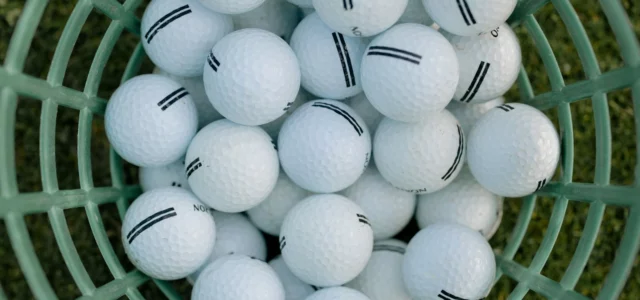
If your range uses mats, which most do over the winter, remember they forgive a heavy strike that wet turf would not. Where you can, finish with a few balls from grass, ideally a slightly fluffy lie. And if a launch monitor is available, our explainer on the four launch monitor numbers worth reading shows what carry, launch and spin are telling you.
Typical outcomes are easy to read. Fewer duffed and thinned shots with the hybrid is a clear vote for the hybrid. Consistent contact with both, but the hybrid hooking, suggests trying a flatter lie or a weaker loft setting before giving up on it. Equal consistency with both clubs means you strike the iron well enough to keep it.
Links, wind and winter: the case for keeping one iron
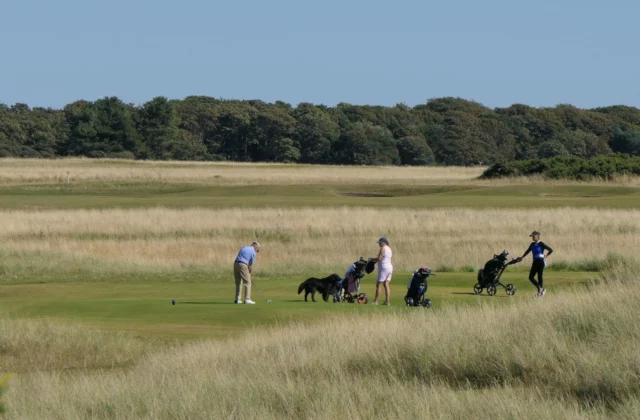
This is where Britain differs from much of the golfing world. On an exposed links, a low, boring long iron can be the most useful club in the bag: it stays under the wind, runs on firm summer turf and can be played as a punch from 170 yards that finishes on the front edge. A hybrid sent up into the same breeze can balloon and drop short, or be carried off line. Plenty of seaside members therefore keep one long iron, or a driving iron, for those days. Our guide to playing into the wind covers the technique.
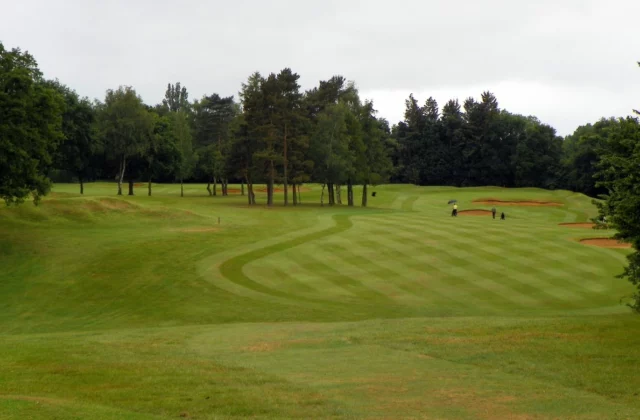
Winter turns the argument round. On soft inland parkland from November to March, with preferred lies, temporary greens and fairways that grab the club, the hybrid’s sole and higher launch earn their keep. A ball has to carry to the green because nothing bounces. That is why many golfers end up with a seasonal compromise: a hybrid in the bag through the wet months, and a long iron that comes back for summer links trips or the club’s windiest days.
What golfers are saying about the Ping G440 hybrid
Reading through golf forums, retailer reviews and threads on social media, a fairly consistent picture emerges.
On the plus side:
- Mishits that still get there. Owners often describe strikes low on the face or towards the toe that finished only a little short of a good one.
- One club for several jobs. Players report using it off the tee on short par fours, from the fairway and out of light rough with equal confidence.
- Gapping through the hosel. The loft adjustment is frequently praised as the simplest way to sit the hybrid neatly between the top iron and the fairway wood.
On the minus side:
- A flatter flight than expected. Some golfers who wanted easy height feel the G440 launches lower than Ping’s previous G430, and found the older club easier to get airborne.
- Not much of an upgrade. A common view is that anyone with a G430 has little reason to change, especially when a used G430 costs noticeably less.
- Plain looks. The matte finish strikes several reviewers as dull compared with rival hybrids.
- The outlay for one club, when a second-hand hybrid or a long iron already in the garage would do the job for many handicap golfers.
Where to try a hybrid in Britain, from the fitting bay to the first cut of heather
You can settle this question in several places, and each has its strengths.
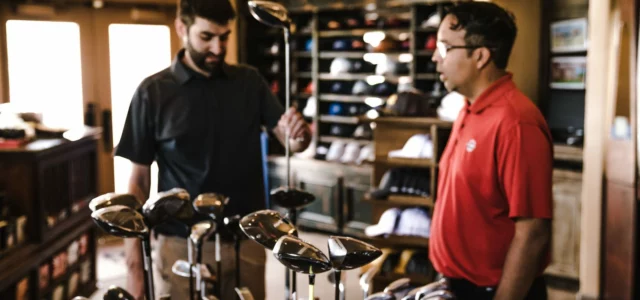
Large golf stores with indoor bays let you compare demo heads and shafts on a simulator, usually at no charge if you are a likely buyer. Ask to use the same ball for both clubs, and ask whether the demo can be set to the loft and lie you would actually order.
Independent fitters and custom-fit studios charge for a session but will set several brands’ hybrids against your current iron and send you away with the numbers. That is money well spent if two or three clubs at the top of the bag are being replaced.
Your club’s PGA professional often holds demo clubs or can arrange a manufacturer fitting day. The big advantage is real grass: a few balls from the practice ground, and a few more from the semi-rough, tell you more than any mat.
Online and second-hand is cheaper but removes the comparison. If you go that way, check the returns policy, and with a used club, look at the hosel sleeve to see which loft setting the previous owner left it on.
Heathland members have one extra test worth running. On courses through Surrey, Berkshire and beyond, the rough is often heather, and heather grabs any hosel and wraps round the shaft. Neither a hybrid nor a long iron is a reliable escape from a proper heather lie, where a wedge back to the fairway is usually the sensible play. From the thinner fringes, though, many golfers find the hybrid’s rounded head slides through where an iron would snag. If you can, ask your pro to let you try both from the edge of the heather before you decide.
Whichever route you take, ask the same three things: can I hit the exact loft and shaft I would buy, can it be set to fit the gap above my irons, and what happens if it does not suit after a few rounds?
Five questions before you buy
- Which club do you leave in the bag on long par threes? That is the one to replace first.
- Does the new loft actually sit between its neighbours, or will it duplicate a yardage you already have?
- Were your worst two shots with the hybrid better than your worst two with the iron?
- Do you play mostly soft inland courses or firm, windy ones, and is it worth keeping a long iron for summer?
- Have you hit it from grass, not only from a mat?
Answer those honestly and the £269 question more or less answers itself. The club that belongs in that slot is the one that turns your 185-yard November shot from a hope into a plan.
How this page was put together
This page is a buying guide and a summary of public opinion, not a test. The lofts, lengths, lie angles, hosel adjustment range, construction, stock shaft and swing weights of the Ping G440 hybrid come from Ping’s published specifications. The price of £269.00, against a manufacturer’s recommended retail price of £295.00, was read in October 2026 on the website of American Golf, a British golf retailer. What golfers say was gathered from golf forums, social media threads and public retailer reviews, together with reviews in Golf Monthly, National Club Golfer, Golfmagic and GolfWRX; nobody is quoted by name, nothing is counted, and no impression is presented as a statistic.
Nobody here has hit this club. There is no commercial link on this page, no affiliate arrangement and no commission of any kind. If a piece of content on this site is ever paid for by a brand, it will carry an advertising notice at the top of the page, before the first line.