Hybrid or long iron: the ten-ball range test that settles which club belongs in your bag
Most golfers carry one club they do not trust from 190 yards. Ten balls on the range, alternated between a long iron and a hybrid of the same loft, will tell you which one deserves the spot.

In brief
- Compare clubs of matching loft: a four-iron against a 22 to 23 degree hybrid, a five-iron against a 5H.
- Alternate the two clubs ball by ball and judge each one by its two worst shots, not its best.
- Ping lists the G440 hybrid in six lofts, from 17 to 34 degrees, with loft adjustable by 1.5 degrees either way.
- In October 2026 a U.S. retailer listed the G440 hybrid at $268.98, marked down from $319.99.
Most golfers carry a club they do not trust. It is usually the four-iron, sometimes the five, and it comes out of the bag only when there is no other choice: 190 yards to a green, a tight lie, and a quiet hope that this one will get airborne. The hybrid was invented for exactly that shot, and yet plenty of players still argue for the long iron, for its lower flight, its control in the wind, its honest feedback. The good news is that you do not need an opinion to settle it. You need ten balls, a range with a target, and a notebook. This guide explains what each club is built to do, how to run that ten-ball comparison yourself, and what golfers say about one popular hybrid on the market.
We use the Ping G440 hybrid as a worked example because it is sold in every one of our markets and because Ping publishes a full specification table. The specifications come from Ping, the price was read at an American retailer in October 2026, and nobody here has hit this club. This is a buying guide and a reading of public opinion, not a test.
Why the two clubs fly so differently
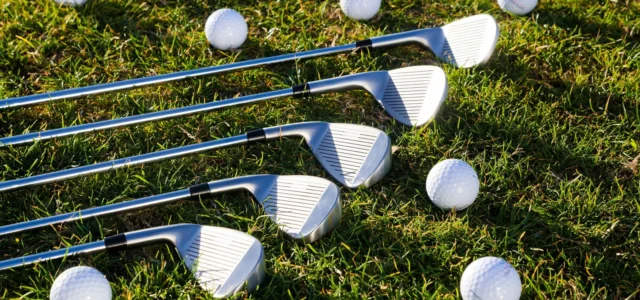
A long iron and a hybrid of the same loft are designed around the same job, sending the ball 170 to 210 yards for most amateur players, but they get there in opposite ways.
The iron has a thin, compact head. Its center of gravity sits close to the face and fairly high, so it launches the ball lower and asks for a descending blow with a clean strike in the middle of the face. When you hit it well, the flight is penetrating and easy to control in the wind. When you miss it by half an inch toward the toe or catch it a little heavy, it loses a lot of distance and height.
The hybrid has a hollow head that is deeper from front to back. That pushes the center of gravity lower and further back, which helps launch the ball higher with more spin and makes the club more forgiving on mishits. The wider sole also glides through the rough and through a slightly fat strike instead of digging. The cost is a flight that some players find too high or too prone to drawing left, and a little less precision on a full shot into a firm green with the wind behind.
Neither club is better in the abstract. One is a better fit for your swing speed, your strike and the courses you play, and that is what the test is for.
The example: what Ping publishes about the G440 hybrid
The G440 hybrid is part of Ping’s 2025 G440 family. According to Ping’s specification table:
- Six lofts. 2H at 17 degrees, 3H at 20, 4H at 23, 5H at 26, 6H at 30 and 7H at 34. The 4H and 5H are the usual replacements for a four-iron and a five-iron.
- Lengths and lie. From 40.75 inches for the 2H down to 38.25 inches for the 7H, a half-inch step between each loft. Standard lie runs from 57 degrees on the 2H to 59.5 degrees on the 7H.
- Adjustable hosel. Loft can be moved up or down by 1.5 degrees, and the lie can be set up to 3 degrees flatter than standard.
- Construction. A shallower, thinner face than the previous model, a CarbonFly wrap crown and an internal hosel design.
- Shaft and weight. The stock shaft is the Ping Alta CB Blue 70 in soft regular, regular and stiff. Standard swing weight is D1; the lighter High Launch build is listed at C7.
In October 2026, a U.S. golf retailer listed the G440 hybrid at $268.98, marked down from $319.99. A single long iron from a current game-improvement set usually costs less, but you rarely buy one alone, and a fitted hybrid often replaces two irons at the top of the bag.
The ten-ball test, step by step
The idea is simple: hit five balls with your long iron and five with a hybrid of similar loft, under the same conditions, and write down what happens. Ten balls is not a lab study, but it is enough to see the pattern that matters, which is the spread of your shots rather than your best one.
Before you start
- Warm up first with a full basket of wedges and mid-irons. The test is about your normal swing, not a cold one.
- Match the lofts. Compare a four-iron with a 4H or a 22 to 23 degree hybrid, a five-iron with a 5H. Comparing a 20 degree hybrid with a 26 degree iron tells you nothing.
- Choose one target flag at a realistic distance, between 160 and 200 yards for most players. If your range has a launch monitor bay, use it; if not, a target flag and a pair of eyes will do.
- Alternate the clubs: iron, hybrid, iron, hybrid. Hitting five in a row with the same club lets you groove it and makes the second club look worse than it is.
What to write down for each ball
- Carry. Where the ball landed, not where it stopped. Estimate it against the flags, or read it off the screen.
- Left and right. How far from the target line it landed: on the line, within ten yards, or wider.
- Strike. Center, toe, heel, thin or heavy. Be honest, nobody is watching.
- Height. Low, normal or high. A ball that would not stop on a green is useful information too.
Our guide to the four launch monitor numbers that matter explains how to read carry, spin and launch if you have a screen in front of you.
How to read the result
Look at your worst two balls with each club, not the best one. A long iron that flies 195 yards when it is struck perfectly and 150 when it is not is not a 195-yard club; it is a gamble. If the hybrid keeps your five balls inside a tighter window, it is the better club for you, even if your single longest shot came with the iron.
Three patterns come back often. If the iron produces two or more thin or heavy strikes out of five and the hybrid does not, the hybrid wins clearly. If both clubs are solid but the hybrid curls left every time, look at the lie and the loft setting before rejecting it. And if the iron is as consistent as the hybrid, keep the iron: you strike it well enough to enjoy its control.
Repeat the test on another day, ideally from a slightly worse lie or from the first cut of rough if your practice ground allows it. That is where the hybrid usually earns its place.
Where the hybrid wins and where the long iron holds on
On the course, the choice is not only about full shots from the fairway.
- From the rough, the hybrid’s wider sole is much less likely to snag in the grass. This is the most common reason amateurs switch.
- Into firm greens, the higher flight of the hybrid lands the ball more steeply and stops it sooner.
- In the wind, a well-struck long iron stays lower and is less affected. Players on exposed, windy courses often keep one iron for that reason.
- Off the tee on a tight par 4, some golfers prefer the iron because its miss is shorter and straighter.
- Around the green, the hybrid can be used to bump and run a ball up a slope, a shot many players find easier than chipping.
Many golfers end up with a mixture: a hybrid in place of the four-iron, sometimes the five, and irons from six down. There is no rule against carrying two hybrids and no prize for carrying a three-iron you never hit.
What golfers are saying about the Ping G440 hybrid
In golf forums, social media threads and public retailer reviews, the same points return regularly.
What they like:
- The forgiveness. Reviewers keep coming back to shots struck low or toward the toe that still carried close to their normal distance.
- The versatility. Owners describe a club that works from the tee, from the fairway and from the rough, which is exactly the job of a long-iron replacement.
- The adjustable hosel. Being able to strengthen or weaken the loft is often mentioned as the way to fill a gap with the irons rather than buying another club.
What they criticize:
- A lower, more penetrating flight than earlier Ping hybrids. Some players who bought a hybrid to get the ball up say the older G430 launched higher and felt easier to hit.
- The small step from the previous model. A recurring view is that a G430 already in the bag is not worth replacing, and that a used G430 costs much less.
- The matte finish, which several reviewers find plain next to other new hybrids.
- The price for a single club, when a used long iron or an older hybrid does the same job for many club golfers.
Where to try a hybrid in the United States
The best version of the ten-ball test is the one you run on a launch monitor with both clubs in your hands. You have several options.
Big golf stores with hitting bays let you try demo heads and shafts on a simulator, often for free if you are serious about buying. Ask for the same ball model in each bay, and ask whether they will set the loft and lie on the demo to match what you would order.
Independent fitting studios charge for a session, but they will compare hybrids from several brands against your current iron and give you the numbers to take home. That is worth it if you are replacing two or three clubs at once.
Your course’s pro shop often has a demo cart from the major brands and lets you try the club on the range, on real grass, which a mat cannot reproduce.
Online and used purchases are cheaper, but you lose the comparison. If you buy that way, make sure the return policy lets you send back a club that does not fit, and check that the hosel setting has not been moved by the previous owner.
Whichever route you take, ask three questions: can I try the exact loft and shaft I would buy, can the loft and lie be set to match my irons, and what happens if the club does not fit after a few rounds.
A short checklist
- Identify the long iron you avoid on the course. That is the candidate for replacement.
- Match lofts before comparing, within one or two degrees.
- Alternate five iron shots and five hybrid shots at the same target.
- Judge by your two worst shots, not your best one.
- Check that the new club does not fly the same distance as its neighbors in the bag.
- Repeat from the rough or a poor lie before you decide.
Ten balls will not change your swing, but they will tell you which club gives that swing the best chance from 190 yards out. That is a better basis for a $270 decision than a review, a forum thread or the bag of the player you watched on television.
How this page was put together
This is a buying guide and a reading of public opinion, not a test. The lofts, lengths, lie angles, hosel adjustment range, construction, stock shaft and swing weights of the Ping G440 hybrid come from Ping’s published specifications. The price of $268.98, marked down from $319.99, was read in October 2026 on the website of PGA TOUR Superstore, an American golf retailer. What golfers say was read in golf forums, social media threads and public retailer reviews; nobody is quoted by name, nothing is counted, and an impression is never presented as a statistic.
Nobody here has hit this club. There is no commercial link on this page, no affiliate arrangement and no commission of any kind. If a piece of content on this site is ever paid for by a brand, it will carry an advertising notice at the top of the page, before the first line.