Short game after winter: dormant couch, Canberra frosts, sandbelt firmness and sticky kikuyu
Winter is over in the south, but the ground around the greens has not caught up. Couch that slept from May to September in places like Ballarat, frosty Canberra mornings and sandbelt turf that firms within a week of fine weather all punish the soft lob that worked in July. Here is how to read spring ground, which shots to play first and which Rules can still help.
In brief
- Dormant couch leaves thin, tight lies and firm surrounds: a Ballarat Golf Club turf report puts Santa Ana couch dormancy there at about May to September, and Canberra averages around a hundred frosts a year, mostly April to October.
- Work down the list: putter from off the green, then a bump-and-run with a 7- to 9-iron, and a lofted pitch only when a bunker or a bank has to be carried.
- When you must pitch, take the wedge with the most bounce, swing shallow and land the ball shorter than in winter; packed bunkers want a squarer face and a shorter, firmer swing.
- Check the board: preferred lies under Model Local Rule E-3 (normally one club-length in Australia) may still apply, and Rule 16.3 gives free relief for a ball embedded in the general area outside sand.
The southern winter is over, the clocks have gone forward and the spring comps are filling up, yet the ground around the greens has not caught up with the calendar. On many southern courses the couch is still waking up, the approaches are thin and tan, and once the rain stops the surface firms quickly. The soft lob that sat down on a damp green in July now skips off a hard collar and finishes six metres past, and the bunker that took a full splash in winter has packed down into something much less friendly. Your technique has not gone anywhere; the ground has changed under it.
Where spring ground catches Australian golfers out
Australia does not have one shoulder season, and the problem you meet around the green in October depends on where you tee off.
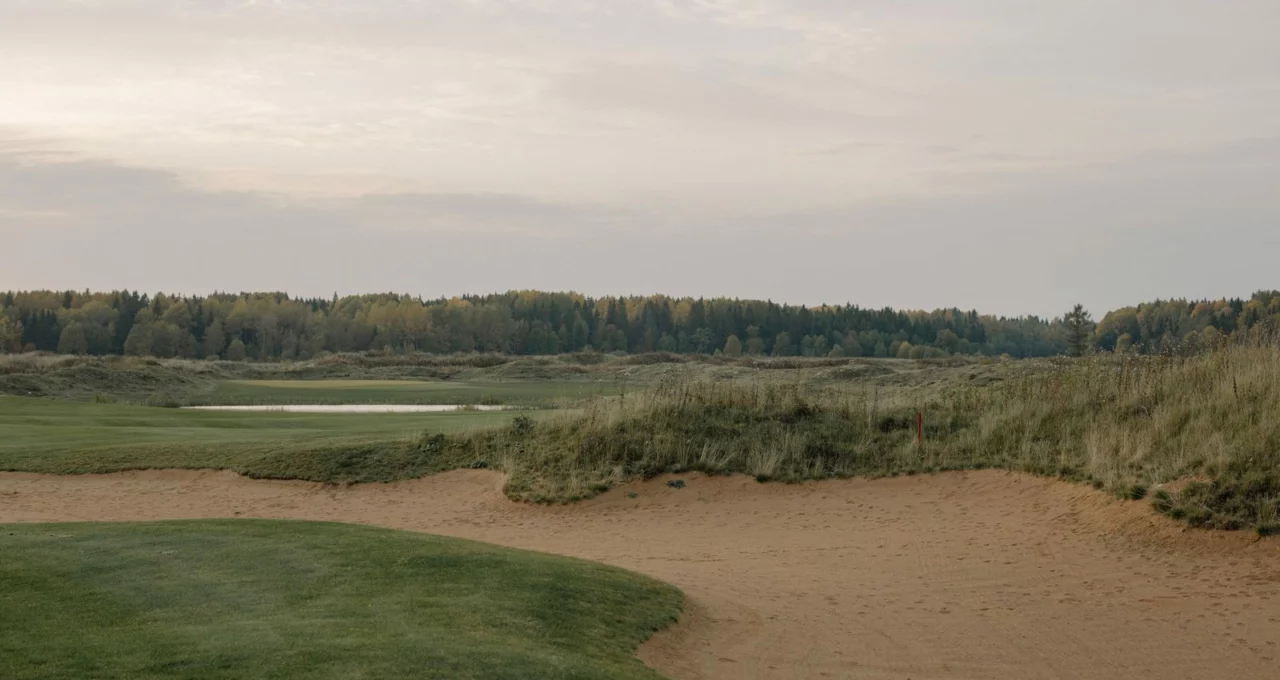
The Melbourne sandbelt. The courses of Melbourne’s south-east sit on sandy soil with couch fairways and bentgrass greens, a combination known for firm, fast, links-like conditions once the weather dries out. Sand drains quickly, so the shift from winter softness to spring firmness can happen within a week of fine weather. The approaches and collars that held a pitch in August start to throw the ball forward again, and a chip that lands on the front edge may not stop until it reaches the back.
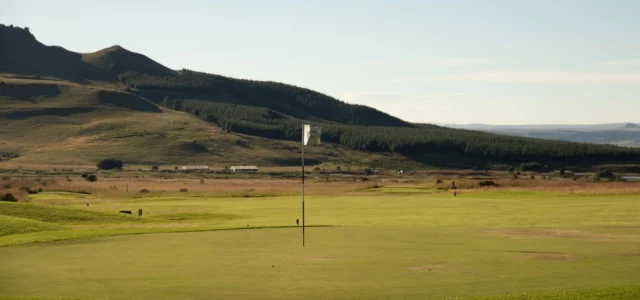
Cold inland Victoria and Canberra. Couch goes dormant in a frosty winter and loses all of its green colour. A turf report prepared for Ballarat Golf Club notes that Santa Ana couch there typically stays dormant from May to September, and that it has the shortest dormancy of the couch varieties. In practical terms, early spring fairways and surrounds in these areas are often still straw-coloured and thin, with the ball sitting down on a tight, hard base rather than on a cushion of leaf. Canberra adds frost to the mix: the city records around a hundred frosts in an average year, almost all of them between April and October. Early October mornings can still start with a crisp surface that softens by lunch, which means the same chip behaves differently on the front nine and the back.
Kikuyu country. On courses with kikuyu fairways and surrounds the issue runs the other way. Kikuyu holds its colour and keeps growing in cooler weather far better than most warm-season grasses, and it is dense and grabby. Golfers who play it describe the club snagging in the leaf, so a chip can come up well short one time and shoot through the next. Here the risk is less about a bare lie and more about the clubhead getting caught, so a sole that glides and a firm, short stroke matter more than ever.
Turf people use soil temperature to judge when couch will come back. New Zealand turf guidance puts the start of green-up at around 10°C at 100 millimetres deep, with full recovery from dormancy closer to 16 or 17°C. Until your course has passed that point, assume the surrounds will play firmer and thinner than they look from the cart path.
Look at the ground before you look at the flag
Every decision around the green in spring starts with the first few metres in front of the ball. Ask how firm the landing area is, whether there is any grass under the ball, and whether anything between you and the hole is wet or frosted enough to grab it. In spring the answer usually points to the lowest shot that still clears whatever is in the way.
The putter from off the green, first
When the collar and approach are firm and short, the putter is often the percentage play from several metres off the putting surface. Dormant couch is tight, and a putt rolls across it far more predictably than a chip lands on it. A putt that drifts thirty centimetres off line will usually still finish closer than a chip caught a fraction heavy.
Two things should make you put it back in the bag. The first is a damp or frosted patch in the line, which will grab the ball and kill its pace. The second is a strip of fringe left long and grainy, or thick kikuyu at the edge of the green, which can knock a putt sideways or stop it dead. If the path is clean, give the putt a little more pace than it looks like it needs, because cool, slow-growing grass tends to hold the ball more than summer turf does.
Bump-and-run: the shot spring rewards
If the putter cannot do the job, the next club out is a mid or short iron played like a long putt. The bump-and-run asks very little of the strike. A lofted wedge has to slide under the ball, and on a hard, thin lie that leaves almost no room: a touch heavy and the sole bounces off the ground into the ball, a touch thin and it races through the green. A 7-, 8- or 9-iron with the ball back in the stance only needs to make contact.
Many coaches teach the shot in proportions of air and ground. A pitching wedge spends roughly a third of the journey in the air and the rest rolling, a 9-iron about a quarter, and a 7- or 8-iron less again. On firm spring ground each of those runs further than the rule suggests, so choose the club that lands the ball just on the green, or even short of it when the approach is smooth and firm, and let the slope carry it the rest of the way.
- Feet fairly close together, a little more weight on the lead side, ball just behind centre.
- Hands slightly ahead of the ball at address, and still ahead at impact.
- Rock the shoulders as you would for a long putt, keeping the wrists quiet.
- Pick a landing spot and look at it, not at the hole, before you start the stroke.
When the ball has to fly: bounce, not loft
Some shots cannot run. A bunker sits between you and the pin, or the green is perched above you, and the ball has to carry. It will release further than in winter, and a clean strike matters more than height.
Reach for the wedge with the most bounce in your bag, usually the sand wedge, ahead of a low-bounce lob wedge. Bounce is the angle on the sole that stops the leading edge digging in. On soft winter turf a low-bounce wedge is handy; on a hard spring surface a high-bounce club can skip off the ground into the equator of the ball. The fix is to keep the shaft closer to vertical at address than you would for a soft-ground pitch and to make a shallower swing that brushes the turf rather than chopping into it. Land the ball noticeably shorter than you would have in July and let it run up.
If the surface is still frosted or rock hard, forget the flop: playing to the fat part of the green and two-putting is a sound spring result.
Bunkers coming out of winter
Bunker sand changes more over a season than any other surface on the course. After a wet winter it is often packed and heavy, firm enough to walk across without leaving much of a footprint. As spring dries it out, it can be crusted on top and loose underneath.
Packed sand plays more like a firm fairway lie than a classic bunker. The big splash with a wide-open face tends to bounce off the surface and thin the ball. Open the face less, enter the sand a little closer to the ball and make a shorter, firmer swing; the ball will come out lower and run further than you are used to. If the lip is low and the sand is firm, a putt or a bump with a 9-iron can be the safer play, provided you do not ground the club in the sand before the stroke, which the Rules do not allow.
The Rules that help in a shoulder season
Two pieces of the Rules of Golf matter around the green while conditions are uneven.
Preferred lies. Many Australian clubs adopt Model Local Rule E-3 over winter. It is designed for areas of the general area cut to fairway height or lower, and lets you lift, clean and place the ball within a set distance of its spot, no nearer the hole. In Australia that distance is normally one club-length, though committees can choose a hand span or a scorecard length. The R&A’s guidance is that preferred lies should be withdrawn once conditions no longer justify them, so clubs often lift the rule as spring firms up. Read the board before you play.
Embedded ball. Under Rule 16.3 a ball embedded in its own pitch mark anywhere in the general area gets free relief, except when it is in sand. Early spring rain can still leave soft patches on the approach, especially in low spots that drain slowly. Mark the ball, lift and clean it, and drop in the relief area directly behind the spot where it was embedded, no nearer the hole.
Two practice drills for the change of season
- One spot, three clubs. From the same place a couple of metres off the practice green, play the same chip with a pitching wedge, a 9-iron and a 7-iron to the same hole. Note where each has to land. The gap between those landing spots is your spring distance chart.
- Towel target. Put a small towel a few steps onto the green and try to land every chip on it. On firm ground you will find the towel has to sit closer to you than it did in winter.
Before your next spring round
- Check the ground first: drop a ball on the apron and see how much it bounces before you pick a club.
- Work down the list: putter from off the green, then a bump-and-run with a 7- to 9-iron, and a lofted pitch only when something must be carried.
- When you have to pitch, use your highest-bounce wedge, swing shallow, land the ball short and aim for the middle of the green.
- Read the board for preferred lies and ground under repair, and know your embedded-ball relief under Rule 16.3.
Spring golf in the south rewards the player who picks the simplest shot that suits the ground in front of them. Build that habit now, while the couch is still waking up, and it will serve you just as well when the sandbelt is running hard and fast in January.