Winter chipping in Britain: links, heathland or clay parkland, frost and temporary greens
A British winter gives you two courses around the green: iron-hard at nine, greasy by lunchtime, and on a clay parkland soft all the way through. The spinning pitch suffers most. The putter, the bump-and-run and a wedge chosen for its bounce cope with all of it, as long as you know what your course is built on.
In brief
- Putt from off the green whenever the line is clear of frost, water and long fringe, and hit it firmly: cold grass is slow.
- Links and heathland sit on sand and run in winter; clay parkland holds water and stops the ball, so the same chip needs a different club.
- England Golf allows preferred lies (E-3), lift, clean and replace (E-2) and fairway mats (E-12) from 1 October to 30 April; a card counts with no more than two temporary greens on 18 holes, one on nine.
- Rule 16.3 gives free relief for a ball embedded in its own pitch mark in the general area: drop within one club-length of the spot right behind it, no nearer the hole.
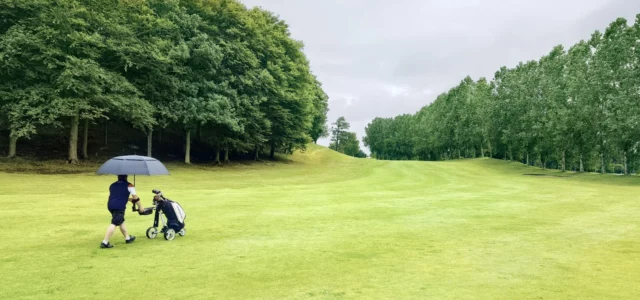
Around the green, a British winter hands you two different courses and rarely tells you which one you have drawn. On a frosty morning the ground is iron: a wedge that pitched and stopped in August now skips off the apron and through the back. By lunchtime the same patch has thawed into a greasy top layer over cold, hard soil, and the ball dies where it lands. On a clay parkland in a wet December it may never be firm at all. The lofted, spinning pitch that looks so tidy in summer is the shot that suffers most from all of this. What works is plainer: the putter, the bump-and-run, a wedge chosen for its sole, and a close reading of the noticeboard by the first tee.
Start with the putter, even from a few yards off
The first question over every winter chip should be whether you need to chip at all. Fringes and aprons are cut tight and grow very little once the soil goes cold, so a putt rolled through them holds its line far better than it does in June.
Look at the line before you commit. Three things should stop you: white frost lying in the path, which grabs the ball; standing water or a soft, muddy patch on the apron; and a strip of fringe left long and shaggy for the winter. If the route is clean, hit the putt firmly. Cold grass is slow, and most golfers leave their first few winter putts from off the green well short.
If there is a yard of rougher grass to cross, a hybrid hit with your putting stroke is worth learning: the broad sole slides over hard ground instead of catching it.
The bump-and-run is the winter workhorse
When the putter is out, keep the ball low. A lob wedge has to get its leading edge beneath the ball, and on a bare, frozen lie there is no margin for that: a fraction heavy and the club bounces off the ground into the ball’s equator; a fraction thin and it shoots through the green. A straighter-faced club played with a putting action asks for nothing except contact.
Set up with a narrow stance, the ball back of centre, your weight leaning towards the target and your hands just ahead of the ball. Rock the shoulders, keep the wrists quiet, and let the hands lead through impact. Pick a landing spot, not the flag, and look at that spot last before you start the stroke.
Club selection is about ratio. A pitching wedge spends roughly a third of its journey in the air, a 9-iron about a quarter, a 7-iron less again. On firm winter ground every one of those shots releases further than the textbook ratio, so land the ball just on the putting surface or even a yard short when the apron is smooth and hard. If you are twenty yards out with fifteen yards of green to work with, that is usually an 8- or 9-iron rather than the sand wedge your summer self would reach for.
Where the British winter decides the shot: links, heathland and parkland
The single most useful thing to know about your winter short game is what your course is built on, because that decides whether it plays firm or soft once the weather turns.
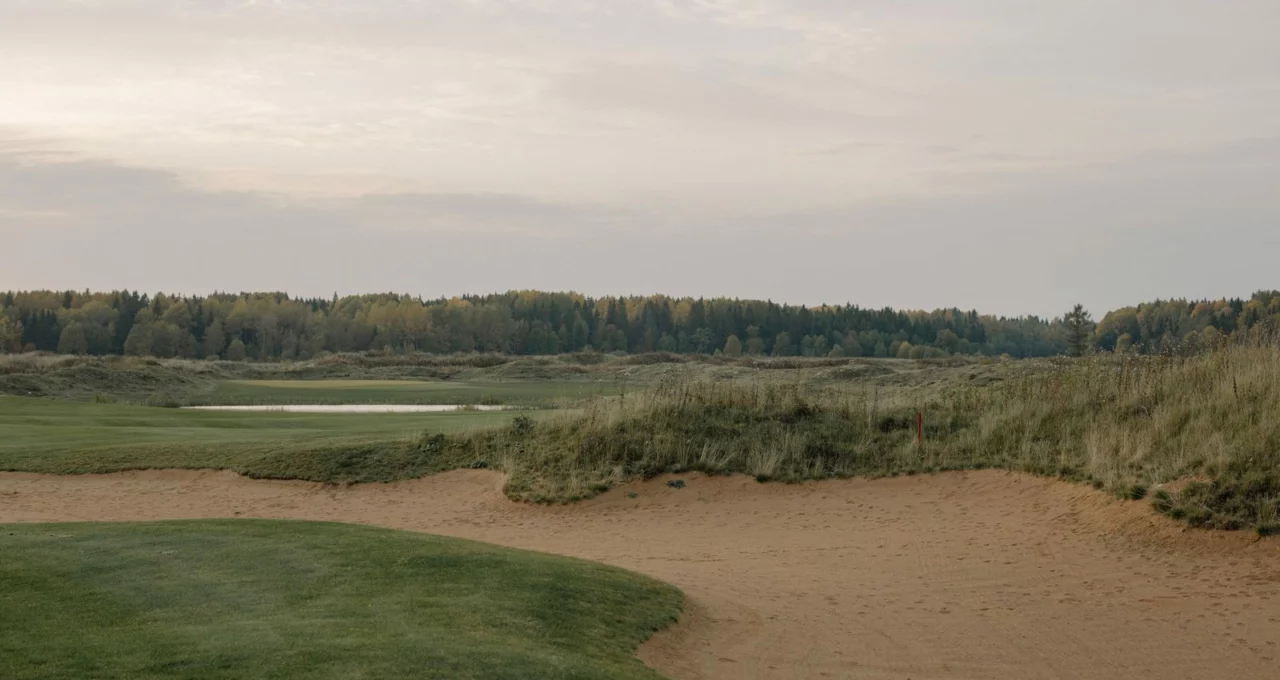
Links. Sandy, free-draining ground beside the sea is the firmest winter surface in the country. It shrugs off rain, the turf is fine and tight, and the approaches run like a road in a dry, cold spell. This is where the bump-and-run is not merely sensible but close to compulsory. The wind adds its own lesson: a ball kept low and on the ground is barely touched by it, while a high pitch can be blown off line before it lands.
Heathland. Heathland courses also sit on sandy soil, so they drain well and play firmer through the winter than most inland golf. Treat them much like links: putter where you can, a running iron where you cannot, and a wedge only when there is heather or a bunker to carry.
Parkland. Much of the parkland golf in England sits on heavier soil, and clay holds water. Here the winter problem is the reverse: a wet, soft top layer, mud on the ball and approaches that stop the ball dead. A chip that would scamper on a links plugs or checks. On these courses you can carry the ball nearer the flag, because it will not run, and the high-bounce wedge comes into its own. The trap is the frosty morning on clay, when the surface is hard on top and soft beneath; the first bounce kicks forward, then the ball stops. Allow for both.
Frost and temporary greens. On a frosty morning many clubs delay play or move to temporary greens, because footsteps on frozen grass, and especially on turf that is thawing above frozen soil, damage the plant in a way that can take weeks to show and to recover. A temporary green is often a rough circle cut into the fairway: bumpy, slow and unpredictable. Chip to it as you would to a firm fairway, keep the ball low and do not expect it to hold a line. England Golf’s guidance says an 18-hole round counts for handicap with no more than two temporary greens in play, and a nine-hole round with no more than one, so count them before you submit a card.
Preferred lies season. England Golf has restored a fixed window for the weather-related Model Local Rules: preferred lies (E-3), lift, clean and replace (E-2) and compulsory fairway mats (E-12) may be applied from 1 October to 30 April, and outside that period only with the county’s approval. Even then, only when acceptable scoring would otherwise be impossible. In Scotland and Wales, check your own national body’s guidance and your club’s notices.
When the ball has to fly
Sometimes a bunker or a bank must be carried. Then the job is solid contact, and accepting that the ball will roll out further than in summer.
Reach for the wedge with the most bounce in the bag, which for most club golfers is the sand wedge, not the lob wedge. Bounce is the angle on the sole that stops the club from digging. On hard ground that same bounce can skip the club into the ball, so keep the shaft fairly upright at address rather than opening the face wide, and make a shallow swing that brushes the turf. Choose a landing spot noticeably shorter than in summer and let the ball release.
On genuinely frozen ground, be honest. A high, soft pitch off rock-hard turf is a difficult shot for a professional and a poor bet for everyone else. The middle of the green and two putts is a good winter result.
Bunkers in a British winter
Winter sand is the least predictable lie on the course. After a week of rain it is often packed and wet, firm enough to bounce a club. After a dry, cold spell it can have a crust on top and loose sand below. After a hard frost it may be set solid.
In wet, compacted sand, the big summer splash is the wrong shot because the club bounces rather than cutting through. Keep the face only slightly open, strike closer behind the ball, and make a shorter, firmer swing. The ball comes out lower and runs more. Where the lip is low and the sand firm, a putt or a little bump with a 9-iron can be the safer play. Remember that you may not ground the club in the sand right in front of or behind the ball, or touch the sand with a practice swing, before the stroke.
Some clubs take bunkers out of play in winter as ground under repair. Read the noticeboard: it might give you a free drop.
Two rules that rescue a winter lie
Preferred lies. When a committee brings in Model Local Rule E-3, you may lift, clean and place your ball within a set distance of where it lay, no nearer the hole, in the area the rule names. That distance is defined by the local rule, so read it rather than guess. Around the green, the rule can turn a muddy, tight lie into a clean one; if it is in force, use it.
Embedded ball. Under Rule 16.3, a ball sitting in its own pitch mark in the general area gets free relief. You drop in a relief area one club-length from the spot right behind the ball, no nearer the hole and in the general area. It does not apply in a bunker, nor in sand in the general area that is not cut to fairway height or lower. On a soft parkland approach in January it is a rule you may use more than once a round.
A frosty-morning routine
The practice green may be shut, covered or temporary, but a short game area or a patch of firm ground still does the job.
- One spot, three clubs. From the same place a few yards off the green, play the same chip with a pitching wedge, a 9-iron and a 7-iron to the same hole. Note where each one has to pitch. That spread is your winter chart.
- The dropped glove. Lay a glove on the green a few paces from the edge and try to land every chip on it.
- Before and after the thaw. If you can, hit the same chip first thing and again after lunch.
Your winter short game on one card
- Know your soil: links and heathland run, clay parkland stops. Choose the shot for the ground, not the season.
- Putter first, then a low runner with a 9- or 7-iron, and a lofted wedge only when something must be carried.
- Pitch with the high-bounce wedge, a shallow swing and a landing spot shorter than in summer.
- Read the noticeboard: preferred lies, closed bunkers and temporary greens all change the shot and whether the card counts.
- On frozen ground, aim for the fat of the green and take two putts without complaint.
None of this makes winter golf glamorous. It makes it simpler: look at the ground, pick the shot that needs the least to go right, and play it. That habit is still there in April, when the proper greens come back and the ground softens.