Shoulder-season short game: frost delays, the BC coast and dormant Bermuda down south
Between the first frost and the end of Golf Canada's posting window, the chip that checked in August skips off a hard apron and runs through the green. The answer is a new order of shots: putter first, a low bump-and-run next, a bounce-heavy pitch only when something must be carried. Here is how to play it, which rules help, and how the game shifts on the BC coast and on dormant Bermuda in Arizona or Florida.
In brief
- Frost leaves a hard crust that thaws unevenly, especially in shade and on north-facing slopes, so the same 20-yard chip rolls farther at 9 a.m. than at 2 p.m.: read the landing spot before choosing the club.
- Use the putter from off the green first, then a hybrid, then a 7- or 9-iron bump-and-run; pitch only to carry a hazard, with your highest-bounce wedge and a shallow swing.
- Model Local Rule E-3 (preferred lies), free relief for an embedded ball under Rule 16.3 and closed bunkers marked as ground under repair can all turn a bad late-season lie into a clean one.
- Golf Canada's active season ends October 31 in most provinces and November 15 in BC, where some clubs stay active all year; scores made in Florida or Arizona during their active season must be posted.
Late October in most of Canada brings a strange kind of golf. The first tee opens at ten instead of seven because of frost, the fairways are the colour of straw, and a chip that would have checked beside the hole in August now skips off the apron and runs to the back fringe. The swing has not left you. The ground has hardened under it. The fix is not a new technique but a new order of shots: roll first, fly last, and read the turf before you read the putt. Below: the shots, the two rules that rescue a bad lie, and how a Prairie closing weekend, a Victoria January and a Bermuda trip south differ.
Start by reading the morning, not the yardage
On a cold morning the club you pick around the green depends less on the distance to the hole than on the temperature of the ground. Overnight frost puts a hard crust on the approaches and greens, and when it lifts the top layer softens while the soil underneath stays cold and firm. The result is that the same 20-yard chip behaves differently on the third hole and on the fifteenth. Early, the ball bounces high and keeps going. Later, once the sun has worked on the surface, it grabs a little more on landing.
Shade adds a second layer. Golf Ontario points out that shaded spots, north-facing slopes and low ground keep their frost long after the rest of the course has thawed. A green tucked behind a stand of spruce can still be crisp at noon while the next one is soft. Before every short shot, look at the patch where the ball will land and ask a simple question: is this ground firm, thawing or soft? Your landing spot moves with the answer.
The putter is your first option, even from 10 yards off
In shoulder season the putter earns a place it rarely gets in summer. With the aprons cut tight and growing slowly, the ball rolls through them on a far more predictable line than in July. A putt that drifts a foot off line usually finishes closer than a chip caught a fraction heavy on hard ground, and a heavy chip on frozen turf is a real risk because the club has nowhere to go but into the ball.
Two things change that verdict. A wet or still-frosted patch between you and the green will grab the ball and kill it. A strip of longer, matted grass at the edge of the fringe will knock it offline. If it is clean and firm, putt it, and hit it harder than your eyes suggest: cold, slow-growing turf holds the ball back more than you remember.
A hybrid used like a putter is the backup. Its wide, smooth sole slides over firm, thin grass instead of digging, and its loft hops the ball over the first few feet of rougher turf before it settles into a roll. Try it on the practice green before you trust it on the course.
Bump-and-run: choose the club by how far you want it to roll
When the putter is not on, the next shot is a low chip that lands early and runs. Think of it as a long putt with a little loft. Set the ball back of centre, narrow your stance, lean a bit more weight onto your lead side, keep your hands just ahead of the ball and rock the shoulders with almost no wrist action. Look at your landing spot, not the hole.
It works in the cold because it never asks the club to slide under the ball: a 7-iron played like a putt only needs contact.
Club choice is a matter of ratios. As a rough coaching guide, a pitching wedge spends about a third of its journey in the air, a 9-iron about a quarter, and a 7- or 8-iron even less. On firm October turf all of them run farther than those ratios suggest, so take the club that lands the ball a yard or two onto the putting surface, or on the apron itself if the ground in front is smooth and firm, and let it release.
A ten-minute ladder before you tee off
- From one spot about 5 yards off the green, chip to the same hole with a pitching wedge, a 9-iron and a 7-iron.
- Note where each ball has to land to finish near the hole. The gaps between those landing spots are your yardage book for the day.
When the ball has to fly: lean on bounce, not loft
Sometimes a bunker or a false front leaves no room to run the ball. Then you need a pitch, and two things matter more than in summer: the strike, and where you land it.
Use the wedge with the most bounce, usually the sand wedge. Bounce is the angle under the sole that stops the leading edge from digging, and on firm ground it lets the club skim rather than stab. The catch is that a lot of bounce on hard turf can kick the club up into the equator of the ball. Two adjustments handle that: keep the shaft closer to vertical at address rather than leaning it far forward, and make a shallow, brushing swing that clips the grass instead of hitting down. Choose a landing spot noticeably shorter than in summer and expect the ball to run out.
If the ground is frozen solid, take the flop shot off the menu and aim for the fat part of the green.
Bunkers between the first frost and freeze-up
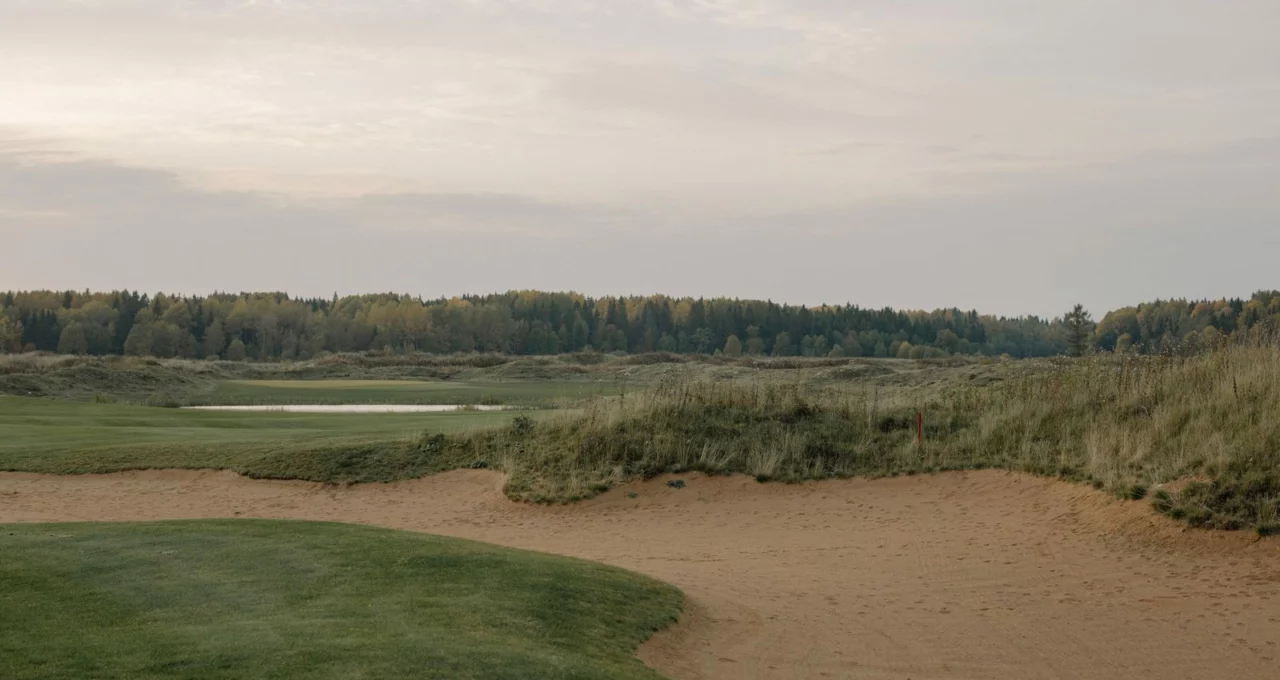
No part of the course swings more in late season than the sand. After cold rain it packs down and feels almost like a cart path. After a dry, frosty week it can be crusted on top and loose a centimetre below.
On packed, wet sand the big summer splash fails because the club bounces off the surface. Square the face more, enter the sand closer to the ball and make a shorter, firmer swing. The ball comes out lower and rolls more. With a low lip and very firm sand, a putt or a bump with a 9-iron is often the smarter play. Just remember that the Rules still bar you from touching the sand with your club right in front of or behind the ball, in a practice swing or in your backswing.
Many clubs close bunkers in late season or mark them as ground under repair. That information sits on the notice board by the first tee or on the scorecard, and it can turn a nasty buried lie into a free drop.
Two rules that can rescue a winter lie
Preferred lies. Model Local Rule E-3 in the Rules of Golf lets a committee allow players to lift, clean and place a ball lying in a closely mown area, or more widely in the general area, within a set distance, often one club-length or a shorter measure, and no nearer the hole. It exists for exactly the wet, muddy, patchy conditions of late season. If it is posted, use it every time.
Embedded ball. Under Rule 16.3 a ball embedded in its own pitch mark in the general area gets free relief, unless it is in sand. On saturated autumn ground it happens often. Mark it, lift it, clean it and drop within one club-length of the spot directly behind the pitch mark, no nearer the hole.
Where the Canadian short game changes with the calendar: frost delays, the BC coast and southern Bermuda
The last weeks before closing. Golf Canada’s posting calendar sets the active season by province: March 1 to October 31 in Alberta, April 15 to October 31 in Saskatchewan, Manitoba, Ontario, Quebec and Nova Scotia, and March 1 to November 15 in British Columbia. Courses that stay open after their window closes are still playable, but the rounds no longer count for handicap purposes. British Columbia Golf explained in October 2025 why: frost-hardened fairways and slower greens no longer match the conditions under which courses were rated. That is the season of frost delays. Ice crystals inside the grass leaf make it brittle, and Golf Ontario notes that a single foursome takes around 300 steps on each green, so courses hold the first tee until the frost has lifted. The USGA adds that the damage from walking on frosted turf often only shows two or three days later and can take more than a month to heal. Once you get out, expect a firm, fast first hour, play the putter and the 7-iron by default, and save the wedge for the afternoon.
The BC coast in winter. On the Lower Mainland and Vancouver Island the problem flips from frost to water. British Columbia Golf noted that some BC clubs observe a year-round active season, and the Vancouver Island Golf Trail, running from Victoria to Campbell River, has been described as the only golf trail in Canada open all year. Ground there is usually soft rather than hard, so balls plug, preferred lies and embedded-ball relief come up constantly, and a carried pitch makes more sense than on the Prairies.
The southern trip. A February week in Florida or Arizona puts you on a completely different grass. Bermuda goes dormant and turns tan when it gets cool, and many desert courses overseed it each fall with perennial ryegrass to keep the colour; because of water costs, some limit that overseed to tees, fairways and greens. The result is a patchwork: a fluffy rye lie on one side of the green, a tight, bare lie on dormant Bermuda a few steps away. Match the shot to what is under the ball every time. And post the score: Golf Canada’s handicap guidance says a round at a course in its active season must be posted, even if your home club in Ontario is under snow.
Your shoulder-season checklist
- Read the landing spot, not just the distance: frozen, thawing and soft ground each need a different club.
- Follow the order: putter, then hybrid, then a 7- or 9-iron bump-and-run, and a pitch only when something must be carried.
- Pitch with your highest-bounce wedge, a shallow swing and a shorter landing spot; on frozen turf, aim for the middle of the green.
- Check the board by the first tee for preferred lies, closed bunkers and ground under repair.
- Know your province’s posting window, and post the scores from your trip south.
Cold ground rewards the simplest shot that works, a habit worth carrying into April.